
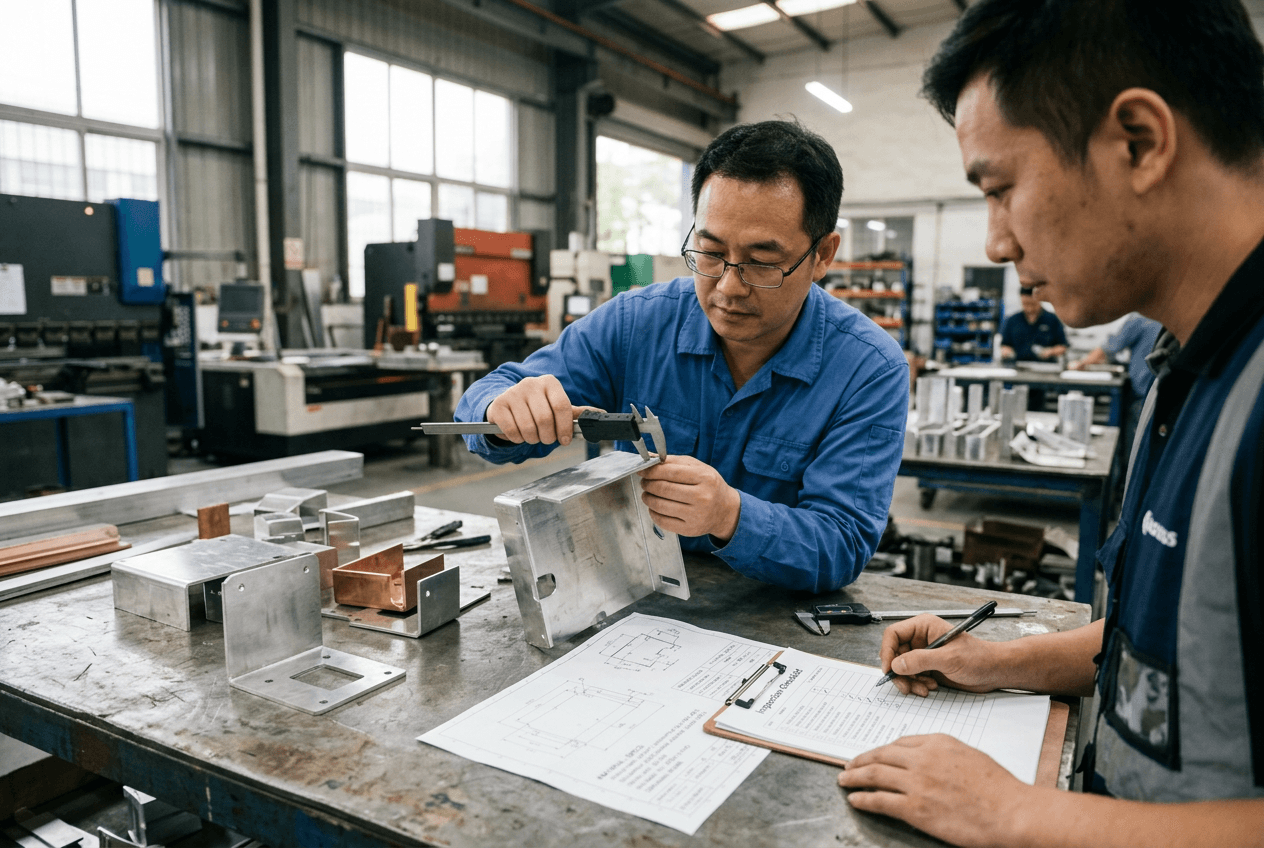
When a buyer asks what is non ferrous metals mean, the practical answer is simple: aluminum, copper, brass, bronze, and other metals that do not rely on iron as the main element. In sheet metal procurement, that definition is not enough to price a part safely. The real risk is not the alloy name. It is the gap between the drawing, the RFQ assumptions, and the route a supplier uses to build the part.
An aluminum enclosure, a copper bracket, and a brass trim panel may all fall under non-ferrous metals. Yet each one can change bending, welding, surface protection, inspection, and packing. If the buyer leaves those choices open, suppliers fill the gaps differently. One quote may assume a simple cut-and-bend job. Another may include fixture time, masking, and cosmetic handling. The lowest price then reflects the smallest assumption set, not the lowest real cost.
That is why non-ferrous sourcing often fails at the quote stage. The part can look straightforward, but the risk starts when the supplier has to guess alloy, temper, finish, and assembly fit. Once those guesses enter the quote, they usually return later as change requests, sample delays, or batch variation.
When Non-Ferrous Hides the Real Fabrication Route in the RFQ
Some RFQs use the term as a placeholder. They specify non-ferrous, then stop. That is enough for a rough budget, but not enough for a competitive quote. A fabricator still needs to know whether the part is a decorative front panel, a welded frame, or a functional enclosure. Each route carries different scrap risk, setup time, and inspection effort.
Take an aluminum control cabinet door. If the buyer does not name the alloy and temper, one supplier may choose an easy-form sheet and another may choose a stronger one with more springback. The drawings can match while the production plans diverge. The result is a quote spread that has little to do with market price and a lot to do with hidden assumptions.
Where the Assumption Enters the Price
The first assumption usually appears in material selection. The second shows up in operations. A supplier may price laser cutting and bending only, while another adds deburring, hole protection, weld cleanup, or fixture checks. If the RFQ says little about visible faces or mating holes, the quote will not tell the whole story.
Buyers should treat the term non-ferrous as a category, not a specification. Until the alloy, thickness, surface expectations, and assembly role are clear, the supplier cannot compare the part against other jobs on a consistent basis.
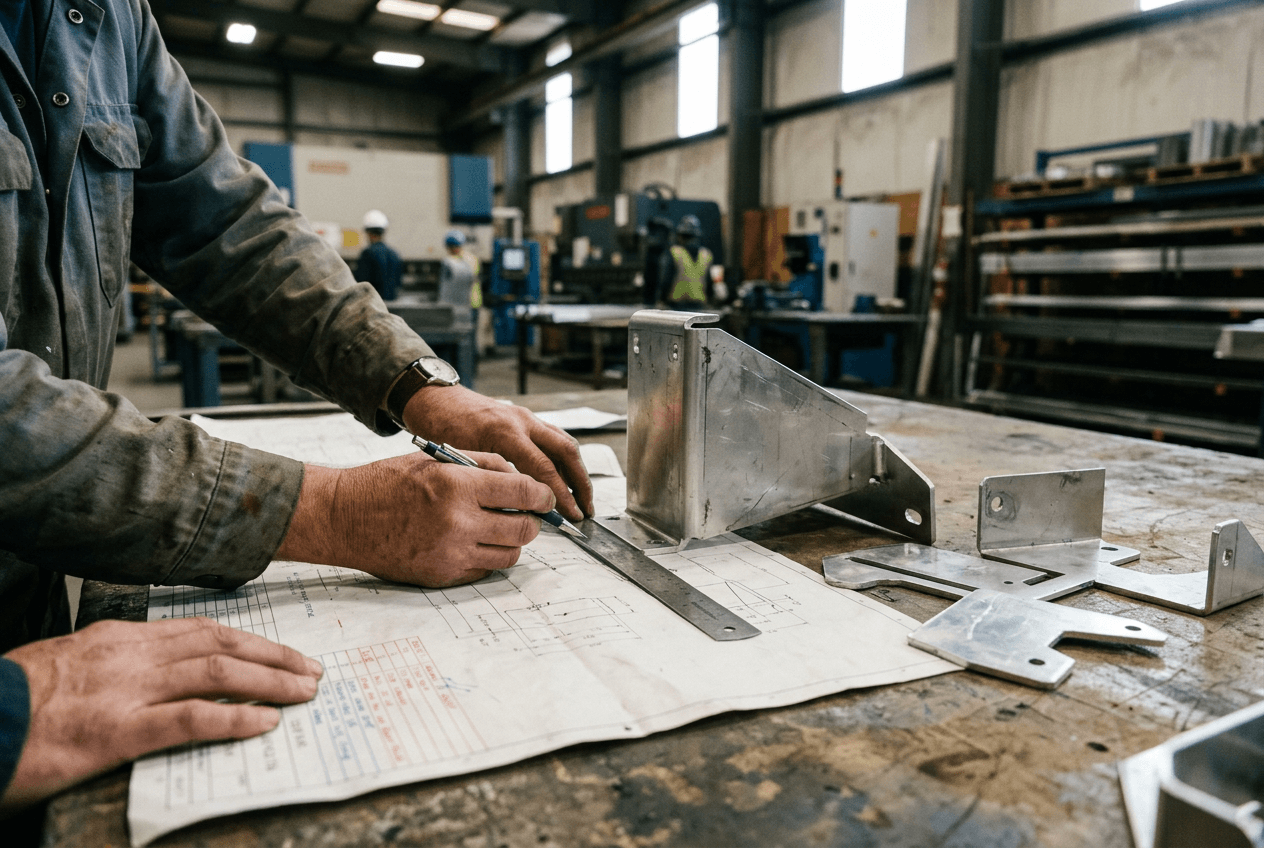
How Alloy, Temper, and Thickness Change Bend and Weld Behavior
Non-ferrous sheet metal often looks forgiving on paper. In production, it can move more than expected. Aluminum alloys vary widely in bend response. Copper and brass can mark easily. Thin material can oil-can. Thicker sheet can push the bend line out of position. These changes are not theoretical. They affect hole alignment, weld quality, and the amount of correction a shop must budget.
For example, 5052-H32 and 6061 do not behave the same way in a formed enclosure. One may bend with less cracking risk. The other may need more radius and tighter control of grain direction. If the buyer only writes aluminum, the supplier may choose the wrong process path for the geometry.
Why Small Changes Become Major Procurement Risk
A bracket with close mounting holes can move after forming if the bend allowance is not planned correctly. A welded aluminum frame can twist if the fixture does not hold heat input in check. A copper busbar cover may need a different edge treatment because scratches show fast. The drawing may still be correct. The quote becomes unstable because the fabrication route is unclear.
This is where buyers should ask for manufacturability feedback early. A partner such as Yishang can review whether the alloy, thickness, bend radius, and hole placement create a realistic route before the RFQ goes out. That review helps prevent a low quote that later turns into a rework quote.
Why Visible Surfaces and Finish Rules Change More Than Appearance
For many non-ferrous parts, the finish note controls more cost than the cutting step. A brushed aluminum front panel, a polished brass trim strip, and a powder-coated enclosure shell each need different handling. If the RFQ does not define protected faces, acceptable tool marks, or masking points, suppliers will price different cosmetic standards.
This problem often starts with one line on a drawing. The buyer may write powder coat or brushed finish and assume the intent is obvious. The fabricator still has to decide whether the inside face is cosmetic, whether thread holes need masking, and whether post-coat assembly checks are included. Those choices change labor, inspection, and packaging.
Project Example: A Cabinet Door That Looked Cheap Until Coating Was Added
An OEM ordered a small run of aluminum cabinet doors. The sample looked fine in raw form. After coating, the hinge side showed a slight build-up near the bend line, and the latch hole lost clearance. The supplier had priced a standard coating route. The buyer had expected protected holes and a finish check. The real problem was not the coating itself. It was the missing rule set around visible faces and fit-critical features.
Buyers avoid this trap by naming which surfaces matter, where masking is required, and what cosmetic defects are not acceptable. That keeps the quote closer to the true production path and prevents finish-related disputes after sample approval.
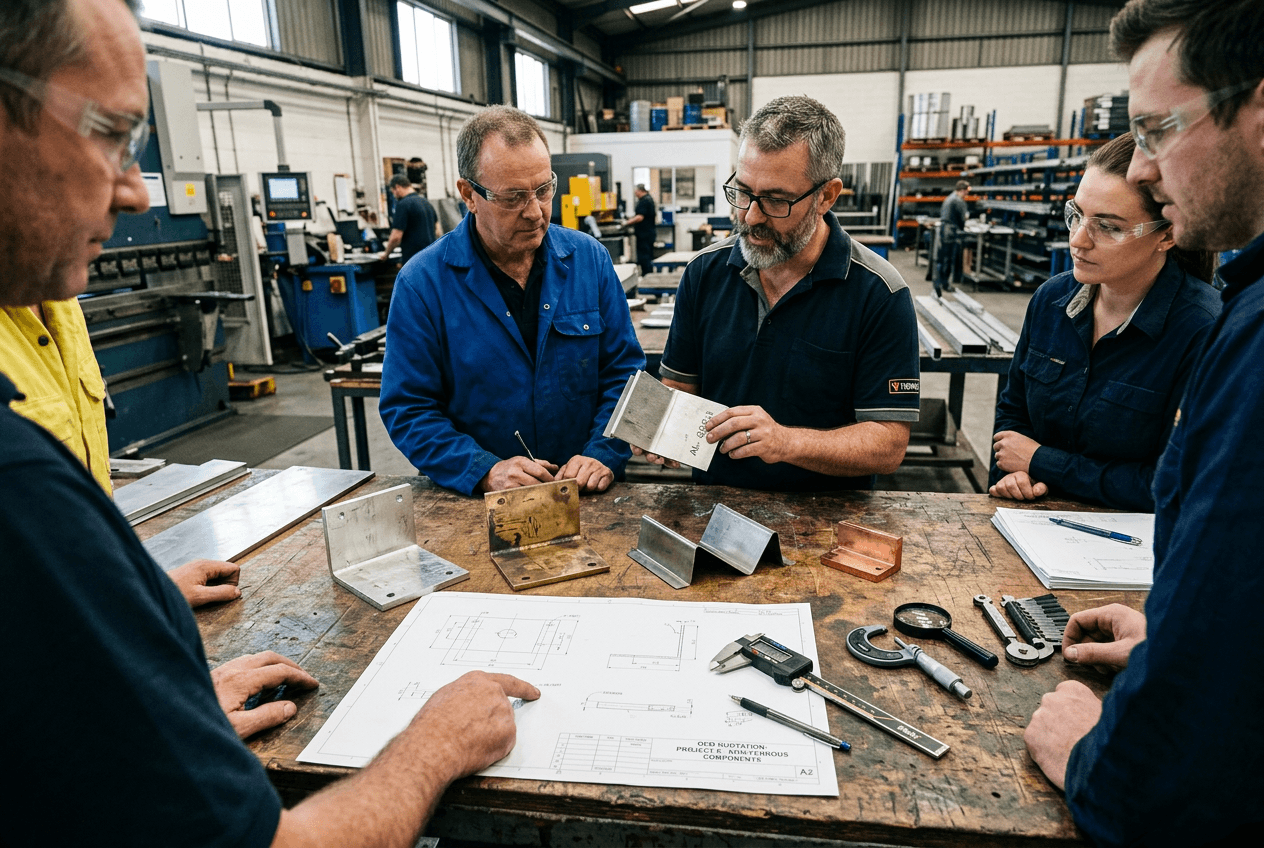
Why Prototype Approval Does Not Guarantee Batch Consistency
A prototype can pass for the wrong reasons. The sample may be hand-fit, reworked, or built with extra attention that production never receives. That is especially common in welded assemblies and formed enclosures. The part fits once. Then the batch drifts because the fixture pressure changes, the welding sequence changes, or the finishing line runs with a different setup.
Batch variation is a serious risk for non-ferrous parts because the material may react quickly to heat and handling. Thin aluminum can twist. Copper can mark during transfer. Brass can show polish variation between runs. If the supplier has not locked the same route for sample and batch, the approval sheet offers limited protection.
Project Example: A Welded Frame That Passed the Sample and Failed the Lot
A buyer approved a lightweight aluminum frame for a display system. The sample aligned with the mating shelves. In production, the same frame came back with a small twist after welding. The shelves no longer sat flat. The issue started with fixture discipline. The consequence was a batch hold, remeasurement, and a schedule slip that cost more than the original unit price gap.
Buyers should ask how the shop will reproduce the sample route in volume. That includes fixture design, weld sequence, inspection points, and any hand adjustment allowed during production. If those steps are not controlled, the prototype tells you less than it seems.
What Buyers Should Lock Before Comparing Supplier Quotes
Comparing quotes only by unit price is risky when the fabrication route is still open. Buyers get better decisions when the RFQ locks the details that change process time and fit. For non-ferrous sheet metal, that means more than a material name. It means a clear drawing package and a clear production expectation.
Before price comparison, define the alloy or grade, thickness, temper, and the role of the part. State which faces are visible, which edges need protection, and which holes are fit-critical. If the part includes welding, ask the supplier to confirm the sequence and expected distortion control. If assembly is part of the scope, identify mating parts and required checks.
A good supplier response should explain the route, not just the number. That is where Yishang can be useful as a fabrication partner: drawing review, prototyping, finish planning, and assembly-fit review can expose hidden assumptions before they turn into production cost. Buyers do not need a generic yes. They need a route that can be repeated in batch production.
Send Yishang a risk-ready RFQ: share your drawings, material requirements, quantities, tolerances, finish expectations, photos, samples, and assembly notes. If you already have prototype feedback, include that too. The faster the supplier sees the full fabrication route, the easier it is to compare quotes that describe the same job.
Frequently Asked Questions
What is non ferrous metals mean in an OEM sheet metal RFQ?
It usually means metals such as aluminum, copper, brass, or bronze that do not use iron as the main element. In an RFQ, the term is not specific enough. Buyers should also define alloy, temper, thickness, finish, bend radius, and inspection needs so suppliers quote the same fabrication route.
Why can two quotes for the same aluminum enclosure differ so much?
One supplier may assume basic cutting and bending. Another may include masking, deburring, fixture control, or cosmetic handling. If the RFQ leaves finish, fit, and weld details open, the quotes are not really for the same job.
What should buyers define before asking for a non-ferrous sheet metal quote?
Start with the exact alloy, temper, thickness, and part function. Then define visible faces, protected areas, fit-critical holes, bend radius limits, and any welding or assembly steps. These details help suppliers price the same fabrication route.
Why can a prototype pass and the batch still fail?
A prototype may receive hand fitting, extra correction, or slower setup work. Batch production often runs with tighter time and less manual adjustment. If fixture control, welding sequence, or finishing method changes, the batch can drift even after a good sample approval.
How do finish requirements affect cost for brass or aluminum parts?
Finish rules change handling, masking, polishing, packing, and inspection. Brass can scratch and show color variation. Aluminum can need protected edges and clean cosmetic faces. If the buyer does not define these rules, suppliers may quote very different levels of care.