
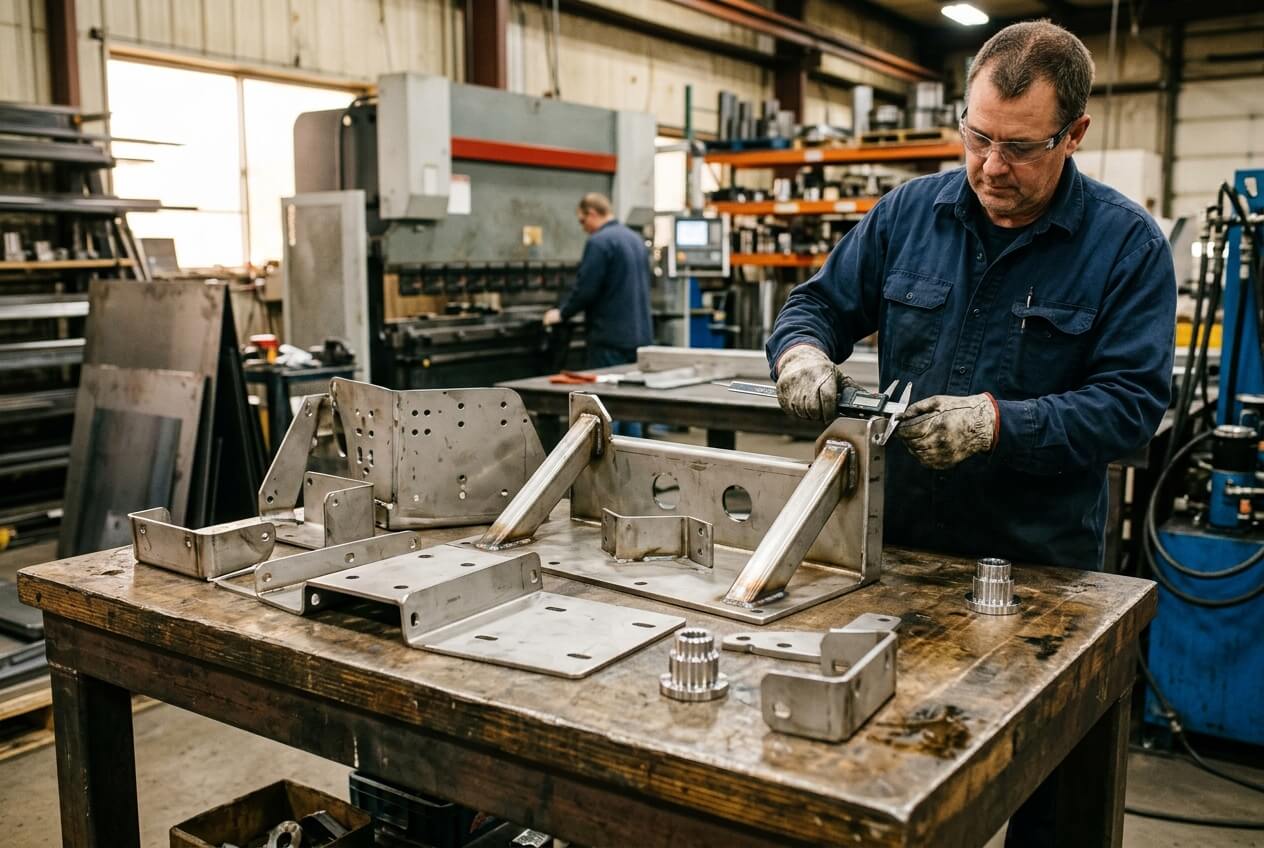
A buyer requests quotes for a 2 mm steel enclosure beside a heated process line. The drawing says “steel,” calls for a general wall thickness, and notes elevated temperature. Three suppliers respond with different prices. One assumes mild steel and standard powder coating. Another prices stainless steel with reinforced welds. A third excludes the finish until the operating temperature is confirmed.
The price gap may come from different assumptions rather than different fabrication efficiency. This is the central procurement risk behind the question what is the melting point for steel? Melting data offers technical context, but it does not define service temperature, strength, alignment, coating performance, or assembly fit.
For custom sheet metal parts, the real purchasing question is whether every supplier has quoted the same part under the same conditions. If the RFQ leaves grade, temperature, finish, or critical dimensions open, the lowest price may describe a different product.
Why “Steel” on an RFQ Produces Non-Comparable Quotes
Steel alloys melt across a range, not at one universal temperature. Many common steels melt at approximately 2,500 to 2,750 degrees Fahrenheit, or 1,370 to 1,510 degrees Celsius. The exact solidus and liquidus temperatures depend on chemistry, grade, and governing standard.
That range does not tell a fabricator which material to buy. Low-carbon steel, stainless steel, tool steel, and heat-resistant grades differ in carbon, chromium, nickel, molybdenum, and manganese content. They also differ in forming behavior, weld procedure, corrosion resistance, certification, and cost.
When a drawing only states “steel,” suppliers fill the gap themselves. One may quote ASTM A1008 or an equivalent low-carbon sheet. Another may assume 304 stainless steel because the part sits near heat or moisture. A third may include material certificates and traceability while the first excludes them. All three prices can look reasonable while covering different scopes.
Use the melting range as context, not as the material specification
A material note should identify the steel grade, governing standard, thickness, thickness tolerance, and approved equivalents. If the application requires a specific mechanical or corrosion performance, state that requirement directly. Do not expect a supplier to infer it from a temperature note or a product photograph.
For a heat-exposed enclosure, also state the maximum continuous temperature and peak temperature at the component surface. Surrounding-air temperature may be much lower than the temperature conducted through a mounting bracket or welded frame. The heat path matters because a shielded cabinet and a bracket inside the hot zone may experience entirely different conditions.
Ask suppliers to list every material assumption on the quotation. That simple request makes a hidden scope difference visible before purchase orders, prototypes, and production tooling commit the project to one interpretation.
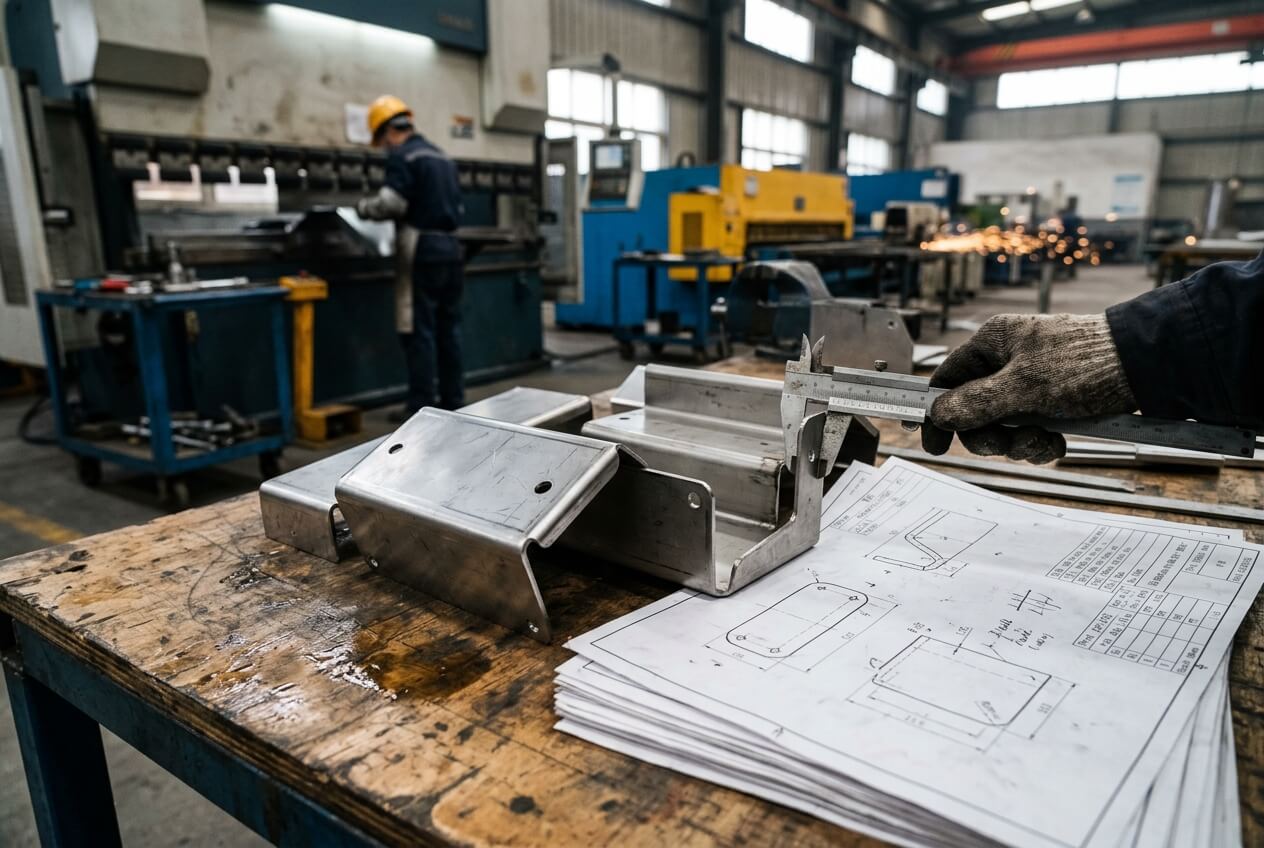
How Temperature Notes Change Fabrication, Finish, and Cost
Steel can lose useful performance long before it approaches its melting range. As temperature rises, yield strength generally falls. Thermal expansion changes hole positions and clearances. Long exposure can cause creep or stress relaxation. Thin panels may bow, buckle, or sag while remaining visibly solid.
The consequence chain often starts with a vague note such as “for high-temperature use.” The supplier then chooses a material, weld approach, and finish based on experience. That decision changes the quote. Once the prototype arrives, the buyer discovers that a door gap, sensor position, or mounting pattern shifts during operation. Corrective work then affects both cost and schedule.
A lightly loaded heat shield may tolerate movement that would make a sensor bracket unusable. A protective cabinet may remain structurally sound while its powder coating discolors or loses adhesion. A welded frame may survive the heat but distort enough to prevent assembly with the customer’s chassis.
Separate structural temperature from coating temperature
Finish requirements need their own service limits. Standard powder coating can discolor, embrittle, lose adhesion, or degrade when the part exceeds its rated temperature. A high-temperature coating, an uncoated stainless surface, or a separate heat shield may provide a better solution.
The RFQ should identify the coating system, expected thickness, cosmetic limits, and maximum continuous and peak temperature. Show masked areas around grounding points, threaded holes, bearing surfaces, and mating faces. Coating build can reduce clearance and change electrical contact.
These details influence more than unit price. A supplier may need different weld cleaning, surface preparation, masking, oven conditions, inspection, or packaging. A quote that excludes those operations can appear cheaper until the buyer adds them during production.
Project example: a furnace-side cabinet
A furnace-side cabinet initially specified “mild steel, powder coated, heat resistant.” The supplier asked for the actual cabinet surface temperature and learned that forced ventilation kept the panels below the coating limit. The mounting brackets, however, carried heat from the machine frame and reached a higher temperature.
The revised RFQ separated the cabinet from the brackets. It retained powder-coated mild steel for the enclosure and specified stainless steel with masked mounting faces for the brackets. This clarification prevented the buyer from paying for stainless throughout the assembly while also avoiding a coating failure at the heat path.
Which Drawing Details Prevent Assembly and Inspection Disputes
Temperature risk becomes a production risk when the drawing does not identify the dimensions that protect function. General sheet metal tolerances may suit an outer cover. They may not suit a fan opening, busbar support, latch, gasket face, or sensor bracket.
A hole pattern can shift during bending. A narrow flange may lose bearing area after coating. A large flat panel can bow during welding. A corner cutout can weaken a cabinet and require reinforcement. If the drawing does not identify the critical datum, the supplier may inspect the part against a different reference than the assembly team uses.
Buyers should mark critical features instead of applying tight tolerances everywhere. Identify the holes, faces, bends, and datums that control alignment, sealing, grounding, or safety. Then define realistic limits and an inspection method. Excessively tight tolerances increase machining, setup, inspection, and rejection costs without improving the product.
Define what must remain stable in service
For a heat-exposed part, specify allowable deflection, alignment change, gap variation, or hole movement where those values affect operation. State whether the limit applies at room temperature, operating temperature, or after thermal cycling.
Welded assemblies need similar clarity. Show weld locations, weld size, acceptable visual condition, distortion limits, and critical datums. A fabricator may use a controlled weld sequence and fixture for a frame that must mate with another assembly. Without that requirement, the supplier may optimize for appearance and throughput instead.
Request material certificates, heat or batch traceability, and inspection records when the application justifies them. Link those records to the production lot. This process helps the buyer detect an unapproved material substitution that changes thermal performance or fabrication behavior.
Project example: a sensor bracket that remained solid but failed alignment
A 3 mm steel bracket supported a sensor near a heated line. Its design team focused on the steel melting point and concluded that the material had a large temperature margin. During testing, the bracket remained intact but deflected enough to move the sensor outside its measurement zone.
The corrective RFQ added the component temperature, supported load, maximum deflection, mounting orientation, and thermal-cycle condition. It also required the supplier to check the bracket in the assembled position. The buyer could then compare quotes based on functional performance rather than material temperature alone.
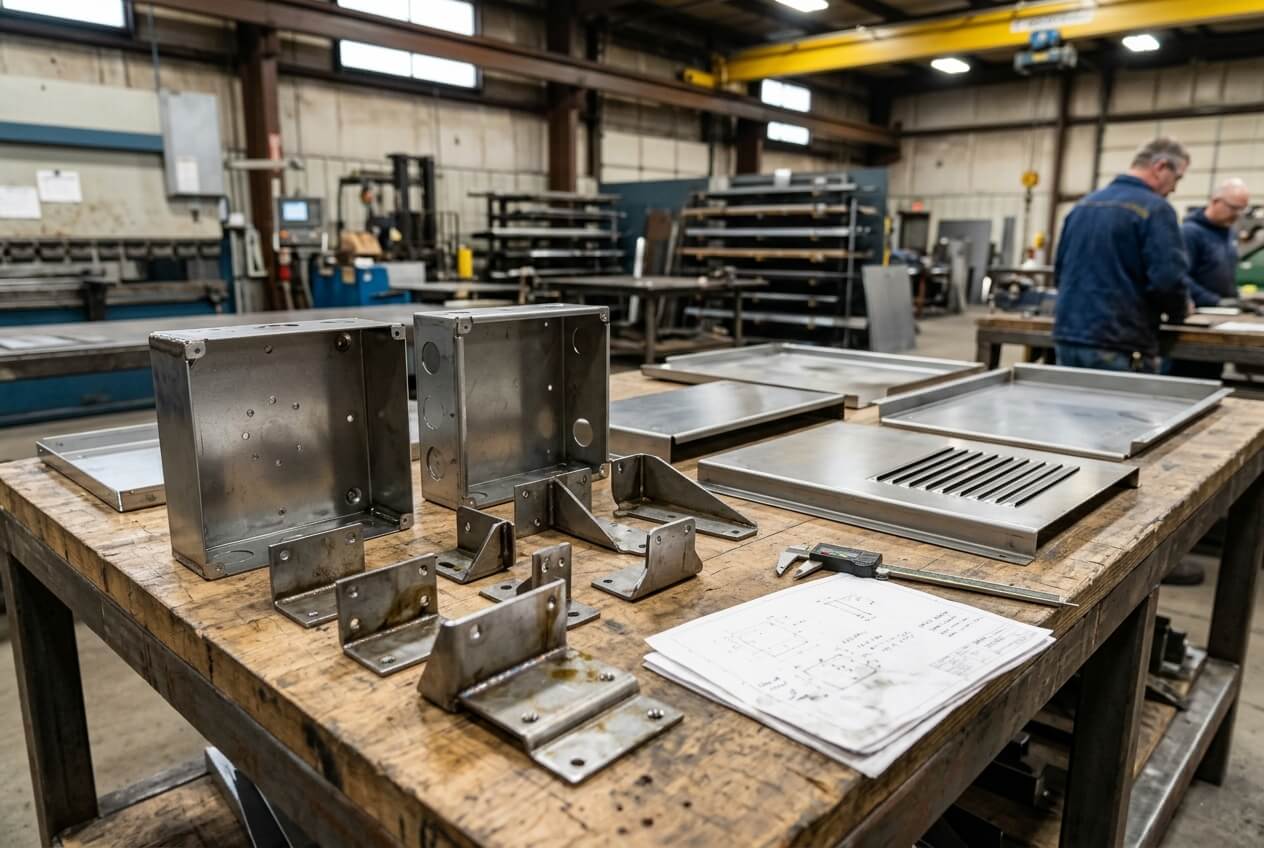
Why Prototype Approval Can Still Leave Batch Risk
A prototype proves less than many buyers assume. It may use a different sheet batch, hand-adjusted bends, temporary fixtures, or a weld sequence that operators cannot repeat economically. An operator may tune a door hinge or enlarge a hole during prototype assembly. That adjustment can hide a design or process problem until batch production.
Heat makes this risk more serious. Thermal expansion can change a door gap, mounting pattern, or frame diagonal. Coating thickness can reduce clearance. Weld distortion can vary with part orientation, fixture condition, and operator sequence. A prototype that fits on a workbench may fail against the customer’s chassis after production welding and finishing.
Make the approved sample represent production
Prototype approval should record the steel grade, thickness, certificate, bend radius, weld sequence, fixture method, coating system, masked areas, and critical dimensions. Record the temperature and duration used in any functional test. Visual approval alone does not establish dimensional stability or thermal performance.
Ask the supplier which process changes require written approval. The answer should cover material grade, thickness, weld method, coating system, fixture strategy, and approved subcontractors where applicable. Also confirm how the supplier will maintain hole position, bend angle, weld distortion, and coating thickness across the planned batch.
Lead time can change when the project adds material certification, special coating, prototype testing, or inspection reports. Include those requirements before comparing delivery promises. Otherwise, one supplier may quote only fabrication while another includes the full approval process.
What to Send Before Comparing Steel Fabrication Quotes
A comparable RFQ gives the supplier enough information to price the intended part without inventing performance requirements. Send the latest drawing or 3D model, material grade and standard, thickness, quantity, expected annual volume, critical tolerances, surface finish, coating areas, and assembly notes.
For heat-exposed parts, add the maximum continuous and peak component temperature, exposure duration, thermal cycles, heat-transfer path, structural load, and allowable movement. Include installation photographs when the part mounts beside a furnace, engine, heater, or process line. A photograph cannot replace a specification, but it can reveal shielding, contact points, access limits, and neighboring components.
Ask each supplier to return a quotation with material, welding, finishing, inspection, packaging, tooling, prototype, and assembly assumptions clearly separated. Require them to identify exclusions and unresolved engineering questions. This approach exposes scope differences before the buyer chooses a price.
Yishang can review drawings for laser cutting, CNC bending, welding, powder coating, assembly, and prototype requirements. Send the drawings with material requirements, quantities, tolerances, and finish expectations, then request a quotation that marks all high-temperature and manufacturability assumptions. The goal is a quote that your team can compare against other offers on equivalent scope.
Frequently Asked Questions
What is the melting point for steel?
Steel has no single melting point because different grades melt across different ranges. Many common steels melt at approximately 2,500 to 2,750 degrees Fahrenheit, or 1,370 to 1,510 degrees Celsius. The exact solidus and liquidus temperatures depend on alloy chemistry. For an RFQ, specify the grade and standard instead of relying on a general melting value.
Does steel’s melting point define the service temperature of a sheet metal part?
No. Steel can lose strength, deform, creep, or shift alignment far below its melting range. A part’s service limit depends on grade, thickness, load, restraint, exposure time, atmosphere, and thermal cycling. Define the actual component temperature and allowable movement for brackets, frames, enclosures, and welded assemblies.
Why can two suppliers quote different prices for the same steel enclosure?
The suppliers may have interpreted the material, coating, welding, inspection, or temperature requirement differently. One quote may include stainless steel and certification while another uses low-carbon steel with standard powder coating. Ask every supplier to list grade, thickness, finish, processes, exclusions, and inspection assumptions.
What temperature information belongs on a high-temperature fabrication drawing?
State the maximum continuous and peak component temperature, exposure duration, thermal-cycle frequency, heat-transfer path, structural load, and allowable deflection or alignment change. Separate surrounding-air temperature from the temperature at the bracket, frame, enclosure panel, or welded joint. Include the coating service limit as a separate requirement.
What should a prototype approval confirm before batch production?
Confirm the production material grade, thickness, bend radii, weld sequence, fixture method, coating system, masked areas, critical dimensions, and test conditions. Check the assembled part after thermal cycling when alignment matters. Also document which material or process changes require buyer approval.
What should buyers send when requesting a custom sheet metal quote?
Send drawings or 3D files, material requirements, quantities, tolerances, finish expectations, assembly notes, and installation photographs. Add component temperature, loads, thermal cycles, critical datums, inspection needs, and prototype requirements for heat-exposed parts. Ask the supplier to identify assumptions and exclusions in the quotation.