
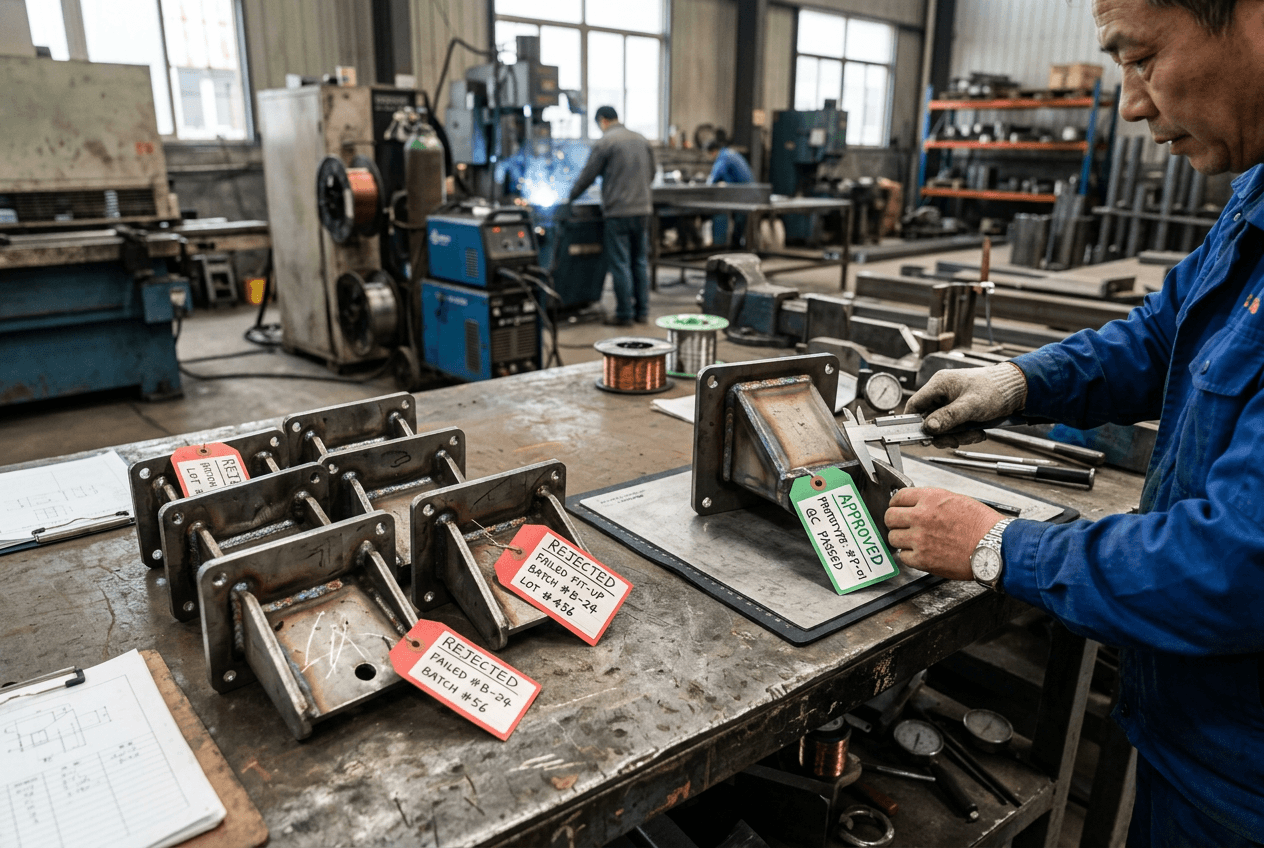
A prototype can make sub arc welding look easy. The sample fits, the seam looks even, and the first article passes inspection. Then the batch starts, and the problems appear. Hole patterns drift. Cabinet doors rub. A frame that looked square on the bench pulls out of alignment after cooling. That is the real procurement risk: the prototype often hides setup work that the production lot cannot repeat.
For buyers of sheet metal fabrication, sheet metal parts, metal enclosures, brackets, frames, and welded assemblies, this risk matters more than the weld process name. The danger starts when the RFQ treats a hand-tuned sample as proof of a stable process. Once the shop moves from one piece to twenty or two hundred, small differences in fixturing, weld sequence, and heat input can change the finished geometry. That leads to rework, late shipments, and disputes over whether the quote was ever realistic.
Yishang reviews a lot of these projects through drawings and prototype photos. The value is not in saying yes to everything. It is in spotting where the first sample depended on manual correction that will not scale.
Why a prototype can hide the exact problem that appears in production
A one-off welded sample often gets more attention than a batch order. The operator spends extra time aligning parts. The fixture gets adjusted between passes. A technician may tap a corner into place before the final weld. That extra care can produce a part that looks fully approved. But the approval may reflect manual help, not a repeatable process.
Once production starts, the shop must hold the same result under time pressure. That is where sub arc welding can expose weak assumptions. Heat input rises on long seams. Clamp pressure varies from one cycle to the next. Tack locations shift. A small change in root gap or part flatness can change the final size. Buyers often notice the effect only when the assembly no longer fits the mating panels or mounting faces.
Where the hidden variation usually begins
The root cause is rarely the last weld alone. It usually starts earlier. The drawing may not define the critical faces. The fixture may locate off a surface that moves during welding. Or the sample may have been corrected after welding, so the buyer never saw the real distortion. When the lot is released, the shop quotes against the visible sample, but the sample did not represent the true process cost.
That mismatch creates a chain reaction. The supplier underestimates straightening time. The buyer expects the sample price to hold. The batch then needs extra grinding, checking, or rework. Lead time slips because the team now has to recover fit-up instead of simply repeating the approved pattern.
Project example: a machine base for industrial equipment may look rigid in the prototype stage. In batch production, however, the long seam pulls one corner up by a few millimeters. That is enough to disturb leveling pads and mounting holes. The weld is not “bad,” but the part no longer fits the machine around it.
Why fixture and weld-sequence assumptions change the real quote
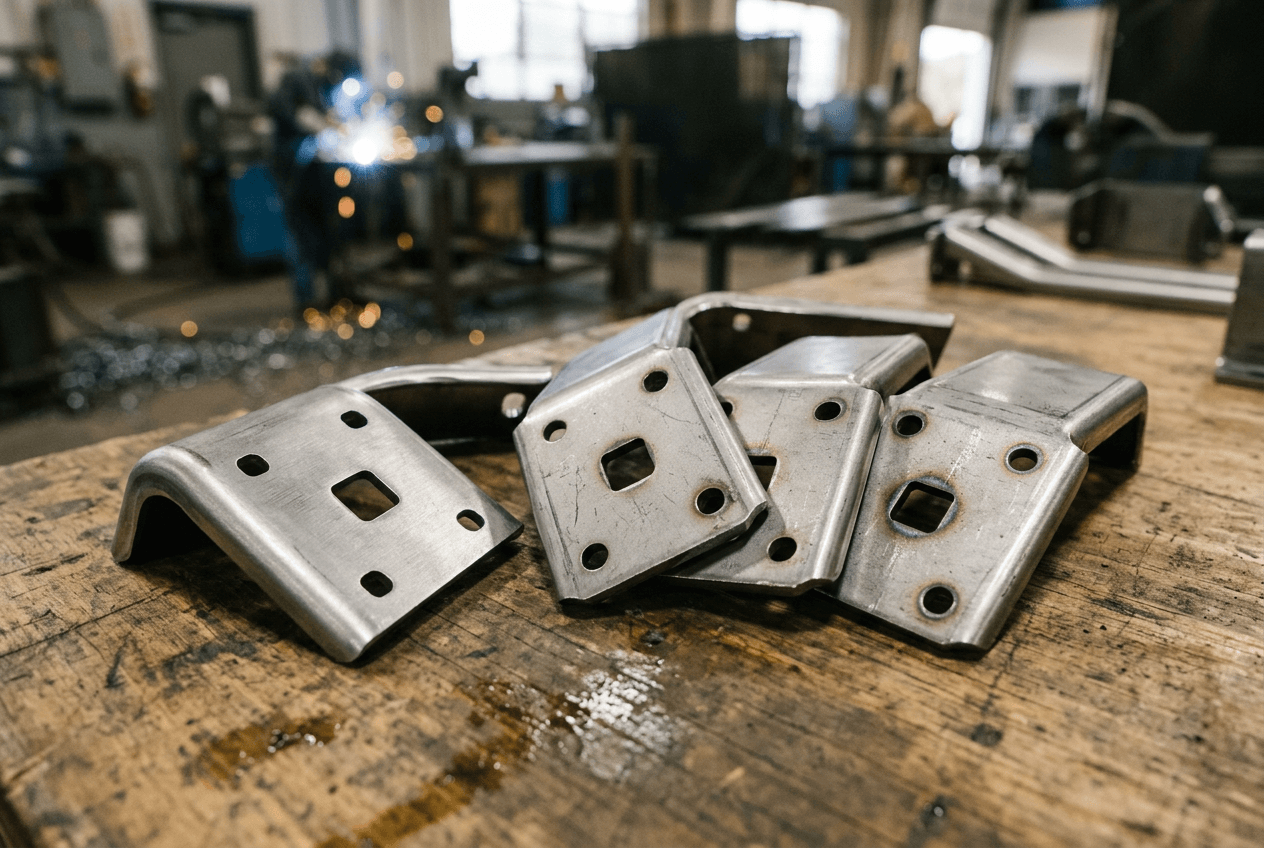
Buyers often compare SAW quotations as if they are all built from the same method. They are not. One shop may price a frame with a dedicated fixture, a single-pass sequence, and no post-weld straightening. Another may assume multiple setups, extra clamps, and corrective work after cooling. Both numbers can be honest. They simply describe different production paths.
This matters because the cheapest quote may depend on a prototype-only routine. The sample might have needed hand alignment before welding, but the quote does not include that labor across the full order. Or the supplier may assume the part can be welded in one direction, while the actual drawing forces repositioning on every seam. If the RFQ does not freeze the process assumptions, the quotation can look competitive and still fail in execution.
The assumptions that most often distort comparison
- Whether the prototype fixture can be reused for batch production without changes.
- Whether the part must be flipped or repositioned during sub arc welding.
- Whether straightening, grinding, or touch-up work is part of the quoted route.
- Whether the seam layout supports a stable weld sequence or forces heat imbalance.
- Whether the quote assumes the sample dimensions are already final and repeatable.
These details also affect lead time. A simple quote can turn into a slower job if the shop must redesign the fixture after the order arrives. That is why procurement should ask how the part will be held, welded, checked, and released before the buyer compares unit price.
Project example: a welded bracket set for a cabinet frame may seem straightforward. Yet one bracket uses a short intermittent seam and another needs a long continuous seam. If the RFQ does not separate those joints, the quote may understate heat control and inspection work. The result is a batch that looks fine individually but fails assembly as a set.
How distortion turns into assembly failure after welding and coating
Distortion is not only a cosmetic issue. It becomes a supply risk when the welded part has to mate with panels, hinges, doors, internal supports, or coated surfaces. A frame can pass a visual weld check and still fail downstream because the heat moved the mounting plane. Once that happens, the buyer is no longer judging the weld. The buyer is judging whether the part still supports the product.
Sub arc welding is often chosen for long seams and thicker sections because it deposits metal efficiently. That advantage can disappear if the part lacks enough restraint. A small bend during cooling may not matter on a structural plate, but it can matter a lot on a sheet metal enclosure. Powder coating makes the risk sharper. Coating thickness can tighten fit on mating edges, and a part that was barely within range before coating may become a reject after coating.
Where fit-up problems show up first
Fit-up problems often appear in the same places: door gaps, latch alignment, hole-to-hole spacing, and flat mounting faces. Buyers sometimes approve a prototype after the shop has dressed those areas by hand. Then the batch arrives with visible weld variation or a slightly different angle at the corner. The part may still be structurally sound, but it no longer assembles cleanly.
That is why the RFQ should name the critical dimensions that matter after welding and coating. If the enclosure must hold a flat face within a defined range, say so. If a frame must keep diagonal symmetry for downstream assembly, mark those checks on the drawing. Without that freeze point, the shop may optimize for weld speed while the buyer cares about assembly fit.
Yishang usually flags this risk early during drawing review. The question is not only whether the part can be welded. It is whether the welded part can still function in the next assembly step.
What to freeze in the RFQ before the first batch is released
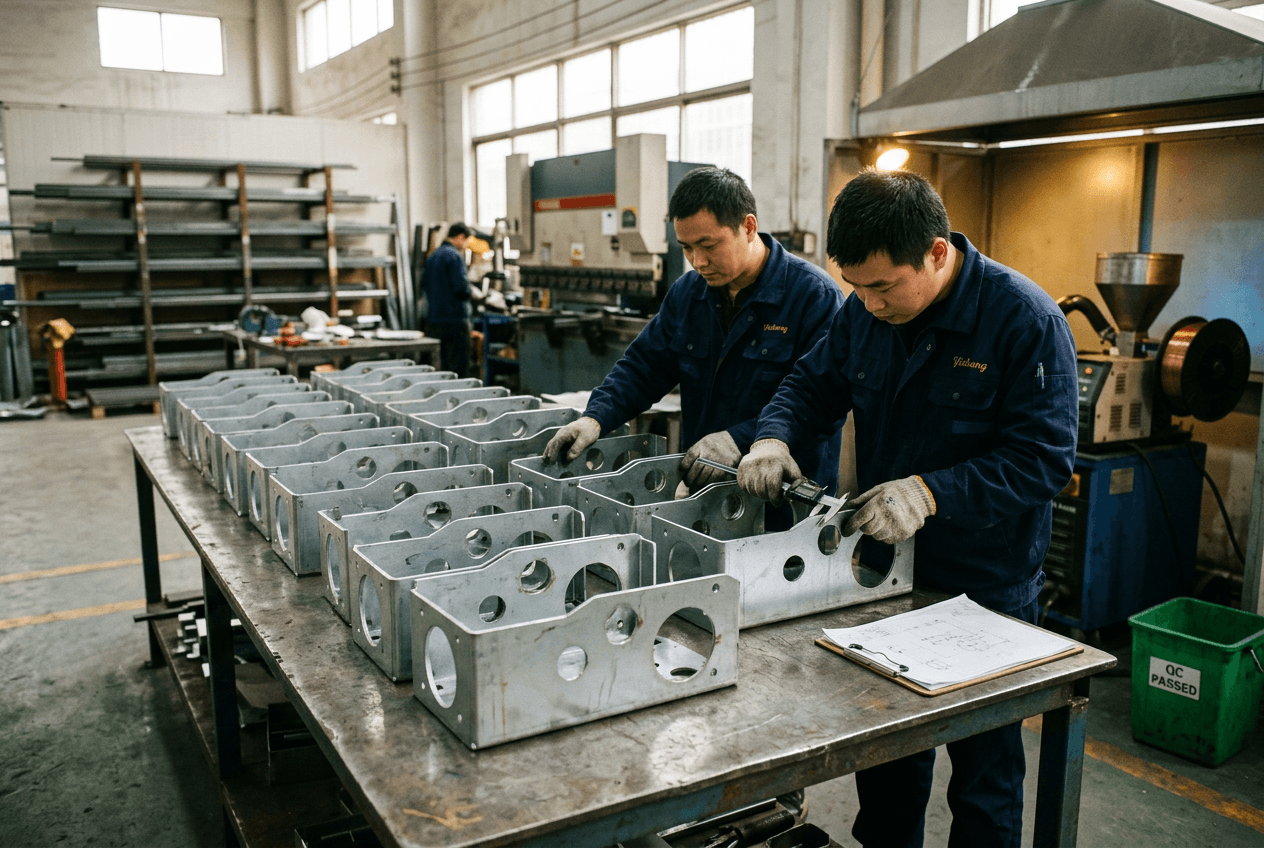
The best time to stop prototype-to-batch drift is before the purchase order is issued. The RFQ should not describe only the final shape. It should define the production logic behind the shape. That means the buyer needs to lock the drawing notes, the revision level, the critical tolerances, the material grade, and the finish expectation in one place. If those details are scattered across emails, the quote will be built on assumptions.
For SAW jobs, the most useful RFQ notes are practical. Identify which seams must use sub arc welding and which joints do not. State whether the prototype was hand-corrected before approval. Clarify whether the batch can reuse the same fixture. Mark any faces that must stay flat after welding. If the part will be coated, note which surfaces are cosmetic and which are hidden. These points reduce confusion more than a generic “good quality required” line ever will.
RFQ notes that protect the batch quote
- Send the latest drawings with revision marks and clear dimensions.
- State material grade and thickness for every welded component.
- List quantities for prototype, pilot, and batch production separately.
- Identify tolerances on holes, mounting planes, and mating edges.
- Define finish expectations, including coating, visible welds, and touch-up level.
- Attach prototype photos if manual correction was needed for approval.
These details help the supplier build a realistic process plan. They also help the buyer compare quotes on the same basis. If one supplier is pricing a fully repeatable fixture and another is pricing a hand-fitted sample path, the lower number is not the safer choice.
What a buyer should ask before approving a production lot
Approval should not stop at the first article. Buyers need a simple way to test whether the process will hold across the lot. Ask how the shop will confirm repeatability on the critical seams, not just on the appearance of one part. Ask what happens if the welded assembly drifts out of square or the hole pattern moves after cooling. And ask who owns the correction path if the first lot does not match the sample.
This is also where inspection needs to match the real risk. A cosmetic enclosure may need close attention on post-weld appearance and coating consistency. A structural frame may need dimensional checks, straightness control, or non-destructive testing on the key seams. A bracket set may need a fit check against the mating part, not just a weld inspection. The inspection plan should follow the consequence, not the welding method alone.
If the supplier, such as Yishang, can show how the part will be fixtured, welded, checked, and corrected in the same way for every lot, the buyer has a better basis for approval. If not, the prototype may still be useful, but it should not be treated as proof of batch stability.
Practical next step: send your drawings, material requirements, quantities, tolerances, and finish expectations, along with prototype photos or sample notes, for review before batch release. If your project includes an enclosure, bracket set, frame, or welded assembly, ask the supplier to confirm the fixture plan and the expected correction method. That is the fastest way to find out whether the quote matches the real production path.
Frequently Asked Questions
Why can a sub arc welding prototype pass but the batch still fail fit-up?
The prototype may rely on extra hand alignment, slower setup, or post-weld correction. Batch production removes some of that attention. When the same part runs faster, small changes in heat input or clamping can move the final geometry enough to affect assembly fit.
What should buyers lock before comparing SAW quotes?
Buyers should lock the fixture plan, weld sequence, material grade, thickness, critical dimensions, and any straightening or grinding allowance. Without those details, two quotes may describe very different production methods and cannot be compared fairly.
How does coating make a welded enclosure harder to assemble?
Coating adds thickness to mating surfaces and can tighten clearances. If the welded enclosure already sits near the limit, powder coating may turn a marginal fit into a rejection. That is why buyers should define coating-related fit requirements before release.
When should inspection go beyond visual weld quality?
Inspection should go beyond visual checks when the part carries load, must hold a flat mounting plane, or has tight hole alignment. In those cases, dimensional checks, fit checks, or non-destructive testing on key seams may matter more than bead appearance alone.
What if the prototype was hand-corrected before approval?
Record the correction method in the RFQ and ask the supplier whether the same correction can repeat in batch production. If the sample needed manual adjustment, the quote should include that effort or propose a fixture change that removes the manual step.