
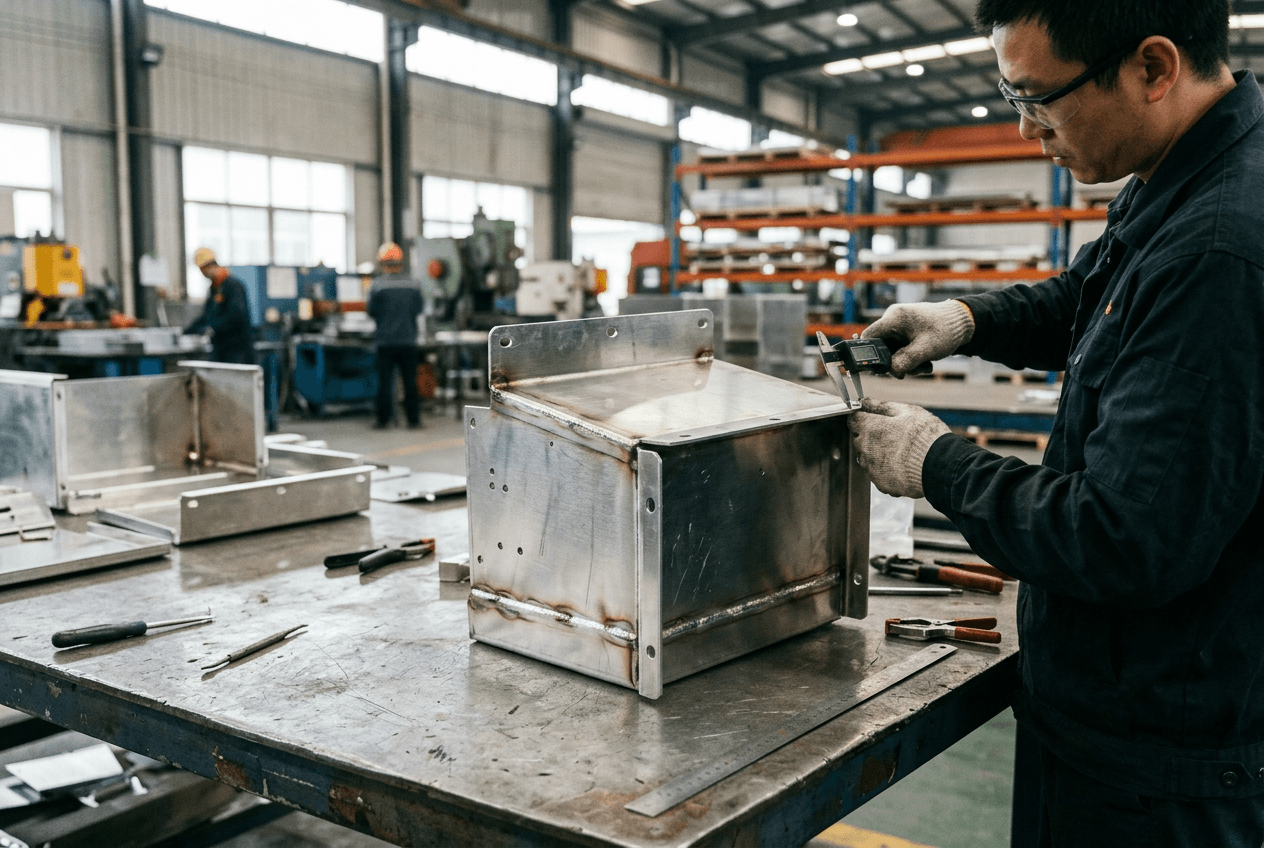
An overseas OEM buyer sends a drawing for an aluminium enclosure: laser-cut panels, bent flanges, welded corners, powder coating, and mounting holes that must line up with an internal frame. One supplier returns a quote fast. Another asks for alloy, temper, bend radius, weld locations, cosmetic faces, and assembly context. The quick quote feels easier to approve, but it may hide the real cost of rework, distortion, and fit failure.
That is why what temperature does aluminium melt matters in sheet metal sourcing, but only as a starting point. Pure aluminium melts at about 660°C, or 1220°F. Most fabrication RFQs involve alloys, tempers, welds, forming, and finish steps. The bigger procurement risk is not the melting point itself. It is the set of assumptions suppliers make when the drawing leaves too much open.
In aluminium fabrication, small omissions change the quote and the result. A supplier may price one alloy, one bend method, and one finish standard. Another may assume a different temper, extra straightening, or cosmetic rework. The part may still look right on paper, yet fail at assembly. For buyers, that means one unclear RFQ can turn into cost variance, schedule drift, or batch inconsistency.
Why the 660°C answer does not settle the RFQ
The melting point answers a physics question. It does not answer a sourcing question. A sheet metal buyer needs to know how the part will be cut, bent, welded, coated, and assembled. Those steps depend on alloy and temper more than the base word “aluminium.”
For example, a 5052 enclosure side panel and a 6061-T6 bracket can both come from aluminium sheet, but they do not behave the same. 5052 usually forms more easily. 6061-T6 gives different strength and bending behavior. If the RFQ only says “aluminium, 2 mm,” one supplier may price a light forming route while another prices cracking risk and extra inspection. The quotes are both logical, but they are not based on the same assumptions.
That is where procurement risk starts. The buyer may compare the numbers and assume one supplier is cheaper. In reality, the lower quote may exclude bend correction, weld cleanup, or tighter material control. The higher quote may include all of that. Without a clear drawing note, the price gap can reflect hidden scope, not supplier efficiency.
Details that make suppliers quote the same part
Buyers do not need to write a fabrication manual. They do need to make the part readable. A supplier should not have to guess the alloy, the temper, or which faces matter most.
- State the exact alloy and temper, or allow one approved equivalent.
- Mark the faces that must stay cosmetic after forming or welding.
- Identify dimensions that control assembly, not just overall size.
- Call out any tight bends near holes, louvers, slots, or corners.
- Share photos of the installed part when the drawing alone is not enough.
A clear RFQ reduces quote spread. It also lowers the chance that engineering, purchasing, and production all think they approved the same part when they did not.
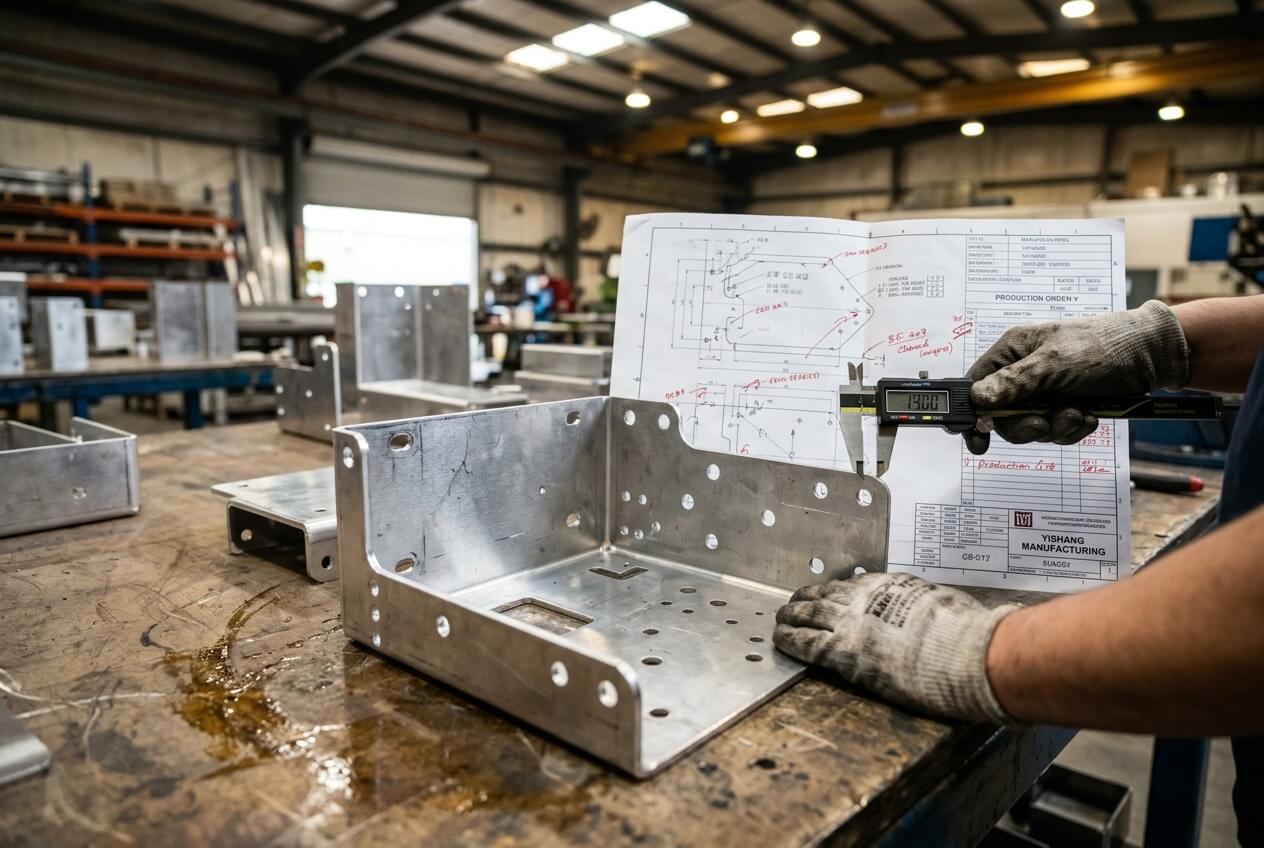
How bend, weld, and coating assumptions turn into hidden cost
Heat does not only matter at the melting point. In sheet metal fabrication, heat starts to move a part long before anyone reaches 660°C. Aluminium conducts heat quickly, so thin sheet can distort fast during welding or local rework. That distortion becomes expensive when the part must fit another assembly.
Consider a welded aluminium frame with 2 mm walls. A short weld can pull a corner inward, shift a mounting hole, or create a twist that only shows up when the frame meets a door or internal bracket. If the drawing does not define the acceptable straightness or post-weld correction method, one supplier may allow straightening and grinding while another may price more rigid fixture control. Again, the quote difference reflects assumptions.
Powder coating adds another layer of risk. Cure temperatures sit far below the metal’s melting point, but the part can still lose quality. Weld marks, grind lines, masking edges, coating build-up around holes, and trapped corners often drive inspection failures. If the RFQ says only “powder coat black,” the supplier has room to assume a basic finish. If the panel is visible on a machine front or cabinet door, that basic finish may not be enough.
Aluminium oxide also matters. Its melting point is far higher than the base metal, so the surface does not behave like clean aluminium. Welding needs proper surface preparation and controlled heat input. Buyers do not need to specify torch settings, but they should state what finish they expect at the weld. If the weld can stay visible, the price should account for it. If the weld must disappear under coating, the quote should include the extra prep.
Project example: a control enclosure that looked simple on paper
A buyer once requested a powder-coated aluminium control enclosure with front cutouts and welded rear corners. The drawing showed the outline and hole pattern, but not the cosmetic faces. One supplier quoted standard weld cleanup. Another assumed full grinding on all visible seams. The samples looked similar from a distance, but the full-grind route added labor and changed the lead time. The issue did not start in production. It started when the RFQ left the finish standard open.
Project example: a mounting bracket that bent differently after quoting
A small 6061-T6 bracket looked easy to source because the geometry was simple. The buyer wanted a tight bend near a slot and two alignment holes. One supplier flagged a cracking risk and proposed a larger radius. Another quoted the original drawing and planned to force the bend. The cheaper quote looked attractive until the first sample showed edge distortion around the slot. A clearer bend-radius note would have prevented the mismatch between price and reality.
Why prototype approval can still fail when production starts
A prototype can pass inspection and still fail in batch production. That is one of the most common procurement traps in aluminium sheet metal. A sample often receives extra hand finishing, more senior operator attention, and more inspection time than a regular run. The sample can therefore hide the real effect of fixture pressure, weld order, and forming repeatability.
This matters most on parts that must assemble with other components. A cosmetic enclosure may look fine on the bench, but a hinge line, grounding point, or mating flange can move when the batch starts. The buyer sees a good sample and assumes the process is stable. In truth, the sample may only represent one carefully managed part, not a repeatable method.
Batch variation often starts with one small decision. If the same fixture is not used, the bend angle can drift. If the weld sequence changes, the frame can pull in a different direction. If the coating mask changes, hole diameters can close up or lose edge definition. The outcome is familiar: the approved sample matches the drawing, but ten production parts no longer fit the assembly the same way.
That is why a prototype approval should record more than appearance. It should capture the alloy and temper, the weld sequence, the fixture reference, the flatness limit, and the dimensions that affect assembly. Without that record, the approved sample is only a visual benchmark. It is not a reliable production standard.
What to lock in before you approve a sample
- The exact alloy, temper, and thickness used for the sample.
- Which hole patterns, flanges, and edges control assembly.
- Whether the sample includes hand finishing or manual correction.
- The bend tooling and fixture approach used for the approved part.
- The acceptable correction method if the batch starts to drift.
When buyers define those points early, they protect both quality and schedule. They also make it easier for a fabricator to repeat the same result without guesswork.
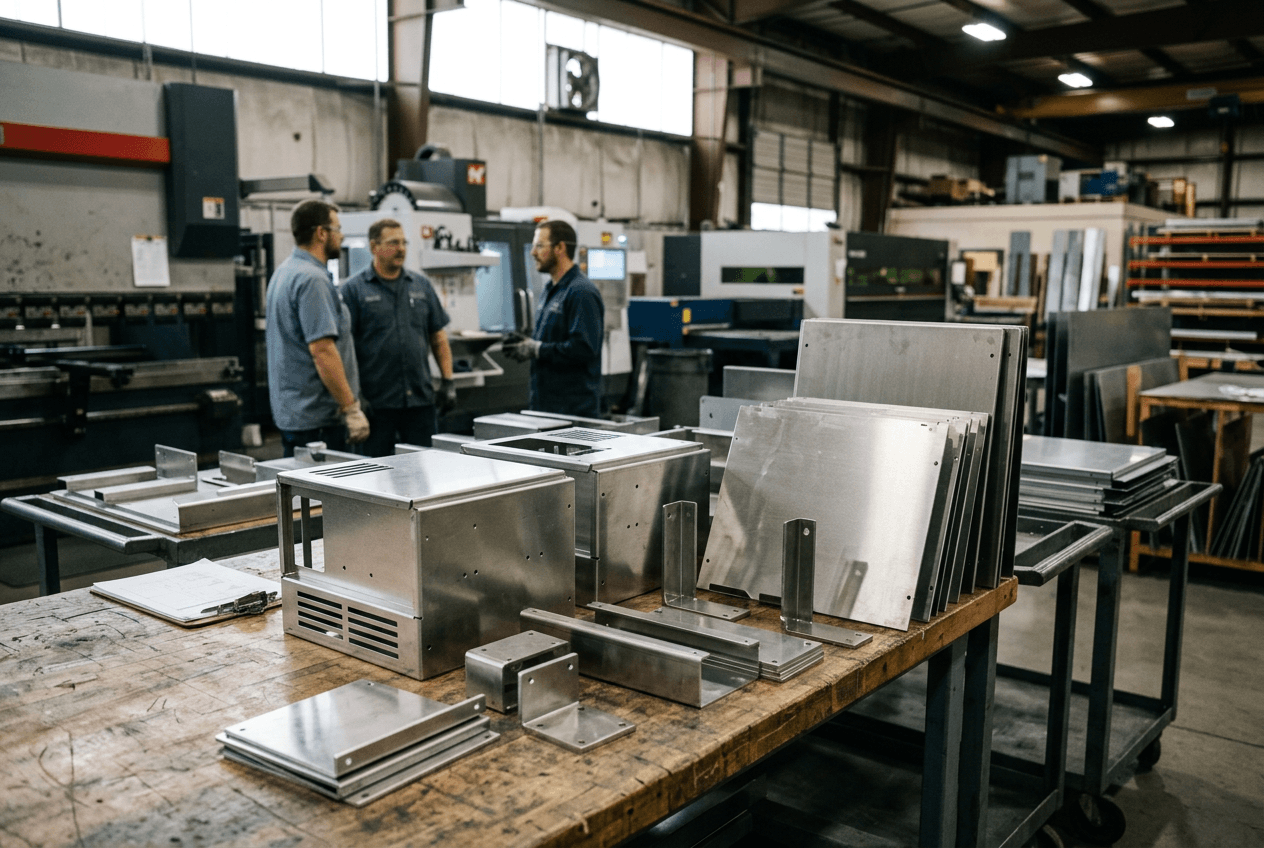
What to send before you compare aluminium quotes
The safest quote is usually not the lowest one. It is the quote that matches the real scope. That only happens when the RFQ gives the supplier enough information to see the risk before production starts. Buyers should think in terms of fit, finish, and repeatability, not only unit price.
Start with the drawing, then add the information that changes fabrication decisions. State the alloy and temper if you already know them. If you do not, say what the part must do. A bracket carrying load needs different control from a hidden cover panel. A visible front door needs different finish handling from an internal frame. If the part sits near heat sources such as motors, lamps, batteries, or power electronics, include that too. Operating heat does not equal melting temperature, but it can affect distortion, coating durability, and hardware loosening.
Ask the supplier to flag any bend, weld, coating, or assembly risk before pricing. That request does not slow the project down. It removes uncertainty from the quote. For custom sheet metal fabrication, that is often the difference between a clean order and a chain of clarifications after the PO is released.
At Yishang, that kind of drawing review is most useful when the part includes welded corners, cosmetic surfaces, or mounting features that must align with another assembly. A practical review can catch problems before they become scrap, rework, or delayed sample approval.
Practical CTA: If your aluminium part includes tight bends, welded corners, powder coating, or mounting holes that must match another assembly, send Yishang the drawings, material requirements, quantities, tolerances, and finish expectations before you lock the quote. Add photos, samples, and assembly notes if the part has to fit an existing frame or enclosure. A focused RFQ review can help prevent assumption-driven pricing and batch variation.
Frequently Asked Questions
What temperature does aluminium melt?
Pure aluminium melts at about 660°C, or 1220°F. In fabrication, that number is useful as a reference, but it does not define the alloy, temper, bend behavior, or finish requirements that shape a quote.
Why do two aluminium fabrication quotes differ when the drawing looks identical?
They often differ because the suppliers made different assumptions. One may include weld cleanup, fixture time, or coating masking. The other may not. If the RFQ does not define alloy, temper, finish, and critical dimensions, the quotes may not cover the same scope.
Does powder coating heat threaten an aluminium enclosure?
Powder coating cure heat is far below aluminium’s melting point, so melting is not the main concern. The real risks are distortion from earlier welding or bending, coating build-up around holes, and finish defects on visible surfaces.
Why can a prototype pass but a batch order fail to fit?
A prototype often gets hand finishing and special attention. Batch parts do not. If the approved sample does not record fixture method, weld sequence, and flatness limits, the production run may drift and stop fitting the mating assembly.
What should buyers send with an aluminium RFQ to reduce quote risk?
Send the drawing, alloy and temper requirements, thickness, quantities, tolerances, finish expectations, and any photos or sample parts. If the part must fit another assembly, include that context as well.
When should a buyer ask the fabricator to review manufacturability before pricing?
Ask before you compare quotes, especially if the part has tight bends, welded corners, cosmetic faces, or assembly-critical holes. Early review helps the supplier price the real process instead of guessing at hidden work.