
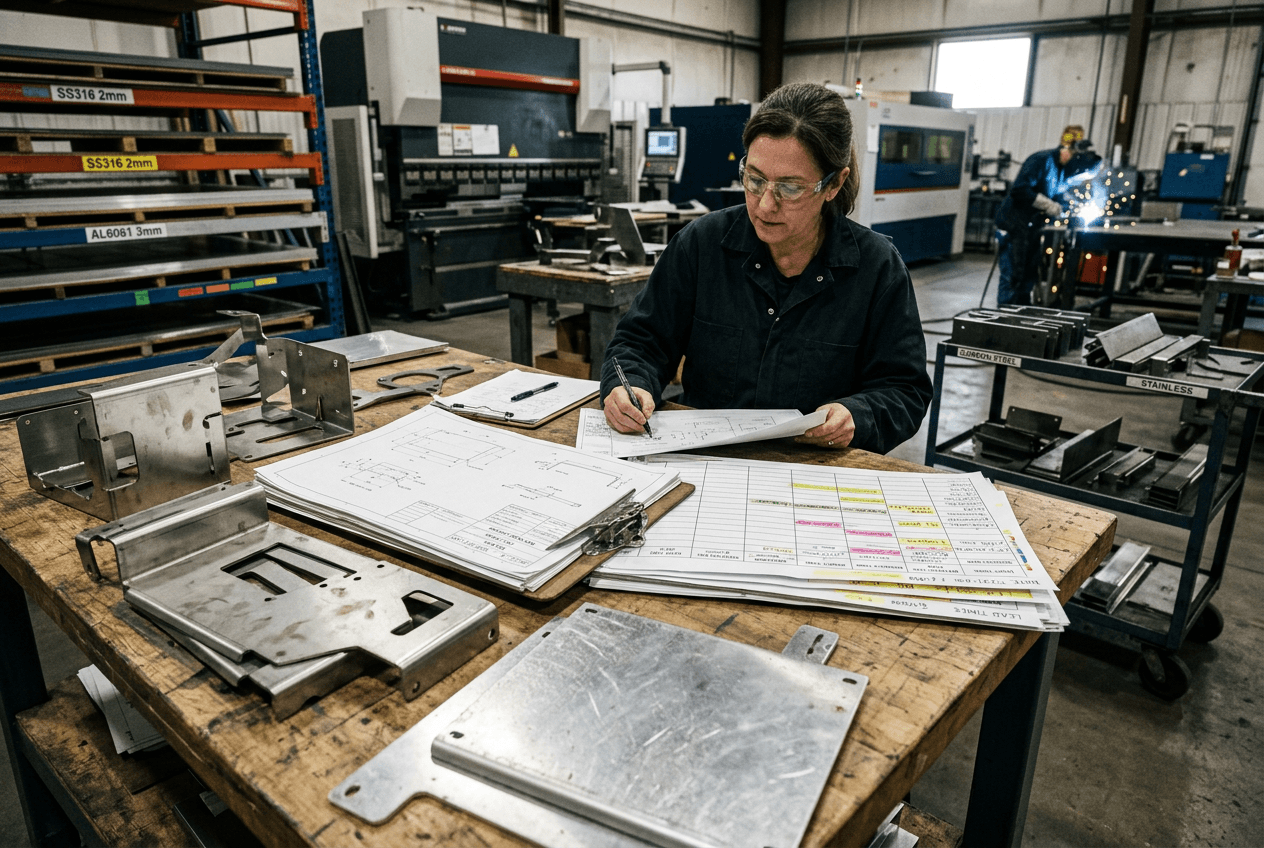
When buyers ask for the same enclosure in carbon steel, 304 stainless steel, or 5052 aluminum, they often expect a clean price comparison. The drawing may look complete, and the requested delivery date may look fixed. Yet the quote can still rest on assumptions that change the production route before the first sheet reaches the laser.
The main risk is not simply choosing the wrong metal. The bigger procurement risk is RFQ ambiguity. Different types of metal change stock availability, bending behavior, weld planning, finish routing, inspection time, and packaging needs. If the RFQ does not lock those details, each supplier may quote a different hidden version of the same part.
That creates a dangerous comparison. One quote may assume common carbon steel with standard powder coating. Another may assume brushed stainless with protected cosmetic faces. A third may price aluminum but exclude anodizing lead time. The buyer sees three numbers. Production sees three schedules, three risk levels, and three possible approval loops.
Where RFQ Assumptions Start to Distort Fabrication Quotes
RFQ ambiguity often starts with a simple material line. A buyer may write stainless steel, aluminum, or mild steel without naming the exact grade, thickness tolerance, or finish condition. The supplier then has to decide whether to quote the fastest available stock, the safest grade, or the lowest-cost option. That choice affects both price and delivery.
For custom sheet metal fabrication, a vague material note can change the entire routing. Carbon steel may move quickly through cutting and bending, but powder coating can become the longest queue. 304 stainless steel may avoid coating, yet it often needs more careful handling and weld cleanup. 316 stainless steel may protect better in corrosive service, but stock can take longer to confirm. Aluminum can cut and form quickly, but cosmetic dents and finish matching can slow release.
The hidden quote behind the visible quote
A quote is only useful when the assumptions match the buyer’s real requirement. If the RFQ says 2 mm stainless enclosure, one supplier may price 304 stainless with a brushed finish. Another may quote 201 stainless because the drawing does not restrict it. A third may assume no visible-face requirement. All three quotes may look responsive, but only one may fit the end use.
This risk grows when buyers compare suppliers on unit price alone. The lowest number may reflect an easier material, a looser finish standard, or no allowance for traceability. The fastest delivery may depend on stock that the supplier has not yet reserved. A clear RFQ prevents that gap from turning into a purchase order problem.
Lock points that protect the quotation
- Exact grade, such as Q235 carbon steel, 304 stainless steel, 316 stainless steel, or 5052 aluminum.
- Sheet thickness, thickness tolerance, and any required material certificate.
- Approved substitute rules if the preferred metal is unavailable.
- Finish route, color, texture, grain direction, coating thickness, or passivation requirement.
- Critical dimensions, bend radius, hole position, and assembly fit notes.
- Sample approval, inspection report, and batch acceptance method.
Buyers do not need to over-specify every feature. They need to separate fixed requirements from flexible choices. That lets the supplier quote the real job instead of filling gaps with private assumptions.
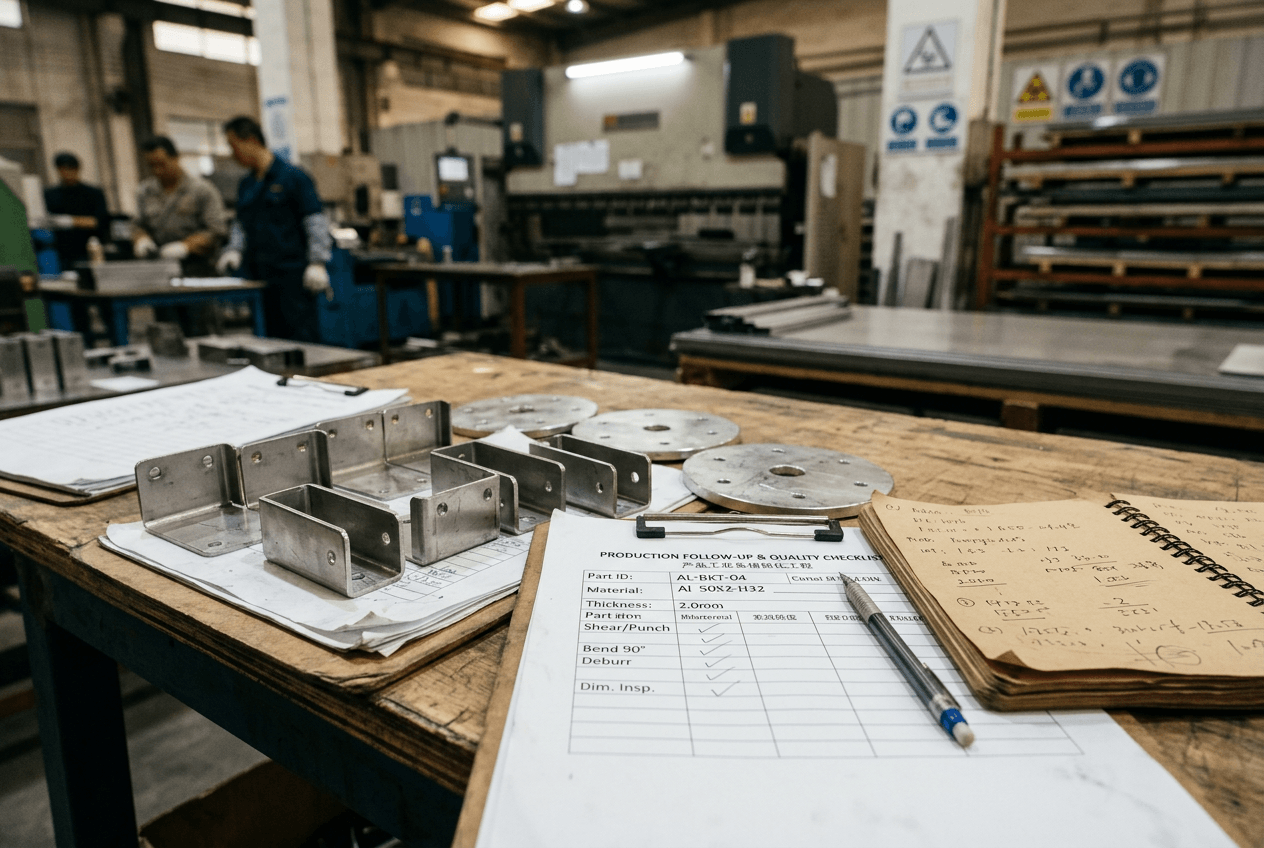
Why Different Types of Metal Change More Than the Material Line
Many procurement teams treat metal selection as a cost item. In fabrication, it also controls scheduling risk. The same cabinet, bracket, frame, or welded assembly can enter different work queues depending on the selected metal. Those queues may involve different stock checks, cutting parameters, bend allowances, welding methods, finish vendors, and inspection standards.
Carbon steel often gives buyers a competitive material cost. It also almost always needs a protective finish. If the RFQ lacks powder coating notes, the supplier may quote a standard color and texture. Later changes to gloss, masking, or outdoor durability can move the delivery date because coating capacity sits outside the cutting and bending schedule.
Stainless steel reduces coating dependence, but it raises appearance and handling questions. A hidden internal bracket may only need a basic industrial surface. A visible stainless control panel may need grain direction, weld discoloration control, and scratch limits. Without those notes, the buyer may approve a quote that does not include the finish level expected by the customer.
Aluminum introduces another chain of assumptions. 5052 aluminum bends well for many enclosures and panels, while 6061 aluminum can create cracking risk in tight bends. If the drawing only says aluminum, the supplier may quote an alloy that fits sourcing, not one that fits forming. Finish changes also matter. Anodizing, powder coating, and bare aluminum each require different handling and inspection.
Example: powder-coated equipment enclosure
An OEM buyer sends a drawing for a wall-mounted equipment enclosure. The RFQ asks for 1.5 mm metal, black finish, and a four-week delivery date. One supplier quotes carbon steel with standard powder coating. Another quotes 304 stainless because the installation site may be humid. The price gap looks large, but the real issue is unclear service environment.
If the enclosure will sit indoors, coated carbon steel may work. If installers mount it near washdown equipment, stainless may avoid field corrosion complaints. The buyer should clarify the service environment, finish durability, and visible faces before comparing quotes. Otherwise, the purchase decision may trade away corrosion performance without anyone stating it.
Example: aluminum bracket with tight bends
A machinery team requests an aluminum mounting bracket to reduce weight. The drawing shows tight bends near slotted mounting holes. The RFQ does not name the alloy or bend radius. A supplier may quote available aluminum sheet, then discover cracking risk during forming. The delay starts with an incomplete material note, but it appears later as a production problem.
The safer RFQ names the alloy, confirms the bend radius, and marks the critical hole pattern. If weight matters more than appearance, say so. If anodized color must match other parts, say that too. The supplier can then flag manufacturability issues before the buyer locks price and delivery.
How Unclear Metal and Finish Notes Turn Lead Time Into an Approval Loop
Lead time rarely slips from one dramatic mistake. It usually slips through small clarification rounds. The factory asks which grade applies. Engineering confirms the grade but changes the finish. The supplier updates the quote, then asks which faces are cosmetic. Procurement sends photos, then the buyer’s customer asks for a coating certificate. Each step seems reasonable. Together, they consume the schedule.
Different types of metal make these loops more likely because each material carries different finish expectations. Carbon steel needs corrosion protection. Stainless steel needs appearance control. Aluminum needs dent protection and finish compatibility. Copper and brass often need exact alloy confirmation because small-batch sourcing can dominate lead time.
Finish expectations affect production release
A finish note should not appear after production starts. It controls material handling from the beginning. Parts with cosmetic faces may need protective film, separate stacking, limited grinding marks, or special packaging. Welded stainless assemblies may need cleanup before passivation. Powder-coated carbon steel parts may need masking around grounding points, threaded inserts, hinges, or assembly interfaces.
If the quote excludes these details, the supplier may still fabricate the part correctly by geometry. The buyer may still reject it visually. That creates rework, not value. A practical RFQ states which surfaces matter, which defects are acceptable, and whether the finish sample controls batch acceptance.
Traceability and certificates change the buying path
Material certificates can also affect lead time. Some buyers need mill certificates for audit, export, corrosion, or customer approval reasons. Others do not. If the RFQ asks for stainless steel but requests certificates only after the order, the supplier may need to re-check stock traceability or repurchase material. That can erase the original delivery promise.
Procurement should ask a direct question before awarding the order: does this quote include the required certificate and traceability level? If not, the quote may still be technically close, but it is not commercially comparable.
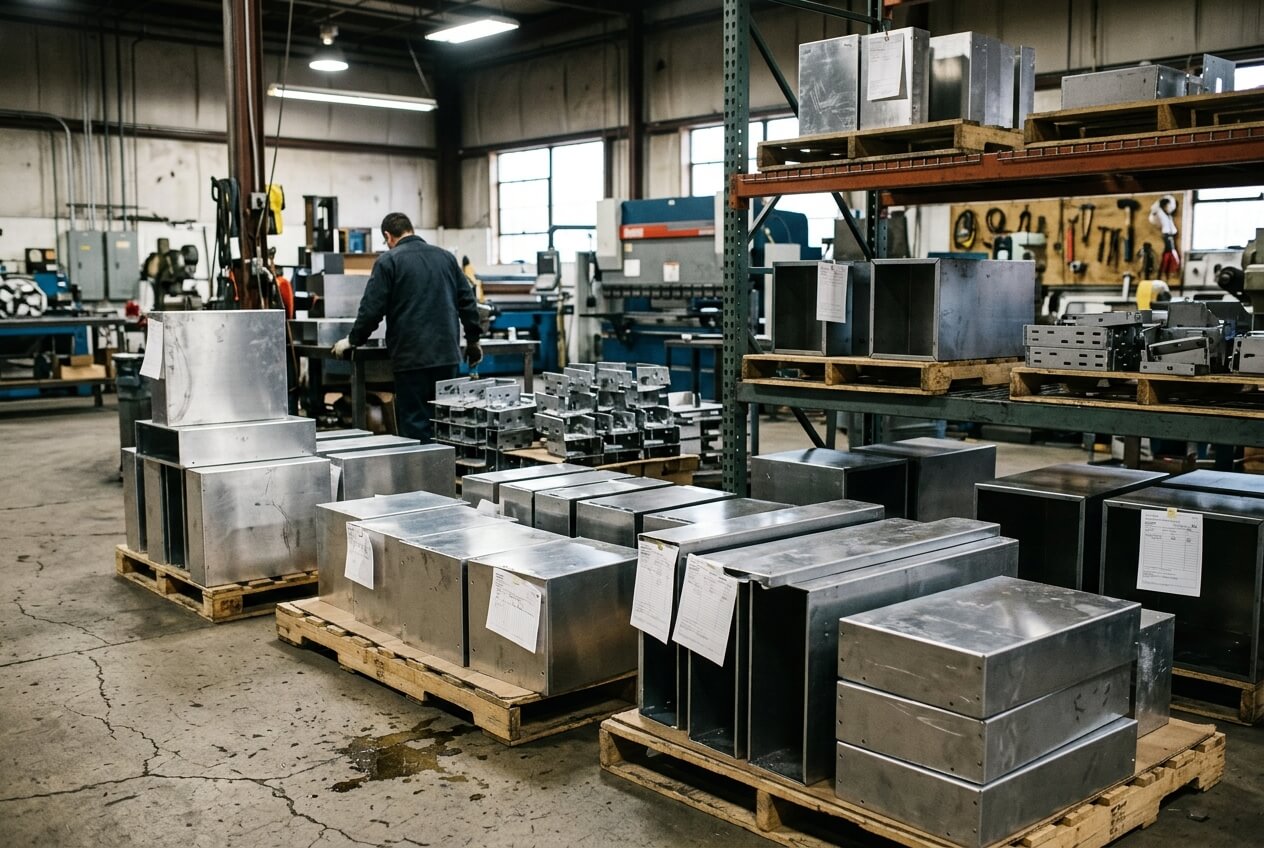
When Tolerances and Assembly Fit Expose the Wrong Material Assumption
Material ambiguity does not stop at sourcing. It also affects fit. Different metals spring back differently during bending, respond differently to welding heat, and distort differently during finishing. A bracket that fits in carbon steel may need bend compensation in stainless. A welded aluminum frame may need more fixture planning than a simple flat panel.
Buyers often miss this risk because the drawing shows nominal dimensions. Production has to hold those dimensions after cutting, bending, welding, grinding, coating, and inspection. If the RFQ does not mark the critical features, the supplier may apply standard shop tolerances to dimensions that control assembly.
Fit features need priority, not just tolerances
A drawing filled with tight tolerances can raise cost and inspection time. A drawing with no critical tolerances can create fit risk. The better approach marks the dimensions that control assembly: hole-to-hole spacing, flange height, slot width, hinge alignment, door gap, insert position, and mating faces. This lets the supplier protect the right features while using practical tolerances elsewhere.
Metal choice matters here. Stainless can require different forming compensation. Aluminum can mark more easily during handling. Powder coating adds thickness around holes, tabs, and mating surfaces. If the buyer wants panels, brackets, and frames to assemble without filing or force, the RFQ should connect material, finish, and fit features.
Example: welded frame with mounted panels
A buyer orders a welded frame that supports removable sheet metal panels. The RFQ names carbon steel but does not define flatness after welding or powder coating buildup around mounting holes. The first sample fits after manual adjustment. The batch then arrives with several panels that need rework because coating thickness and weld distortion reduced hole alignment.
The issue started before quotation. The RFQ should have marked panel mounting holes as critical, stated the coating requirement, and defined the inspection method. Yishang, or any fabrication supplier reviewing the drawing, can only protect assembly fit when the buyer identifies the features that must not drift.
Why Prototype Approval Does Not Remove Batch Risk
A prototype proves that one part can be made. It does not prove that a batch will repeat the same result under production conditions. This matters when different types of metal require different handling, fixtures, finish routes, and inspection plans. A buyer who approves one sample without freezing those controls may still face batch inconsistency.
Prototype work often uses extra attention. A technician may adjust a bend, polish a scratch, or hand-fit a mating bracket. Batch production needs repeatable settings. If the RFQ does not define what the supplier must repeat, the approved sample becomes a visual reference with weak commercial value.
Sample approval needs acceptance rules
For powder-coated enclosures, buyers should define color tolerance, texture, gloss, masking, coating thickness, and acceptable touch-up rules. For stainless housings, they should define grain direction, weld cleanup, and scratch limits. For aluminum panels, they should clarify anodizing color variation, visible faces, and packaging. These points sound small until the buyer’s customer rejects a batch for appearance differences.
Inspection scope also changes with quantity. A five-piece pilot run may allow full dimensional inspection. A 500-piece batch needs a clear sampling plan. Critical dimensions still need protection, but not every dimension needs the same inspection frequency. If the buyer waits until after production to ask for full reports, shipment can sit while the supplier measures parts that were never planned for that level of inspection.
Keep prototype and batch assumptions aligned
The safest path keeps the prototype and batch on the same metal grade, same finish route, same tooling assumptions, and same inspection criteria. If the buyer approves a stainless prototype but later switches to aluminum for weight or cost, the approval should not carry over automatically. The material change can alter bend behavior, surface appearance, and fit.
Before releasing the batch, procurement should confirm what changed since the sample: grade, thickness, finish supplier, weld method, fixture, tolerance notes, packaging, and inspection records. That short review reduces the chance that the batch exposes assumptions hidden in the prototype stage.
What Buyers Should Clarify Before Comparing Supplier Quotes
Supplier comparison only works when each quote answers the same question. If one supplier includes coating, another excludes certificates, and a third assumes different metal stock, the comparison becomes unreliable. A low price may simply reflect a missing requirement. A short lead time may depend on unreserved material.
Buyers can reduce this risk by sending a controlled RFQ package. Include 2D drawings, 3D files if available, target quantities, material grade, acceptable substitutes, tolerances, finish notes, assembly requirements, prototype expectations, and required documentation. Add photos or samples when cosmetic standards matter. State the delivery date, but ask what assumptions support it.
Useful supplier questions include: Is the quoted metal in stock? Does the quote include finishing lead time? Which dimensions drive inspection? Are certificates included? What changes would move the delivery date? These questions force hidden assumptions into the open before the purchase order.
If your project involves metal enclosures, brackets, frames, cabinets, or welded assemblies, send Yishang your drawings, material requirements, quantities, tolerances, and finish expectations through Yishang. A manufacturability review can identify quote assumptions before they become cost, fit, or schedule problems.
Frequently Asked Questions
Why do different types of metal make RFQ comparison risky?
Different metals change stock sourcing, forming behavior, welding, finishing, inspection, and packaging. If the RFQ does not define the exact grade and finish, suppliers may quote different assumptions. The buyer then compares prices that do not represent the same production route.
What material details should buyers include before asking for lead time?
Buyers should include the exact grade, thickness, acceptable substitutes, certificate needs, finish route, and any cosmetic surfaces. They should also mark critical dimensions that control assembly. These details help the supplier confirm whether the quoted delivery date rests on real stock and practical routing.
Can a supplier quote from a drawing that only says stainless steel?
A supplier can quote it, but the quote may contain risky assumptions. Stainless steel could mean several grades and surface expectations. For procurement control, specify 304, 316, or another required grade. Also state whether brushed finish, passivation, weld cleanup, or certificates are required.
Why can a prototype pass while the batch still has fit or finish problems?
A prototype often receives extra manual adjustment and close attention. Batch production needs repeatable material, fixtures, finish controls, and inspection rules. If the approval does not define those controls, the batch may expose variation that the sample did not reveal.
How should buyers handle metal substitutes when stock is short?
Buyers should approve substitutes only after checking function, strength, corrosion resistance, forming risk, finish compatibility, and customer requirements. A substitute can protect lead time, but it can also create fit, appearance, or compliance problems if the trade-offs are not clear.
What should buyers ask before awarding a sheet metal fabrication order?
Ask whether the quoted metal is available, whether finishing and certificates are included, which tolerances affect inspection time, and what assumptions could change lead time. Those questions help uncover missing RFQ details before they become production delays.