
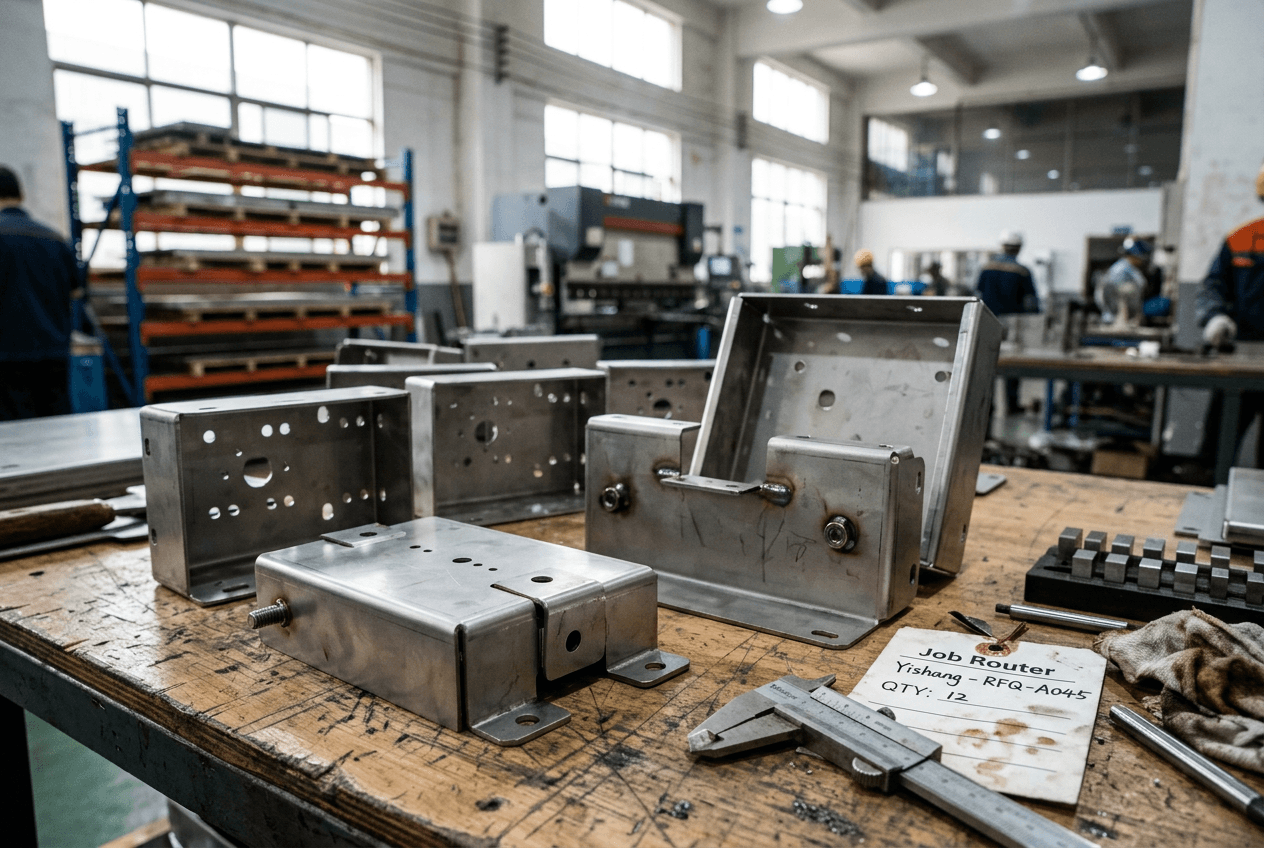
A buyer sends a drawing for a powder-coated enclosure bracket and asks three suppliers to quote the same day. One supplier prices laser cutting and deburr only. Another adds rework allowance and tighter inspection. A third warns that the fit only works before coating. The spread starts with one missing decision: the tolerance for slip fit is not tied to the actual assembly state.
That sounds small on paper, but it can change the whole procurement outcome. In sheet metal fabrication, a slip-fit feature may pass through bending, welding, grinding, and coating before anyone tries to assemble it. A slot that looks generous on a flat drawing can become tight after heat input or powder buildup. A hole that looks safe during prototype can turn noisy or loose in batch production. The buyer does not need the tightest possible number. The buyer needs the right clearance at the right stage, priced on the right process.
This is where RFQ risk begins. If the drawing does not say when the fit matters, suppliers fill the gap with their own assumptions. That leads to quote drift, inspection mismatch, and assembly problems later. For OEM buyers, the real job is not to ask for a generic slip fit. It is to define the fit in a way that survives production.
Where a vague slip-fit note starts to split the quote
A slip-fit note without a process state tells suppliers almost nothing. One shop may assume a clean laser-cut opening. Another may assume the part needs hand finishing. A third may price secondary machining because the feature must still work after coating. All three can be reasonable. All three can produce very different prices.
That difference matters because the quote is not only a unit price. It reflects tool path, inspection method, rework risk, packaging, and sometimes lead time. If one supplier expects a raw cut edge and another expects a finished hole after powder coat, they are not bidding the same part. They are bidding different manufacturing routes.
The risk gets worse when the slip-fit feature sits near a bend or weld. A tab that looks fine in CAD may move after forming. A welded frame may pull out of square. The supplier then has to decide whether to hold the opening with process control, oversize the feature, or plan for manual adjustment. Each choice changes cost. Each choice also changes the delivery promise.
Buyers often miss this because the drawing feels complete. It may show a dimension, a tolerance, and a note. Yet none of those tells the supplier whether the fit must work before paint, after paint, or only during prototype approval. When that point is unclear, the supplier protects itself by widening the quote, adding inspection, or excluding the risk. That is how a simple note becomes a procurement problem.
For sheet metal parts, brackets, frames, and welded assemblies, the first question should not be, “What tolerance should I write?” The first question should be, “What manufacturing state does this fit have to survive?” That one answer often decides whether the quote stays simple or turns into a controlled, higher-cost route.
Short example: a cabinet bracket that looked cheap until coating entered the build
A control cabinet buyer asked for a mounting bracket with a tab-to-slot slip fit. The prototype assembled by hand. The batch did not. Powder coat reduced the opening enough that operators had to force the tab into place. One supplier had quoted the feature as-cut. Another had included post-coat verification. The gap was not the sheet metal itself. The gap was the undefined assembly state.
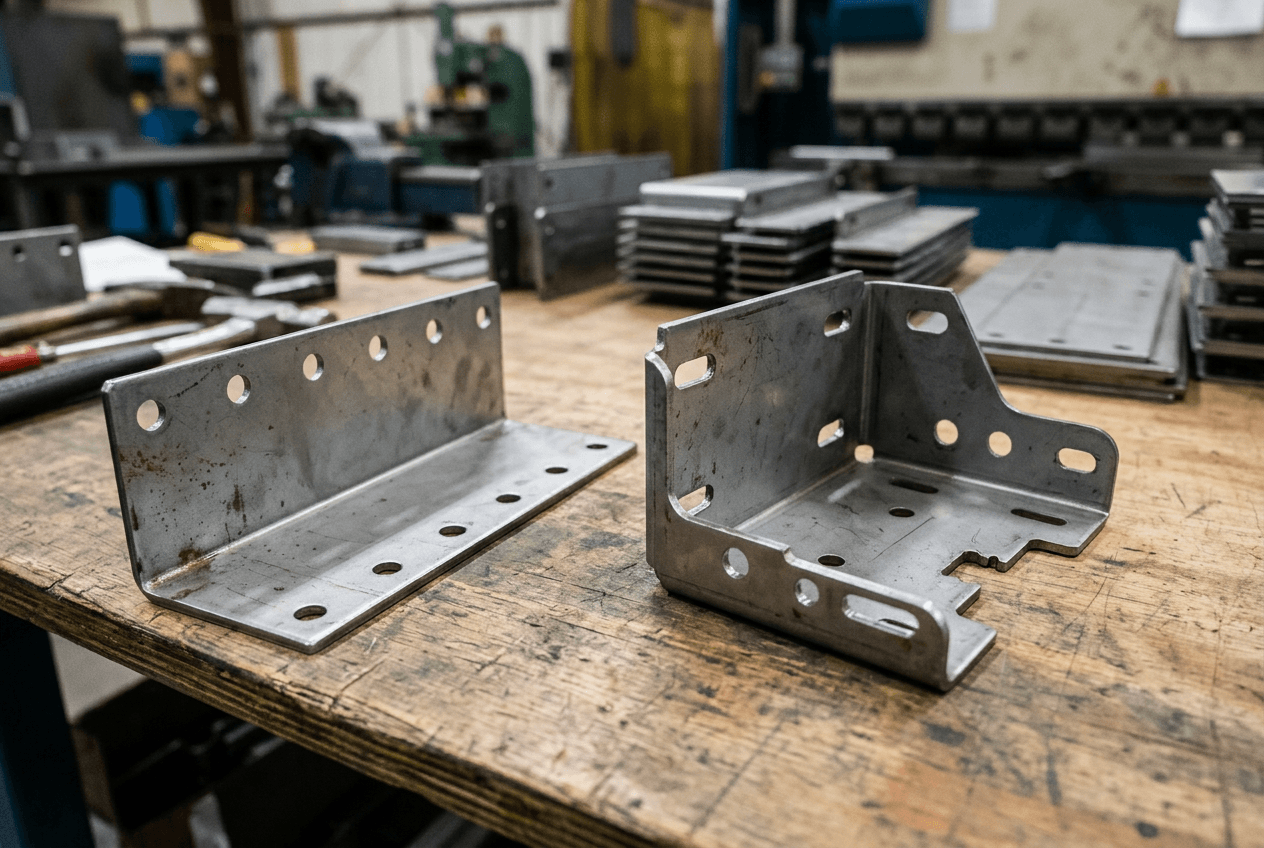
Why the same tolerance for slip fit behaves differently before and after bending, welding, and coating
A tolerance only works when the process route can hold it. In sheet metal, the route changes the feature. Bending shifts position. Welding pulls metal. Grinding changes edge condition. Coating changes effective clearance. If the tolerance for slip fit does not account for those steps, the finished part can miss the requirement even when the flat drawing looked correct.
That is why a close slip fit is rarely just a dimension issue. It is a process chain issue. A laser-cut tab might fit a slot on the flat blank, then tighten after the flange is formed. A welded frame may start square and drift after the last weld sequence. Powder coating can add enough build to turn a comfortable clearance into a forcing fit. The more stages the part passes through, the more the assembly risk moves away from the print and into the shop floor.
Material and thickness also matter. Thin mild steel responds differently from stainless steel or aluminum. Springback changes the final geometry. Clamp pressure can distort thin flanges. Deburring can open or close an edge slightly. None of these effects are dramatic on their own. Together, they can wipe out the clearance margin the buyer thought was safe.
This is why suppliers ask about the mating part. They need to know what actually moves into what. A free-sliding panel bracket does not need the same control as a locating tab in a welded frame. If the interface is cosmetic, the tolerance can stay flexible. If the interface sets final assembly position, then the fit becomes a functional feature and must be treated that way in the RFQ.
Lead time often follows the same path as cost. If the supplier must protect a close fit after weld or coating, it may need extra fixturing, more inspection, or a secondary machining step. That extra work does not only add money. It also adds scheduling risk. A buyer who wants a fast quote but leaves the fit stage unclear may end up paying twice: once in unit price and once in delay.
Short example: a welded rack frame that passed prototype but failed in batch
A machinery rack frame used a slip-fit locator to align an internal rail. The prototype worked because the shop hand-finished the mating edge. In batch production, the same tolerance for slip fit was judged against the laser-cut edge only. After welding, the locator shifted slightly and the rail started rattling. The buyer had approved the sample, but the production route was different. The lesson was simple: prototype approval does not prove batch stability.
Why prototype approval does not guarantee batch consistency
Prototype parts are often more forgiving than production parts. Operators may spend extra time hand fitting them. The shop may use slower inspection. The coating load may be smaller. Even the sample lot may come from a cleaner tool condition. That means the first successful assembly can hide the real production risk.
Batch production removes those hidden supports. Tool wear starts to matter. Bend variation becomes repeatable. Weld heat affects more parts. Powder thickness becomes consistent enough to expose a tight margin. At that point, a slip-fit feature that looked acceptable in one sample may start producing noise, drag, or rejection across the batch.
This is where procurement teams get trapped. The prototype was approved, so the buyer expects the quote to hold. The supplier, however, may have priced the sample with extra care that cannot scale. If the RFQ does not ask how the fit will be controlled in batch, the buyer may accept a number that only works for short runs. That creates a hidden cost when the order grows.
To avoid that trap, ask what changes between sample and production. Did the prototype use hand deburr while batch will use standard finishing? Did the sample skip coating, or use a lighter coat? Did the sample come from one operator and one fixture? Those details are not minor. They explain why a fit that worked once may not repeat three hundred times.
For custom sheet metal fabrication, the buyer should treat prototype approval as a data point, not a guarantee. If the interface controls assembly, request a production-representative sample or a first-article review after the full route. If the part is part of a larger build, ask the supplier how they will verify fit under normal production conditions. That is especially important for metal enclosures, brackets, and welded assemblies where the mating part is not tolerant of drift.
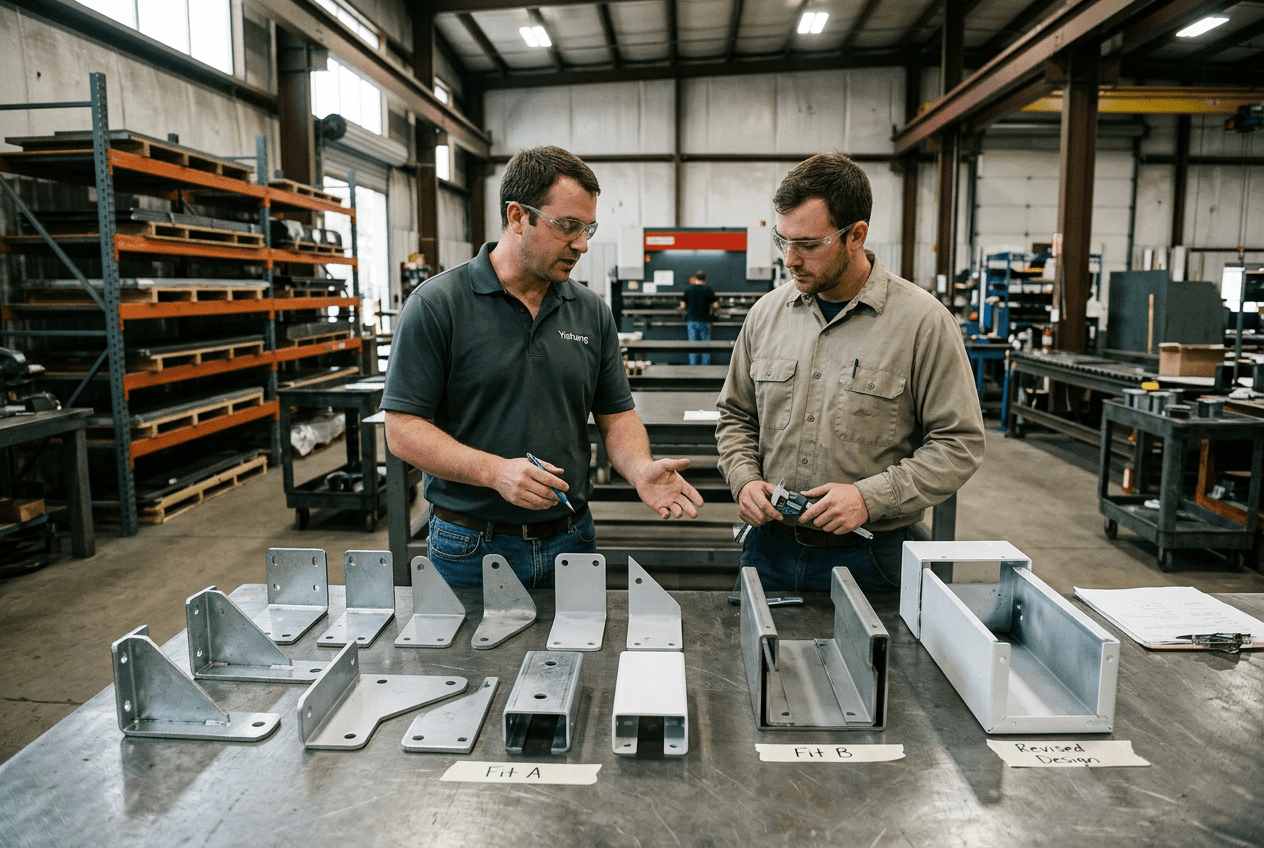
What to lock into the RFQ so suppliers price the same assembly risk
The goal is not to bury the supplier in details. The goal is to remove the assumptions that distort pricing. A clear RFQ should tell the shop what the fit touches, when the fit matters, and what finish or process state is included in the requirement. If those points are clear, suppliers can quote the same job instead of three different versions of it.
Start with the mating part. A slip-fit hole or tab means little without the other component. Then define the assembly state. Say whether the fit is checked before coating, after coating, or after final assembly. If the part is welded, note whether the critical dimension should be measured before weld, after weld, or after any rework. Those three statements often eliminate the biggest quote spread.
Next, identify the functional feature on the drawing. Not every dimension needs the same control. If the slot controls location, mark it. If the bend line is only reference, say so. This prevents the supplier from over-controlling noncritical edges while missing the real risk. It also helps avoid unnecessary secondary operations that raise cost without improving the assembly.
Finish expectations matter here too. A powder-coated part that needs free insertion cannot be treated like a raw sheet metal part. If coating thickness affects the clearance, state that in the drawing notes. If a clean laser edge is enough, say so. If the feature needs machining, reaming, or a pressed insert, define that early. Otherwise, the supplier may quote a basic cut and the buyer may expect a finished interface.
For buyers comparing quotes, the best test is simple: can each supplier explain how they will meet the same tolerance for slip fit with the same process route? If one quote includes a machined feature and another does not, the numbers are not comparable. If one supplier assumes pre-coat assembly and another assumes final finished assembly, the price gap is not a negotiation problem. It is an RFQ problem.
When buyers send drawings to Yishang for custom sheet metal parts, enclosures, brackets, frames, or welded assemblies, the most useful request is not “please quote.” It is “please review the fit assumption.” That small change surfaces hidden process steps before they reach procurement.
What belongs in a fit-driven RFQ note
- The mating part or assembly position the feature must work with.
- The exact stage where the tolerance for slip fit must be valid.
- Whether coating, weld distortion, or post-process inspection is included.
- Whether a laser-cut edge is acceptable or a secondary operation is required.
- The assembly feel you want, such as free slide, light hand insertion, or no shake.
- A marked drawing, sketch, or photo when the interface is hard to describe in text.
When a tighter slip fit is worth paying for, and when it only adds machining cost
Many buyers over-tighten the requirement because they fear loose assembly. That is understandable, but it can create a different problem: the quote climbs, lead time stretches, and the production route becomes more fragile than the application needs. The right move is to hold only the feature that truly controls assembly and let the rest stay flexible.
For a bracket that locates into a frame, the position of the hole relative to the bend may matter more than the hole diameter itself. For a welded assembly, the fit may be better controlled with a machined insert, dowel, or bushing instead of forcing the sheet metal edge to carry the entire burden. For a panel that only needs to slide into place, a clean cut and controlled deburr may be enough.
This is where procurement discipline saves money. If the fit requirement stays on the actual interface, the supplier can choose the least expensive process that still protects the function. If the requirement is vague, the supplier often chooses the safest process for itself, which is usually the most expensive path. That is why many quoting disputes are not about price alone. They are about whether the RFQ forced the wrong control point.
A practical rule helps. Tighten the dimension only when the assembly function truly depends on it. Otherwise, move the tolerance to the feature that controls the fit and let the rest of the part breathe. That keeps batch production stable, avoids hidden rework, and reduces the chance that a simple bracket turns into a machined part.
For buyers who need a manufacturability check before release, Yishang can review drawings, prototype assumptions, and assembly notes before the RFQ is locked. That review is most useful when the fit, finish, and mating part all affect quote accuracy. It helps the buyer decide whether the feature should stay in sheet metal or move to a different control method.
If your project depends on a close fit, send your drawings, material requirements, quantities, tolerances, and finish expectations with any mating-part photo or sketch. The more clearly the assembly state is defined, the easier it is to compare quotes that are actually pricing the same sheet metal part.
Frequently Asked Questions
What does tolerance for slip fit mean in sheet metal fabrication?
It means the clearance needed for one part to enter, locate, or slide against another without forcing. In sheet metal work, that clearance must match the real process route. A fit that works on a flat drawing may fail after bending, welding, or coating if the RFQ does not define the assembly state.
Should the slip-fit tolerance be measured before or after powder coating?
Measure it at the stage where the part must actually function. If the part must slide, latch, or locate after finishing, then the final coated state matters. If the fit is only needed during welding or pre-assembly, the pre-coat state may be enough. The key is to state that choice in the drawing and RFQ.
Why can a prototype pass but the production batch fail?
Prototype parts often get hand finishing, slower inspection, and extra operator attention. Production parts run through a normal route, so bend variation, weld pull, tool wear, and coating buildup show up more clearly. That is why a successful sample does not prove batch consistency for a close slip fit.
When does a laser-cut feature need machining or reaming?
Use machining or reaming when the required clearance is tighter than the full production route can hold. That often happens after bending, welding, or coating. If the part only needs free insertion with normal clearance, a clean laser-cut edge and controlled deburr may be enough.
What should buyers send with an RFQ to avoid quote assumptions?
Send the drawing, material requirements, quantity, tolerance notes, finish expectations, and the mating-part sketch or photo if possible. For fit-critical parts, also state whether the tolerance for slip fit applies before coating, after coating, or after final assembly. That helps suppliers price the same job.