
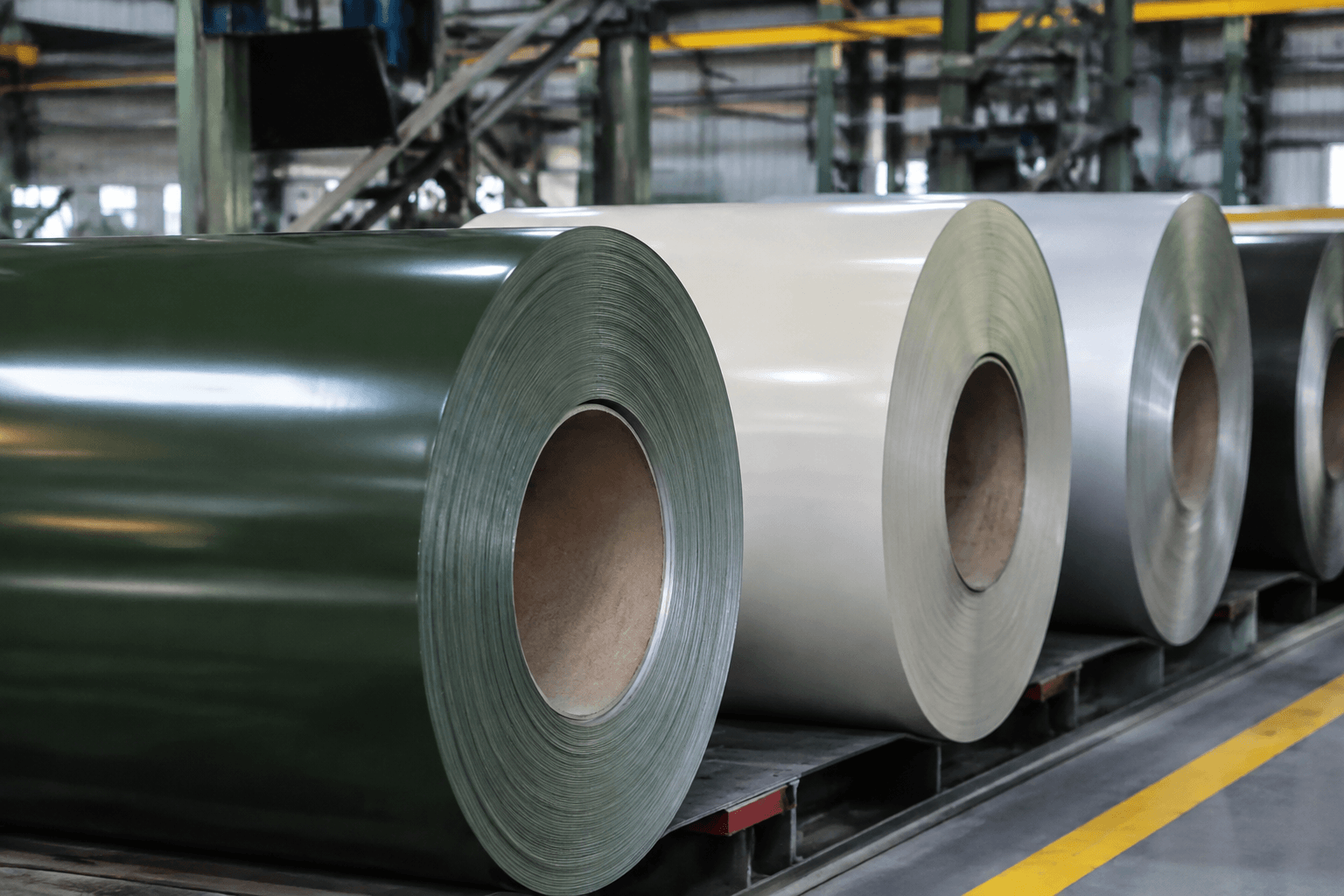
Coated steel is not a single steel grade. For a panel, bracket, enclosure, or other sheet metal part, it means steel sheet, coil, or a fabricated steel component with a deliberately applied metallic, organic, or multilayer surface coating. Depending on the coating system, that layer can improve resistance to corrosion, heat exposure, or visual wear. The steel substrate still supplies much of the part’s strength, formability, and weldability; a coating does not make the material stainless steel.
That distinction matters when an OEM selects material for a custom sheet metal part. Galvanized, aluminized, Galvalume, and pre-painted steels do not respond identically to laser cutting, CNC punching, metal bending, welding fabrication, or assembly. The right choice depends on the service environment and the manufacturing route.
What Is Coated Steel?
In industrial purchasing, coated steel usually means sheet or coil coated during steel production. For a custom part, that choice affects what happens at cut edges, bends, and joints. A finished steel component can also receive a coating as a later finishing operation. These routes are not interchangeable: pre-coated material carries its surface layer through cutting, forming, and joining, while post-fabrication finishing must be applied to prepared edges, welds, and joints.
Metallic coatings commonly include zinc, aluminum-silicon, and zinc-aluminum-silicon systems. Organic coatings include paint and other protective layers. Some products combine both approaches, such as a metallic-coated substrate with a colored organic topcoat. The exact coating process, coating amount, surface condition, and coated sides should be confirmed from the applicable product specification.
The coating forms a barrier between the steel and its surroundings. With zinc-coated steel, the zinc can also provide sacrificial protection to small areas of exposed steel in many conditions. Protection is not unlimited, however. Cut edges, drilled holes, weld areas, deep scratches, trapped moisture, and aggressive chemicals may require additional design controls or local treatment.
Coated steel should be distinguished from stainless steel. Stainless steel obtains much of its corrosion resistance from its alloy composition, while coated steel depends partly on the continuity and condition of a separate surface layer. Coated steel can be a practical choice, but damage tolerance, repair requirements, and service exposure belong in the design review.
Common Coating Systems and Their Typical Uses
For a buyer comparing material callouts, coating selection usually balances corrosion exposure, temperature, appearance, forming behavior, and joining requirements. The comparison below is a starting point rather than a substitute for the material supplier’s specification.
| Type | Coating characteristics | Common project fit | Important checks |
|---|---|---|---|
| Galvanized steel | A zinc layer provides barrier protection and, in many conditions, sacrificial protection to the steel substrate. | Often considered for humid areas, general outdoor use, brackets, panels, and enclosures. | Cut edges, weld zones, forming marks, fume controls, and touch-up requirements. |
| Aluminized steel | An aluminum-silicon coating is generally selected when elevated-temperature exposure is important. | Heat shields, exhaust-related parts, and components subject to defined heat cycles. | Actual temperature, exposure duration, forming behavior, joining method, and coating damage after fabrication. |
| Galvalume steel | A zinc-aluminum-silicon metallic coating is used to balance corrosion and heat-related requirements. | Roof and wall systems, equipment panels, and selected outdoor products. | Edge protection, bend radius, water traps, chemical exposure, and compatibility with later finishes. |
| Pre-painted steel | An organic topcoat is applied to prepared steel, often over a metallic-coated substrate. | Visible panels, appliance-style covers, architectural products, and color-sensitive enclosures. | Color, gloss, scratch resistance, bend performance, cut edges, weld repairs, and protective film. |
These categories can overlap. A pre-painted sheet, for example, may have galvanized or Galvalume steel underneath. A purchase description should therefore identify the substrate grade, thickness, coating type, coating amount or thickness where specified, coated side or sides, surface condition, and any color or appearance requirement. Writing only coated steel or galvanized sheet leaves important quotation assumptions open.
Fabrication Changes the Condition of the Coating
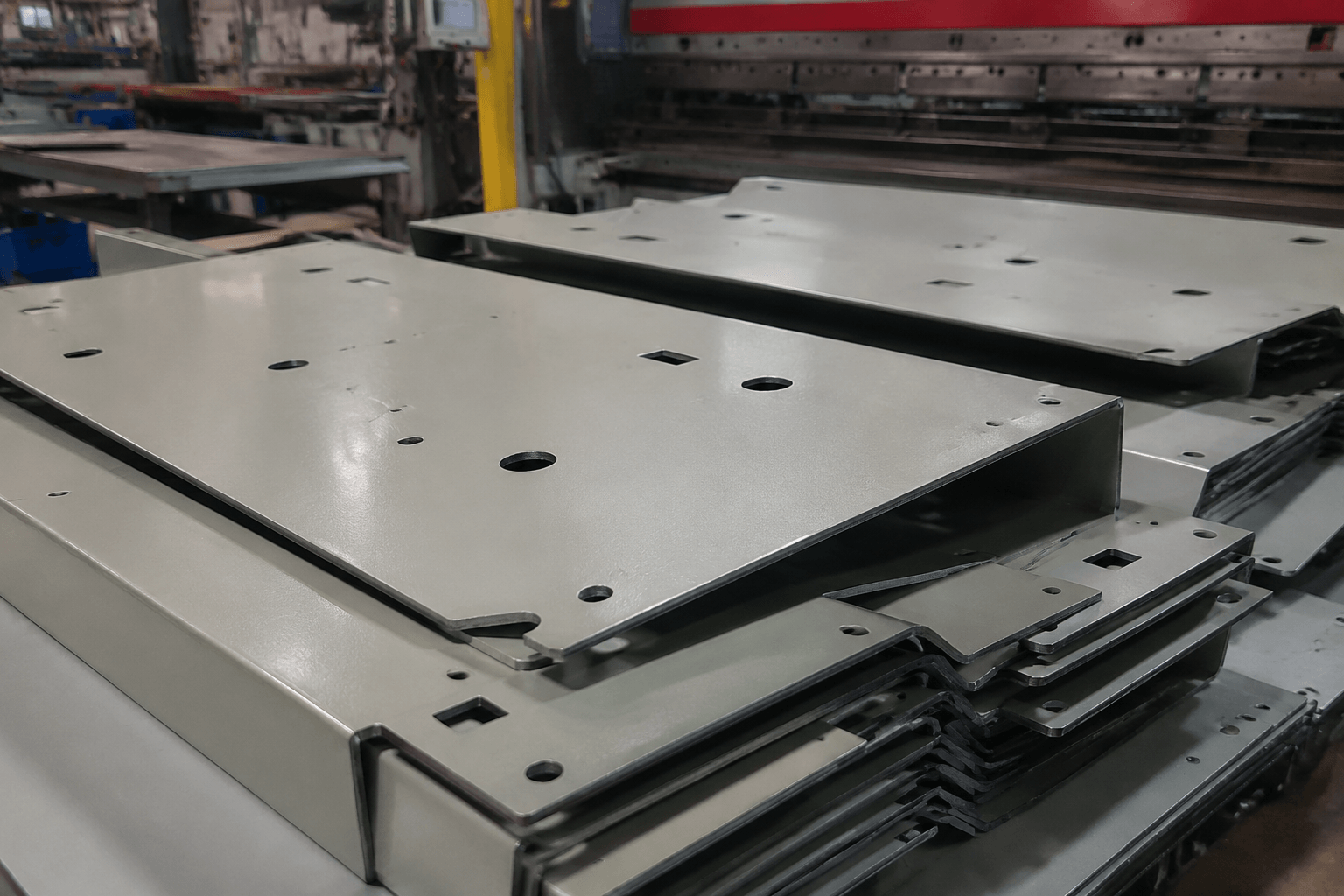
Once the material enters sheet metal fabrication, the coating becomes part of the process plan rather than just a material label. The fabricator should review how each operation affects the visible face, cut edge, bend, joint, and final inspection point. This is especially important when a part combines visible panels with punched features or welded subassemblies.
- Drawing review: Check the flat pattern, bend lines, hole locations, exposed faces, joining sequence, and required bend radius. A coating that tolerates normal forming may not tolerate an unnecessarily tight bend or unsuitable bend direction.
- Laser cutting: Thermal cutting can discolor the surface, leave residue, and expose the steel substrate at the cut edge. The specification should address edge condition and cleanup. Zinc-containing coatings can also generate fumes during hot processing, so suitable ventilation and process controls are necessary.
- CNC punching: Mechanical punching avoids some thermal effects but can still mark the surface, transfer contamination from tooling, or leave burrs around holes. Tool condition, clearance, protective measures, and edge inspection are especially important on visible panels.
- Metal bending: Tool contact and bend strain can scratch or crack a coating when the radius, tooling, coating ductility, or bend direction is unsuitable. A forming trial or sample review is useful when appearance is critical.
- Welding fabrication: Welding through a metallic coating can increase fume exposure and may affect weld quality. Heat also disrupts the coating around the joint. The project should define whether the coating is removed locally, how the weld is inspected, and how the affected area is re-protected.
- Edge and surface treatment: Deburring should remove sharp edges without spreading scratches across the finished face. Weld spatter, handling marks, and exposed substrate may require an approved repair coating or a later finishing operation.
- Inspection and packing: Inspection should cover formed dimensions, holes, bends, welds, cut edges, visible scratches, coating coverage, and color or gloss when applicable. Packaging should prevent rubbing, impact, and moisture damage during storage and shipment.
For a complex part, fabricating a fully pre-coated sheet is not always the most practical route. Fabricating uncoated steel and applying a finish after welding can make it easier to treat edges and joints uniformly, but it adds preparation, masking, appearance, inspection, and cost requirements. The better route depends on the part geometry and the required finish.
A Practical Selection Check for a Coated-Steel Project
After the service environment and part geometry are clear, use the following sequence to connect the coating choice with the actual part requirements:
- Map the environment: Identify dry indoor use, humidity, outdoor exposure, salt, chemical contact, condensation, and cleaning agents.
- Define the temperature: Record normal and peak temperatures, exposure duration, and whether heating is continuous or intermittent.
- Set the appearance level: Decide whether the part is hidden, industrially visible, or a customer-facing panel requiring controlled color, gloss, and scratch appearance.
- Check forming and joining: List tight bends, punched vents, deep features, threaded areas, welds, and fasteners. These details indicate where coating damage may occur.
- Compare the manufacturing route: Decide whether pre-coated sheet, metallic-coated sheet with local repair, or post-fabrication finishing provides the most practical combination of protection, appearance, and cost.
Hypothetical example: Consider an outdoor metal enclosure with visible panels, punched ventilation slots, bent flanges, and a welded frame. Pre-painted material may suit the visible panels if its forming and appearance requirements match the design, but the cut edges, bends, and weld zones still need a defined protection plan. A metallic-coated blank followed by finishing after fabrication may improve coverage at joints, but it adds another operation. The drawing, exposure, and appearance requirement should determine the route rather than the word coated alone.
What to Include in a Coated-Steel Drawing or RFQ
Before requesting a quote, give the fabricator enough information to separate material requirements from process assumptions. For custom sheet metal parts, include the following wherever they apply:
- A 2D drawing, 3D model, or both, with finished-part orientation and critical features identified.
- Base steel grade, thickness, and any required forming or strength condition.
- Coating type, coating mass or thickness, coated side or sides, and the applicable material or purchasing specification.
- Surface requirements such as color, gloss, texture, visible-face limits, protective film, and acceptable repair areas.
- Dimensional and geometric tolerances, including requirements for cut features, holes, bends, flatness, and assembly interfaces.
- Edge, deburring, welding, post-weld treatment, and corrosion-protection requirements.
- Prototype or sample quantity, expected production quantity, inspection documents, and approval steps.
- Packaging requirements that prevent scratching, moisture damage, and part-to-part contact during shipment.
Quotation cost is influenced by the base material, coating specification, blank size, material utilization, forming and joining operations, finishing or touch-up, inspection, packaging, and order quantity. Minimum quantities and production timing vary by supplier and specification, so they should be confirmed rather than assumed.
Frequently Asked Questions
These questions address common coated-steel decisions when a drawing, RFQ, or prototype plan is still being developed. Final selection should follow the specified material, exposure, geometry, finish, and joining requirements.
Is galvanized steel a type of coated steel?
Yes. Galvanized steel is one coated-steel category that uses zinc. The broader category also includes aluminized, Galvalume, pre-painted, and other coating systems. The coating type and application details should be stated in the purchase specification.
Can coated steel be laser cut, punched, bent, and welded for a prototype or production part?
Yes, but each operation requires controls for coating damage, exposed edges, fumes, forming strain, surface marks, and post-weld protection. For an RFQ or prototype, identify critical tolerances, visible faces, bend requirements, joining method, and finish or repair expectations in the drawing or accompanying notes. The product’s forming suitability, bend radius, cutting method, joining sequence, and repair finish should be reviewed before production.
Which coated steel is used for outdoor or high-temperature parts?
Galvanized steel is often considered for general outdoor or humid exposure, while aluminized steel may be considered for defined elevated-temperature service. Galvalume is used in many roof, wall, and panel applications. Final selection depends on the actual environment, temperature cycle, forming, edges, joints, and finish requirement.
Is pre-coated sheet always better than coating a part after fabrication?
No. Pre-coated sheet can be suitable for formed parts where appearance and material handling are controlled. Finishing after fabrication can make treatment of welds and edges more consistent, but it adds preparation and process requirements. Geometry, exposure, appearance, and total processing cost should guide the decision.