
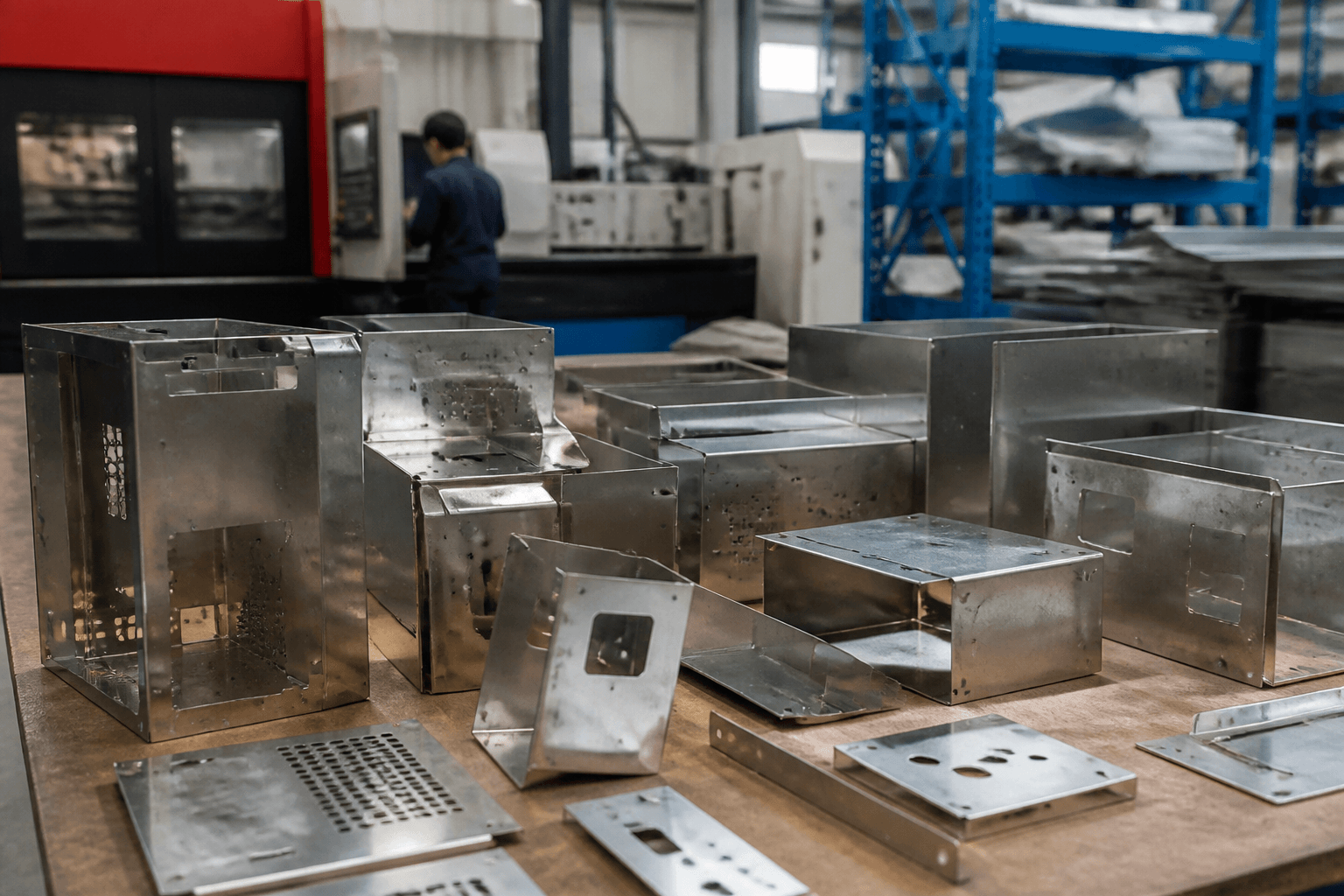
A metal parts supplier may manufacture custom components, provide standard metal parts, source materials or hardware, coordinate outside processes, or deliver completed assemblies. For an OEM preparing an RFQ, the key question is not whether a supplier lists the required process. The buyer needs to know whether the supplier can interpret the current part definition, select a suitable manufacturing route, and quote the requested scope clearly.
That review should cover the drawing or model, material, quantity, tolerances, finish, inspection, assembly, and delivery assumptions. It should also identify the operations the supplier performs directly and the work it coordinates externally. This gives the buyer a sound basis for comparing quotations and discussing manufacturability before production begins.
What a Metal Parts Supplier Actually Provides
Supplier scope varies when a project combines fabrication, machining, joining, finishing, and assembly. A distributor may provide stock material or standard components. A custom manufacturer may produce parts from drawings, 3D models, samples, or a project brief. Another supplier may perform selected operations directly and coordinate the remaining work through external partners. For a buyer managing a new part or a supplier transition, these boundaries affect responsibility, communication, and quotation completeness.
Typical custom deliverables include brackets, mounting plates, equipment panels, covers, trays, enclosures, machined components, welded frames, and assemblies. The right source depends on the part family and the level of responsibility required. A supplier suited to a formed sheet metal bracket may not have the appropriate route for a tight-tolerance turned shaft, a complex milled housing, or a high-volume stamped component.
Keep the main manufacturing terms distinct:
- Sheet metal fabrication generally cuts, forms, and joins sheet or plate. The design depends on thickness, bend geometry, hole placement, access, and operation sequence.
- CNC machining removes material from a solid or semi-finished workpiece to create controlled features. Milling commonly serves prismatic or irregular parts, while turning mainly serves rotational parts such as shafts, bushings, and threaded components.
- Welding joins components into an assembly and can affect distortion, joint access, appearance, and later finishing or inspection.
- Finishing changes surface condition or appearance through operations such as deburring, brushing, polishing, plating, anodizing, or coating. It follows a separate part-making operation.
- Assembly combines parts, inserts, fasteners, labels, or other subcomponents according to a defined scope. Manufacturing one component does not automatically include assembly.
These processes may support one product, but the supplier should review and quote each against its own requirements. The production route should reflect the design, material, quantity, functional features, and appearance requirements.
Match the Manufacturing Route to the Part
Before sending an RFQ, classify the part by how it will be made and how it will function. A flat sheet metal component may depend on hole locations, edge condition, and flatness. A formed component may depend more on bend sequence, inside radius, flange length, and the distance between holes and bends. A machined component may require review of datums, stock allowance, feature access, and functional tolerances. This classification directs technical questions toward the processes that can affect fit and performance.
Joining introduces separate requirements. A welded frame needs suitable joint access and a realistic sequence that limits distortion. A part using rivets, threaded inserts, clinching, or separate fasteners needs those operations listed in the assembly scope. Finishing may support corrosion resistance, appearance, electrical behavior, or safe handling, but the buyer should specify the treatment for the relevant part or assembly.
Manufacturability review works best when it focuses on features that affect cost, quality, or assembly. Examples include a narrow bend flange, holes too close to a bend, an inaccessible weld joint, an unnecessarily tight tolerance, a finish that cannot reach a masked area, or an assembly that could be simplified by changing the part breakdown. These conditions invite engineering discussion; they do not automatically require design rejection.
Interfaces between processes deserve particular attention. A fabricated enclosure may connect to a machined mounting plate. The enclosure may need a formed boss, insert, clearance hole, or stable mounting surface, while the machined component may control the functional location, fastener pattern, or required flatness. Review the interface as one functional relationship while keeping fabrication and machining requirements separate.
Information to Include in an RFQ
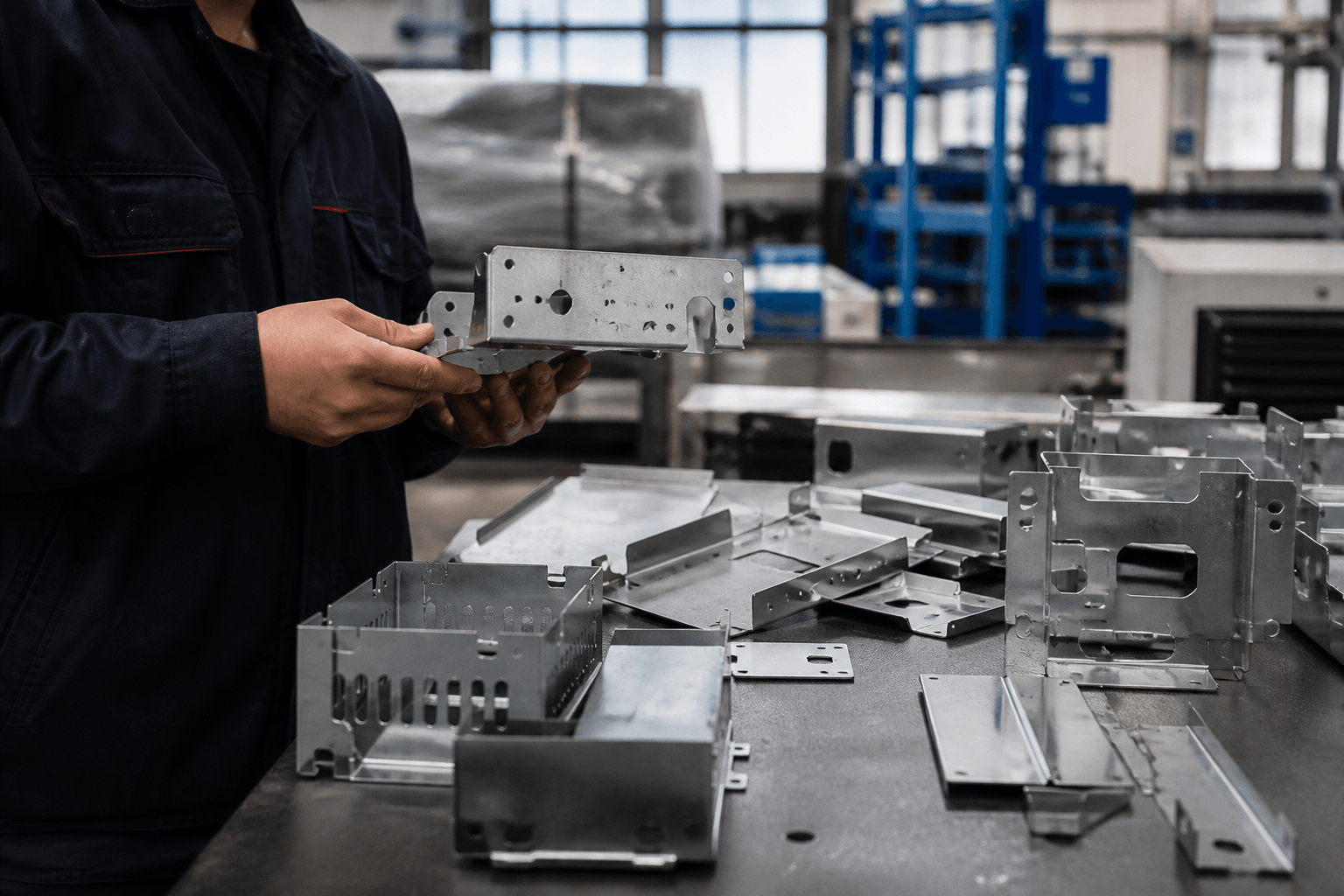
A useful RFQ gives the supplier enough information to price the intended product rather than a rough interpretation. When a buyer moves from a prototype or sample toward regular production, the current revision matters because an outdated drawing can change the material, process, or finished configuration under quotation.
- Drawing or 3D model: Provide the current revision, units, dimensions, datums, critical features, and production notes.
- Material: State the alloy, grade where required, thickness or stock size, temper or material condition where relevant, and whether the supplier may propose an equivalent.
- Quantity: Separate prototype, sample, pilot, annual, and repeat-order quantities when known.
- Tolerance: Identify general tolerances and tighter requirements for functional features.
- Finish: Describe surface treatment, color or appearance, coverage, masked areas, and restrictions on visible marks.
- Assembly scope: List welding, inserts, fasteners, subcomponents, labels, testing, and packaging requirements.
- Inspection and documents: State required inspection points, reports, material documentation, compliance declarations, or sample approval steps.
- Delivery assumptions: Provide destination, packaging expectations, and commercial conditions that affect the quotation.
Distinguish functional requirements from preferred production methods. A drawing may specify a finished hole location and surface condition while leaving the cutting or forming method open. In other cases, the process itself may be mandatory because it affects material structure, appearance, or downstream assembly.
How to Evaluate the Supplier’s Scope
Evaluate evidence connected to the specific part instead of relying on a long capability list. During quotation review, ask the supplier to explain how it will produce the requested features, which work it performs directly, which work it coordinates externally, and how it maintains responsibility across the order.
| Evaluation area | What to clarify | Why it matters |
|---|---|---|
| Manufacturing scope | Which operations are direct and which are external? | Defines responsibility for process control and delivery. |
| Engineering review | How does the supplier review drawings, materials, tolerances, finishes, and interfaces? | Exposes assumptions before they affect price or production. |
| Material control | How does the supplier identify and document specified material? | Material changes can affect forming, strength, finish, and fit. |
| Inspection documentation | Which inspection or compliance records can the supplier supply? | Lets the buyer match documentation to project requirements. |
| Production communication | Who handles revisions, approvals, and nonconformity decisions? | Creates a defined path for technical decisions. |
| Finishing and assembly | Do downstream operations appear in the quoted scope? | Omitted work can make an otherwise correct part unusable. |
Geographic location can affect freight, communication time, import requirements, and service expectations, but it should not decide the purchase alone. Overseas OEM sourcing also calls for clear revision control, units of measurement, packaging, labeling, payment terms, export documentation, and inspection responsibility.
Yishang states that it has more than 26 years of experience manufacturing custom sheet metal parts and metal products and exports custom metal products to more than 50 countries. The company also states that it supports B2B wholesale, custom manufacturing, OEM and ODM projects, and holds ISO and RoHS certifications. Buyers should confirm that the requested process, material, finish, inspection scope, and documentation apply to the particular project.
Compare Quotations on an Equivalent Basis
A quotation comparison works only when suppliers price the same deliverables. Review line items and assumptions instead of the headline unit price, particularly when one quotation covers fabrication and another includes finishing, inspection, or assembly.
Check whether each quotation includes material, cutting or machining, forming, joining, deburring, finishing, inspection records, assembly, tooling, packaging, and delivery terms. Ask suppliers to identify exclusions, one-time charges, minimum quantities, proposed substitutions, and features that require engineering confirmation.
Prototype and repeat-production prices may use different fixtures, inspection approaches, or production methods. Suppliers should state those differences. When a part moves from sample approval to regular production, identify the approved revision, material, finish, inspection points, and packaging configuration.
A Practical Supplier Decision Process
When several metal parts suppliers are under consideration, use a staged review tied to the actual part and order scope. This keeps selection focused on manufacturability, quotation accuracy, and repeat supply.
- Classify the part: Identify whether it is primarily fabricated, machined, turned, welded, assembled, or a combination.
- Mark critical characteristics: Highlight mounting locations, sealing surfaces, mating interfaces, cosmetic faces, safety-related features, and assembly dimensions.
- Request manufacturability feedback: Ask about bend access, hole placement, joint access, material behavior, finish coverage, machining access, and tolerance assumptions where relevant.
- Align quotation scope: Compare material, process, finishing, inspection, assembly, packaging, tooling, and delivery assumptions.
- Define approval points: Establish who approves drawing changes, samples, substitutions, deviations, and nonconforming parts.
- Confirm repeat-order control: Clarify revision identification, retained specifications, change notification, and references to the approved configuration.
As a hypothetical scenario, an OEM might need a sheet metal enclosure with welded brackets and a machined mounting interface. The enclosure scope would cover formed panels, joint sequence, insert locations, finish coverage, and applicable inspection points. The machined interface would be reviewed separately for mating dimensions and fastener requirements, while the quotation would identify both scopes and their interface.
For an RFQ review, contact Yishang for a quotation with the current drawing or model, material, quantity, required tolerances, finish, and prototype or repeat-order status. The supplier can then clarify manufacturability and quotation assumptions before pricing is confirmed.
Where RFQ Assumptions Create Cost and Production Risk
Many sheet metal fabrication problems begin before production starts. If drawings, tolerances, finish expectations, material grades, or assembly requirements are unclear, suppliers may quote based on different assumptions. That can make prices difficult to compare and may lead to rework, cosmetic rejection, assembly misalignment, or production delays later.
For OEM buyers, the goal is not simply to request the lowest price. The goal is to make sure each supplier is quoting the same manufacturing reality. Before confirming an order, clarify which dimensions are fit-critical, which surfaces are cosmetic, whether prototypes must match batch-production conditions, and how finished parts will be inspected.
Frequently Asked Questions
What metal parts supplier details should buyers define before requesting a quote?
Buyers should define the functional requirement, drawing notes, critical dimensions, material or process expectations, and any inspection points related to metal parts supplier. This helps suppliers quote the same manufacturing scope instead of making different assumptions.
How can RFQ details affect cost, fit, or lead time?
RFQ details can change tooling, forming, welding, finishing, inspection, or rework requirements. If buyers do not clarify it early, two supplier quotes may look comparable while covering different production risks.
Why should drawing requirements be reviewed before prototype approval?
drawing requirements may look acceptable on a single sample but become harder to control during batch production. Buyers should confirm whether the prototype reflects the same process, finish, and inspection conditions expected for production.
What inspection points matter most for metal parts supplier projects?
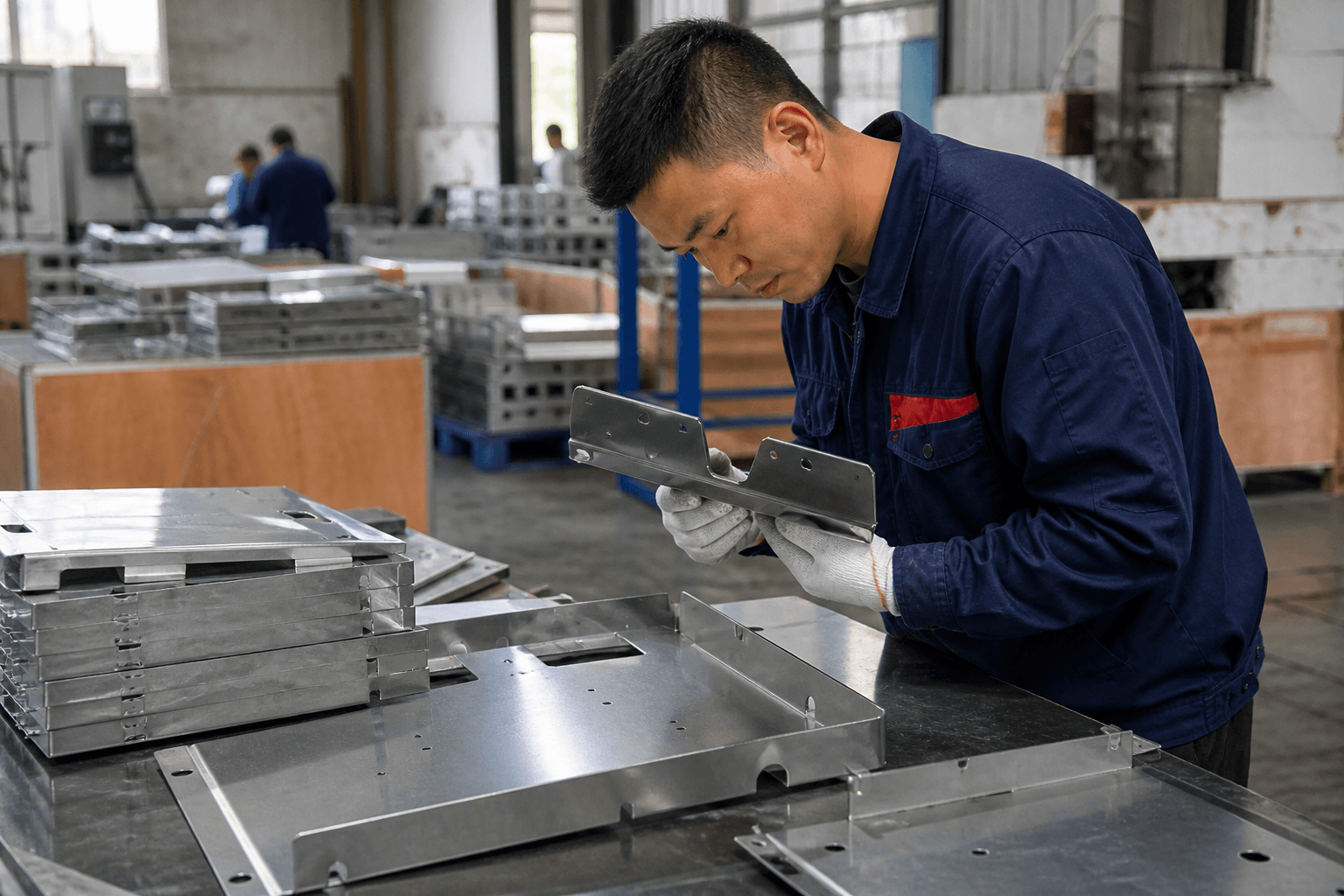
Important inspection points usually include fit-critical dimensions, holes or mating areas, cosmetic surfaces, finish build-up, welded or formed features, and any dimensions that affect downstream assembly. These points should appear in the RFQ or drawing notes.
How can buyers reduce prototype approval risk before batch production?
Buyers can reduce risk by clarifying drawings, locking key material and finish assumptions, defining inspection timing, approving a representative sample, and confirming which dimensions or surfaces require tighter process control.
How can Yishang help review metal parts supplier requirements?
Yishang can review drawings, RFQ notes, material requirements, tolerance expectations, finish details, samples, and assembly needs to identify unclear assumptions before quoting or batch production.