

A metal fabrication design consultation is a structured review of a proposed metal part or product before production. It connects design intent with practical decisions about material, cutting, bending, welding, machining interfaces, finishing, assembly, inspection, and cost.
The purpose is not simply to make a drawing easier for a supplier to quote. A useful consultation identifies where the design may be difficult to manufacture, where requirements are unclear, and where a small change could simplify production without compromising function. For overseas OEM buyers, this review also helps establish a shared technical interpretation before tooling, samples, or production materials are approved.
What Should a Metal Fabrication Design Consultation Cover?
The scope depends on whether the project is a single bent bracket, an enclosure, a welded frame, or a complete metal product. However, most reviews begin with the same central question: can the proposed design be manufactured consistently using suitable processes?
A fabricator may examine the 2D drawing, 3D model, bill of materials, finish specification, assembly method, and expected quantity. The review should distinguish functional requirements from preferences. A tight tolerance around a bearing seat, for example, may be essential. The same tolerance applied to every edge of a welded cabinet may add inspection and production difficulty without improving performance.
Typical subjects include:
- Material grade, thickness, temper, and availability
- Cutting method and the accessibility of internal features
- Bend direction, radius, flange length, reliefs, and bend sequence
- Welding access, joint design, heat distortion, and cosmetic expectations
- Machined holes, threads, inserts, studs, and purchased hardware
- Grinding, polishing, plating, anodizing, painting, or powder coating
- Assembly clearances and access for tools or fasteners
- Datum selection, tolerances, inspection points, and packaging needs
Consultation does not replace engineering validation by the product owner. The buyer remains responsible for defining load, safety, regulatory, environmental, and end-use requirements. The fabricator contributes manufacturing knowledge and should flag assumptions requiring confirmation.
Reviewing the Design in Manufacturing Sequence
A productive review follows the likely production route rather than examining each drawing note in isolation. This reveals interactions that may otherwise be missed.
First, the flat material and cutting layout are considered. Hole size, slot width, corner geometry, edge distance, and part nesting can influence the appropriate cutting process and material use. Very small features or narrow webs may behave differently depending on material, thickness, and cutting method.
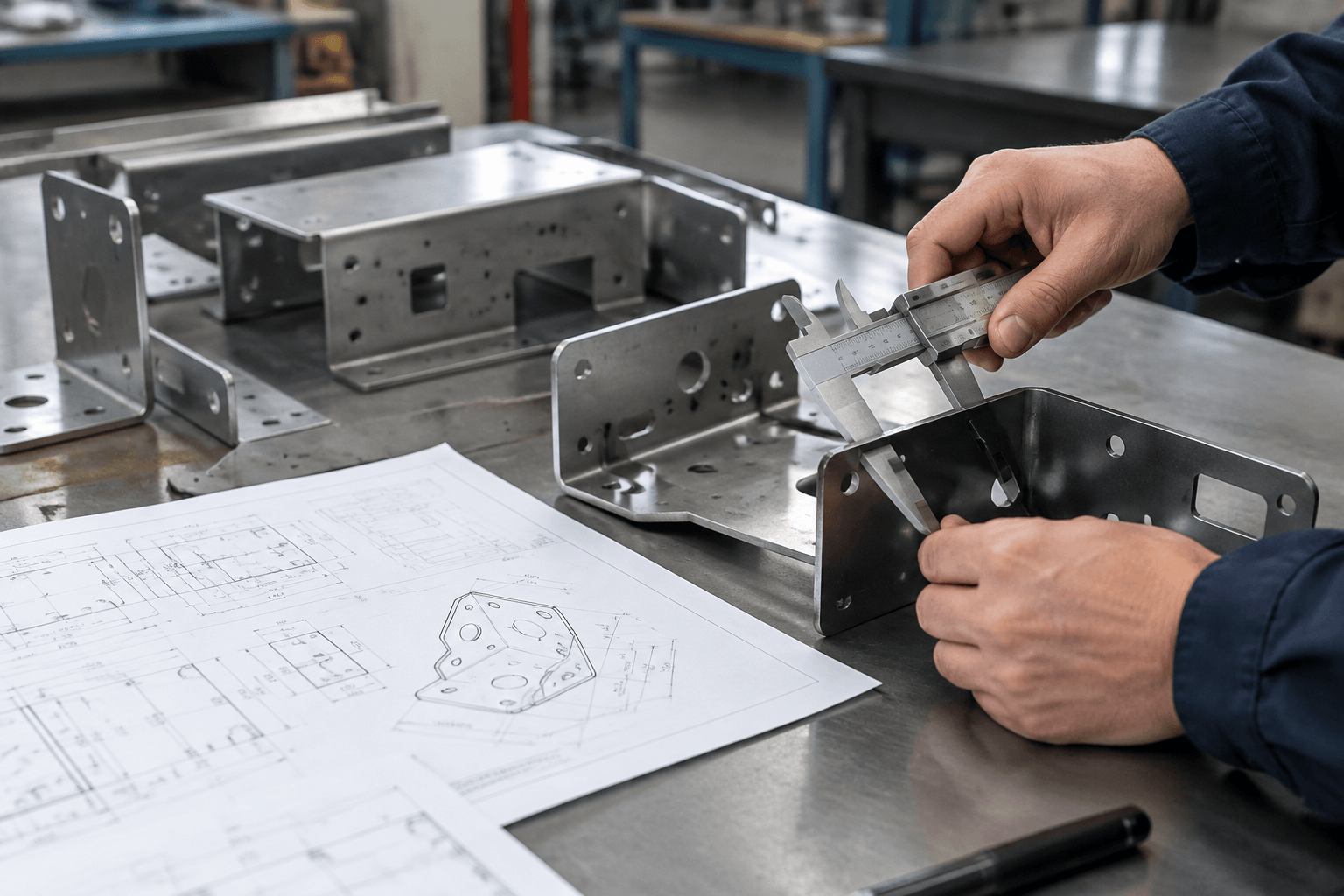
Next comes forming. Bend radii, bend deductions, grain direction where relevant, tooling access, and collision risks affect whether the flat pattern can become the intended shape. A feature that appears valid in a 3D model may be too close to a bend and distort during forming. A short return flange may also be difficult to hold with available tooling.
For welded products, the review then considers joint preparation, welding sequence, fixture access, heat input, and post-weld finishing. Welding can move panels and frames, so dimensions measured after welding should be toleranced according to function and construction. Calling for perfectly flush, fully ground cosmetic seams can require substantially more work than an ordinary structural joint.
Machining is reviewed as a separate but connected operation. Precision bores, turned spacers, milled faces, or threaded bosses may interface with a sheet metal assembly, but CNC turning and milling are machining processes rather than sheet metal fabrication. The consultation should define when these features are produced and how their positions are controlled after welding or finishing.
Which DFM Decisions Have the Greatest Production Impact?
Not every drawing detail carries the same manufacturing significance. The following areas deserve early agreement because they can influence process selection, tooling, inspection, and unit cost.
| Design area | What to review | Possible design response |
|---|---|---|
| Material | Grade, thickness, mechanical properties, corrosion exposure, and finish compatibility | Specify the required grade and permitted alternatives rather than using only a generic material name |
| Bends | Inside radius, minimum flange, holes near bend lines, bend access, and sequence | Move vulnerable features, add reliefs, or adjust geometry where function permits |
| Welded joints | Strength requirement, access, distortion, appearance, and grinding extent | Define weld locations and cosmetic zones instead of requiring the same treatment everywhere |
| Tolerances | Functional interfaces, datum structure, cumulative variation, and inspection method | Apply tight limits to critical characteristics and practical general limits elsewhere |
| Finish | Coating thickness, masking, color, texture, surface preparation, and visible faces | Mark contact areas, threads, grounding points, and appearance surfaces clearly |
| Assembly | Fastener access, hardware installation, mating-part clearance, and service needs | Add access, standardize hardware, or split the product into sensible subassemblies |
Tolerance review is especially important. Fabricated parts do not behave like parts machined entirely from solid stock. Cutting, bending, welding, grinding, and coating can each introduce variation. The appropriate tolerance depends on material, thickness, geometry, process route, datum location, and how the feature functions in the assembly.
Finish requirements also need more detail than a color reference alone. The drawing or specification should identify the substrate, pretreatment expectation, appearance class, masked areas, and whether coating thickness affects fitted dimensions. Threads, press-fit holes, electrical contact points, and tight assembly gaps may require special consideration.
Inputs for a Productive Design Consultation
A clean 3D model is helpful, but it is rarely sufficient by itself. The 2D drawing should control dimensions, tolerances, datums, threads, weld symbols, finish notes, and inspection requirements. If the 3D model and drawing differ, state which document takes precedence.
Provide the expected order quantity because production assumptions change with volume. A low-volume prototype may justify flexible tooling and additional manual work, while recurring production may support fixtures, dedicated gauges, or a redesigned assembly sequence. Quantity does not automatically determine the process, but it gives the fabricator essential context.
Also identify critical-to-function features. These may include mounting patterns, sealing faces, hinge alignment, rack dimensions, connector positions, or interfaces with machined components. A highlighted characteristic is easier to review than a drawing where every dimension appears equally important.
If cosmetic quality matters, define the viewing condition and visible surfaces. Terms such as “good finish” or “no defects” are open to interpretation. State which faces are customer-facing, whether weld witness is acceptable, and whether handling marks on concealed surfaces matter. Physical samples or agreed visual references may be useful when appearance cannot be communicated adequately through notes.
Can Metal Fabrication Design Consultation Be Done Online?
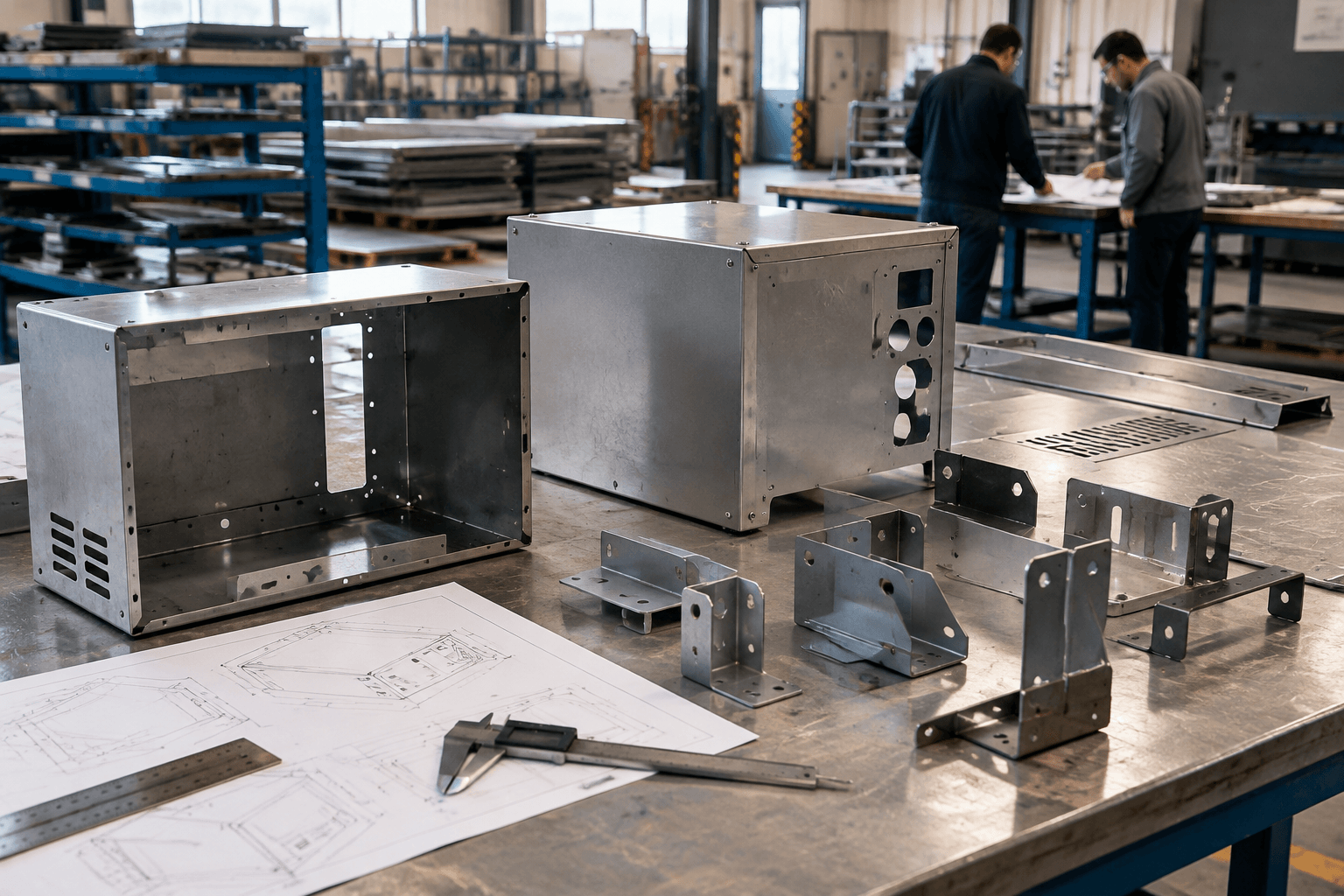
Metal fabrication design consultation online is practical when the buyer can share controlled technical files and communicate revisions clearly. Common inputs include PDF drawings, neutral-format 3D files, assembly models, photographs, specifications, and marked-up review documents.
An online review can address material choices, bend feasibility, weld access, tolerances, finish details, and quotation assumptions. Screen sharing can also help teams examine complicated assemblies together. However, remote consultation has limits. Color matching, tactile surface expectations, complex fit issues, and existing-part reverse engineering may require physical samples or inspection data.
Revision control is critical. File names should include part numbers and revision levels, and written decisions should be reflected in updated production documents. Informal comments in an email should not remain the only record of an approved design change.
Buyers should also expect questions. A consultation that produces no questions is not necessarily more efficient; it may mean assumptions have not been exposed. The goal is a documented, manufacturable definition rather than immediate agreement with every initial detail.
Frequently Asked Questions
How much does a metal fabrication design consultation cost?
Metal fabrication design consultation cost depends on the review scope, product complexity, number of parts, drawing quality, and whether engineering calculations or extensive redesign are required. Some suppliers include a basic DFM review in quotation activity, while detailed design development may be charged separately. Ask what deliverables are included, such as marked drawings, revised models, process recommendations, or review meetings.
Does a metal fabrication design consultation include redesign work?
Not necessarily. A DFM consultation may identify manufacturing risks, unclear requirements, and recommended design changes, but revised CAD models, detailed engineering, calculations, or drawing creation may require a separate scope. Confirm the expected deliverables before the review begins.
Can a design consultation confirm that a product is safe for its intended use?
No. A fabrication consultation can assess manufacturability and flag assumptions, but it does not replace the product owner’s engineering validation. Load requirements, safety factors, regulatory obligations, environmental conditions, and end-use approval must be defined and verified by the responsible product team.
Should consultation happen before or after requesting a quotation?
A preliminary review can accompany the quotation, but important DFM decisions should be resolved before production approval. If the design is still changing, request a budgetary quotation with clearly stated assumptions. Once material, geometry, tolerances, finish, and quantity are stable, the supplier can prepare a more meaningful production quotation.