
Superior Metal Forming Inc appears to be a company-specific search, but the available evidence does not establish a clear match between that exact name and the business or product wording shown in the supplied search snippet. This is an independent overview, not an official company profile or contact page.
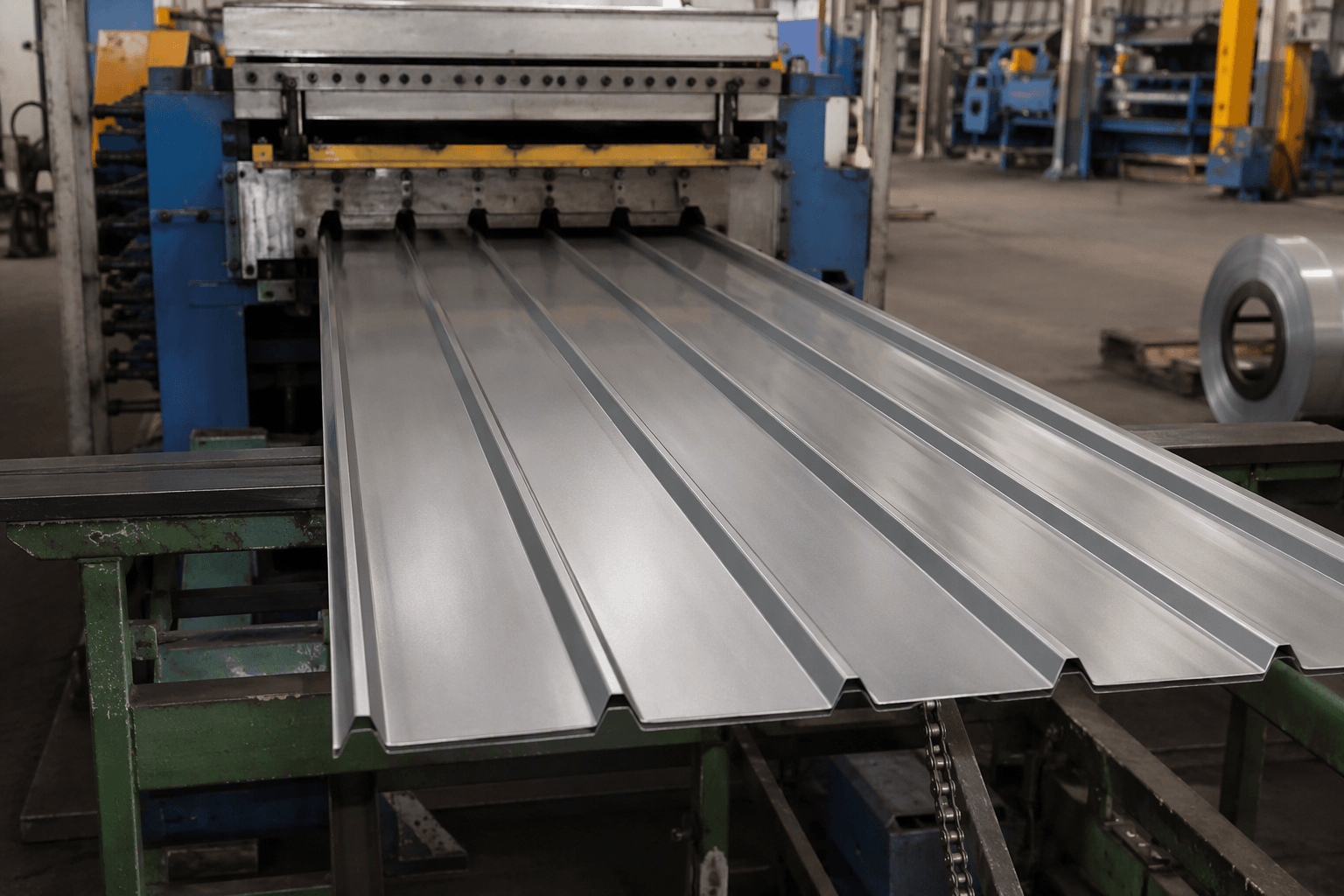
The snippet refers to roll-formed five-rib panels, custom lengths, products labeled “#1 Metal” and “#2 Metal,” and an advertised 40-year warranty associated with #1 Metal. These statements provide a starting point, but they are not enough to confirm the seller’s identity, product specification, application suitability, or warranty coverage.
What the Search Snippet Says, and What It Does Not Verify
No authoritative company website, government registration record, or confirmed business contact source was supplied for this article. Consequently, an address, phone number, owner, location, operating status, career opening, and review rating cannot be responsibly stated. Searchers using terms such as “Superior Metal Cassville MO” or “Superior steel sales” should not assume those results refer to the same legal entity without comparing official registration and contact information.
The available SERP research is limited to snippet-level wording, and no retrieval date was provided. Snippets can be shortened, assembled from page text, or become outdated after a website changes. The following matrix separates what the snippet reportedly says from what a buyer would still need to verify directly.
| Topic | Visible in the supplied search research | Status and required confirmation |
|---|---|---|
| Business identity | The search query uses “Superior Metal Forming Inc,” while the exact relationship to the titled business in the snippet is unclear. | Confirm the legal business name through an official website or government registration record. |
| Process | Roll forming is referenced. | Confirm the actual profile, forming limits, production route, and available materials. |
| Panel | A five-rib panel is described. | Request a profile drawing. “Five-rib” alone does not define rib height, spacing, cover width, seams, or fastening details. |
| Length | Panels are described as available in custom lengths. | Confirm minimum and maximum lengths, cut tolerance, end condition, handling limits, and transport constraints. |
| Product labels | The snippet mentions #1 Metal and #2 Metal. | The labels are undefined. Obtain written material, thickness, coating, surface, and quality criteria for each option. |
| Warranty | #1 Metal is advertised with a 40-year warranty. | Request the complete written warranty, including covered products, failure modes, exclusions, installation requirements, transferability, and claims procedure. |
Understanding the Panel and Process Terms
Roll forming
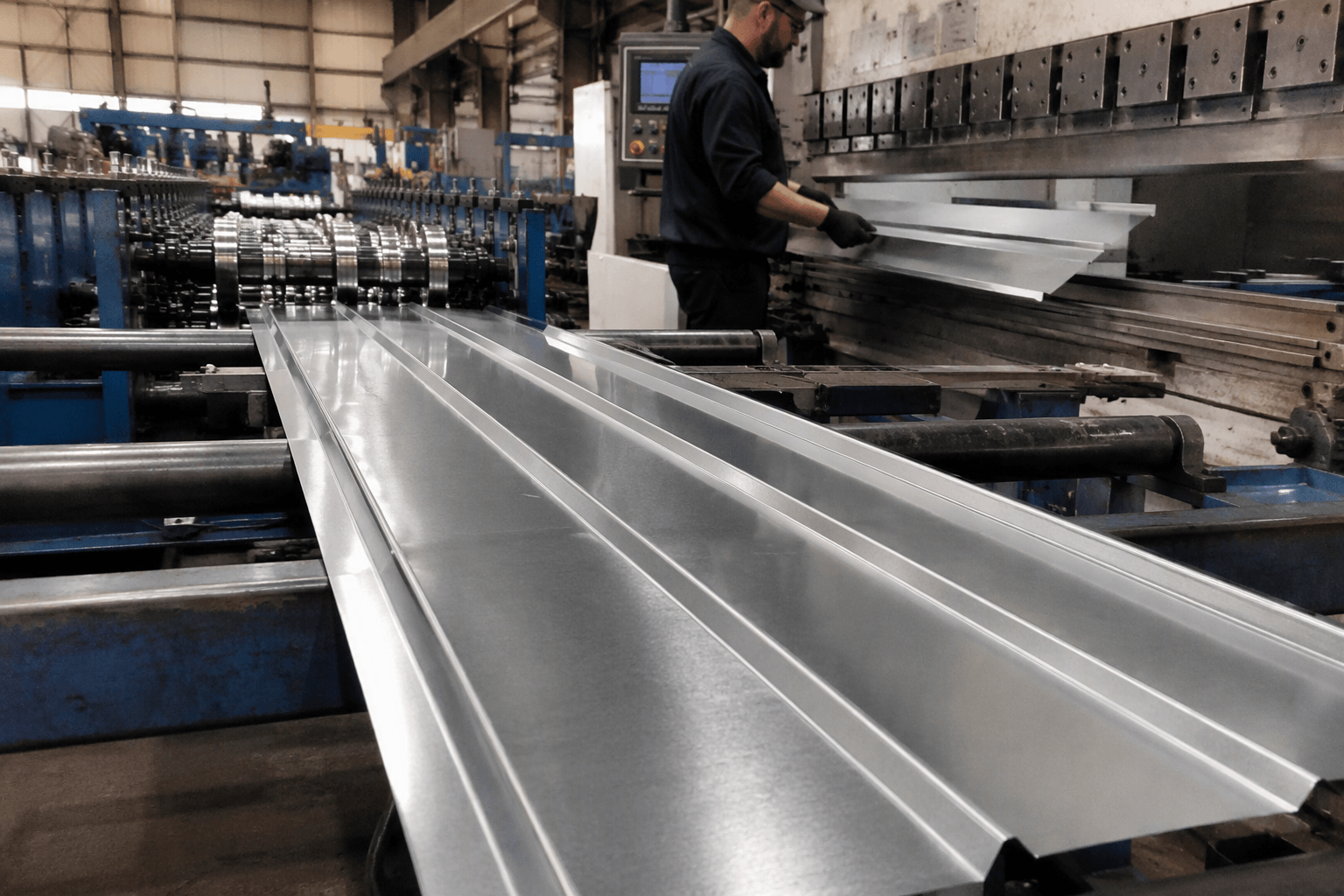
Roll forming is a continuous production process in which sheet or coil passes through a sequence of roller stations. Each station progressively changes the cross-section until the intended profile is produced. It is commonly considered when a buyer needs repeated lengths with a consistent cross-sectional shape.
The process can be efficient for recurring profiles, but it normally requires profile-specific tooling and appropriate production volume. Setup cost, changeover, material behavior, cut-off control, and the ability to transport long parts can limit its practicality. A reference to roll forming does not, by itself, establish the alloy, thickness range, dimensional capability, or production capacity.
Five-rib panel
A five-rib panel generally has five raised longitudinal features across its width, but the term is descriptive rather than a complete specification. Rib height, width, spacing, side-lap geometry, flat areas, and fastening arrangement can all differ between profiles. These features influence stiffness, appearance, nesting, drainage behavior, installation interfaces, and compatibility with adjoining panels.
A generic rib count therefore cannot establish whether a panel is appropriate for roofing, siding, structural use, or any code-regulated installation. Suitability depends on the documented profile, material system, support arrangement, loads, fasteners, environmental exposure, and applicable project requirements.
Custom lengths and numbered metal options
“Custom length” indicates that ordered panel lengths may be available instead of only fixed stock sizes. Buyers should still confirm length increments, allowable variation, end squareness, edge condition, packaging, and whether long panels introduce freight or site-handling restrictions.
“#1 Metal” and “#2 Metal” appear to be seller-specific labels. They should not be interpreted automatically as alloy grades, industry standards, coating classes, or universal quality levels. A numbered category could refer to material quality, cosmetic acceptance, coating, warranty eligibility, or another internal distinction. Only the seller’s published specification can define it.
Metal forming compared with bending
Metal forming is the broader category: it changes metal geometry through controlled plastic deformation. Roll forming and press-brake bending are both forming methods, but they are not interchangeable. Roll forming develops a continuous profile through multiple roller stations, whereas press-brake bending typically creates individual bends in discrete blanks or parts.
That distinction matters when reviewing a drawing. A long, constant cross-section may suit roll forming, particularly for repeat production. A bracket, cover, frame, or enclosure with localized bends, cutouts, and varied geometry may be better suited to cutting and press-brake operations. CNC machining, welding, finishing, assembly, and inspection may support a finished product, but each remains a separate production stage.
Specifications Needed Before Deciding Whether the Panel Fits
A buyer cannot determine product suitability from the five-rib description and warranty headline alone. The technical review should close the following information gaps:
| Specification area | Information to request | Why it affects the decision |
|---|---|---|
| Material | Alloy or grade, temper where applicable, base-metal thickness, and coated thickness | Material condition affects forming behavior, strength, corrosion performance, and compatibility with fasteners or adjoining components. |
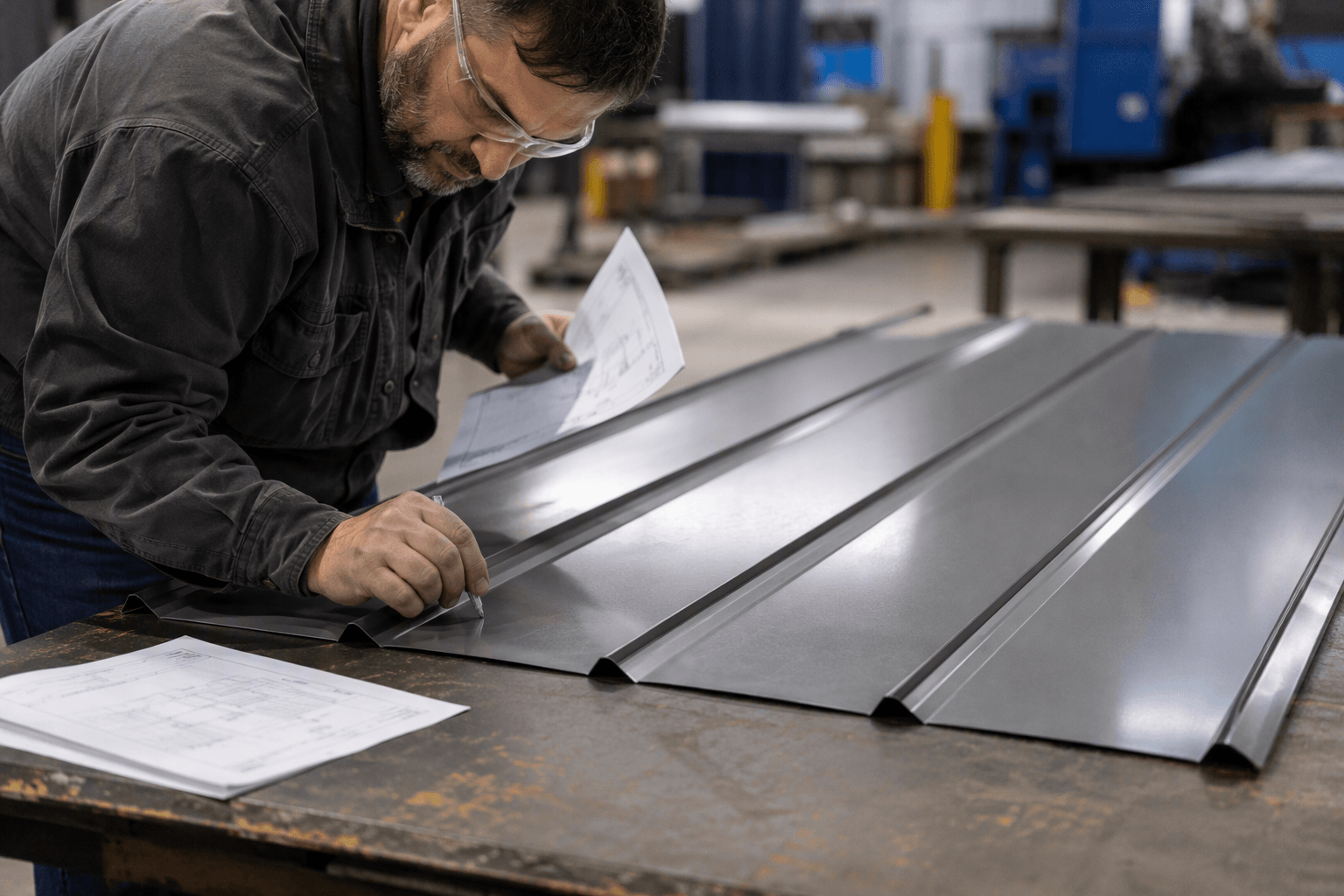
| Profile | Dimensioned cross-section, cover width, overall width, rib dimensions, side-lap details, and available length limits | The drawing determines fit, coverage, interfaces, and whether the profile matches existing construction. |
| Surface system | Substrate preparation, coating type, color definition, gloss or texture expectations, and protective-film requirements | Surface requirements affect appearance, durability, handling, and consistency between orders. |
| Dimensional control | Profile, width, length, bow, twist, end-cut, and edge tolerances | Acceptance criteria should reflect the installation method and mating components rather than an unspecified general tolerance. |
| Commercial handling | Order quantity, packaging method, lead-time basis, loading arrangement, and freight responsibility | Long formed products may be constrained as much by handling and transport as by production. |
| Warranty | Eligible product, duration, covered failures, exclusions, maintenance duties, installation conditions, geographic limits, remedy, and claims process | An advertised duration has limited meaning without written coverage terms. |
For regulated or load-bearing applications, the buyer should also obtain whatever testing, engineering documentation, approvals, and installation instructions the project authority requires. None should be inferred from the product name.
When a Custom Sheet Metal Manufacturer Is the Better Route
A roll-formed panel supplier is relevant when the requirement matches an available continuous profile. A custom sheet metal manufacturer becomes more relevant when the buyer needs discrete parts made to drawings, such as brackets, equipment covers, frames, or enclosures with cut features, several bends, mounting interfaces, or assembly requirements.
Yishang is not affiliated with and is not presented as Superior Metal Forming Inc. It is introduced here only as a separate option for buyers who need custom metal parts made to drawings rather than the snippet-referenced roll-formed panel.
To request a manufacturing-scope review, provide a part drawing or 3D model, material and thickness requirements, required quantity, finish, and application context through Yishang. This route is intended for custom metal parts rather than confirmation or supply of the snippet-referenced five-rib panel.
Frequently Asked Questions
Is this the official website or contact page for Superior Metal Forming Inc?
No. This article is an independent explanation based on limited search-result information. No authoritative address, phone number, owner, location, or operating status was supplied, so those details should be verified through the company’s official website or a government business-registration source.
What is the difference between roll forming and one-off metal bending?
Roll forming progressively shapes a continuous strip through multiple roller stations, producing a repeated cross-section. One-off bending usually refers to making individual bends in a discrete blank, often with a press brake. Both are metal forming processes, but their tooling, geometry, volume economics, and dimensional considerations differ.
What do #1 Metal and #2 Metal mean in this seller’s product range?
The supplied snippet does not define them. They may be internal product tiers, but a buyer should not assume they represent a particular alloy, thickness, coating, cosmetic grade, or standard. Request a written comparison and specification for each option.
What warranty terms should be checked beyond the advertised duration?
Confirm which product is eligible, when coverage begins, what failures are covered, and whether coating, corrosion, fading, perforation, or other conditions are addressed. Also review exclusions, installation and maintenance requirements, geographic restrictions, transferability, available remedies, documentation duties, and the claim procedure.