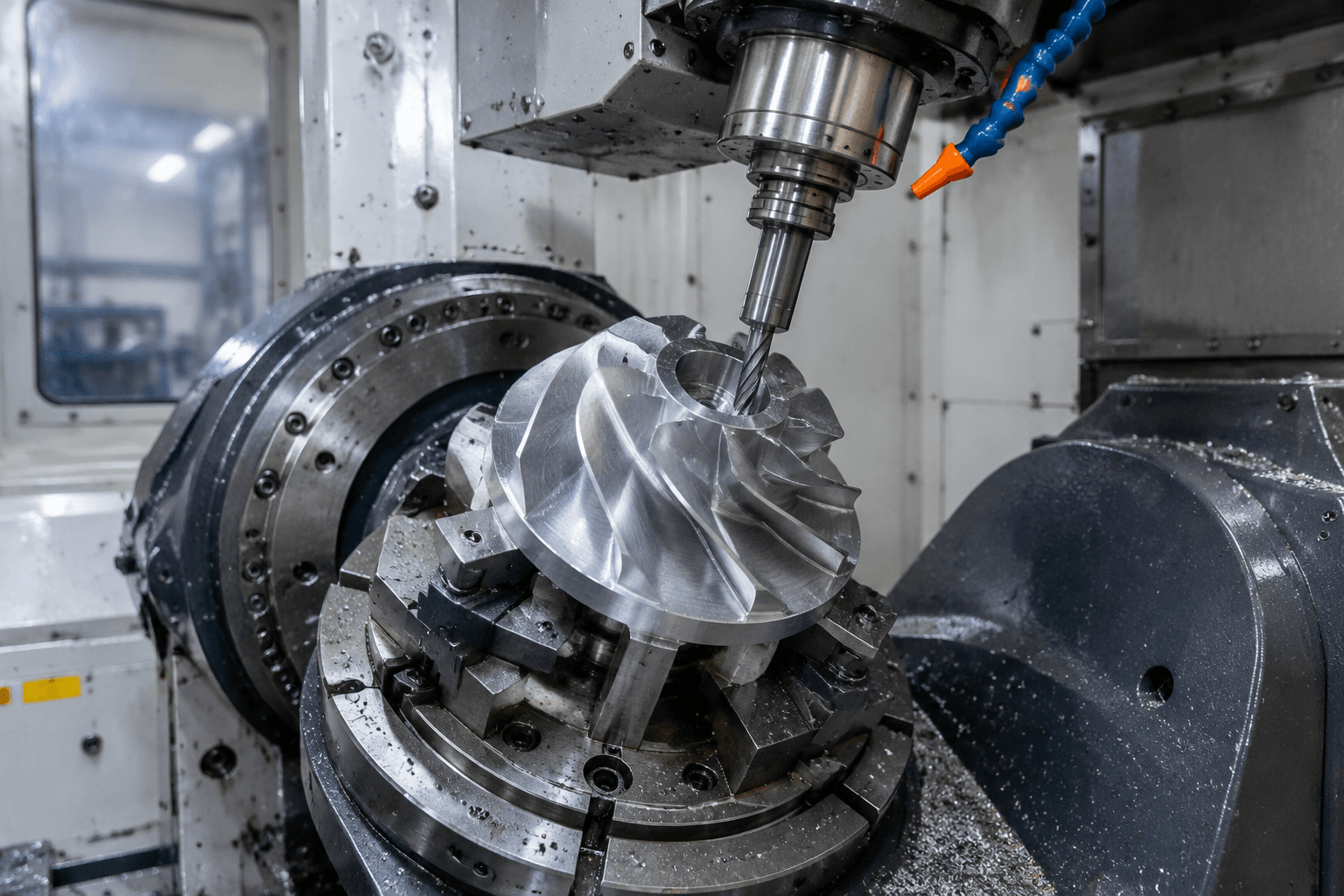
5 axis milling services use CNC subtractive machining to produce custom parts while the cutting tool and/or workpiece move across multiple axes, either simultaneously or through indexed positions. They are worth evaluating when a part has compound surfaces, angled holes, deep or obstructed features, or several faces that would otherwise require repeated setups. A manufacturer normally needs the 2D drawing or 3D CAD file, material, quantity, tolerances, finish requirements, inspection expectations, and delivery context before confirming process fit or preparing a quotation.
For an OEM, ODM, or wholesale project, the service is more than machine time. It can include drawing and CAD review, manufacturability discussion, process planning, CNC milling, coordination of applicable secondary finishing, and inspection documentation when those items are included in the agreed order scope. The final process, quality commitments, and commercial terms must be confirmed against the specific part.
What Does a 5-Axis Milling Service Include?
5-axis milling is a CNC machining process that removes material from a workpiece to create the specified geometry. In addition to movement along the principal linear directions, the machining system provides rotary movement or indexing that changes the tool approach or workpiece orientation. “5-axis” therefore describes the available movement relationship used to reach features; it does not, by itself, define the material, tolerance, finish, size, or production quantity a supplier can accept.
The service begins with technical review. A manufacturer studies the drawing, model, datums, critical dimensions, material callouts, and requested finish. The review may identify whether the part is better handled with simultaneous multi-axis movement, several indexed orientations, a different CNC process, or a combination of operations. Tool access, workholding, feature sequence, stock condition, and inspection references all affect that decision.
During production, the supplier creates the machining plan and produces the part according to the approved information. Deburring, surface treatment, coating, anodizing, plating, or another finish may be coordinated when relevant, but these are separate operations and should be listed explicitly in the quotation. Inspection reports, dimensional records, material documentation, and other quality documents should likewise be treated as agreed deliverables rather than assumed inclusions.
When Is 5-Axis Milling Worth Evaluating?
Complex appearance alone is not enough to justify 5-axis machining. The useful question is whether the part’s access, geometry, setup requirements, and quality needs make this approach suitable compared with another machining strategy. The following guide helps identify when a technical review is sensible.
| Part or project condition | Why 5-axis milling may be relevant | What still needs confirmation |
|---|---|---|
| Several faces contain related features | Multiple faces may be reached with fewer repositioning operations, depending on the part and workholding plan. | Whether the required datum scheme and feature relationships can be maintained through the proposed sequence. |
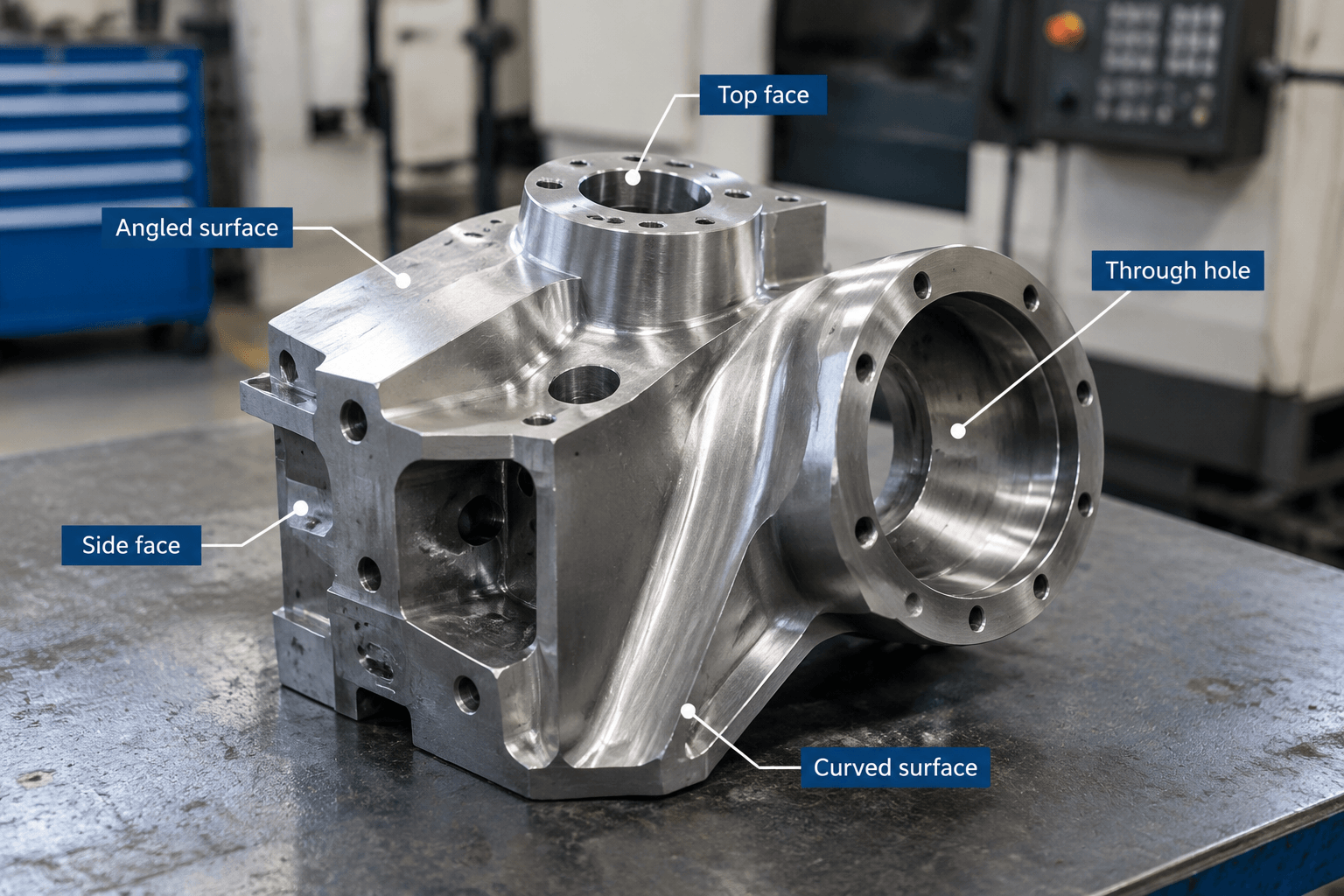
| Angled holes, ports, or pockets | A changing tool approach can provide access to non-orthogonal features that are difficult from one fixed orientation. | Hole direction, depth, tool clearance, edge condition, and inspection method. |
| Compound or sculpted surfaces | Multi-axis movement may support continuous or indexed access to surfaces that are not readily aligned to one plane. | Surface definition, allowable variation, finish expectation, and whether another process is more appropriate. |
| Deep features or obstructed areas | Tool orientation may improve access and reduce the need for long or awkward tools in some geometries. | Reach, rigidity, collision avoidance, workholding, and the actual machine plan. |
| Many setups appear necessary | Reducing setups can simplify handling and may reduce accumulated setup variation or process complexity. | Quantity, cycle strategy, fixture cost, programming effort, and the total quoted process. |
A 3-axis or 4-axis approach may still be more suitable for a part with straightforward access, especially when the geometry, quantity, and tolerance requirements make a simpler process efficient. Conversely, a part may need 5-axis access for only one feature while the remainder is completed through other operations. The supplier should assess the complete part rather than select a process from the feature label alone.
Quantity also matters, but there is no universal rule that 5-axis machining is cheaper or more expensive. A lower setup count can be valuable in one project, while programming, fixturing, tool access, finishing, or inspection requirements can change the overall economics in another. Ask for the proposed process assumptions and compare the complete scope, not just a unit price.
5-Axis Milling RFQ Information: File, Feature, Quality, and Delivery Inputs
A useful RFQ gives the manufacturer enough information to understand both the part and the expected commercial scope. Missing details often lead to assumptions that later change the quotation, schedule, or acceptance criteria.
File and feature information
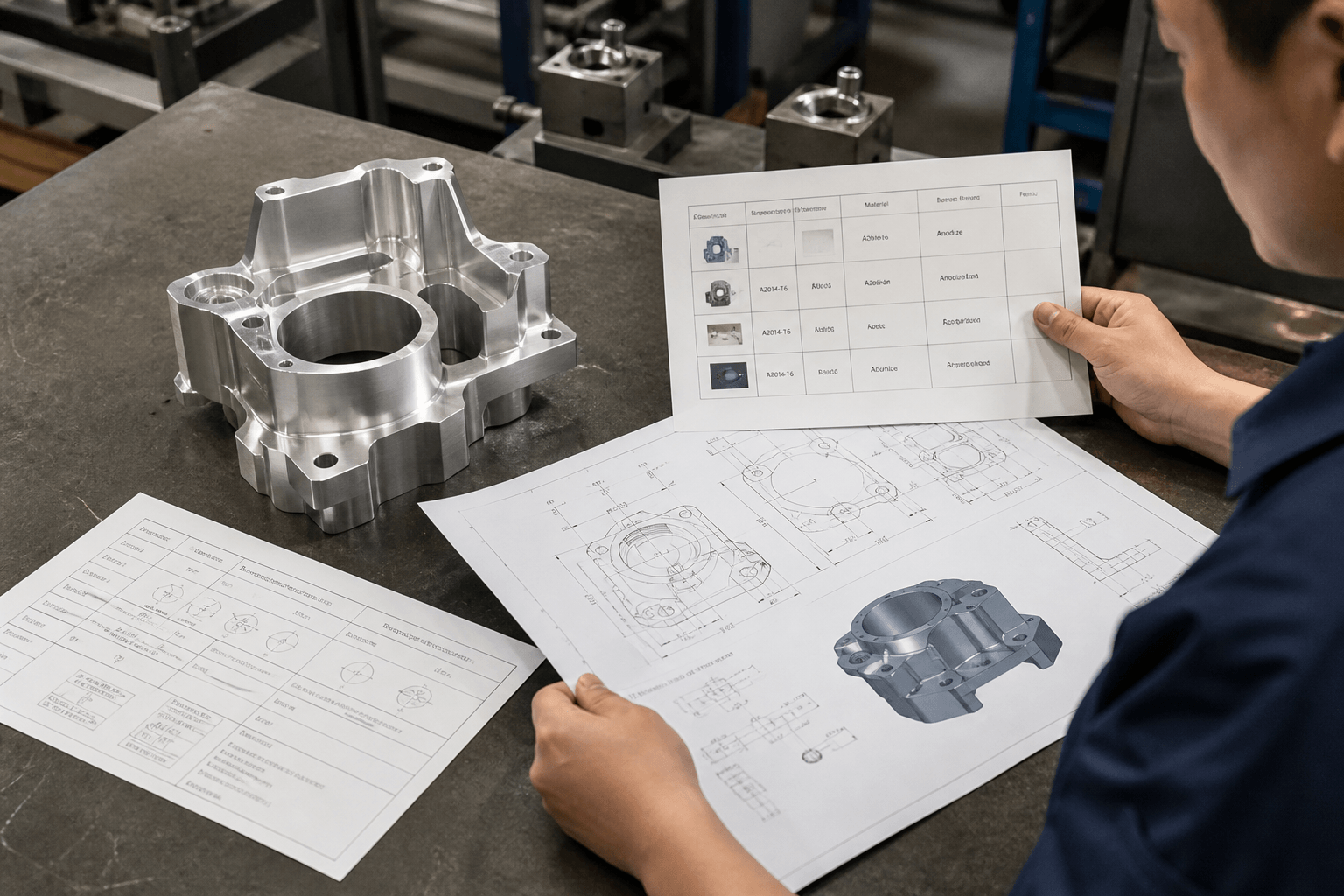
- Provide the latest 2D drawing, 3D CAD model, or both. The drawing should identify units, datums, revision status, dimensions, tolerances, threads, radii, and other controlled features.
- Mark critical-to-function dimensions, mating surfaces, hole locations, sealing areas, and any features that must be inspected or preserved through finishing.
- Explain the part’s function or interface where that context affects process decisions. A short note about mating components can clarify which surfaces are most important.
- State whether the model is for reference or is the controlling definition. Resolve any difference between the CAD file and drawing before approval.
Material and quantity information
- Name the required material and grade where specified. If an approved alternative is possible, identify the approval process rather than allowing an unreviewed substitution.
- State prototype, pilot, repeat, or production quantity, along with the expected order pattern if known. Quantity affects setup planning and commercial review.
- Include raw-material condition or stock requirements when they are important to the design, traceability, or downstream process.
Quality, finish, and documentation
- Specify surface-finish requirements by feature or surface when they differ. Clarify whether the requirement applies before or after a secondary finish.
- List dimensional tolerances, geometric tolerances, visual standards, burr limits, edge requirements, and cleanliness expectations that are part of acceptance.
- Request the inspection records you actually need, such as a dimensional report or material-related documentation, and state whether approval samples are required.
- Identify any packaging, labeling, corrosion protection, or traceability instructions. These are part of the delivered scope, not automatically part of milling.
Delivery and process questions
- Give the destination, required delivery context, packaging constraints, and any project milestone that affects the review.
- Ask whether the quotation includes programming, fixtures, deburring, finishing coordination, inspection, documentation, packaging, and assembly.
- Request a clear list of assumptions, exclusions, recommended design changes, and points requiring engineering approval before production.
For a practical review workflow, organize your package into four groups: files, feature priorities, quality requirements, and delivery information. This structure helps a supplier separate a machining question from a finishing, assembly, or logistics question and makes quotation comparisons more meaningful.
Where Milling Fits in a Larger Manufacturing Workflow
5-axis milling should not be treated as a substitute for every metalworking process. CNC milling removes material with rotating cutting tools. CNC turning is also subtractive machining, but it is organized around a rotating workpiece or turning operation and is often considered for rotational features. A turned component may later interface with a milled or fabricated assembly, but turning and milling remain distinct process choices.
Sheet metal fabrication generally forms parts from sheet or plate through operations such as cutting, bending, and joining. A bracket, enclosure, or frame may be better suited to fabricated construction than to machining from a solid block. Some projects combine fabricated parts with machined interfaces, but the quotation should identify which components receive which process.
Welding joins separate pieces and can follow cutting, bending, or machining. Assembly brings multiple components together and may include fasteners, inserts, seals, or functional checks. Finishing-only work changes the surface or appearance of an already manufactured part; it does not replace the operation that created the part’s geometry.
How to Review a 5-Axis Milling Quotation
Before placing an order, read the technical reply alongside the drawing and RFQ package. A professional quotation should make its assumptions visible. Confirm that the supplier has identified the intended material, quantity, drawing revision, tolerance interpretation, surface finish, secondary operations, inspection documents, packaging, and delivery requirements.
Pay particular attention to the difference between a confirmed commitment and an item that still requires engineering approval. The supplier may recommend a datum change, corner-radius adjustment, fixture feature, or alternative process. Such recommendations can be useful, but they should be accepted through the agreed drawing or approval process before production begins.
Use this compact review list:
- Is the proposed process appropriate for the actual geometry and feature access?
- Are all critical dimensions, finishes, materials, and quantities reflected correctly?
- Does the price include or exclude deburring, finishing, inspection, documentation, packaging, and assembly?
- Are inspection expectations and acceptance records clearly defined?
- Are delivery assumptions, commercial exclusions, and approval points written down?
- Does the supplier distinguish what is confirmed from what depends on final technical review?
Yishang supports B2B wholesale, OEM, and ODM custom manufacturing projects and has more than 26 years of experience manufacturing custom sheet metal parts and metal products, with exports to more than 50 countries. The company holds ISO and RoHS certifications. Those facts provide business context, but the manufacturability, tolerance, finish, inspection, and delivery commitments for a particular milled part still need to be confirmed in the project response.
Prepare Your Project for Technical Review
For a focused 5-axis milling review, submit the latest 2D drawings and 3D CAD files if available, together with the material, quantity, tolerances, surface-finish requirements, inspection expectations, delivery context, and any required secondary operations or assembly. This gives a custom manufacturer enough information to assess process fit and prepare a more useful quotation. Yishang welcomes B2B OEM, ODM, and wholesale project inquiries backed by the available technical details.
Frequently Asked Questions
What does 5-axis milling mean in a custom manufacturing service?
It means CNC subtractive machining in which the tool and/or workpiece can move through multiple linear and rotary directions, either simultaneously or by indexed positions, to reach and create the specified geometry. The service scope may also include drawing review, process planning, applicable secondary operations, and agreed inspection documentation.
Is 5-axis milling suitable for every complex CNC-machined part?
No. A complex-looking part may be efficiently produced through 3-axis, 4-axis, turning, fabrication, or a combination of processes. Multi-face access, compound surfaces, angled features, deep areas, and setup reduction are reasons to evaluate 5-axis machining, but the final choice depends on the complete drawing, material, quantity, tolerance, and process requirements.
How does a supplier estimate the cost of a 5-axis milling job?
The supplier reviews the geometry, material, quantity, tolerances, surface finish, setup and workholding needs, programming, tooling, secondary operations, inspection, packaging, and delivery requirements. A reliable estimate should state its assumptions and exclusions. There is no universal hourly or unit price that can be applied without reviewing the part.
What files and specifications should I provide for a 5-axis milling quotation?
Send the latest 2D drawing and 3D CAD file when available, plus material and grade, quantity, tolerances, critical features, finish requirements, inspection and documentation expectations, packaging details, delivery context, and any assembly or secondary-process requirements. Identify the controlling document and drawing revision.