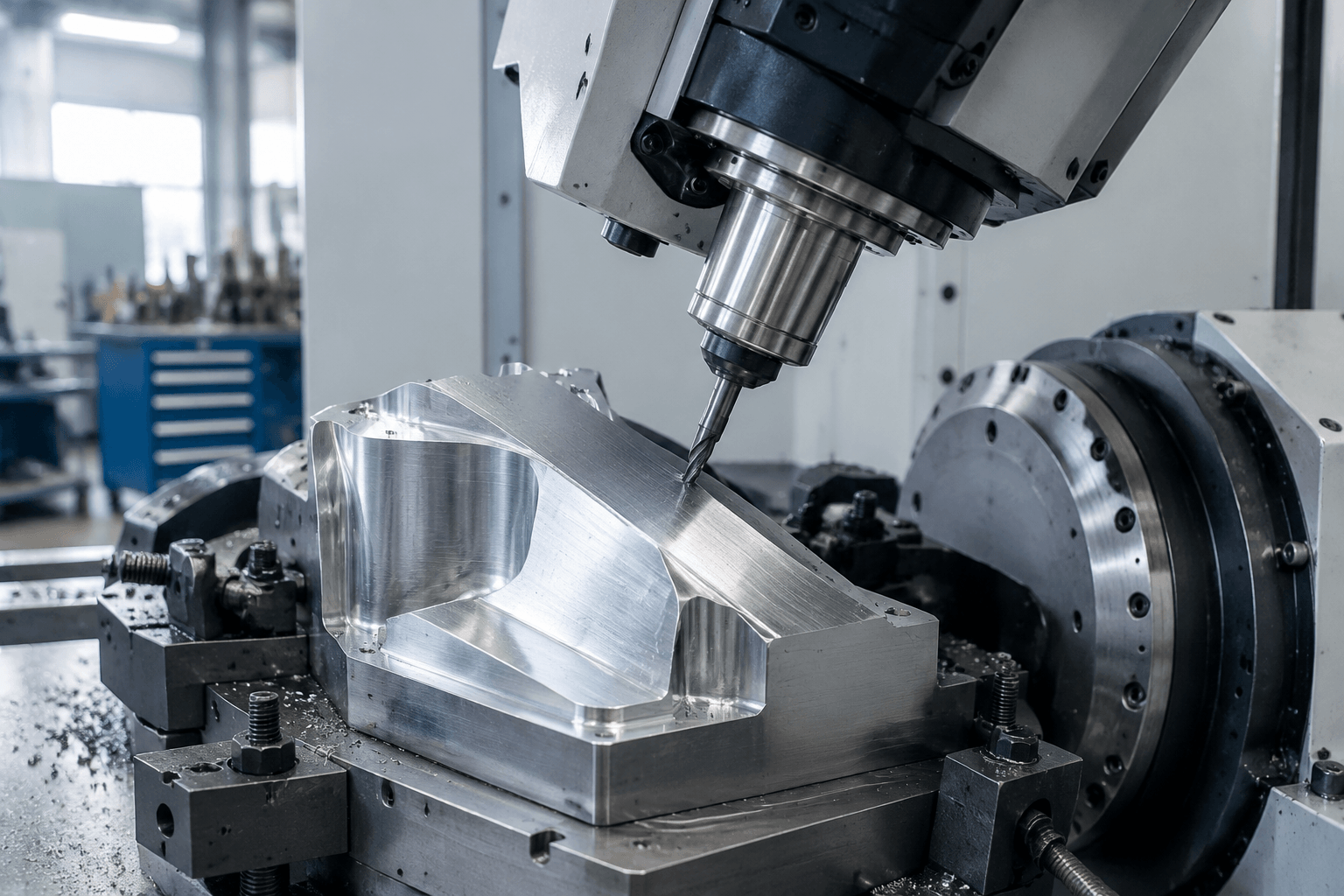
5-axis routing services use CNC cutting or machining equipment with five-axis tool access to reach angled faces, compound contours, and features that may be difficult to produce in one three-axis setup. A suitable service depends on verified machine motion, material, workpiece size, geometry, tolerance, inspection method, and the supplier’s ability to support the specific drawing.
Direct answer: A 5-axis routing service should confirm whether its equipment provides simultaneous five-axis motion or indexed positioning, the supported material and work envelope, the achievable project-specific tolerance, the workholding and tooling approach, and the inspection evidence supplied with the parts. These details matter more than the phrase “5-axis” alone because routing performance changes with material, thickness, geometry, setup, and acceptance requirements.
For an OEM or procurement team, the right comparison is therefore not simply which supplier advertises five axes. The useful question is whether the proposed process can produce your part consistently, document the critical features, and meet the commercial conditions stated in the RFQ.
What a 5-Axis Routing Service Should Confirm
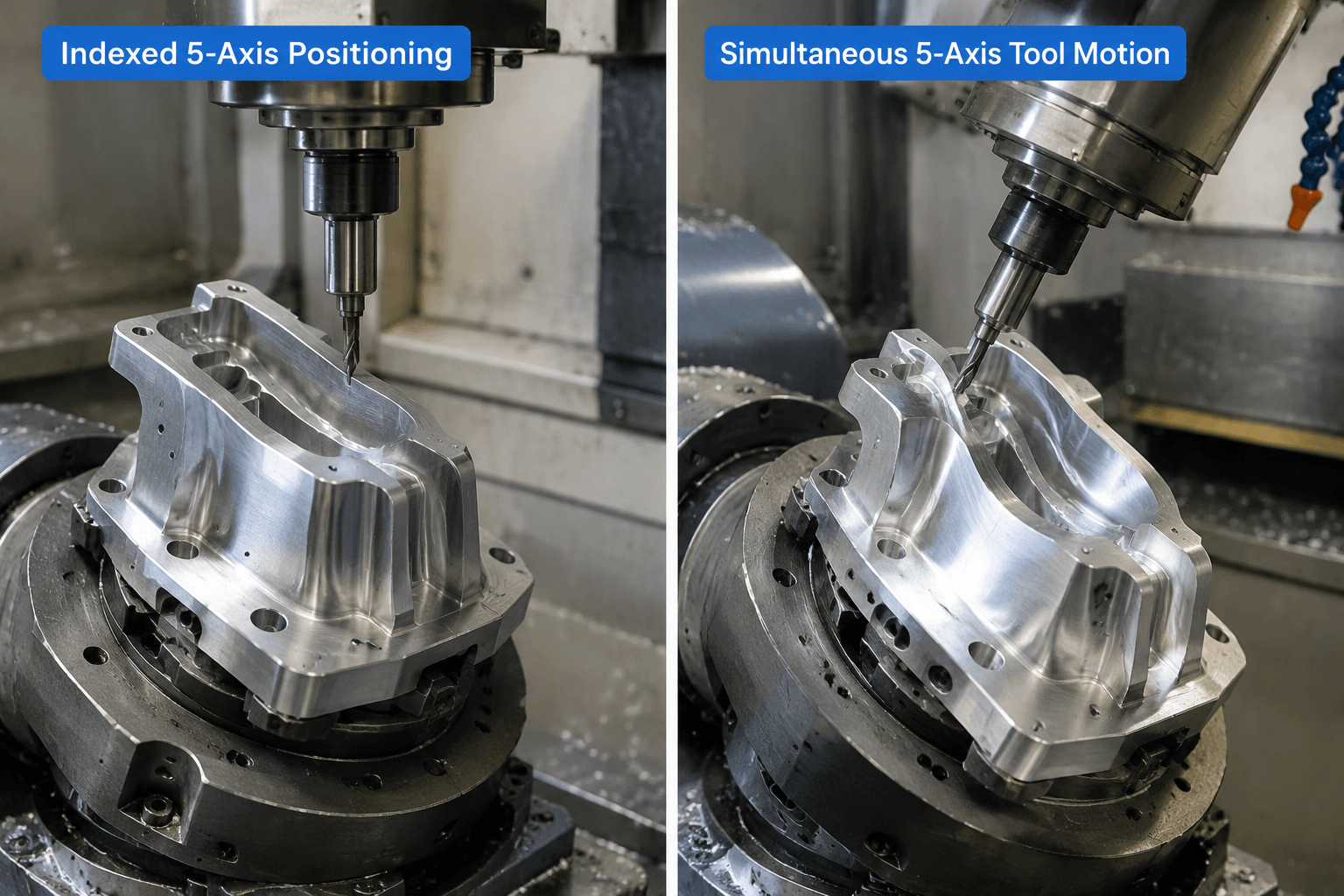
In a conventional three-axis routing operation, the cutting tool moves along three linear axes, commonly described as X, Y, and Z. A five-axis router adds two rotary axes, allowing the tool, workpiece, or both to be oriented from additional directions. This can improve access to angled surfaces, compound contours, bevels, and features around a part without manually repositioning it for every face.
However, “five-axis” can describe different operating modes. With simultaneous five-axis motion, the linear and rotary axes move together during a cutting path. This is useful when the tool orientation must change continuously across a compound surface. With indexed five-axis positioning, the machine rotates or tilts to a selected orientation, stops, and then performs a three-axis cut before repositioning again. Indexed work can still reduce setups and improve access, but it is not the same as continuous five-axis interpolation.
Ask the supplier which mode applies to your part and which features require it. Also confirm the machine’s working envelope, Z clearance, rotary-axis limits, table or fixture arrangement, and the size and weight of the workpiece that can be supported. A five-axis router is not automatically interchangeable with a five-axis milling center. Router suitability depends on the cutting tool, spindle behavior, material, rigidity, chip or dust evacuation, and required surface condition.
Which Projects Are a Good Fit for 5-Axis Routing?
Begin with the material and the geometry rather than the machine label. The same tool path may behave very differently in a rigid aluminum plate, a heat-sensitive plastic, a laminated wood panel, or a fiber-reinforced composite. The table below identifies questions to resolve during a feasibility review.
| Project factor | What to verify with the supplier | Typical risk to discuss |
|---|---|---|
| Material | Can the supplier process the specified grade, density, reinforcement, or laminate consistently? | Heat buildup, delamination, burrs, dust, chip evacuation, or tool wear. |
| Size and thickness | What are the usable workpiece dimensions, Z clearance, and supported stock thickness under the required setup? | Interference, inadequate reach, unstable workholding, or inability to complete deep features. |
| Geometry | Can the machine access angled faces, compound contours, deep pockets, and undercut-like surfaces? | Tool collision, excessive tool engagement, limited internal corner radii, or extra setups. |
| Thin features | How will thin walls, narrow ribs, unsupported edges, and flexible panels be held during cutting? | Vibration, distortion, edge breakout, or dimensional movement after release. |
| Functional requirements | Which dimensions, holes, angles, edges, and surfaces are critical to assembly or performance? | A visually acceptable part that fails at an interface or does not meet the datum scheme. |
For plastics, ask how the supplier controls heat and whether the selected tool and cutting conditions are appropriate for the grade. Acrylic and other heat-sensitive materials may develop melted or smeared edges if heat is not removed effectively. Wood and composite panels raise additional questions about tear-out, fiber direction, dust extraction, layer separation, and edge sealing. Aluminum may require confirmation of rigidity, chip evacuation, tool selection, burr control, and whether routing or milling is the better process for the required tolerance and finish.
Geometry also determines whether five-axis access provides a real advantage. Angled external surfaces and compound contours can be good candidates. Very small internal radii still require a tool with a corresponding radius; five-axis movement does not create a sharp internal corner. Deep narrow cuts may cause tool deflection or poor chip evacuation, while thin unsupported features can chatter or move under cutting forces. Separate cosmetic edge requirements from functional requirements: “no visible melt,” “no fiber breakout,” “clean deburred edge,” and a dimensional tolerance are different acceptance criteria.
How to Evaluate Capability and Quality Claims
A supplier’s capability statement should be converted into questions that can be answered against your drawing. First, request the machine configuration relevant to the job: rotary-axis arrangement, usable travel, Z clearance, table or fixture limitations, and whether the quoted process is simultaneous or indexed. The answer should explain how the equipment will reach your critical surfaces, not merely confirm that five axes exist.
Next, separate a published general tolerance from a project-specific commitment. A tolerance may depend on material stability, part size, thickness, geometry, setup count, tool wear, temperature, datum definition, and measurement method. Ask the supplier to identify which dimensions can be controlled as specified, which require a design review, and which should be relaxed or assigned a different process. Do not treat a broad tolerance statement as applicable to every feature on every routed part.
Programming and simulation are also relevant. Ask whether the tool path will be reviewed for collision risks, rotary-axis limits, holder or fixture interference, tool access, and gouging on compound surfaces. Confirm how the supplier will control chatter, tool deflection, thin-feature movement, and edge quality. Workholding should be part of this discussion because vacuum, clamps, fixtures, sacrificial boards, or custom supports can each affect access and dimensional stability.
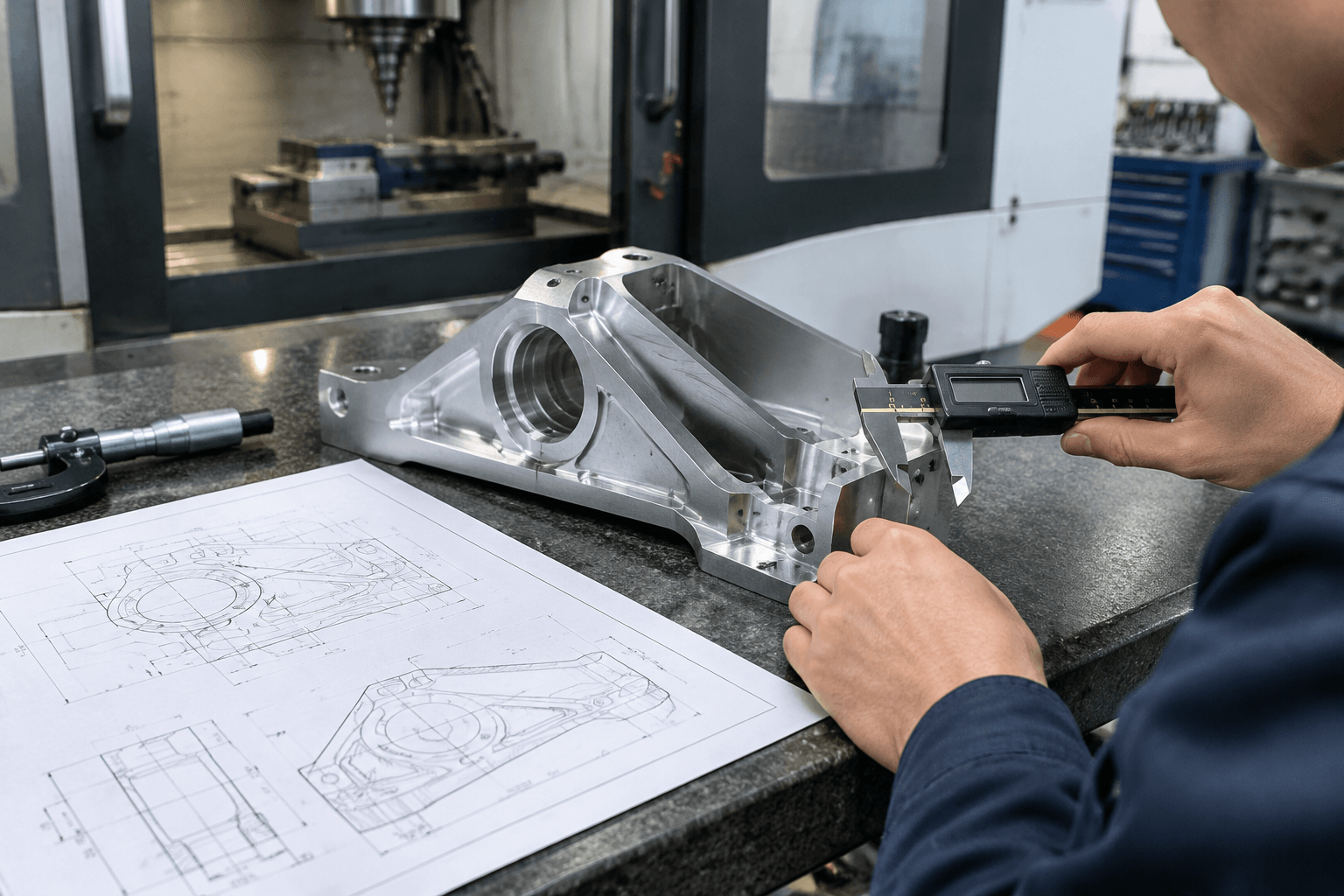
Inspection evidence should match the risk of the part. Clarify the measurement equipment and method, the datum scheme, the inspection sampling plan, and whether a dimensional report is available. For critical features, request agreement on the report format, measured characteristics, inspection timing, and acceptance criteria before production. A photograph of a finished edge does not verify a positional or profile requirement, and a measurement report is only meaningful when the drawing, datums, and method are aligned.
Finally, confirm how nonconforming parts, rework, tool marks, burrs, melted edges, and cosmetic variation are handled.
What Affects Service Price and Lead Time?
Two quotations for the same 5-axis routing project can differ because they include different assumptions. Material cost is affected by grade, stock dimensions, thickness, minimum purchasing quantity, yield, nesting, and waste. A large blank with low material utilization may cost more than the finished part dimensions suggest. Plastics, wood, composites, and aluminum also require different tooling and process controls.
Manufacturing cost includes programming, simulation, setup, workholding, tool changes, cutting time, deburring, edge treatment, and finishing. A compound contour may require more programming and verification than a flat profile, while a part with several orientations may need additional fixturing. Inspection can range from basic in-process checks to documented measurement of specified critical features. Packaging must also protect edges, surfaces, and thin sections during shipment.
Quantity changes the commercial balance. A prototype or one-off part may carry a larger share of programming and fixture cost, while a repeat batch may justify dedicated workholding or optimized nesting. Rush machining, online machining, or quick-turn services can be useful alternatives, but the shorter requested schedule still needs confirmation of material availability, programming capacity, inspection scope, and shipping conditions.
Compare quotations line by line: material, tooling, setup, programming, inspection, finishing, packaging, freight, delivery destination, and any assumptions about revisions or supplied stock. Generic price and lead-time ranges are not reliable without those project conditions. A supplier that clearly identifies exclusions may be easier to evaluate than one that gives a lower but incomplete number.
5-Axis Routing Information to Include in a Supplier Request
A useful RFQ gives the supplier enough information to assess process fit before pricing. Include the following items and ask the supplier to return assumptions or exclusions with the quotation.
| Information to provide | Question the supplier should answer |
|---|---|
| CAD file and drawing revision | Can the current geometry be programmed, and are there conflicts between the model and drawing? |
| Material, grade, thickness, and stock condition | Is the material suitable for routing, and what tooling or heat-control conditions apply? |
| Overall dimensions and quantity | Does the workpiece fit the confirmed envelope, clearance, and workholding arrangement? |
| Critical dimensions, datums, and tolerances | Which requirements are standard, which are project-specific, and how will they be inspected? |
| Geometry and access notes | Will the job use simultaneous or indexed motion, and are any features better made by milling or another process? |
| Edge, surface, and finishing requirements | How will burrs, melt, fiber breakout, tool marks, coating, polishing, or edge sealing be controlled? |
| Inspection and documentation | What measurements, report format, sampling plan, and acceptance criteria are included? |
| Packaging and requested delivery date | What packaging method, shipping scope, and schedule assumptions apply? |
Yishang has more than 26 years of experience manufacturing custom sheet metal parts and metal products, serves OEM and ODM projects, and exports to more than 50 countries. Those verified facts relate to its custom metal manufacturing scope; they should not be read as confirmation of an unverified 5-axis routing capability.
For a project-specific capability review, send the current CAD files and drawings together with material, thickness, dimensions, quantity, critical tolerances, edge and surface requirements, finishing, inspection, packaging, and requested delivery information. Also identify any features you want compared between routing, milling, or another process. A defensible response should state the proposed process, motion mode, open assumptions, inspection evidence, and any exclusions before the quotation is accepted.
Frequently Asked Questions
What are the five axes in a CNC routing service, and does every provider use them simultaneously?
The five axes generally combine three linear movements with two rotary movements. Not every provider uses all five axes simultaneously. Indexed five-axis positioning changes the tool or workpiece orientation between cutting operations, while simultaneous five-axis motion changes orientation during the tool path. Ask which mode applies to the specific features on your drawing.
How much does a 5-axis routing service cost?
There is no reliable universal price without project information. Material, stock size, thickness, waste, geometry, programming, setups, tooling, workholding, quantity, inspection, finishing, packaging, and shipping all affect the quote. Rush requirements and material availability can also change the commercial result.
What materials and thicknesses can a 5-axis router process?
Possible materials include plastics, wood, composites, and some aluminum applications, but the supported grades and thicknesses must be confirmed with the supplier. Work envelope, Z clearance, rigidity, tooling, heat control, dust or chip evacuation, and workholding determine whether a particular material and thickness are suitable.
Can 5-axis routing achieve tight tolerances, and what inspection evidence should the buyer request?
It may meet demanding tolerances on selected features, but the result depends on material, size, geometry, setup, tool condition, temperature, datums, and measurement method. Request project-specific tolerance confirmation, the inspection method and equipment, the characteristics to be measured, the sampling plan, and a dimensional report when the application requires documented acceptance.