
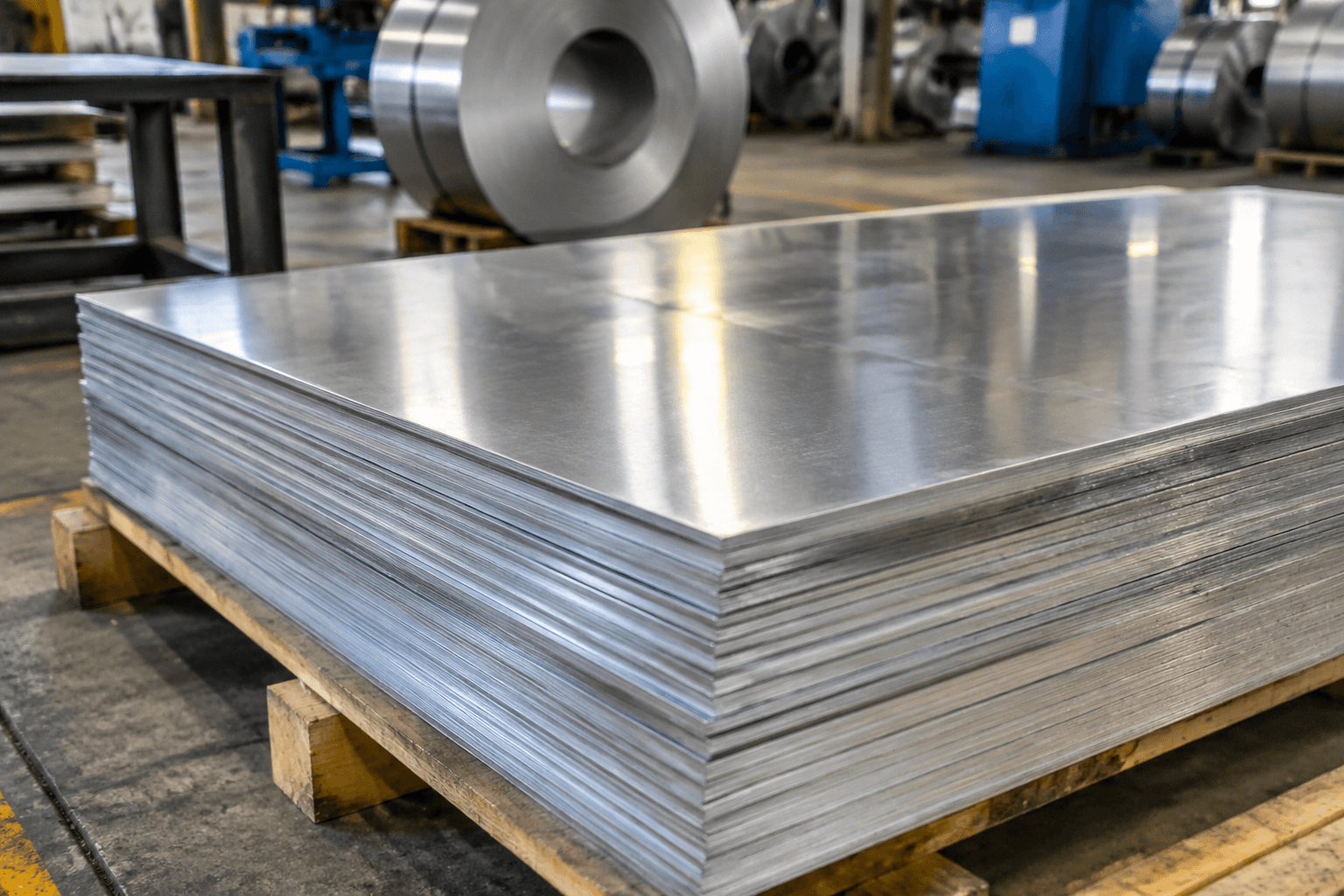
7075 is a high-strength aluminium alloy whose properties depend on its temper and product form. The alloy designation identifies the material family; it does not, by itself, specify strength, corrosion behavior, or fabrication response. Before using a published property value or specifying a part, confirm the exact temper, product form, and governing material specification.
What 7075 means
7075 is an aluminium alloy designation used for a high-strength alloy. UNS A97075 is the corresponding Unified Numbering System designation for the alloy identity. Neither designation alone says whether the material is in a T6, T7351, or other temper. Those suffixes describe condition and processing history, so they must not be treated as interchangeable names for the same property profile.
In practical terms, a material callout needs to identify both the alloy and its required condition. Product form matters too: plate, sheet, bar, and extrusion can have different applicable specifications and published property requirements. A value reported for one form or thickness is not automatically valid for another.
How temper affects the property profile
Temper indicates processing after the alloy has been produced, including heat treatment and, for some tempers, stress-relief steps. T6 generally refers to solution heat treatment followed by artificial aging. T7351 denotes an overaged condition with stress relief by stretching; it is not another way of writing T6. The resulting properties and tradeoffs differ, and the exact requirements depend on the product specification.
| Property or designation | What to verify |
|---|---|
| Tensile strength | Use the minimum or allowable value for the specified temper, product form, thickness, and material specification. Do not apply a generic 7075 value. |
| Yield strength | Check the same condition-specific source as tensile strength. Yield values can differ by product form and temper. |
| Density | Confirm the value and source required for the design calculation. Density is not a substitute for strength data and does not establish a part’s allowable load. |
| Young’s modulus | Use a cited material reference appropriate to the design method. Temper should be identified alongside the source, even where a reference treats modulus as broadly similar across conditions. |
| T6 and T7351 | Specify the complete temper and product form. They represent different conditions; do not transfer a property value from one to the other. |
This table is a verification guide, not a set of design values. No numerical strength, density, or modulus values are given here because a usable value requires a reliable source tied to the actual temper and product form. For design allowables or acceptance limits, use the applicable material specification, certified material documentation where required, and engineering review.
Heat treatment, machining, and joining
7075 is heat-treatable, but heat treatment is not a generic repair or finishing step. The intended temper depends on a controlled processing route and the applicable specification. Heating a finished part, changing its temper, or relying on a post-process treatment can alter its properties and dimensions. Any such route needs validation for the specific alloy, product form, geometry, and requirements.
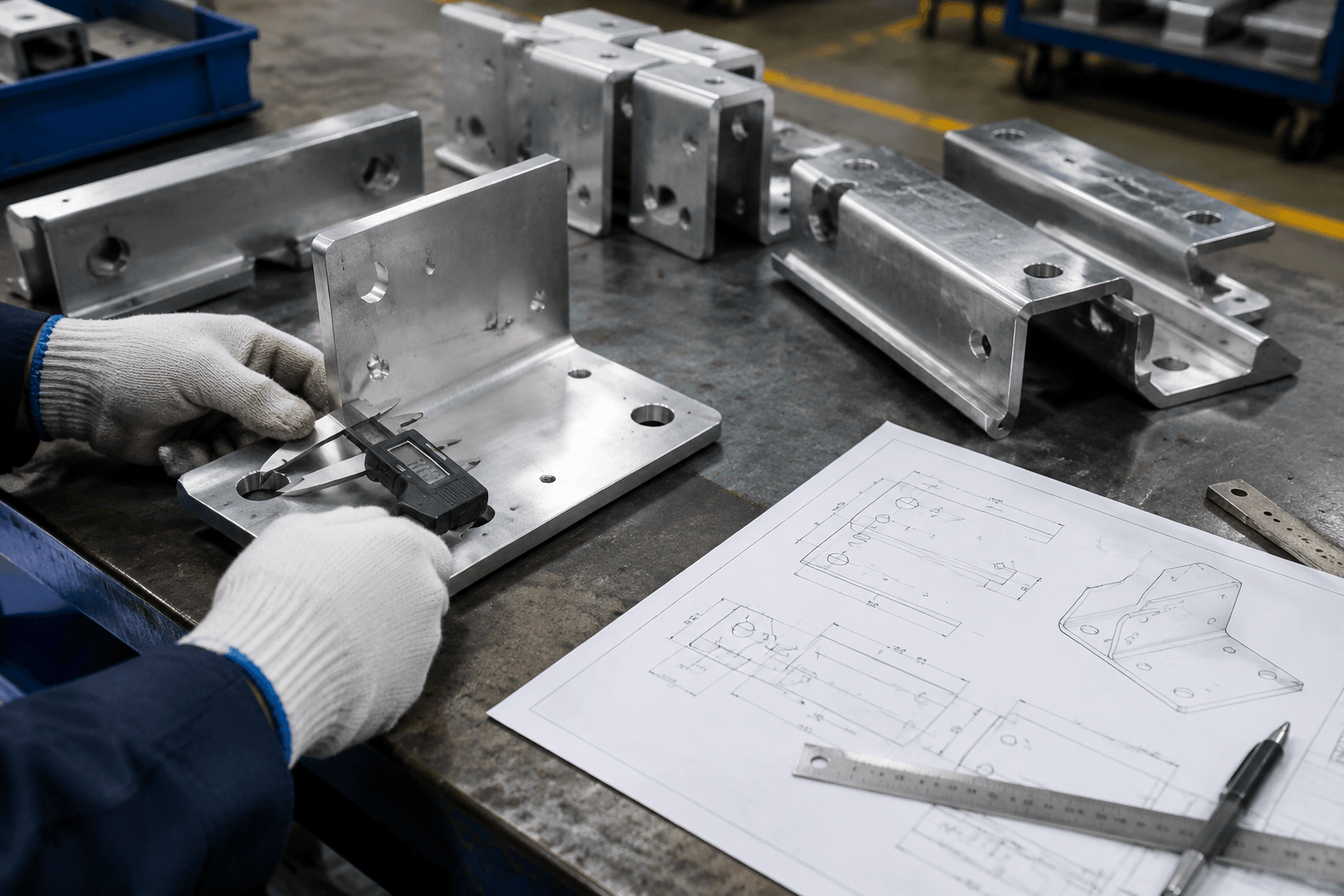
Machining a 7075 component is distinct from forming sheet, welding, finishing, assembly, and inspection. Each involves different material and part considerations. Machining removes material from a selected product form; it does not make sheet-forming or welding assumptions valid. For a sheet-metal design, assess the intended forming operation and specified condition with a qualified engineering source rather than assuming a machined-part property profile applies.
Welding 7075 is generally not a routine joining assumption. Its high-strength heat-treated conditions are susceptible to weld-related loss of properties and cracking concerns, and a joint can behave differently from the unwelded parent material. A particular joint, process, filler, and post-weld condition require qualified engineering review and part-specific validation. If joining is essential, establish the joint requirements before choosing the alloy and temper.
Finishing and assembly also require part-specific consideration. A coating or other surface treatment may affect dimensions, fit, or corrosion performance, while assembly requirements may introduce local loads or joining constraints. Inspection should be set by the drawing and governing requirements; the fact that a component is 7075 does not determine inspection criteria by itself.
When to consider 7075
7075 may be worth considering when a design needs a high-strength aluminium alloy and the selected product form and temper can meet the component’s requirements. It is not universally the strongest or best aluminium choice. A selection should balance required strength and stiffness with corrosion environment, joining needs, forming route, product form, availability of the specified condition, and the applicable design or acceptance requirements.
For example, a machined component whose design depends on a specified strength condition raises different questions from a formed sheet component or a welded assembly. In the first case, the designer needs property data matching the stock form and temper. In the latter cases, forming and joining behavior may be central constraints, and the material choice may need reconsideration or engineering qualification. These are decision examples, not claims about a particular customer application.
For a custom component, first identify the function and critical performance requirements, then confirm the alloy, temper, product form, and applicable specification. Check whether the intended manufacturing route is compatible with those requirements. If the design includes welding, forming, or a heat-treatment change, resolve that issue before releasing the material callout. Transportation applications can involve varied component requirements; see custom metal fabrication for automotive and transportation equipment for general industry context, not as evidence of 7075-specific capability.
Specification checks by temper and product form
| Design question | What to establish |
|---|---|
| Which condition is required? | State the complete alloy and temper, such as 7075-T6 or 7075-T7351, only where that condition is supported by the design and governing requirements. |
| What form is being used? | Identify plate, sheet, bar, extrusion, or the actual stock form. Confirm the applicable specification and property data for that form and relevant dimensions. |
| Which properties control? | Identify the required tensile, yield, density, modulus, or other design inputs and record their source and applicability. Do not substitute a generic alloy summary for design allowables. |
| How will the part be made? | Separate machining from forming, welding, finishing, assembly, and inspection. Flag any process that could change properties or affect the specified condition. |
| What environment and constraints apply? | Review corrosion exposure, joining needs, product-form constraints, and sourcing of the specified condition against the project requirements. |
A custom component drawing can make these decisions concrete. Yishang supports OEM and ODM custom manufacturing for B2B projects; for a manufacturability discussion, share the part drawing or model, required alloy and temper if known, product form, quantity range, and critical performance or joining requirements. This is a project review invitation, not confirmation of 7075 material supply or a particular process capability.
Where RFQ Assumptions Create Cost and Production Risk
Many sheet metal fabrication problems begin before production starts. If drawings, tolerances, finish expectations, material grades, or assembly requirements are unclear, suppliers may quote based on different assumptions. That can make prices difficult to compare and may lead to rework, cosmetic rejection, assembly misalignment, or production delays later.
For OEM buyers, the goal is not simply to request the lowest price. The goal is to make sure each supplier is quoting the same manufacturing reality. Before confirming an order, clarify which dimensions are fit-critical, which surfaces are cosmetic, whether prototypes must match batch-production conditions, and how finished parts will be inspected.
Frequently Asked Questions
What 7075 aluminium alloy details should buyers define before requesting a quote?
Buyers should define the functional requirement, drawing notes, critical dimensions, material or process expectations, and any inspection points related to 7075 aluminium alloy. This helps suppliers quote the same manufacturing scope instead of making different assumptions.
How can RFQ details affect cost, fit, or lead time?
RFQ details can change tooling, forming, welding, finishing, inspection, or rework requirements. If buyers do not clarify it early, two supplier quotes may look comparable while covering different production risks.
Why should drawing requirements be reviewed before prototype approval?
drawing requirements may look acceptable on a single sample but become harder to control during batch production. Buyers should confirm whether the prototype reflects the same process, finish, and inspection conditions expected for production.
What inspection points matter most for 7075 aluminium alloy projects?
Important inspection points usually include fit-critical dimensions, holes or mating areas, cosmetic surfaces, finish build-up, welded or formed features, and any dimensions that affect downstream assembly. These points should appear in the RFQ or drawing notes.
How can buyers reduce prototype approval risk before batch production?
Buyers can reduce risk by clarifying drawings, locking key material and finish assumptions, defining inspection timing, approving a representative sample, and confirming which dimensions or surfaces require tighter process control.
How can Yishang help review 7075 aluminium alloy requirements?
Yishang can review drawings, RFQ notes, material requirements, tolerance expectations, finish details, samples, and assembly needs to identify unclear assumptions before quoting or batch production.