
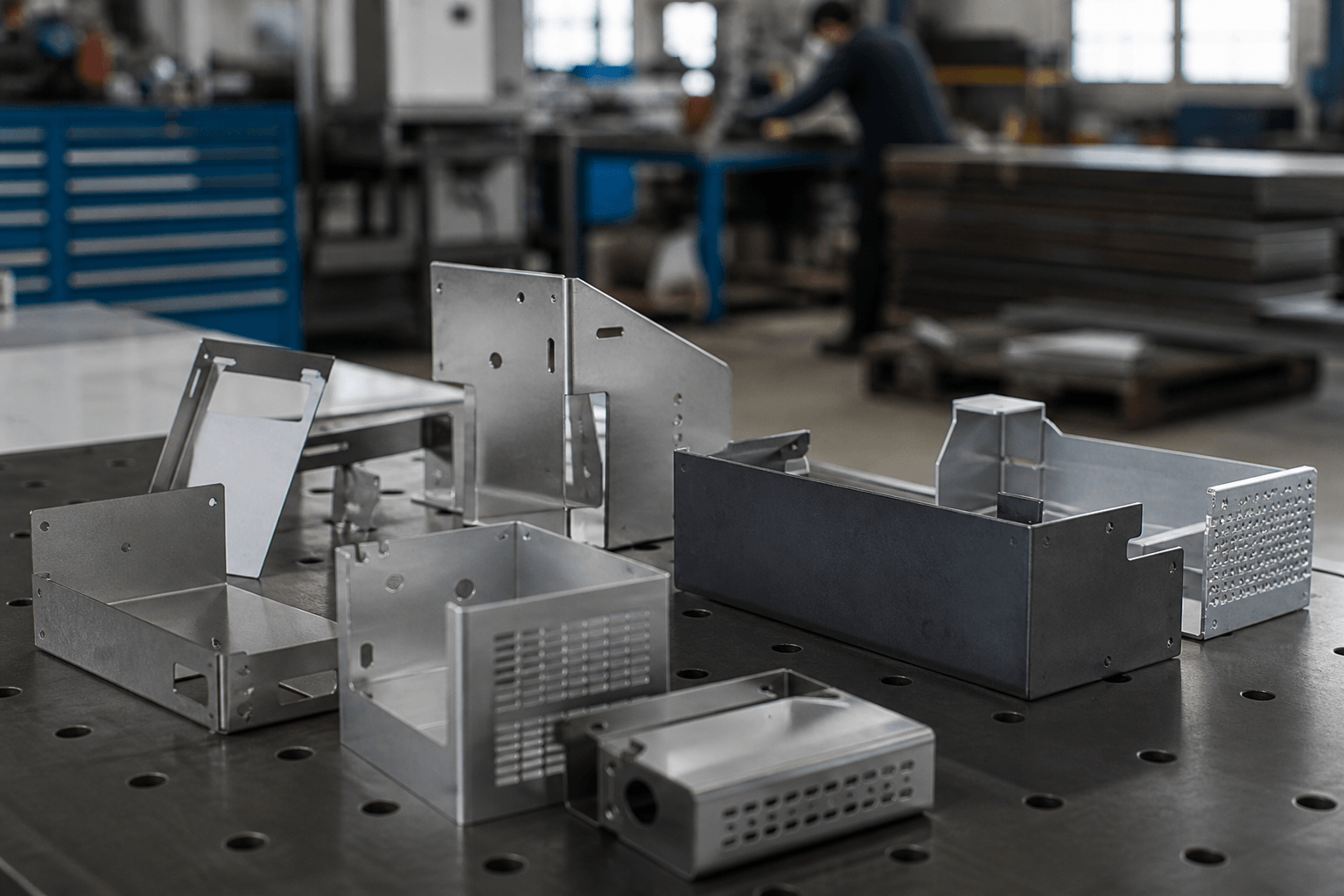
Rapid prototyping turns a digital design into a physical or functional model early in product development. Its main advantages are faster feedback, earlier fault detection, lower design-change risk, improved communication, and better validation of fit, assembly, ergonomics, and manufacturability.
These benefits are not automatic. A prototype is useful only when its material, process, accuracy, and inspection method match the questions the development team needs to answer. A visual 3D-printed model can clarify appearance, for example, but it may not predict the strength, bend behavior, finish, or dimensional variation of a production sheet metal part.
How Rapid Prototyping Supports Product Development
Rapid prototyping is an iterative development approach rather than one specific manufacturing process. A team creates a model, evaluates it, changes the design, and produces another version when necessary. Depending on the objective, the prototype may be made through additive manufacturing, CNC machining, sheet metal fabrication, casting, soft tooling, or a combination of processes.
The word “rapid” is relative. It means shortening the path from a design concept to useful physical feedback, not necessarily producing every part within a fixed number of hours or days. Complexity, material availability, outsourced operations, finishing, inspection, and design revisions all affect timing.
Prototypes also vary in fidelity. Some represent only size and appearance. Others use production-intent materials and processes to evaluate mechanical interfaces or manufacturing behavior. Defining the required fidelity prevents a team from paying for unnecessary detail or drawing unsupported conclusions from a simple model.
The Main Advantages of Rapid Prototyping
1. Design faults can be found earlier
A CAD model may look complete while still containing interference, inaccessible fasteners, weak mounting features, unsuitable bend locations, or incorrect clearances. A physical prototype makes many of these issues easier to observe. Discovering them before tooling, procurement, or batch production generally gives the team more options for correction.
Early detection does not guarantee that all faults will disappear. It reduces uncertainty by creating another opportunity to inspect and test the design before larger commitments are made.
2. Iterations become more focused
Without a prototype, design discussions can remain theoretical. Once a part can be handled, assembled, or measured, feedback becomes more specific: a flange needs additional clearance, a hole is difficult to access, a cover flexes during use, or a control is poorly positioned.
This evidence helps engineers prioritize changes rather than redesigning around assumptions. Separate prototype versions can also isolate variables, such as comparing two bracket geometries while keeping the material and mounting arrangement unchanged.
3. Fit and assembly interfaces can be checked
Products often fail at interfaces rather than within individual components. Rapid prototypes can reveal whether tabs enter slots, fasteners align, cables have enough routing space, doors open without collision, and mating parts can be assembled in the intended sequence.
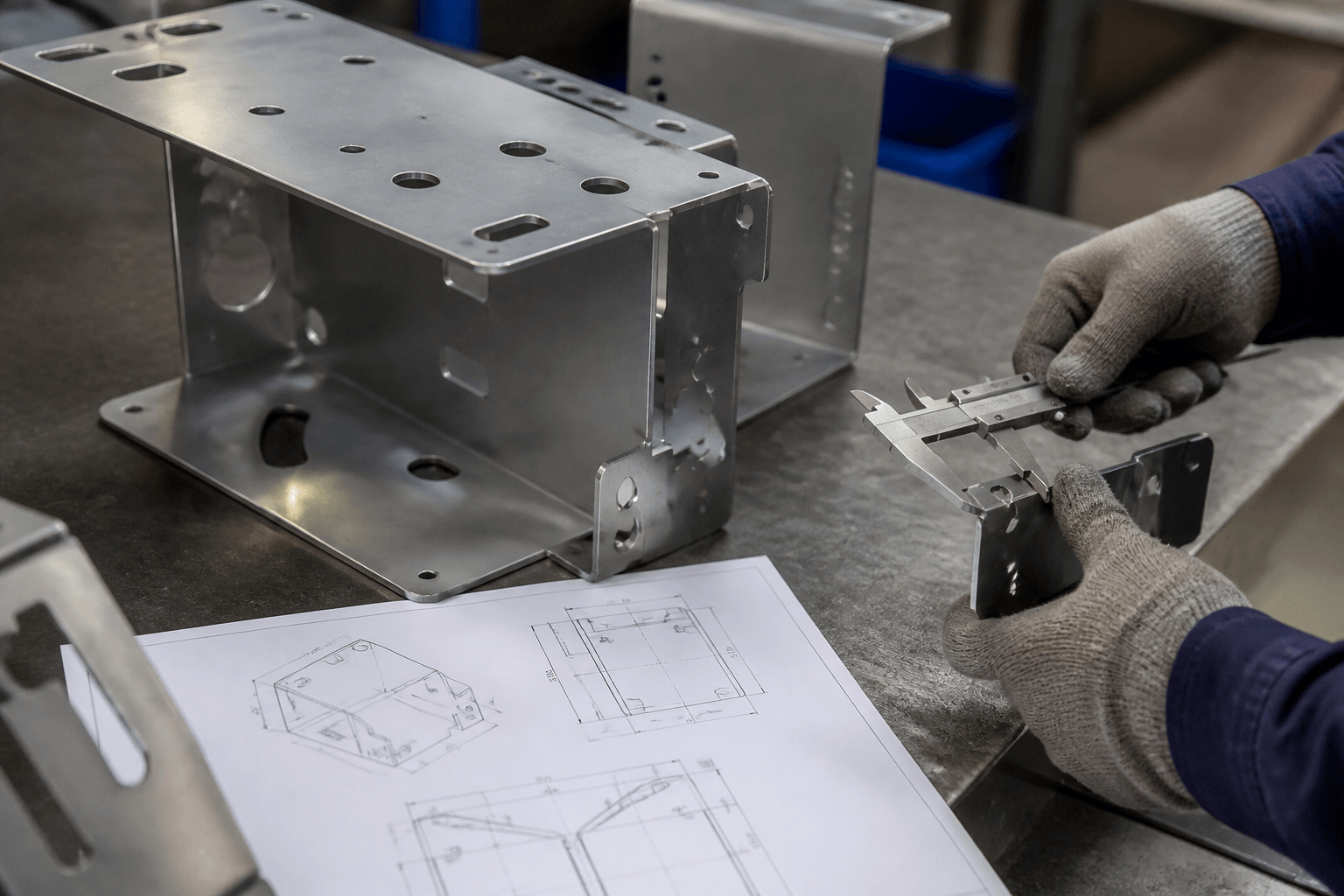
For useful validation, the prototype must represent the relevant interfaces accurately. Hole position, formed geometry, coating allowance, hardware, weld location, and tolerance accumulation may all matter. A rough appearance model is usually insufficient when the objective is to approve assembly fit.
4. Users and stakeholders can give clearer feedback
Physical models are easier for many non-specialists to assess than drawings or rendered images. Product managers can review proportions, operators can comment on access, and assembly personnel can identify handling difficulties. For user-facing products, a prototype may also expose ergonomic or usability problems that are not obvious on a screen.
The evaluation should use defined questions. Asking whether a prototype “looks good” produces subjective feedback; asking whether a gloved operator can reach a latch or read a display produces more actionable information.
5. Communication across companies improves
Rapid prototyping gives buyers, designers, and manufacturers a shared reference. Marked-up photographs, inspection records, revision-controlled drawings, and physical samples can make change requests less ambiguous. This is particularly valuable when engineering and production teams work in different locations or languages.
A prototype does not replace technical documentation. The approved drawing, revision level, material specification, tolerances, finish requirements, and acceptance criteria should still control manufacturing.
6. Critical assumptions can be tested before scaling
Producing a small number of parts allows a team to investigate critical assumptions before ordering a larger quantity. Testing may cover fit, basic function, load behavior, environmental exposure, appearance, or assembly time, depending on the product.
The potential saving comes from avoiding late changes, not simply from making a prototype cheaply. A low-cost model that cannot answer the intended engineering question may add time without reducing meaningful risk.
Choosing Prototype Fidelity for the Question Being Asked
One of the most important rapid prototyping decisions is how closely the model must represent the final product. Higher fidelity can provide stronger evidence, but it usually requires more manufacturing effort, documentation, and inspection.
| Prototype level | Suitable questions | Important limitation |
|---|---|---|
| Visual or concept model | Is the overall shape, size, layout, or appearance suitable? | May not represent production material, strength, tolerances, or finish. |
| Fit-check model | Do major components occupy the intended space and connect correctly? | Results depend on the accuracy of critical interfaces. |
| Functional prototype | Does the mechanism or assembly perform the required basic function? | Alternative materials and processes may change performance. |
| Production-intent prototype | Can the design be assessed using the intended material and a comparable manufacturing route? | Small prototype quantities may still differ from batch production conditions. |
The right level depends on the cost of uncertainty. A simple enclosure mock-up may be enough to review control placement. A load-bearing bracket may require production-intent material, realistic bends, actual fasteners, and an agreed test method. Cosmetic approval may require defined finish samples, viewing conditions, and acceptable surface criteria.
Teams should document what each prototype proves and what it does not. This prevents approval of one characteristic, such as external dimensions, from being mistaken for approval of strength, corrosion resistance, or volume-production capability.
Rapid Prototyping for Sheet Metal Parts and Assemblies
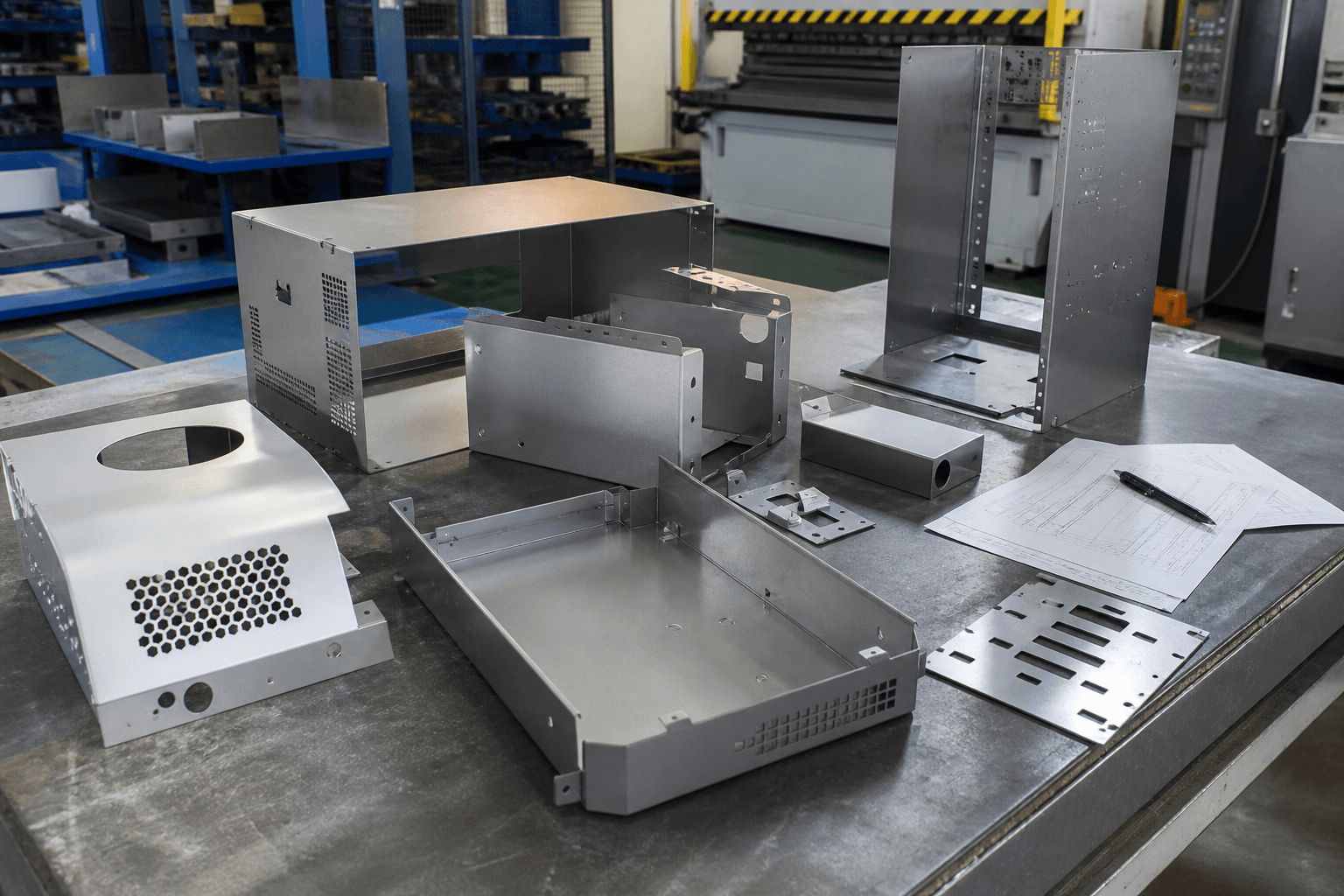
In sheet metal development, prototypes can validate more than the flat pattern. Cutting, bending, welding, hardware insertion, grinding, finishing, and assembly all influence the final result. Material grade and thickness affect bend response, stiffness, weight, and forming feasibility. Coatings can alter mating clearances, while welding can introduce distortion.
Drawing clarity is therefore central to prototype value. A useful fabrication package identifies the material, thickness, formed dimensions, critical tolerances, bend requirements where necessary, hardware, weld expectations, finish, cosmetic surfaces, and assembly relationships. A 3D model can support interpretation, but it should not leave critical acceptance requirements undefined.
Tolerances deserve particular attention. Applying tight tolerances to every dimension can increase fabrication and inspection effort without improving function. Instead, designers can identify the dimensions that control fit, alignment, sealing, movement, or safety. Measurement methods should also be considered because some formed or welded features are difficult to assess consistently without suitable fixtures or datums.
A sheet metal prototype should not automatically be treated as proof of batch consistency. Prototype work may involve extra manual adjustment, a different setup strategy, or material purchased in a small quantity. Before scaling, the supplier and buyer should review which operations will change, what fixtures or tooling may be needed, and how critical characteristics will be inspected.
Moving from Prototype Approval to Production
Prototype approval should be a controlled decision rather than an informal statement that the sample is acceptable. The team can record the tested revision, approved characteristics, unresolved issues, permitted deviations, and required changes. Once revisions are complete, drawings, bills of materials, inspection requirements, and finish specifications need to reflect the same configuration.
Cost and timing should also be reassessed. Prototype pricing can include one-time programming, setup, special material purchasing, manual finishing, or external processes. Batch production may distribute some setup costs across more units, but it may introduce fixtures, tooling, packaging, process-control, or inspection requirements that were unnecessary for one sample.
For outsourced prototyping, supplier communication is as important as fabrication speed. Buyers should explain the purpose of the prototype and identify which features are critical. A supplier can then distinguish between requirements that must represent production and features that only need to support a concept review.
A disciplined transition preserves what was learned during prototyping. It also reduces the risk of an approved sample and the production drawing describing different parts. Revision control, documented acceptance criteria, and communication of design changes remain necessary even when the prototype performs as expected.
Frequently Asked Questions
What is a rapid prototyping model?
A rapid prototyping model is a physical representation created early enough to support design evaluation and iteration. It may be a visual model, a fit-check part, a functional assembly, or a production-intent prototype. Its usefulness depends on whether its material, accuracy, and manufacturing method match the intended evaluation.
How do you choose the right prototype fidelity?
Choose prototype fidelity based on the question the model must answer. A visual prototype may be sufficient for reviewing shape or layout, while fit, function, or manufacturing behavior may require accurate interfaces, production-intent materials, comparable processes, and defined inspection or test methods.
What makes prototyping faster?
Prototyping becomes faster when the design question is clearly defined, files are complete, critical tolerances are identified, suitable materials are available, and unnecessary features or finishes are postponed. Fast feedback also depends on prompt design decisions and controlled revision communication, not only on machine speed.
Does a successful prototype guarantee successful mass production?
No. A prototype can provide evidence about selected design characteristics, but production introduces different setup, tooling, process-control, sourcing, inspection, and consistency considerations. The team should review how the prototype was made and determine whether its materials, processes, tolerances, and acceptance criteria can transfer to the intended batch quantity.