
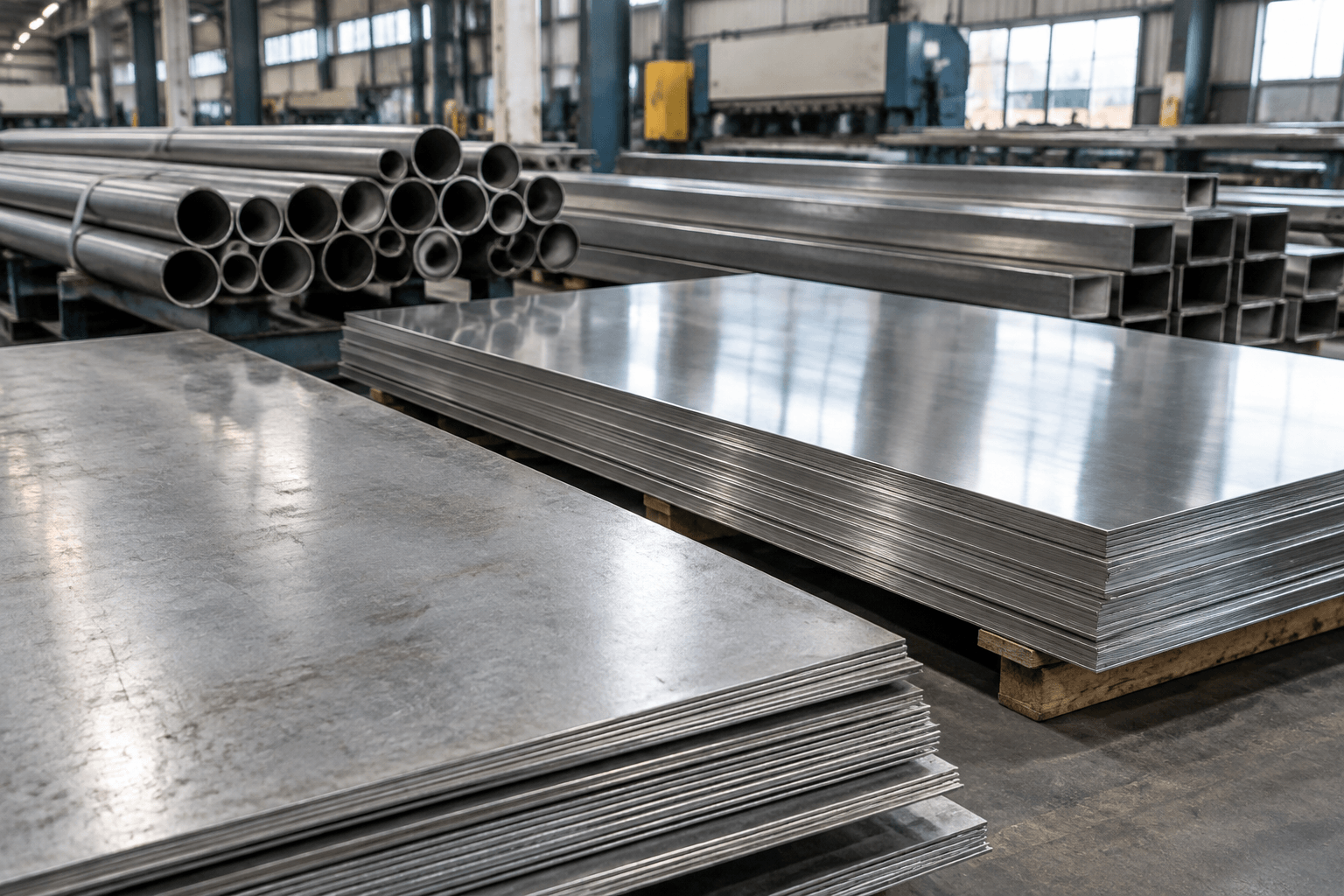
The terms alloy and stainless are often used as if they describe two separate types of metal. Technically, an alloy is the broader category, while stainless steel is a specific family of iron-based alloys. All stainless steels are alloys, but most alloys are not stainless steel.
This distinction matters when selecting material for fabricated parts. “Alloy” alone does not identify corrosion resistance, strength, formability, weldability, appearance, or cost. Buyers and engineers need the alloy family, grade or specified composition, product form, condition, and finish before they can judge whether a material is suitable.
How Are Alloy and Stainless Steel Related?
An alloy contains two or more chemical elements, usually with at least one metallic element. The added elements alter the structure or behavior of the base metal. Alloy constituents are normally expressed by mass percentage in manufacturing specifications, although scientific studies may also describe them by atomic fraction.
Steel is itself an alloy. It is primarily iron combined with carbon and, depending on the grade, elements such as manganese, chromium, nickel, molybdenum, or silicon. Carbon can increase strength and hardness, but higher carbon content may reduce ductility and affect welding behavior.
Stainless steel is steel containing enough chromium to form a thin, adherent chromium-rich oxide layer at the surface. This passive layer gives stainless steel its characteristic resistance to many forms of corrosion. Stainless does not mean completely immune to rust or chemical attack. Performance still depends on the grade, environment, surface condition, fabrication history, and maintenance.
In commercial conversation, “alloy steel” sometimes means a non-stainless steel with intentional additions of chromium, molybdenum, nickel, or other elements. That usage can create confusion because stainless steel is also an alloy steel in the scientific sense. A drawing or purchase order should therefore use a recognized grade or a complete material specification rather than relying on the word “alloy.”
What Alloying Elements Change in Stainless Steel
Alloying elements influence several properties at the same time. Improving one characteristic can introduce a cost or manufacturing tradeoff elsewhere, so composition should be connected to the service conditions rather than treated as a simple quality ranking.
- Chromium: Supports formation of the passive surface layer and is fundamental to stainless behavior. Increasing chromium can improve resistance in some oxidizing environments, but chromium content alone does not determine performance in every chemical or chloride exposure.
- Nickel: Helps stabilize the austenitic structure and generally supports ductility, toughness, and formability. Nickel-bearing grades are widely used for formed and welded sheet metal products, although their material cost may differ from nickel-free or lower-nickel alternatives.
- Molybdenum: Can improve resistance to localized attack, particularly pitting and crevice corrosion in certain chloride-containing environments. It is one reason 316-family stainless is often considered where 304 may be insufficient.
- Carbon: Contributes to strength and hardness but can affect weld-zone corrosion behavior in some stainless grades. Low-carbon variants may be specified for welded fabrications when the applicable design and material requirements call for them.
- Nitrogen: Can increase strength and contribute to pitting resistance in selected austenitic and duplex compositions.
- Manganese and silicon: Serve metallurgical functions during steelmaking and can influence strength, oxidation behavior, and processing, depending on their levels and the complete composition.
Alloy behavior also depends on atomic arrangement and microstructure. Alloying atoms may replace base-metal atoms in a substitutional solid solution or occupy spaces between them in an interstitial solution. Materials can be homogeneous, contain multiple phases, or form intermetallic compounds. These differences help explain why two metals with similar headline chemistry may respond differently to forming, heat treatment, machining, or welding.
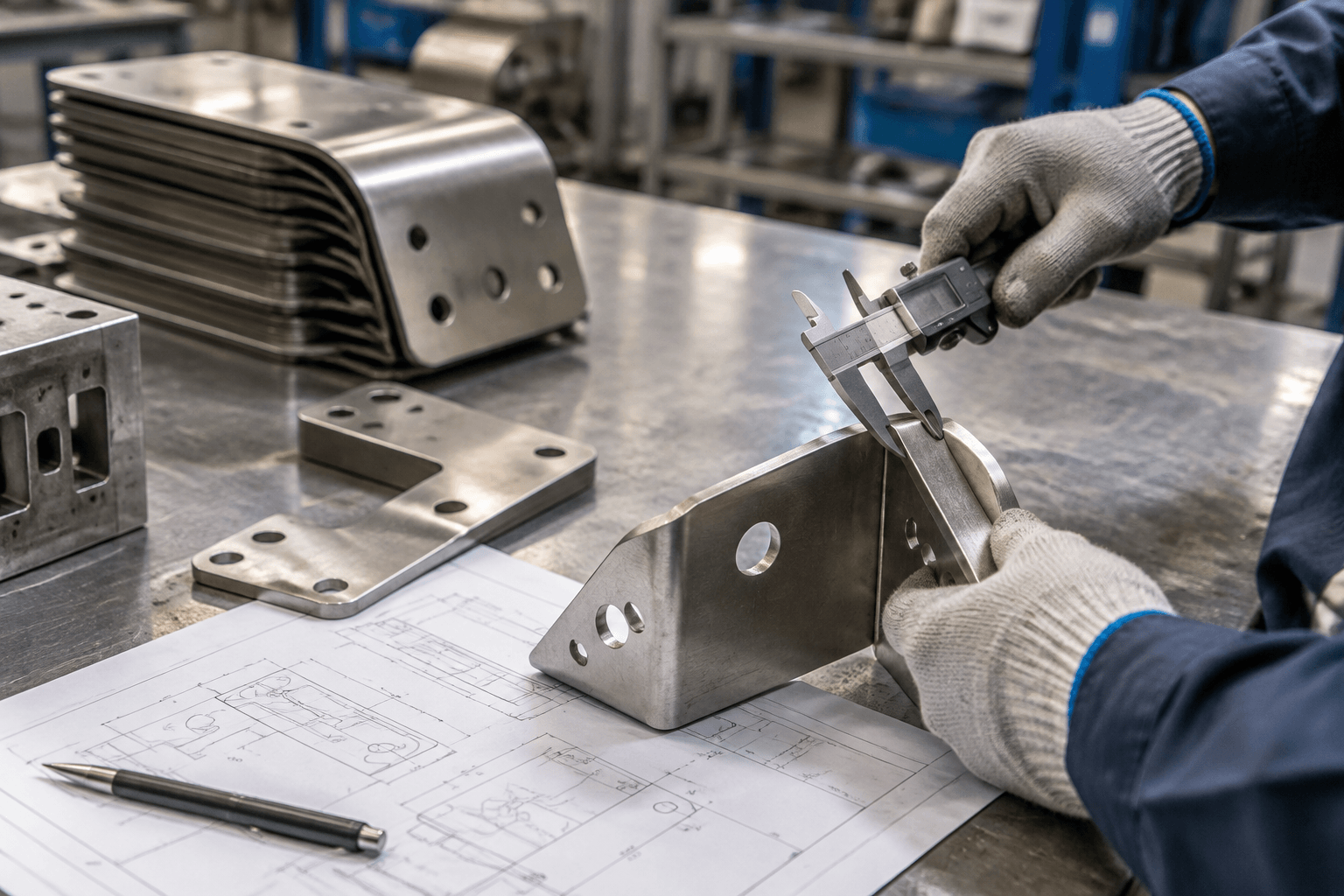
Common Stainless Families and Their Practical Differences
Stainless steel is not one material. It includes several metallurgical families, each with different fabrication and service characteristics. The following comparison is directional; final selection should use the specified grade, product standard, thickness, condition, and application environment.
| Stainless family | General characteristics | Typical selection considerations |
|---|---|---|
| Austenitic | Usually highly formable and weldable, with good general corrosion resistance. Common examples include the 304 and 316 families. | Frequently considered for enclosures, food equipment, architectural products, tanks, and fabricated assemblies. Cold work can increase strength and may produce some magnetic response. |
| Ferritic | Chromium-based, generally magnetic, and usually contains little or no nickel. Formability and welding behavior vary by grade. | Can be suitable for appliances, panels, trim, and moderately corrosive conditions where its properties and economics fit the application. |
| Martensitic | Can be heat treated for greater hardness and strength, but generally provides lower corrosion resistance and formability than common austenitic grades. | Used where wear resistance, hardness, or a cutting edge is more important than deep forming capability. |
| Duplex | Contains a mixed austenitic-ferritic structure, often providing higher strength and improved resistance to certain chloride-related corrosion mechanisms. | May suit demanding process, marine, or chemical environments, but forming and welding procedures require appropriate control. |
| Precipitation-hardening | Can obtain high strength through controlled heat treatment while retaining useful corrosion resistance. | Considered for highly loaded components where strength, dimensional requirements, and post-fabrication heat treatment can be managed. |
Grade names are not interchangeable across families. For example, 304 is a widely used general-purpose austenitic stainless, while 316-family material commonly includes molybdenum for improved resistance in some chloride environments. That does not make 316 universally superior. It may add unnecessary cost where the exposure is mild, and neither grade should be selected for a severe environment without evaluating temperature, concentration, cleaning chemicals, crevices, and expected service life.
Selecting Between Stainless and Other Alloys
The correct comparison is rarely “alloy versus stainless.” It is usually a comparison between specific candidates, such as 304 stainless sheet, coated carbon steel, galvanized steel, or an aluminum alloy. Each option combines material properties with manufacturing, finishing, availability, and lifecycle considerations.
Start with the actual exposure. Indoor dry-service covers may not need the corrosion resistance of stainless steel. Outdoor cabinets, washdown equipment, coastal products, or chemical-processing components need a more detailed review of moisture, salts, pollutants, cleaners, temperature, and contact time. Trapped liquid and narrow crevices can be more severe than an open surface exposed to the same environment.
Mechanical requirements come next. Compare yield and tensile strength, hardness, toughness, ductility, fatigue loading, and behavior at the intended temperature. These values vary by grade, thickness, product form, heat treatment, and amount of cold work. A generic statement that stainless is “stronger” than aluminum or carbon steel is therefore not reliable.
Weight and stiffness can change the decision. Aluminum alloys offer low density, but a part may require different thickness, ribs, bends, or joining details to achieve the required stiffness. Carbon steel can be economical and straightforward to fabricate, although it may need plating, painting, or powder coating. Stainless may reduce dependence on a coating, but exposed appearance and corrosion performance still depend on the finish and fabrication quality.
Cost should include more than the raw sheet price. Consider cutting speed, forming difficulty, tooling wear, welding and distortion control, finishing, inspection, packaging, maintenance, and replacement risk. Availability also matters: an uncommon grade or condition may restrict thickness options or increase minimum purchase quantities.
How Material Choice Affects Sheet Metal Fabrication
Material selection continues to influence the part after the grade is chosen. Stainless sheet work-hardens during deformation, so bend sequence, bend radius, tooling condition, grain direction where relevant, and springback compensation need attention. The suitable setup depends on the stainless family, grade, temper or condition, and sheet thickness.
Cut edges and punched features must also match the design. Tight hole-to-edge distances, narrow webs, and small bend reliefs can distort or crack during forming. A design copied directly from mild steel may require adjustment when produced in a harder or more strongly work-hardening stainless grade.
Welding introduces concentrated heat, residual stress, distortion, discoloration, and changes to the local surface condition. Joint design, filler selection, shielding, heat input, and cleaning method should be appropriate for the specified material. Carbon-steel contamination from shared tools or work surfaces can compromise stainless appearance and may contribute to localized staining, so material handling and tool control are relevant production considerations.
Surface finish deserves an explicit drawing requirement. Mill finish, brushed direction, polished appearance, bead-blasted texture, and coating are not equivalent. Visible parts should identify the required face, grain direction, acceptable cosmetic limits, and any protected areas. For corrosion-sensitive service, post-fabrication cleaning or passivation requirements should be defined according to the governing project specification rather than assumed.
Assemblies may combine stainless sheet with machined inserts, fasteners, hinges, aluminum parts, or carbon-steel frames. These interfaces require attention to galvanic compatibility, moisture traps, thermal expansion, isolation materials, and welding compatibility.
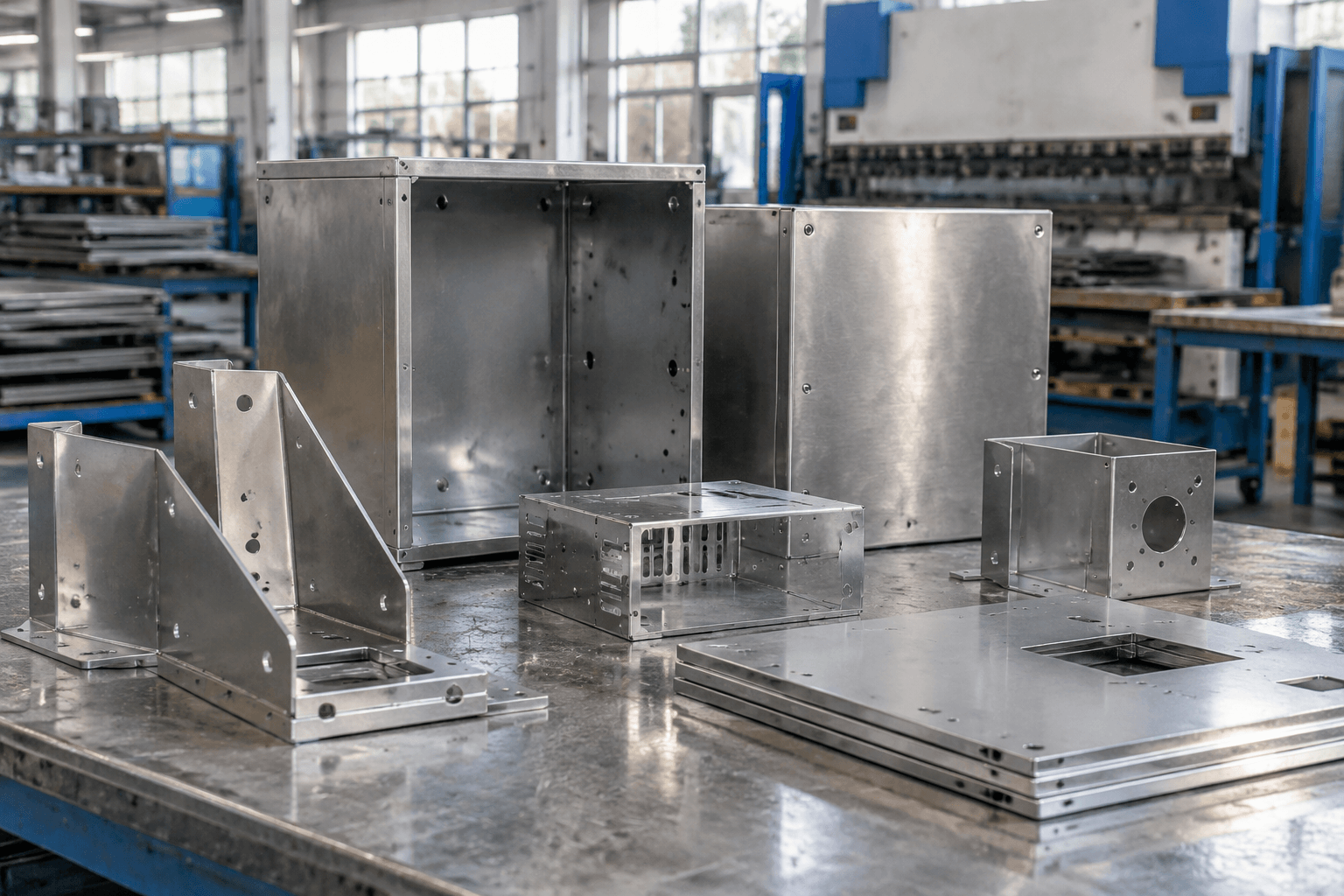
Frequently Asked Questions
Is stainless steel an alloy?
Yes. Stainless steel is an iron-based alloy containing chromium and other elements according to the grade. It is one category within the much broader group of alloy metals.
Is alloy the same as aluminum?
No. Aluminum is a chemical element and base metal. Commercial aluminum sheet and machined products are commonly aluminum alloys containing controlled additions such as magnesium, silicon, copper, manganese, or zinc. Calling a material only “alloy” does not establish that it is aluminum.
What is the main difference between 304 and 316 stainless steel?
Both are austenitic stainless families, but 316-family compositions commonly include molybdenum, which can improve resistance to pitting and crevice corrosion in certain chloride environments. The appropriate choice depends on exposure, fabrication requirements, availability, finish, and cost; 316 is not automatically required for every outdoor or wet application.
What material details should appear on a fabrication drawing?
Identify the grade, applicable material specification, sheet thickness, condition or temper where relevant, and required surface finish. Also define critical tolerances, cosmetic faces, grain direction when it affects appearance or forming, welding requirements, and any required post-fabrication cleaning, coating, or inspection.