
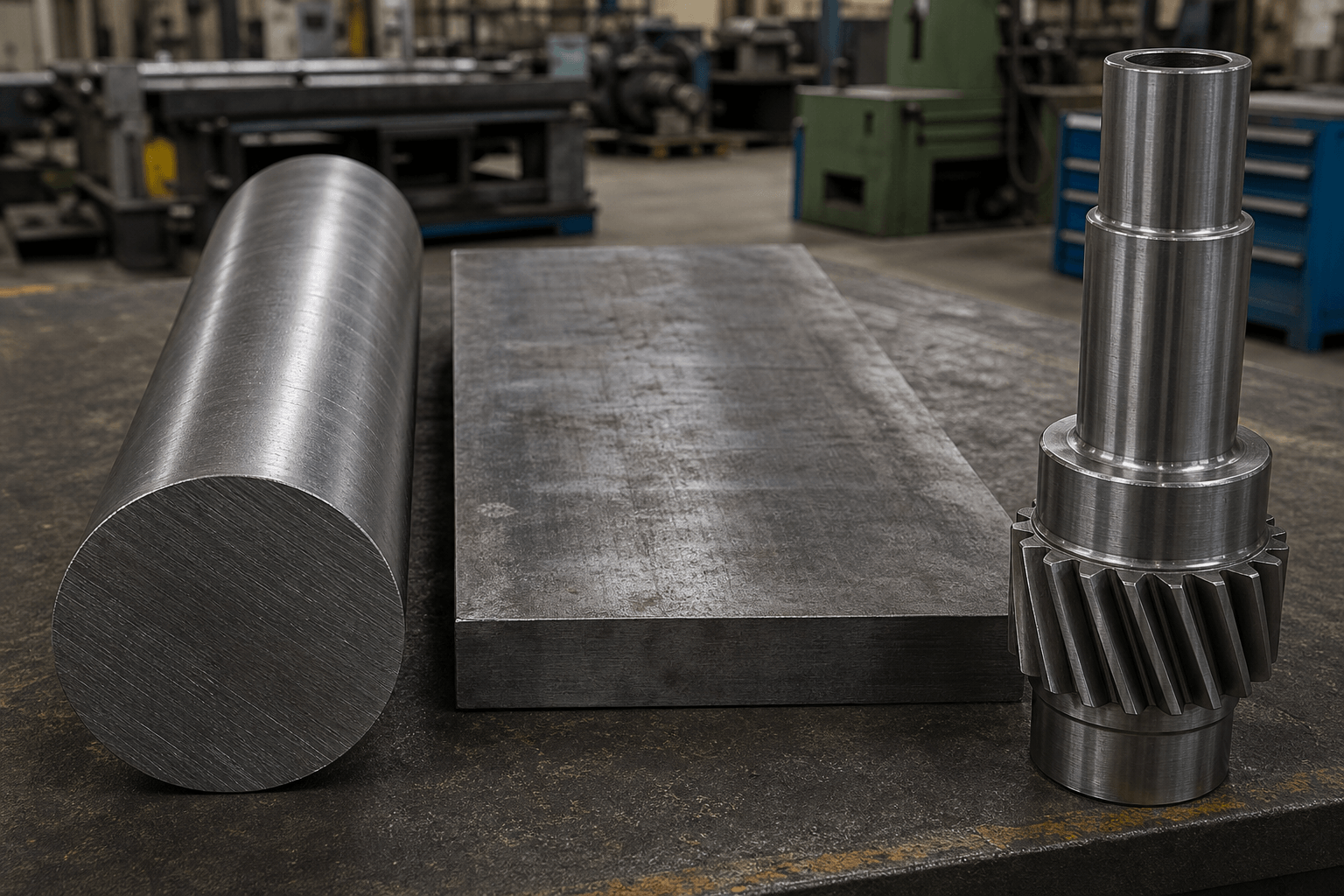
Alloy steel 4140 is a medium-carbon chromium-molybdenum steel designed to respond effectively to heat treatment. It is not plain carbon steel, and its usable strength, hardness, toughness, wear behavior, and machinability depend heavily on whether it is supplied annealed, normalized, pre-hardened, or quenched and tempered.
The practical mistake is specifying only “4140” on a drawing. The grade name identifies a chemical family, but it does not fully define the condition, mechanical performance, product form, or inspection requirements needed to manufacture a reliable component.
What Is 4140 Alloy Steel?
SAE/AISI 4140 is commonly described as a chromium-molybdenum, or chromoly, low-alloy steel. Its nominal carbon level is approximately 0.40%, while chromium and molybdenum are intentional alloying elements. Published producer data typically place chromium near 1% and molybdenum near 0.2%, although the permitted ranges depend on the governing material specification. ([carpentertechnology.com](https://www.carpentertechnology.com/alloy-finder/4140?utm_source=openai))
This composition separates 4140 from plain carbon steel. Carbon contributes to achievable hardness and strength, but chromium and molybdenum improve hardenability—the ability to develop a hardened microstructure below the surface of a component. Molybdenum also supports performance during tempering, while chromium contributes to strength, wear response, and hardening depth.
These effects do not make 4140 universally superior. A thin pin, a heavily loaded shaft, a welded machine frame, and a large gear blank present different requirements. Section size, stress concentration, impact loading, fatigue duty, operating temperature, corrosion exposure, and subsequent processing can all influence whether 4140 is appropriate.
Product form matters as well. Bar, plate, forgings, tubing, and semi-finished blanks may be governed by different specifications and supplied in different conditions. A designation suitable for round bar should not automatically be transferred to plate or forged material without reviewing the applicable standard and supplier documentation.
Why Does the Delivery Condition Change 4140 Performance?
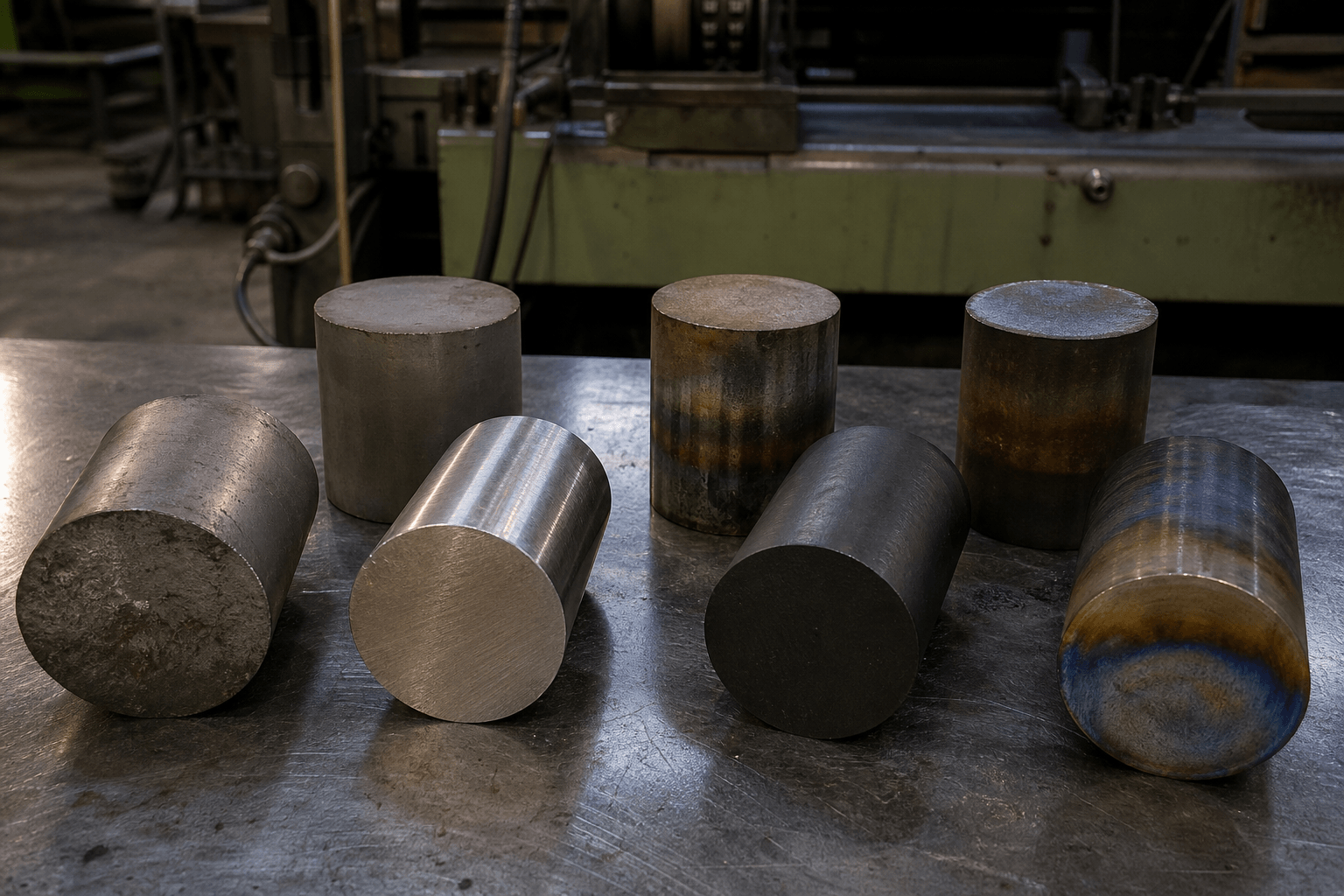
The same 4140 chemistry can produce substantially different manufacturing behavior and final properties. Heat treatment changes the steel’s microstructure, so condition must be treated as part of the material definition rather than an optional purchasing note. Published data also show that mechanical properties can change with diameter, product form, and heat-treatment condition. ([steelnavigator.ovako.com](https://steelnavigator.ovako.com/steel-grades/42crmo4/?utm_source=openai))
| 4140 condition | General characteristics | Manufacturing implications | Specification concern |
|---|---|---|---|
| Annealed | Relatively soft condition intended to improve machinability and allow substantial material removal | Often selected when the component will be rough-machined before later hardening and tempering | The drawing should identify who performs final heat treatment and what final requirement applies |
| Normalized | Refined and more uniform structure compared with some as-rolled conditions | May provide a practical starting condition for further processing, depending on the product and design | “Normalized” alone does not establish final hardness or mechanical properties |
| Pre-hardened | Supplied at an elevated hardness so that some parts can be machined closer to their intended service condition | Reduces or avoids post-machining through-hardening in suitable applications, but increases cutting forces and tool wear | The required hardness range and acceptable variation through the section must be stated |
| Quenched and tempered | Heat treated to obtain a selected balance of strength, hardness, ductility, and toughness | Machining sequence, distortion allowance, grinding stock, and dimensional inspection may require coordination | Required properties must be linked to product size, test location, and governing specification |
“Pre-hardened” and “quenched and tempered” are not automatically interchangeable descriptions. Pre-hardened material is normally purchased in a defined hardness condition for processing or service, whereas quenched-and-tempered material may be ordered to a specific mechanical-property or hardness requirement. The terminology and acceptance criteria should be confirmed with the applicable material specification.
Heat-treatment response is also section-dependent. A treatment that produces the desired structure in a smaller diameter may not create identical properties at the center of a much larger section. One producer’s data for 42CrMo4, a grade often cross-referenced with 4140, explicitly show changing mechanical properties across bar-size ranges. ([steelnavigator.ovako.com](https://steelnavigator.ovako.com/steel-grades/42crmo4/?utm_source=openai))
What Component Demands Can 4140 Address?
4140 is considered when a component needs a combination of strength, toughness, wear resistance, and fatigue performance beyond what a basic low-carbon steel would normally provide. Carpenter Technology describes 4140 as a through-hardening chromium-molybdenum medium-carbon steel with a combination of wear, impact, and fatigue resistance. ([carpentertechnology.com](https://www.carpentertechnology.com/alloy-finder/4140?utm_source=openai))
| Component demand | Relevant 4140 behavior | Representative component categories | Design caution |
|---|---|---|---|
| Repeated torsional or bending load | Heat-treated 4140 can provide useful strength and fatigue resistance | Drive shafts, spindles, axles, and machine transmission parts | Fillets, keyways, threads, surface condition, and residual stress can control fatigue life |
| Impact combined with high load | A qualified quenched-and-tempered condition can balance strength with toughness | Heavy-duty pins, tie rods, structural machine parts, and selected tooling | Maximum hardness is not always desirable when impact toughness is important |
| Contact or sliding wear | Hardness and surface-treatment response can support wear performance | Gears, wear pins, rollers, and guide components | Lubrication, surface hardness, case depth, finish, and mating material remain important |
| Machined load-bearing geometry | Annealed or controlled pre-hardened conditions can provide practical processing routes | Hubs, couplings, fixtures, holders, and equipment components | Machinability decreases as hardness rises and varies with tooling, geometry, and material condition |
Application lists are starting points, not approvals. For example, shafts, pins, and axles appear in transportation and industrial equipment, but their actual materials may range from carbon steel to alloy steel, stainless steel, or specialized grades. The choice must follow the calculated loads, failure risks, environment, manufacturing route, and applicable industry requirements. Related context is available in Yishang’s overview of custom metal fabrication for automotive and transportation equipment.
Welding deserves separate review. The carbon and alloy content that gives 4140 its hardening response can also increase the risk of hard or brittle heat-affected zones. A qualified procedure may require controlled preheating, filler selection, interpass control, slow cooling, or post-weld treatment. The appropriate procedure depends on thickness, condition, joint restraint, service duty, and governing code; 4140 should not be treated like ordinary weldable sheet steel.
How Does 4140 Compare with 4130, 4340, and Equivalent Grades?
No grade is the universal winner. The useful comparison is how alloy content, hardenability, section size, processing, and required toughness affect a particular design.
| Grade or designation | High-level distinction | When it may enter the discussion |
|---|---|---|
| SAE/AISI 4130 | Chromium-molybdenum steel with less carbon than 4140 | Components where weldability, formability, or a lower achievable hardness may be more useful than the higher carbon response of 4140 |
| SAE/AISI 4140 | Approximately 0.40% carbon with chromium and molybdenum | Shafts, pins, gears, tooling, and machine parts needing a versatile strength-toughness-wear balance after appropriate processing |
| SAE/AISI 4340 | Nickel-chromium-molybdenum steel with high hardenability and greater depth-of-hardening potential | More demanding sections or applications where toughness and hardenability justify the material and processing requirements |
| 42CrMo4 / 1.7225 | European designation frequently cited as comparable to 4140 | International sourcing where the drawing and mill certificate are reviewed against the governing EN, SAE, ASTM, or customer specification |
| SCM440 | Japanese chromium-molybdenum grade commonly discussed alongside 4140 | Projects using JIS-based material definitions, subject to chemistry, condition, and property review |
4130 generally has lower carbon content than 4140, which changes its hardening response and can influence weldability. By comparison, 4340 contains nickel in addition to chromium and molybdenum and offers higher hardenability and better depth of hardening than 4140-type alloys. ([carpentertechnology.com](https://www.carpentertechnology.com/alloy-finder/4340?utm_source=openai))
Asking whether 4140 or 4340 is “harder” is incomplete because hardness is primarily condition-dependent. Either grade can be supplied or heat treated to different hardness levels. The better question is whether the grade can achieve the required combination of core properties, toughness, dimensional stability, and surface condition in the specified section.
Likewise, equivalent designations should be treated as cross-reference candidates, not automatic substitutions. Ovako lists AISI 4140, 42CrMo4, 1.7225, 708M40, and other similar designations, but the available variants have different chemistry limits, cleanliness controls, dimensions, and delivery conditions. ([steelnavigator.ovako.com](https://steelnavigator.ovako.com/steel-grades/42crmo4/pdf?variantIDs=897&utm_source=openai))
Which 4140 Condition Matches the Component Requirement?
This condition-selection matrix can guide an early design review without prescribing a heat-treatment cycle.
- Extensive rough machining is required: Consider an annealed starting condition, then define the responsibility and acceptance requirements for subsequent heat treatment.
- The part should be machined near its service hardness: Review pre-hardened material, including its hardness range, section consistency, cutting strategy, and dimensional requirements.
- Final strength and toughness must be tailored: Specify a quenched-and-tempered condition linked to the applicable mechanical-property, hardness, and test-location requirements.
- Surface wear is more critical than core hardness: Evaluate whether an appropriate surface-hardening or coating route is compatible with the selected base condition and geometry.
- The component will be welded: Do not select the condition in isolation. Review the complete welding, heat-treatment, machining, and inspection sequence.
- The section is large or highly stressed: Confirm hardenability, core-property expectations, test location, and whether another alloy such as 4340 should be evaluated.
A hypothetical example is a shaft with deep keyways and tight bearing seats. Machining fully hardened stock may be inefficient, while heat treating after finish machining may introduce dimensional change. A practical route could include rough machining in a softer condition, qualified heat treatment, allowance for movement, and finish grinding. The correct sequence depends on the drawing and heat treater’s process review.
How Should 4140 Be Specified on a Drawing or Purchase Order?
A usable specification separates the material requirement from the manufacturing instructions. “4140 steel” alone leaves too many decisions unresolved.
- Material designation and governing specification: State the required grade and the standard that controls chemistry, product form, and acceptance.
- Product form: Identify bar, plate, tube, forging, or another required form. Include relevant starting dimensions if procurement depends on them.
- Delivery condition: Define annealed, normalized, pre-hardened, quenched and tempered, or another recognized condition.
- Performance requirement: State the required hardness range or mechanical properties, including where and how they are verified when relevant.
- Heat-treatment responsibility: Clarify whether material arrives in its final condition or whether treatment occurs before, during, or after component manufacturing.
- Geometry and tolerances: Provide the drawing or 3D model, datum structure, fits, threads, surface-finish requirements, and any stock allowance for later grinding.
- Secondary processing: Identify welding, surface hardening, coating, plating, or finishing requirements separately from the base-material designation.
- Inspection and documentation: Define material certificates, heat or lot traceability, hardness records, mechanical test reports, dimensional reports, or nondestructive examination only where the project requires them.
For an early technical specification review, provide the part drawing or 3D model, required material designation and delivery condition, target hardness or mechanical-performance requirement, annual quantity, and intended application. Send these details for a technical specification review focused on whether the drawing defines the 4140 grade, delivery condition, performance requirements, manufacturing sequence, and inspection expectations clearly enough for project evaluation; material and process availability should be confirmed separately.
Frequently Asked Questions
Is 4140 a carbon steel or an alloy steel?
4140 is an alloy steel. It contains carbon, as all conventional steels do, but its intentional chromium and molybdenum additions distinguish it from plain carbon steel and improve its response to hardening and tempering.
Which is harder or stronger: 4140 or 4340?
Neither answer is universal because hardness and strength depend on heat treatment, section size, and specification. 4340 generally offers greater hardenability and depth-of-hardening potential, while 4140 may meet many component requirements with a simpler alloy system. ([carpentertechnology.com](https://www.carpentertechnology.com/alloy-finder/4340?utm_source=openai))
How is 4140 hardened, and why must the exact cycle be qualified?
4140 is commonly hardened through a qualified austenitizing, quenching, and tempering process, or through a selected surface-hardening method when only the working surface requires increased hardness. Exact temperatures, quench media, tempering parameters, and allowances must be established for the product form, dimensions, equipment, and required properties.
What grades are comparable to 4140?
42CrMo4, material number 1.7225, SCM440, and 708M40 are frequently discussed as comparable designations. They are not automatically interchangeable: the buyer should compare chemistry limits, product form, condition, dimensions, mechanical requirements, test methods, and governing standard before approving a substitution.