
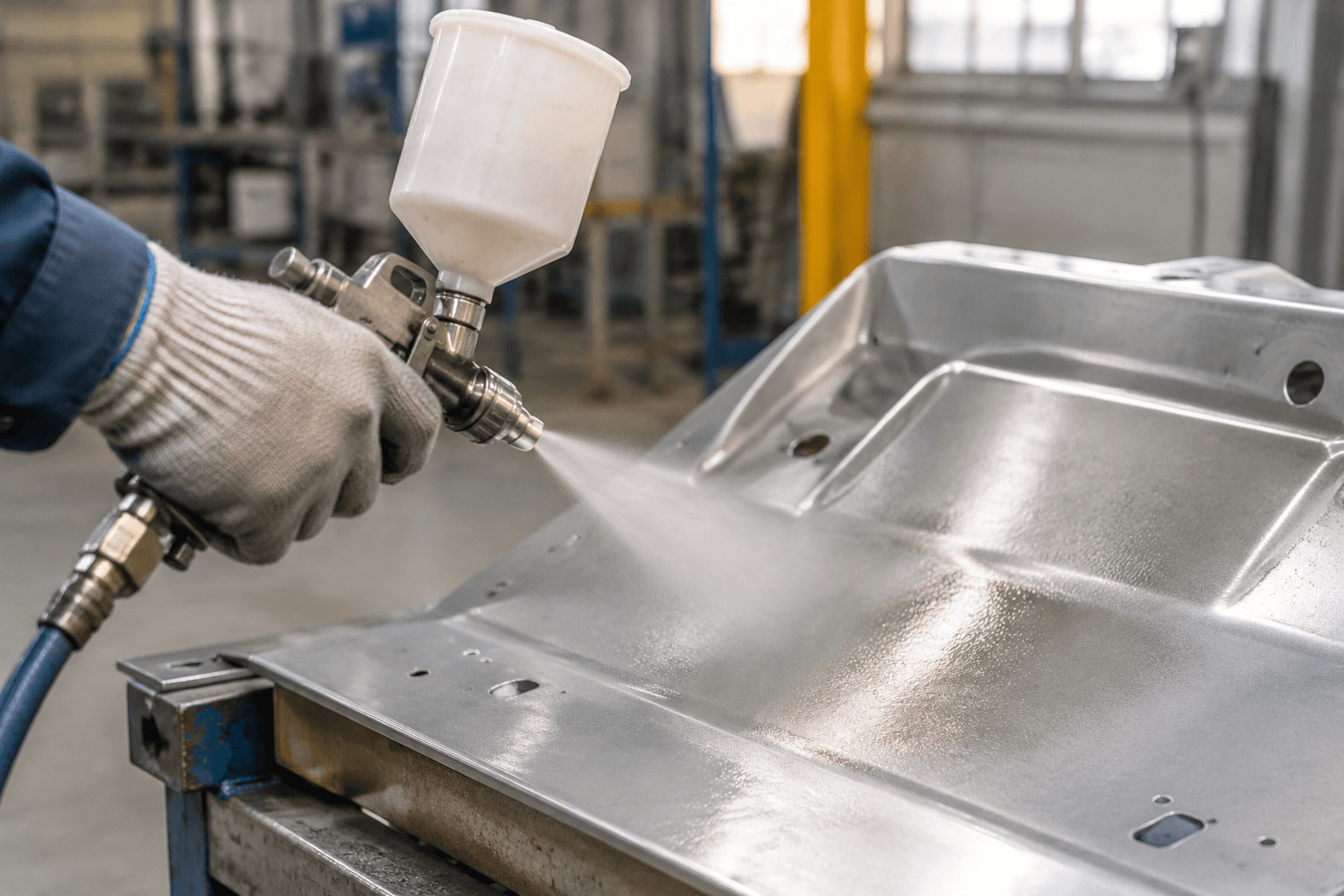
Alodine spray means applying an aluminum chemical conversion coating by spraying the treatment onto a prepared surface. The resulting finish is commonly called chemfilm. Alodine is a product name used for chemfilm products; it is not a type of spray paint. The process is intended primarily to support corrosion protection or prepare aluminum for an organic coating, but suitability depends on the specific product, aluminum substrate, required finish, and conditions of use.
Spraying describes how the treatment is applied, not a separate coating chemistry or proof that a finished part meets a requirement. Before choosing it, confirm the product documentation, starting surface condition, part geometry, and governing drawing or finish specification.
What Alodine spray does on aluminum
A chemical conversion coating forms through a reaction with the aluminum surface. Unlike paint, it is not simply a colored film laid on top; unlike anodizing, it is not an electrochemical oxide coating. Chemfilm is generally selected when the part needs a conversion-treated surface for a specified corrosion-protection purpose or as preparation for a compatible organic coating, such as paint.
These are purposes, not universal performance guarantees. Results can vary with the product, alloy, surface condition, preparation, application method, and post-treatment. A product name alone does not establish that a finish meets a particular drawing, use environment, or coating system requirement.
For example, a fabricated aluminum enclosure that will later be painted may require chemfilm as a preparation step. The relevant question is not simply whether the treatment can be sprayed, but whether the specified product and process are appropriate for the enclosure material and the complete coating requirement. A bare aluminum bracket intended to remain unpainted presents a different decision: confirm that the specified chemfilm is suitable for its intended exposure and required finish.
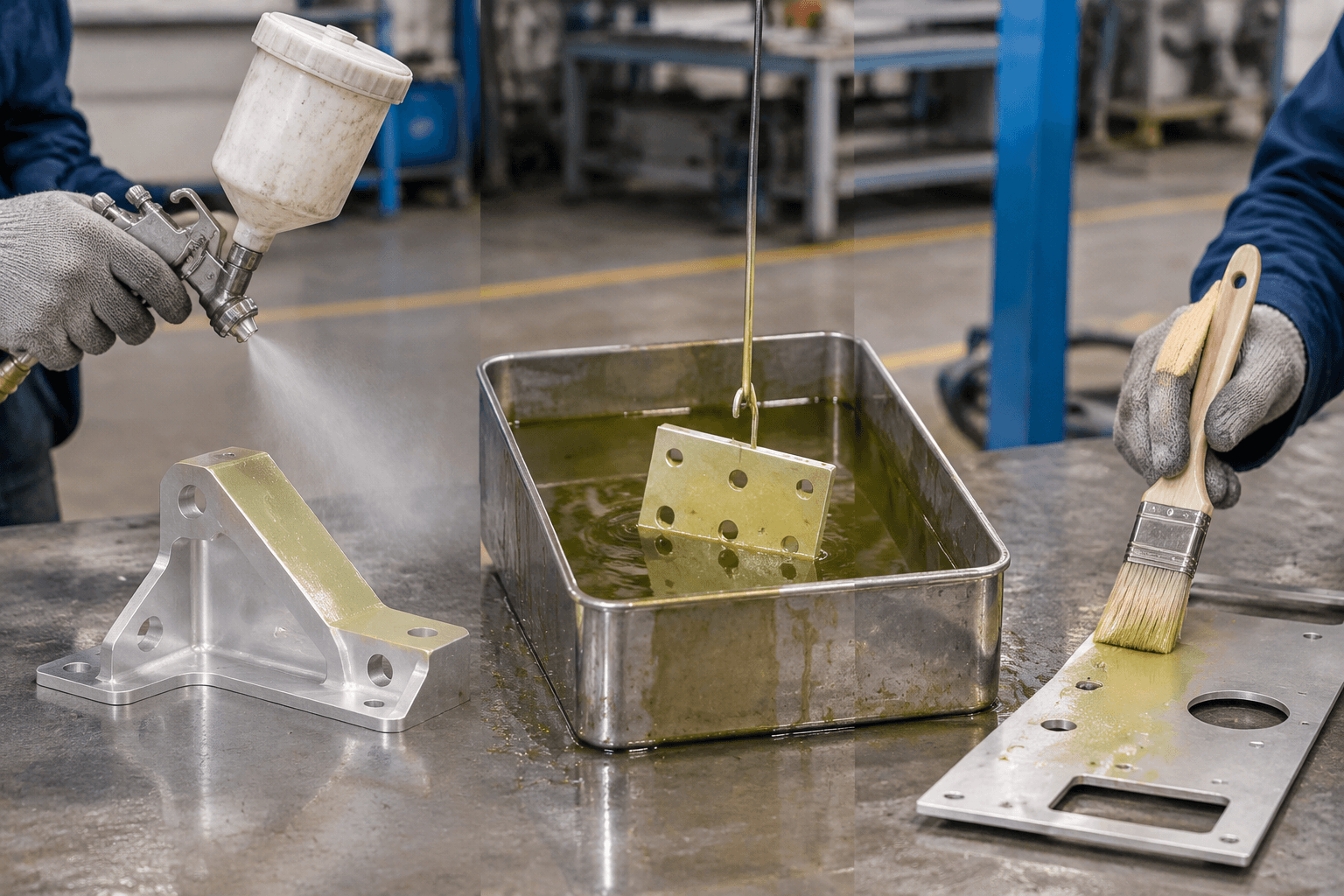
Choosing spray, immersion, or brush application
Spray application may be practical when a part is too large or awkward for an available immersion tank, or when an operator can access the surfaces and maintain consistent coverage. Immersion may be practical for parts that fit the equipment and can be processed with the required handling and control. Brush application may suit a localized treatment only where the applicable product instructions and repair procedure permit it. None of these methods is automatically best for every part.
| Method | Questions to resolve | Potential consideration |
|---|---|---|
| Spray | Can the applicator reach all required surfaces, including edges, recesses, and hidden features? Can application be kept consistent? | May suit large or fixed parts, but access and coverage need attention. |
| Immersion | Does the part fit the available tank and can it be handled and drained as required? | May provide access around a part that can be fully immersed; equipment and part geometry constrain its use. |
| Brush | Does the product documentation and governing repair procedure allow brush application for this purpose and area? | May be considered for localized work when permitted, but should not be assumed equivalent to a production application method. |
Consider a deep channel or a component with overlapping features. A spray approach requires a way to reach the relevant surfaces and verify coverage; a dip approach depends on tank access and the part’s ability to be processed as a whole. For a small localized repair, brush application may seem convenient, but its acceptability must come from the applicable procedure—not from convenience alone. Equipment availability, handling, product instructions, and the finish specification determine which option is workable.
What affects the result during spray application?
Begin by establishing the actual starting condition. Oil, residue, oxide, prior coatings, surface damage, or other contamination can affect how the treatment contacts aluminum. The preparation method and acceptable surface condition should follow the specified process; a clean-looking part is not, by itself, evidence that preparation requirements have been met.
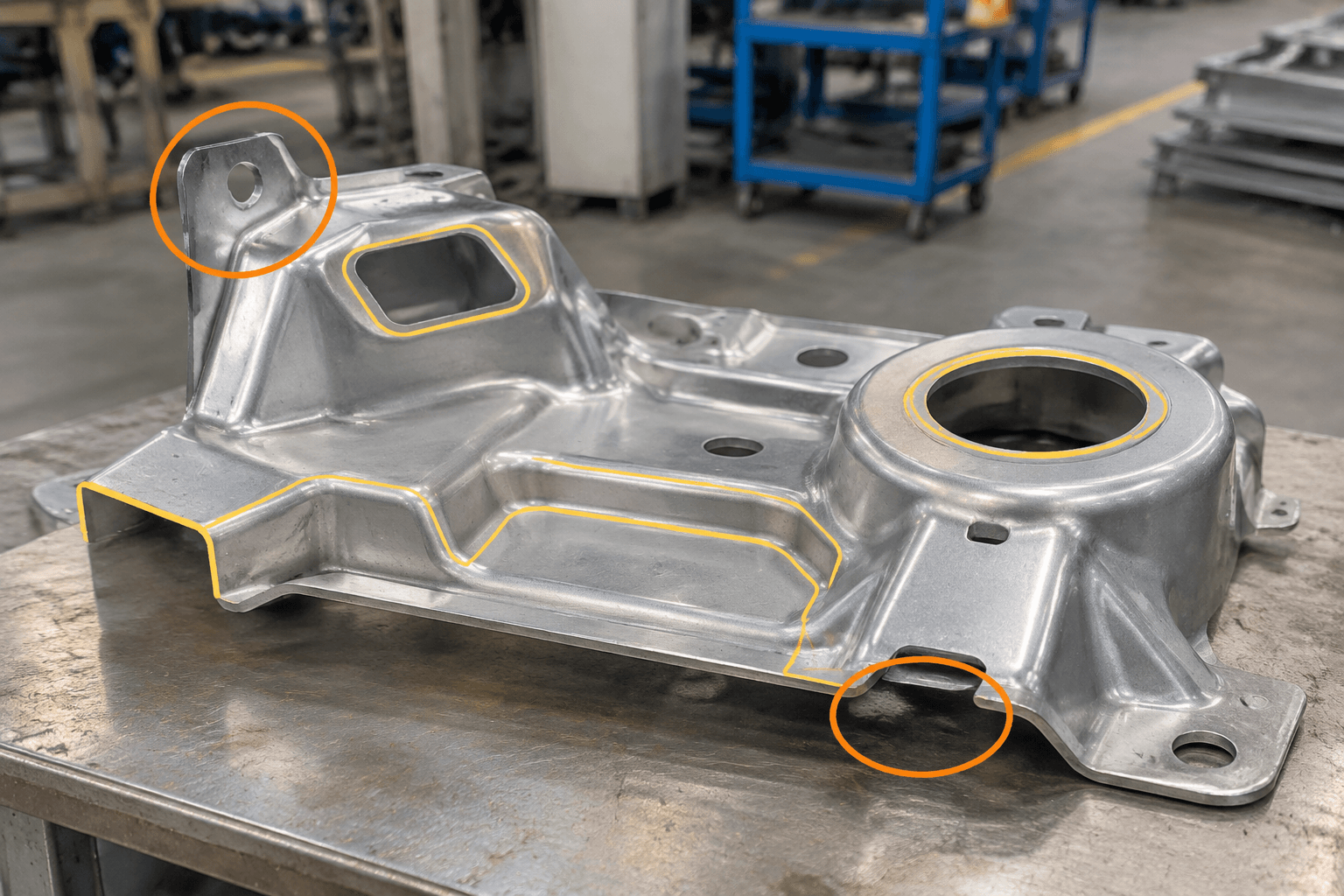
Next, assess the geometry. Edges, corners, recesses, holes, and areas partly screened by other features can be harder to reach consistently than broad, exposed faces. The application plan should account for those features, and inspection should focus on the surfaces the drawing or specification requires. A complex bracket, for instance, may have exposed outer faces and recessed returns; confirming only the easy-to-see faces would not resolve whether required areas received treatment.
Consistency also matters. The applicator, part orientation, access, and handling can affect whether the treatment reaches the intended surfaces in a repeatable way. Do not substitute generic online spray settings or timings for product-specific instructions. Follow the current documentation for the selected product, including any required rinsing or post-treatment, and the governing finish specification. Those documents—not a general article—define the process requirements and acceptance criteria.
Product names, surface limits, and verification
Alodine 1200 and Alodine 1201 are product names readers may encounter. The names alone do not establish that the products are interchangeable or suitable for a particular alloy, application method, or required finish. Check the applicable manufacturer documentation and confirm the required finish against the part drawing or specification before selecting a product.
Inspection should likewise follow the governing requirements. Confirm what characteristics must be assessed, which surfaces are in scope, and what documentation or acceptance criteria apply. Do not infer compliance solely from a product label, application method, or visual appearance. If the drawing is silent or ambiguous about the finish, resolve that requirement with the responsible design or quality authority before processing.
An existing anodized surface is a different substrate condition from bare aluminum. Alodine spray should not be treated as a routine coating over anodizing. If a part has existing anodizing and needs localized treatment, use a defined repair procedure that identifies the permitted method and inspection requirements. Do not assume a brush repair is acceptable or that it can restore anodizing.
Where RFQ Assumptions Create Cost and Production Risk
Many sheet metal fabrication problems begin before production starts. If drawings, tolerances, finish expectations, material grades, or assembly requirements are unclear, suppliers may quote based on different assumptions. That can make prices difficult to compare and may lead to rework, cosmetic rejection, assembly misalignment, or production delays later.
For OEM buyers, the goal is not simply to request the lowest price. The goal is to make sure each supplier is quoting the same manufacturing reality. Before confirming an order, clarify which dimensions are fit-critical, which surfaces are cosmetic, whether prototypes must match batch-production conditions, and how finished parts will be inspected.
Frequently Asked Questions
What alodine spray details should buyers define before requesting a quote?
Buyers should define the functional requirement, drawing notes, critical dimensions, material or process expectations, and any inspection points related to alodine spray. This helps suppliers quote the same manufacturing scope instead of making different assumptions.
How can RFQ details affect cost, fit, or lead time?
RFQ details can change tooling, forming, welding, finishing, inspection, or rework requirements. If buyers do not clarify it early, two supplier quotes may look comparable while covering different production risks.
Why should drawing requirements be reviewed before prototype approval?
drawing requirements may look acceptable on a single sample but become harder to control during batch production. Buyers should confirm whether the prototype reflects the same process, finish, and inspection conditions expected for production.
What inspection points matter most for alodine spray projects?
Important inspection points usually include fit-critical dimensions, holes or mating areas, cosmetic surfaces, finish build-up, welded or formed features, and any dimensions that affect downstream assembly. These points should appear in the RFQ or drawing notes.
How can buyers reduce prototype approval risk before batch production?
Buyers can reduce risk by clarifying drawings, locking key material and finish assumptions, defining inspection timing, approving a representative sample, and confirming which dimensions or surfaces require tighter process control.
How can Yishang help review alodine spray requirements?
Yishang can review drawings, RFQ notes, material requirements, tolerance expectations, finish details, samples, and assembly needs to identify unclear assumptions before quoting or batch production.