
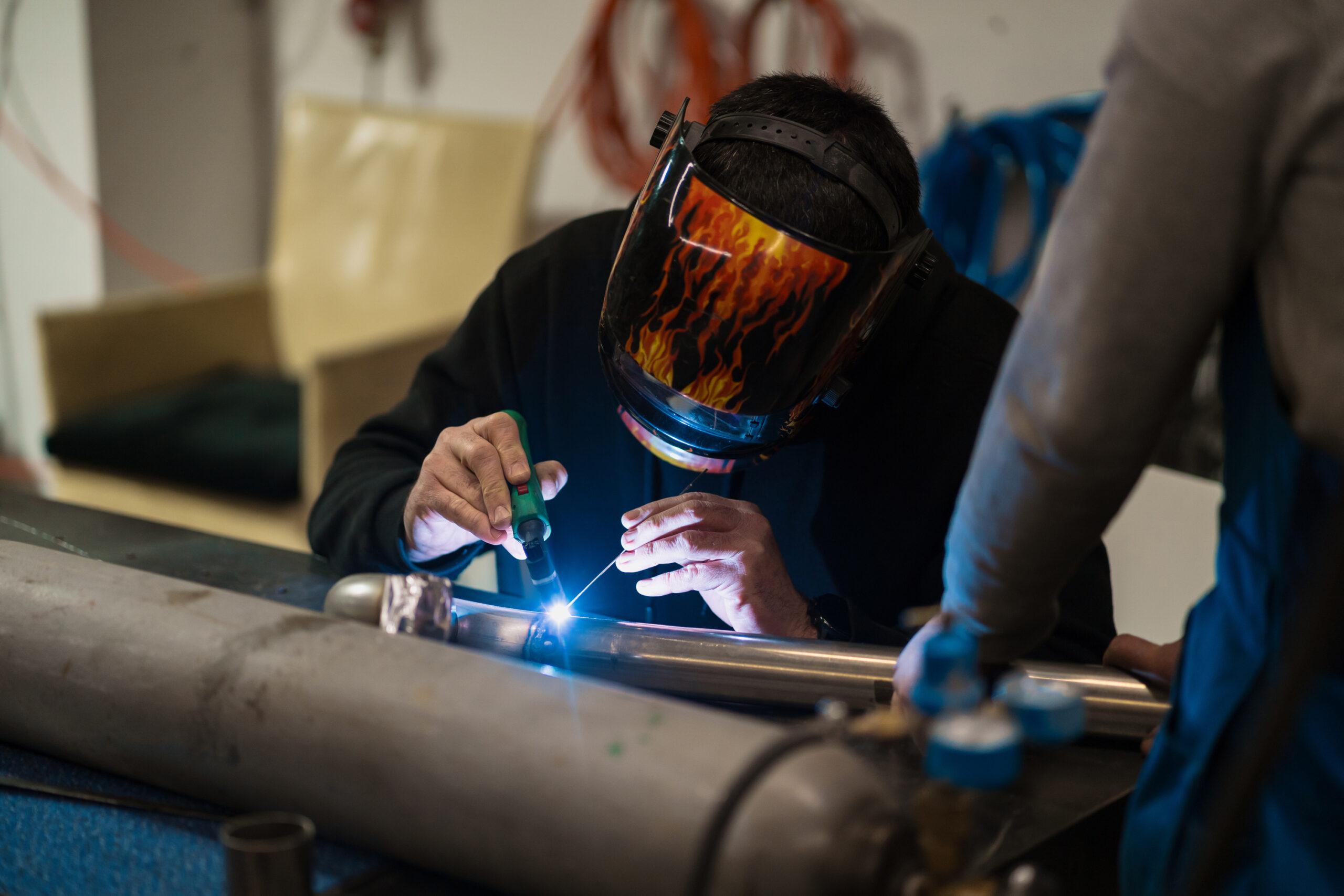
What Is Soldering?
When buyers compare soldering and welding, the question is rarely just “which one joins metal?” The real question is: which joining method will protect the product’s function, cost target, assembly speed, and long-term reliability?
Soldering and welding both create metal joints, but they solve very different manufacturing problems. Soldering is usually selected for lower-temperature, precision-oriented connections. Welding is chosen when the joint itself must carry serious mechanical load. Choosing the wrong process can lead to distortion, weak bonding, excessive cost, field failure, or a product that is harder to assemble than it should be.
Soldering Applications
Soldering is a low-temperature joining method that melts a filler metal—often tin-based—without melting the base materials. Because the heat input is relatively low, it is well suited for precise, compact, and heat-sensitive assemblies.
Typical soldering applications include:
PCB assembly and control units;
low-voltage signal connectors;
LED circuits and compact electronics;
sensor housings and wiring assemblies;
small metal parts where clean appearance and low distortion matter.
For buyers, the main advantage is control. Soldering can join delicate parts without the distortion risk often associated with high-heat joining.
Pros of Soldering
Soldering offers several practical benefits:
low heat input, which reduces warping and oxidation risk;
good compatibility with thin materials and small components;
clean joints suitable for compact or appearance-sensitive assemblies;
relatively low setup cost;
good scalability for electronics and small-part production.
In many cases, soldering also simplifies rework. That can be useful during prototyping or when assemblies include electrical connections that may need later adjustment.
Cons of Soldering
The limitation is strength. Soldered joints are not designed for heavy structural loads, high vibration, strong impact, or demanding outdoor environments.
Soldering may also require flux cleaning, especially where residue could affect appearance, electrical reliability, or corrosion resistance. For structural frames, load-bearing brackets, pressure parts, or heavy equipment housings, soldering is usually not the right choice.
What Is Welding?
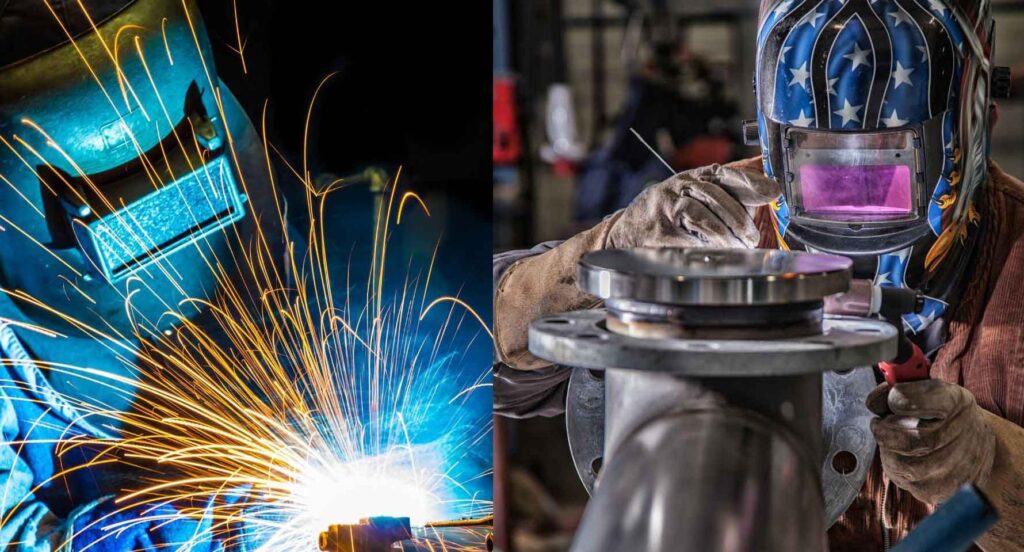
Welding joins metal by melting the base materials, sometimes with filler metal, to create a fused joint. Compared with soldering, it operates at much higher temperatures and produces much stronger bonds.
For industrial buyers, welding is the joining method used when the joint must support load, resist vibration, survive impact, or become part of a structural assembly.
Welding Applications
Welding is commonly used for:
machine frames and equipment chassis;
battery box enclosures and energy storage housings;
load-bearing brackets and support frames;
outdoor cabinets, kiosks, and control boxes;
pipe, valve, and pressure-related assemblies;
structural signage and industrial display frames.
In these applications, the joint is not merely a connection point. It becomes part of the product’s mechanical structure.
Pros of Welding
Welding provides strong, durable, and permanent joints. It is suitable for thick sheets, tubes, frames, enclosures, and assemblies that must handle real mechanical stress.
Its main advantages include:
high structural strength;
good resistance to vibration and impact when properly designed;
suitability for steel, stainless steel, aluminum, and many industrial alloys;
compatibility with manual, robotic, and fixture-based production;
ability to reduce fasteners and simplify structural designs.
When welding is designed well, it can make a product stronger and cleaner at the same time.
Cons of Welding
Welding also introduces risks. The high heat input can distort thin parts, change local material properties, or create visible marks that require grinding or finishing. Poor shielding or weak process control can lead to porosity, undercut, cracking, or inconsistent weld appearance.
It also requires skilled operators, suitable fixtures, correct parameters, and inspection. In short, welding is powerful—but it must be controlled.
Quick Comparison: Soldering vs. Welding
The easiest way to compare soldering and welding is to look at what the joint is expected to do.
| Criteria | Soldering | Welding |
| Temperature Range | Below 450°C | Usually above 1,000°C |
| Base Metal Condition | Remains solid | Melts and fuses |
| Joint Strength | Light-duty | High-load and structural |
| Heat Distortion Risk | Very low | Moderate to high |
| Typical Use | Circuitry, sensors, small connectors, light brackets | Frames, supports, housings, cabinets, structural assemblies |
| Common Materials | Copper, brass, stainless steel, electronic metals | Steel, stainless steel, aluminum, low-carbon alloys |
| Process Cost | Lower setup and material cost | Higher equipment, labor, and inspection cost |
| Common Standards | IPC-A-610, RoHS | ISO 3834, AWS D1.1 |
Soldering is usually the better fit when precision and low heat matter more than strength. Welding is the better fit when the joint must become part of the product’s structure.
What About Brazing?
Brazing sits between soldering and welding. It uses a filler metal above 450°C, but unlike welding, it does not melt the base metals. This allows brazing to create stronger joints than soldering while keeping thermal impact lower than welding.
It is often used when buyers need a clean joint, good strength, and the ability to join dissimilar metals.
Why Use Brazing?
Brazing is useful for:
joining dissimilar metals;
creating leak-tight joints;
HVAC, plumbing, and fluid-handling assemblies;
heat exchangers and thermal components;
parts that require cleaner appearance than welding may provide.
In practice, brazing can be a good middle path. It is stronger than soldering, gentler than welding, and often very effective for sealed or precision-fit assemblies.
When to Use Which Joining Method
The best joining method depends on the product’s actual working conditions. Buyers should consider load, temperature, vibration, appearance, electrical function, material thickness, and production volume before selecting a process.
Choose Soldering If:
Choose soldering when:
the assembly includes electronics, wiring, or sensors;
the components are compact or heat-sensitive;
the joint does not need to carry mechanical load;
clean appearance and precise placement matter;
rework or repair may be needed later.
Soldering is often the practical choice for electrical and miniature assemblies where too much heat would create more problems than it solves.
Choose Welding If:
Choose welding when:
the joint must support load, vibration, or impact;
the product includes thick sheet, tube, frame, or enclosure structures;
the assembly will be used outdoors or in demanding environments;
the joint needs to be permanent and mechanically strong;
structural reliability is more important than rework convenience.
Welding is usually the correct route for industrial frames, cabinets, structural housings, and rugged metal assemblies.
Consider Hybrid Assembly:
Many modern products use both methods. A welded enclosure may hold soldered electronics. A welded frame may include soldered sensors or wire harnesses. A battery housing may require welded structural seams and soldered control modules.
This hybrid approach is common in electromechanical products. It lets each joining method do what it does best instead of forcing one process to solve every problem.
Real-World Manufacturing at YISHANG
At Yishang, joining decisions are reviewed as part of the complete manufacturing route—not as an isolated process choice. For many OEM and wholesale projects, soldering, welding, fastening, forming, coating, and assembly all need to work together.
We support metal fabrication projects involving:
TIG, MIG, spot, and seam welding for sheet metal and structural assemblies;
soldering support for electrical or light-duty connection points;
welded cabinets, kiosks, frames, brackets, and equipment housings;
hybrid assemblies that combine metal structure with electronic or sensor components;
surface treatment, inspection, packaging, and shipment for export orders.
With custom fabrication experience across industrial equipment, energy, retail fixtures, electronics, displays, and medical-related projects, Yishang helps buyers choose joining methods that fit both the drawing and the real production environment.
Final Thoughts
Soldering and welding are not interchangeable. They answer different manufacturing questions. Soldering protects delicate assemblies from excessive heat. Welding gives metal structures the strength to carry load and survive harsher use. Brazing, in many cases, fills the space between them.
The right choice should be based on how the product will be used—not only on what seems easiest during production. A joining method that saves money at the start may become expensive if it causes distortion, weak joints, rework, or field failures.
Let’s Build It Together
Whether you are developing a prototype, refining a sub-assembly, or scaling a long-term OEM program, the joining method should be decided early and reviewed carefully.
At Yishang Metal Products Co., Ltd., we support OEM and wholesale customers with custom metal fabrication and assembly services. With 26+ years of manufacturing experience, we support processes including laser cutting, bending, stamping, welding, CNC machining, soldering-related assembly support, surface treatment, inspection, packaging, and shipment.
For projects involving welded structures, soldered connection points, or hybrid assemblies, we can help review your drawings and recommend a practical manufacturing route.
📩 Send us your drawings or requirements to discuss the most suitable joining method for your next project.