
Custom Mild Steel Parts Built for Load, Alignment, and Repeat Production
Yishang manufactures mild steel enclosures, equipment frames, brackets, mounting plates, panels, guards, racks and welded assemblies for bulk B2B orders. We control stiffness, weld shrinkage, frame squareness, surface preparation and finish so the production batch fits—not only the first sample.
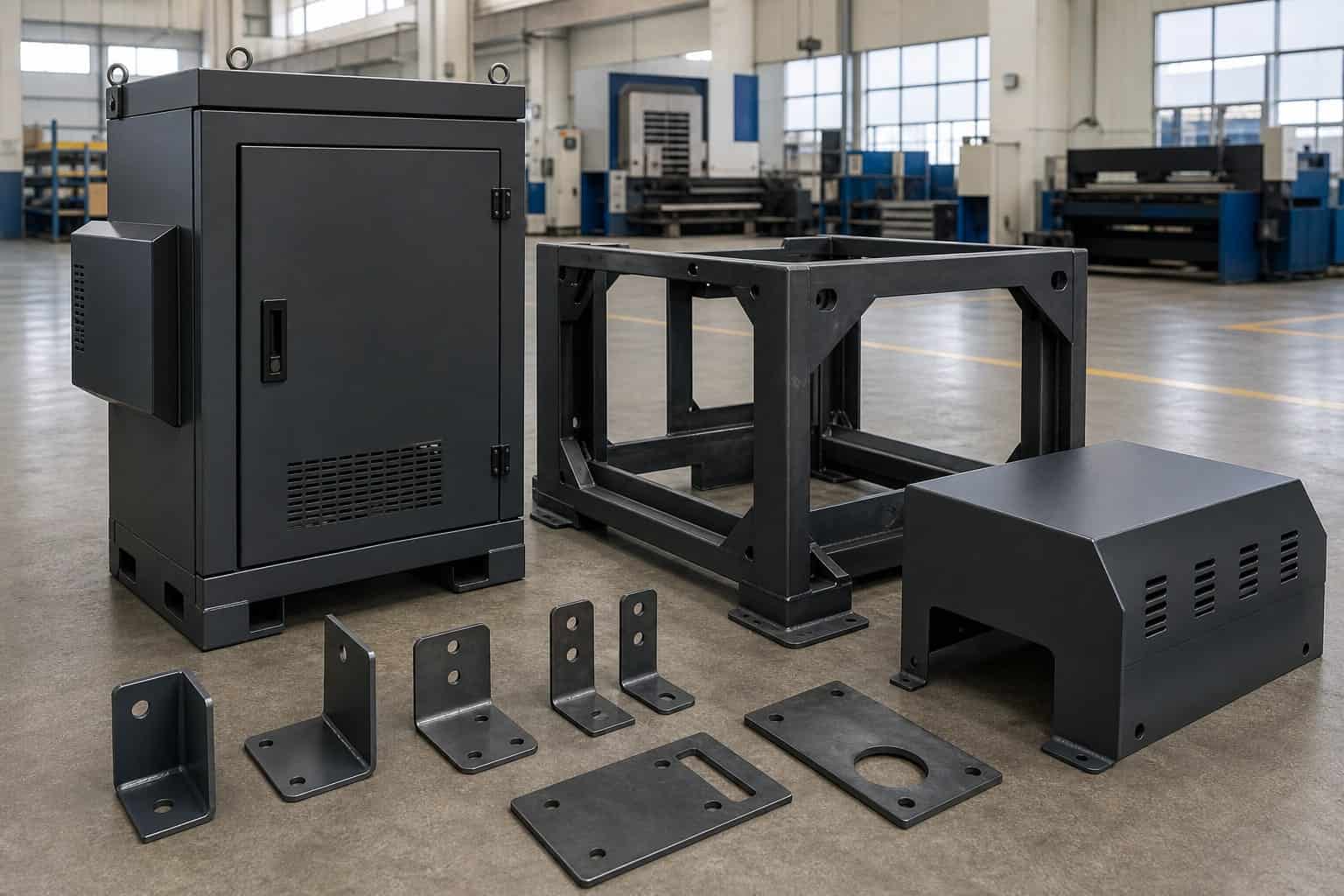
Define What Must Carry the Load—and What Must Stay Straight.
Mild steel offers practical strength and weldability, but thickness alone does not guarantee a stable product. We begin with load paths, spans, mounting points and the geometry the customer’s assembly must retain.
Wide panels can oil-can
Large flat faces may flex or ripple. Returns, ribs, beads, mounting points and finish appearance should be reviewed before thickness is increased.
Brackets can deflect
Load direction, unsupported length, hole position and bend geometry decide whether a bracket stays rigid in service.
Frames can rack out of square
Diagonal control, joint design, fixture support and cross-bracing determine whether equipment installs without forced alignment.
Welds can pull datums out of position
Local heat and shrinkage can move holes, faces and mounting rails. Weld size, sequence and inspection timing must be planned.
Choose the Steel Route Around Thickness, Fabrication, and Finish
The correct mild steel input depends on the product geometry, welding, finish and appearance—not simply the lowest sheet price.
Cold-rolled sheet
Often selected for formed enclosures, panels and brackets that need a smoother surface, controlled thickness and a clean finished appearance.
Hot-rolled sheet and plate
A practical route for heavier frames, bases, supports and structural parts where thickness and welded strength matter more than a fine mill surface.
Pickled and oiled sheet
Useful when a cleaner hot-rolled surface supports cutting, forming, welding and later coating preparation.
Customer-specified grade
When the drawing names a standard or grade, substitution is reviewed for strength, forming, welding, sourcing and finish before approval.
Yishang supplies finished custom products, not raw mild steel sheet or plate. The material route is selected only to support the finished part and its batch requirements.
Use Structure Before Adding Unnecessary Steel Weight.
A well-placed bend, rib or support can improve rigidity more efficiently than making every panel thicker. We review these features against tooling, assembly access and order volume.
Flanges and returns
Turn free edges into structural features while keeping bend access, fasteners and mating parts practical.
Ribs and formed beads
Increase panel stiffness and reduce oil-canning without adding a separate welded reinforcement.
Channels and boxed sections
Use formed profiles where long spans need better resistance to bending or twisting.
Gussets and cross-members
Place supports at load transitions and open frame corners instead of adding steel where it contributes little.
Hemmed and reinforced edges
Improve edge stiffness, handling safety and appearance while checking trapped gaps and coating access.
Fastener and weld spacing
Connect the structure often enough to carry load without creating unnecessary heat, cost or assembly time.
Control Datums, Welding Heat, and Repeatable Fit
Welding distortion is easier to prevent than correct. The production plan links joint design, fixture location, tack sequence, weld order and post-weld measurement to the customer’s critical geometry.
Choose functional datums
Identify the mounting plane, frame baseline, rail position and hole pattern that must control the assembly.
Plan fit-up and tack points
Hold gaps and part relationships before the main welds introduce shrinkage into the structure.
Support the part with fixtures
Locate parts from repeatable surfaces and restrain movement without hiding the areas that require welding or inspection.
Control weld size and sequence
Use the specified joint efficiently and balance heat input instead of adding oversized welds that increase distortion and cost.
Manage heat between operations
Separate long welds, alternate sides or use staged assembly where the geometry is sensitive to accumulated heat.
Measure after the assembly cools
Check diagonals, flatness, datum positions and interface dimensions at the stage that represents the customer’s final fit.
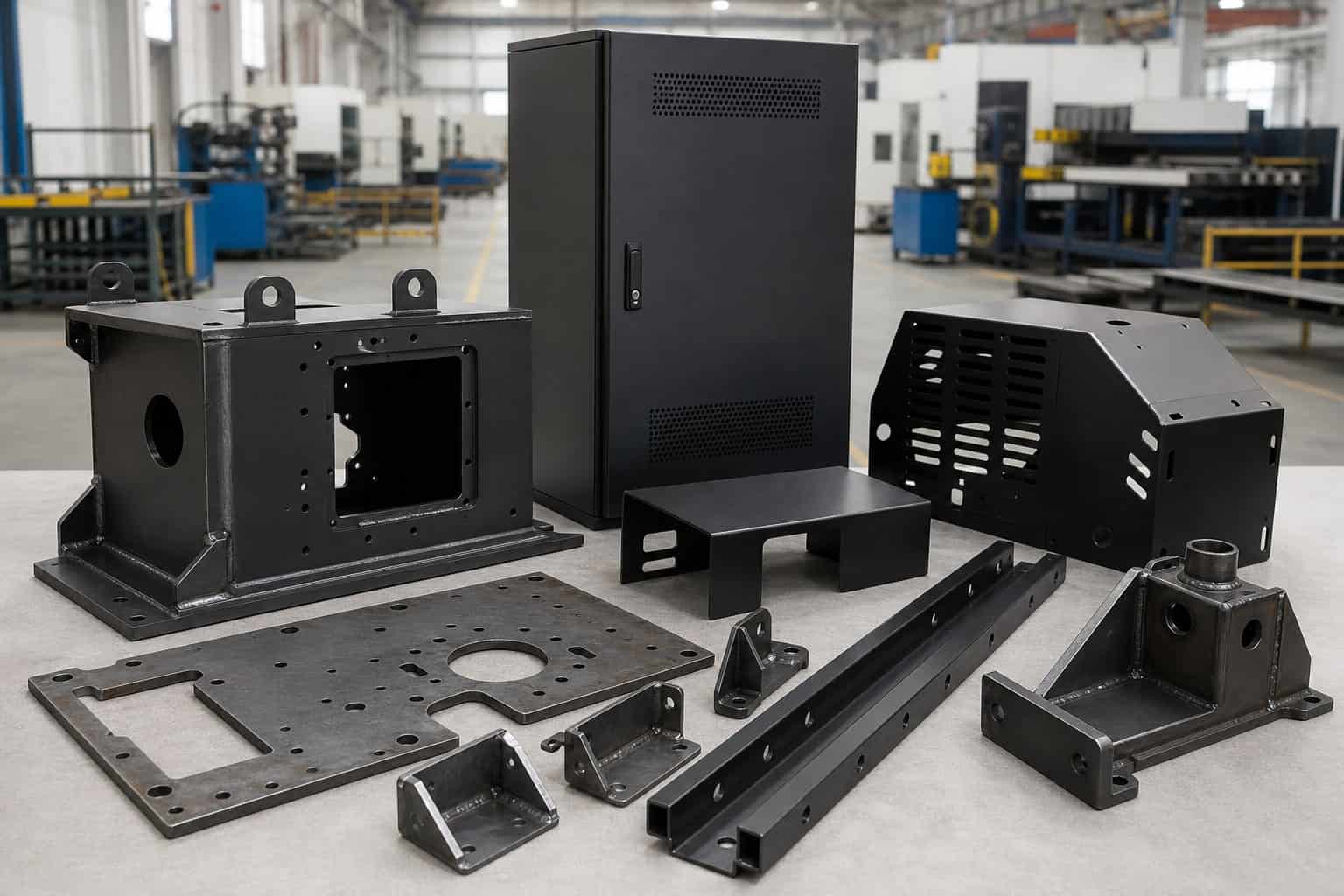
Mild Steel Enclosures, Frames, Brackets and Fabricated Assemblies.
Our work combines sheet metal, tube and plate into drawing-based finished products. Fixtures, welding, machining, surface treatment, assembly and packing are planned as one repeat-order route.
Industrial enclosures and control cabinets
Equipment housings, control cabinets, protective boxes and storage enclosures with doors, vents and mounting systems.
Machine bases and frames
Welded supports, equipment stands, structural bases and subframes controlled for level, diagonal and mounting interfaces.
Brackets and mounting plates
Formed supports, heavy-duty brackets, reinforcement plates, rails and installation hardware.
Panels, guards and covers
Laser-cut and bent panels with openings, louvers, hems, inserts and visible finish requirements.
Racks and display structures
Shelving, advertising frames, vending-machine structures and commercial equipment supports.
Welded OEM assemblies
Custom sheet, tube and plate assemblies delivered inspected, finished, assembled and protected for export.
Surface Preparation Decides Whether the Finish Lasts.
Mild steel needs a protection route matched to the service environment. Oil, mill scale, weld residue, sharp edges and hidden seams can weaken an otherwise suitable coating system.
Powder-coated finish system
Define pretreatment, primer if required, color, gloss, texture, masking, edge coverage and cure limits for the completed product.
Wet paint system
Specify primer and topcoat expectations, surface preparation, film build, color and protected areas for the actual environment.
Zinc-based protection
When plating or galvanizing is specified, review holes, threads, welded geometry, drainage, appearance and dimensional buildup before release.
Uncoated or temporary protection
For internal or further-processed parts, define oiling, rust prevention, storage time, handling and customer-side finishing responsibility.
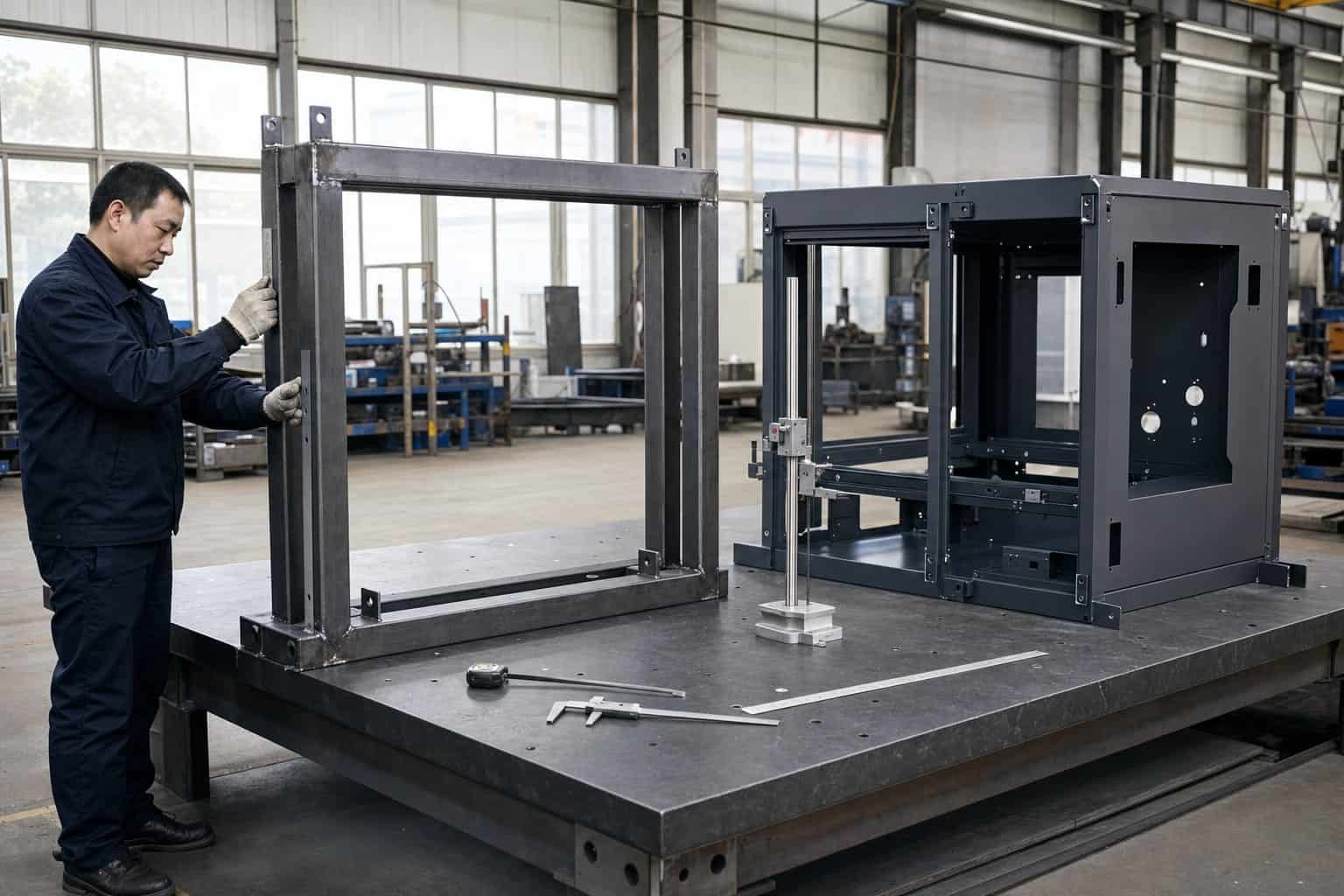
Inspect Geometry After Welding—and Finish After Cure.
The approved sample establishes the functional datums, frame geometry, weld condition and finish appearance that the batch must retain.
Release drawing and fixture datum
Lock material, thickness, load interfaces, reference surfaces, weld call-outs, finish, inspection and packing requirements.
Approve the cooled welded sample
Check diagonals, flatness, hole and rail positions, joint condition, access panels and customer-defined assembly fit.
Verify finish and batch consistency
Inspect surface preparation results, coating appearance, masking, critical dimensions and protective packing before dispatch.
ISO 9001
Quality management system
RoHS
Restricted-substance compliance when specified
Share What Drives Steel Weight, Welding Time and Finish Cost.
A complete RFQ lets us compare formed, fastened and welded solutions before unnecessary thickness or labor is locked into the design.
Released drawing package
Provide 2D drawings, 3D files, revision, datums, tolerances, mating parts and assembly sequence.
Loads and critical geometry
Mark load direction, mounting points, flatness, diagonals, rail positions, hole patterns and allowed deflection.
Material and joining
State grade or standard, thickness, tube or plate sizes, weld call-outs, fasteners, inserts and machining needs.
Environment and finish
Describe corrosion exposure, indoor or outdoor use, pretreatment, coating system, masking, color and visible faces.
Volume and acceptance plan
Share sample quantity, batch quantity, annual demand, inspection records, packaging and delivery expectations.
Send the Drawing and Mark the Loads, Datums and Visible Faces.
We will review the mild steel product as a complete manufactured assembly, then flag avoidable weight, weld distortion, fit and finishing risks before batch production.