
Custom Galvanized Steel Parts Built to Resist Rust
Yishang Metal manufactures custom galvanized steel parts, panels, brackets, enclosures, frames, covers, and OEM metal products. We help buyers review material type, fabrication method, zinc protection, surface finish, drainage, repair needs, and packaging before production.
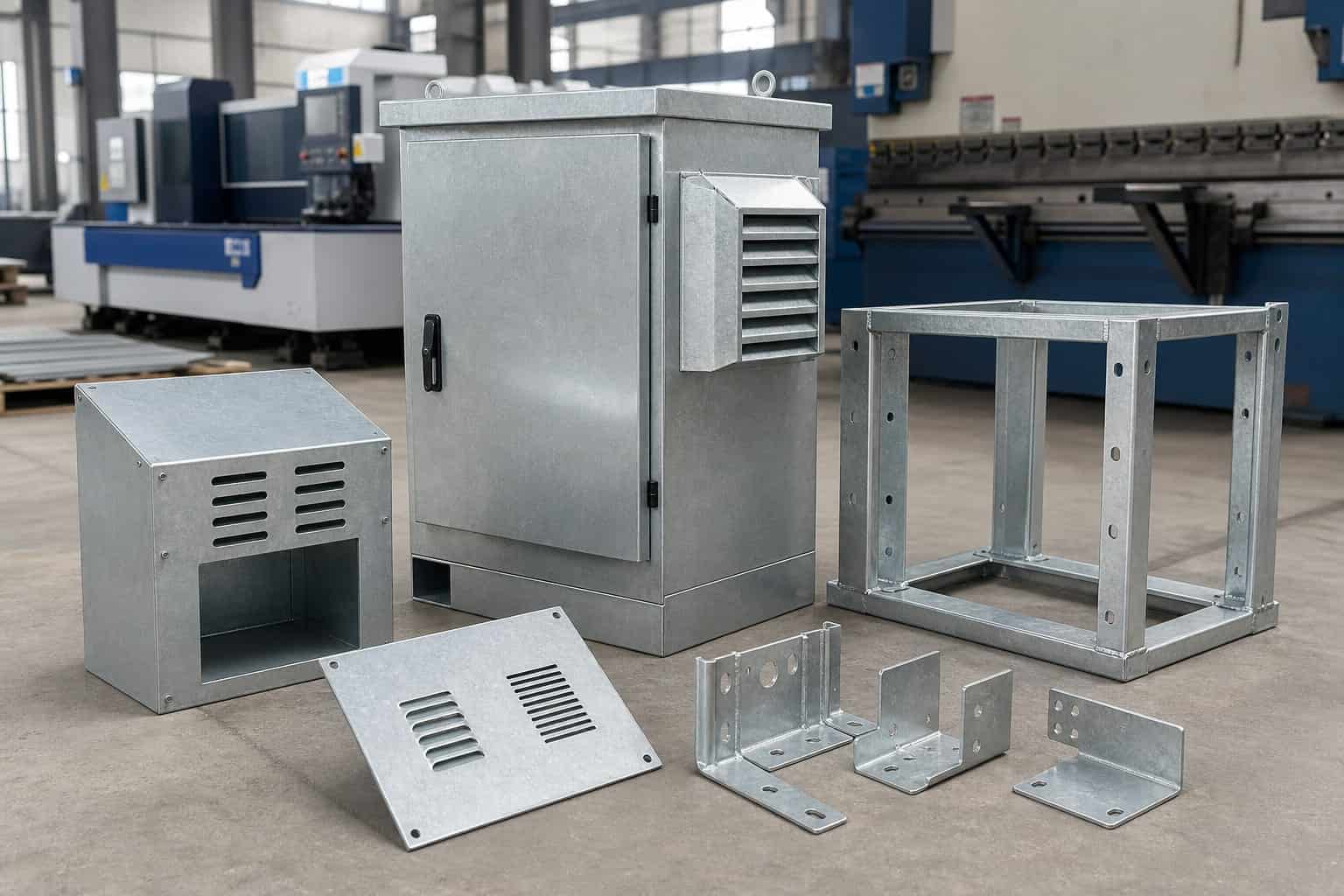
Fabrication Creates the Corrosion Weak Points.
A galvanized surface can look consistent before production while the finished part contains cut edges, burned coating, tight folds and water traps. We identify those locations before fixing the manufacturing route.
Cut edges lose protection
Laser-cut openings, punched holes and trimmed edges need review against exposure, coating designation and expected service life.
Weld zones need repair
Heat damages zinc around the joint. Weld access, cleaning and the agreed repair method must be part of the drawing review.
Tight bends stress the coating
Small radii, severe drawing and tool pressure can mark, thin or crack the zinc layer on visible or exposed areas.
Moisture collects at details
Closed hems, overlaps, horizontal ledges and poor drainage can hold water long enough for white storage stain or red rust to begin.
Match the Protection Route to the Real Environment.
Instead of choosing galvanized steel by habit, define where the product will operate, how often it gets wet and which areas can be maintained after installation.
Dry indoor use
Review handling, condensation risk and cosmetic expectations for cabinets, guards, brackets and internal equipment structures.
Humid or washdown
Identify splash direction, drainage, seams, fasteners and cleaning chemicals that may keep the surface wet or attack the protection system.
Outdoor exposure
Separate direct rain from sheltered condensation, then define coating, repair, finish and maintenance expectations accordingly.
Aggressive local exposure
Salt, fertilizers, industrial chemicals, animal waste and dissimilar-metal contact require application-specific confirmation before quotation.
Service life cannot be promised from the word ‘galvanized’ alone. Exposure, coating specification, part geometry, joining, finish and maintenance all change the result.
Specify More Than ‘Galvanized Steel.’
The production standard should connect the customer’s drawing to a verifiable incoming material, while allowing the forming and finishing route to work reliably.
Steel grade and thickness
Define strength, formability, thickness tolerance and load requirements for the enclosure, bracket, panel or frame.
Zinc coating call-out
State the applicable supply standard and coating designation when exposure or customer approval depends on it.
Surface condition
Confirm passivation, oil, spangle or appearance requirements and whether the surface will remain visible, be painted or receive powder coating.
Approved substitutions
Do not replace the specified grade or coating route without written approval when it changes forming, welding, finish adhesion or service performance.
Design Out Water Traps Before Adding More Coating.
We review the finished geometry for places where moisture collects, coatings are damaged or repair and inspection become impossible after assembly.
Drainage and orientation
Slope horizontal surfaces where practical and place drain paths where water can leave the installed product.
Hems, laps and closed seams
Avoid moisture traps or define sealing and repair access before overlapping features are released to production.
Weld location and access
Keep critical weld zones reachable for cleaning, inspection and zinc-rich repair or the specified finishing route.
Cutouts and exposed edges
Review vents, cable entries, louvers and large openings that create long exposed perimeters in wet environments.
Dissimilar-metal contact
Identify stainless, aluminum, copper or plated fasteners and decide whether isolation is needed in the actual environment.
Handling and assembly faces
Mark visible faces, grounding areas, mating surfaces and zones that must remain free of coating buildup.
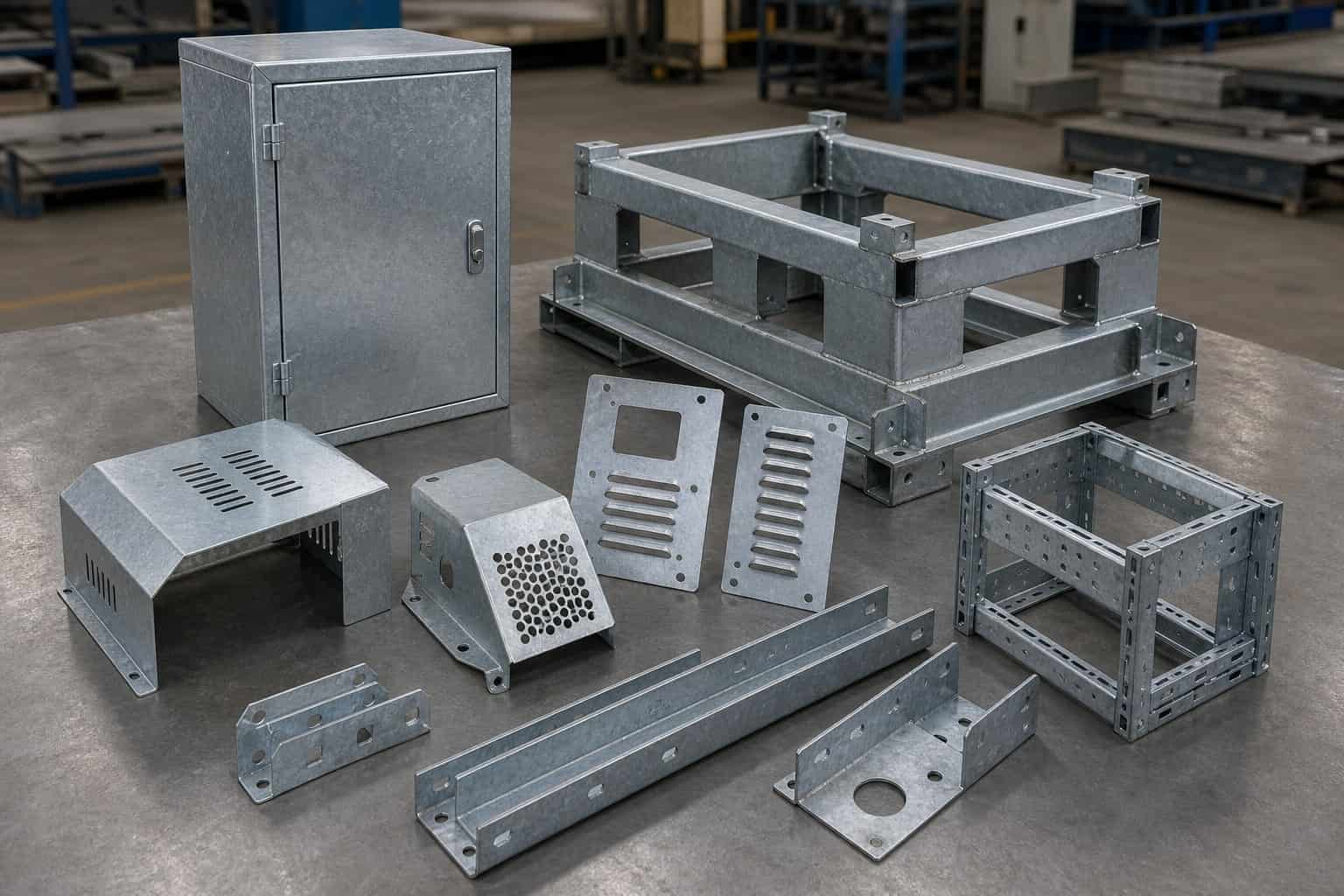
Galvanized Steel Enclosures, Frames and Industrial Hardware.
We manufacture finished products to customer drawings. Product geometry, joining, surface repair, optional coating, assembly and export packaging are coordinated as one batch route.
Enclosures and cabinets
Equipment housings, electrical-style cabinets, storage enclosures and protective boxes with doors, vents and mounting features.
Equipment frames
Welded or fastened bases, support frames and structural subassemblies for machinery and industrial systems.
Brackets and mounts
Formed L, U and Z brackets, mounting rails, reinforcement parts and repeat-order installation hardware.
Panels and covers
Laser-cut and bent access panels, guards, shields and covers with louvers, holes, inserts and edge details.
Racks and equipment structures
Shelving, vending-machine structures, advertising equipment and commercial metal support systems.
Welded assemblies
Drawing-based sheet and tube assemblies with controlled joints, fixtures, coating repair, inspection and packing.
Steel Strength with Practical Zinc Protection.
Yishang supplies bulk custom galvanized steel products for OEM and ODM programs across indoor, humid and outdoor applications.
Agricultural equipment
Construction equipment
Industrial machinery
Energy storage
Vending machines
Advertising equipment
Electronics
Appliances
Automotive equipment
Pet equipment
Hardware products
Custom OEM assemblies
Quote the Finished Part, Not Just the Material.
A useful RFQ explains how the completed part will be made, installed and exposed—not only its outside dimensions.
Current drawing set
Provide 2D drawings, 3D files, datums, tolerances, assembly details and the current revision.
Material and coating spec
State steel grade, thickness, coating designation, supply standard and any certificate requirement.
Installed environment
Describe indoor or outdoor exposure, condensation, washdown, chemicals, salt, maintenance and target service expectations.
Joining, repair and finish
Mark welds, fasteners, sealed joints, repair zones, powder coating or paint, masking and cosmetic faces.
Volume, inspection and packing
Share sample quantity, batch quantity, annual demand, approval records, delivery plan and moisture-sensitive packing needs.
Show Us Where Water, Welds and Cut Edges Meet.
We will review the galvanized steel part as a finished protection system, then flag avoidable corrosion, fabrication and finishing risks before batch production.