
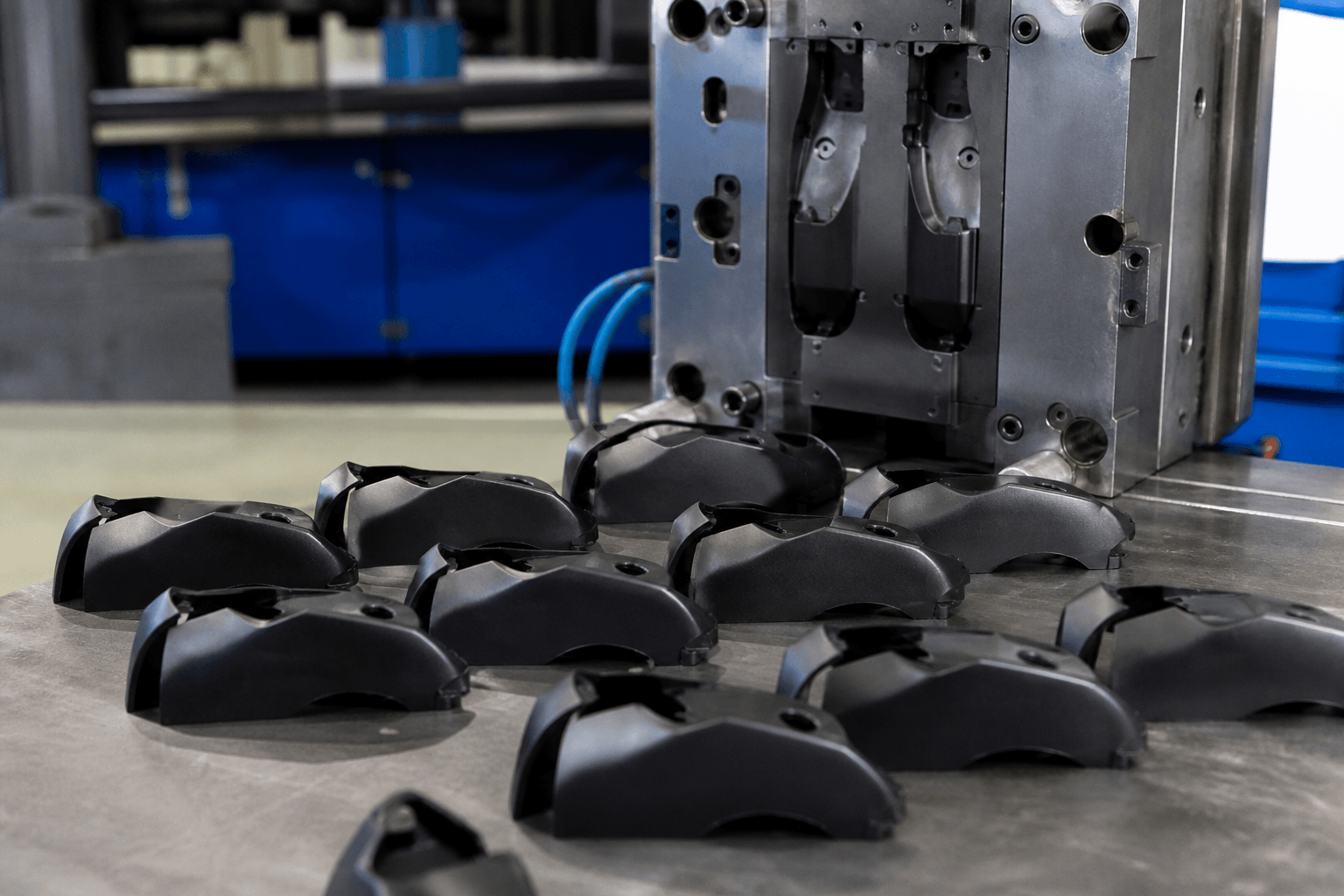
ABS molded generally describes a component formed from acrylonitrile butadiene styrene, most often by injection molding. The term may also refer more broadly to ABS shaped by thermoforming or another heat-forming process, so drawings and purchase specifications should identify the actual manufacturing method.
ABS is widely considered for housings, covers, bezels, brackets, control panels, appliance components, and interior vehicle parts. Its suitability depends on the selected grade, part geometry, operating environment, appearance requirements, production quantity, and any interfaces with metal components.
What Does ABS Molded Mean?
ABS is a thermoplastic made from three constituent monomers: acrylonitrile, butadiene, and styrene. Their combination gives ABS a useful balance of rigidity, impact resistance, surface appearance, and processability. The exact balance varies among material grades. For example, an impact-modified grade may behave differently from a heat-resistant, flame-retardant, electroplating, or general-purpose grade.
“Molded” refers to shaping softened ABS with a mold or forming tool. In most industrial sourcing discussions, an ABS molded part is an injection-molded component produced from pellets. However, a large ABS equipment cover could instead be thermoformed from sheet. This distinction affects tooling, wall thickness, achievable geometry, surface detail, tolerances, and economical production volume.
ABS is not a separate category from plastic; it is one type of plastic. Comparing “ABS versus plastic” is therefore incomplete. A useful comparison identifies the alternative resin, such as polycarbonate, polypropylene, nylon, or an ABS/polycarbonate blend, together with the required performance.
How Injection-Molded ABS Parts Are Produced
Injection molding is the principal process associated with molded ABS. Although the equipment and tool design vary, the production sequence normally includes the following stages:
- Material preparation: ABS pellets are prepared according to the material supplier’s processing guidance. Moisture control is important because excessive moisture can contribute to surface streaks, bubbles, or inconsistent appearance during molding.
- Plasticizing: The pellets enter a heated barrel, where a rotating screw conveys and melts the material. Processing conditions must suit the specific ABS grade rather than a generic setting for all ABS materials.
- Injection and packing: The machine injects molten ABS into the closed mold. Additional pressure may be maintained as the material begins to cool, helping compensate for volumetric contraction and fill detailed features.
- Cooling: The part solidifies inside the mold. Cooling behavior is influenced by wall thickness, mold temperature, cooling-channel layout, part geometry, and resin grade.
- Ejection: The mold opens and ejector features release the part. Their position matters because ejector marks or local deformation may be unacceptable on visible surfaces.
- Secondary work: Depending on the specification, the part may be trimmed, printed, painted, plated, ultrasonically welded, fitted with inserts, or assembled with metal hardware.
Injection molding can create ribs, bosses, clips, openings, logos, and other features in one cycle. That design freedom does not remove manufacturing constraints. Deep walls need suitable draft, abrupt thickness changes can cause visible defects, and undercuts may require slides, lifters, or a redesigned feature.
Injection Molding, Thermoforming, and Extrusion Compared
The correct ABS process depends on the shape and commercial context. Tooling cost should be considered together with part complexity, expected quantity, finishing, material use, and secondary operations.
| Process | Typical ABS form | Best suited to | Important limitations |
|---|---|---|---|
| Injection molding | Pellets | Detailed three-dimensional parts, bosses, ribs, clips, and repeat production | Requires a mold; tool complexity rises with undercuts, side actions, and demanding cosmetic surfaces |
| Thermoforming | Extruded sheet | Large covers, liners, trays, and relatively shallow shells | Wall thickness changes as the sheet stretches; back-side details and sharp features are more limited |
| Extrusion | Pellets formed through a die | Continuous sheet, profiles, edging, and channels | Produces a constant cross-section rather than a complete complex enclosure |
| Machining from ABS stock | Sheet, plate, or block | Prototypes, fixtures, and low quantities where mold investment is difficult to justify | Material is removed rather than formed; complex production parts may be inefficient to machine |
Thermoforming and extrusion are related to ABS part production, but they should not automatically be described as injection molding. An accurate quotation should state whether the supplier is pricing a molded pellet-based part, a formed sheet component, or a machined prototype.
Design and Specification Checks Before Tooling
A workable ABS molded design begins with the assembly function, not only the external shape. The following points deserve review before tooling is released:
- Wall distribution: Relatively consistent walls support more uniform filling and cooling. Thick local sections can contribute to sink marks, internal voids, or longer cooling, while very thin regions may be difficult to fill.
- Ribs and bosses: These features can add stiffness or support fasteners, but their proportions and location affect sink, warpage, and molding pressure. A thick boss attached directly to a cosmetic wall may print through on the opposite surface.
- Draft and parting lines: Surfaces parallel to mold opening generally need draft. Texture, depth, and material behavior influence the required amount. The parting line should be placed with appearance and flash control in mind.
- Fastening method: Screws, molded clips, heat-installed inserts, adhesive bonding, and welding each place different demands on the geometry and resin. Repeated servicing may justify a different fastening approach from a permanently closed housing.
- Environment: Temperature, ultraviolet exposure, chemicals, impact, ignition requirements, and indoor or outdoor use should be disclosed. Standard ABS is not automatically suitable for every outdoor or high-temperature application.
- Appearance: Color, gloss, texture, gate vestige, weld lines, ejector marks, and permissible visual variation should be defined. “Black ABS” alone does not establish an appearance standard.
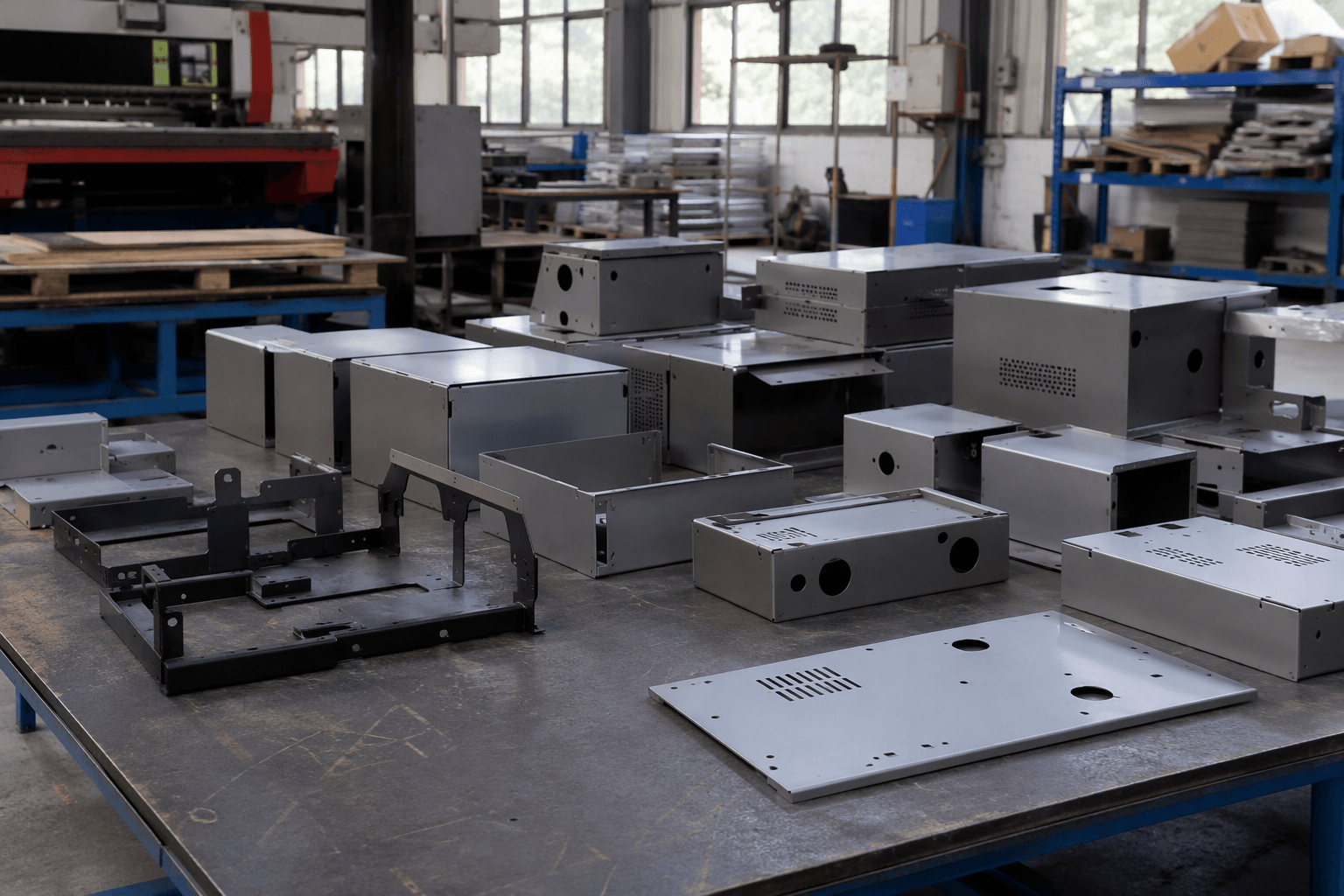
Interfaces with sheet metal need particular attention. An ABS bezel mounted to a fabricated enclosure may depend on hole position, flange flatness, bend conditions, fastener access, and the combined tolerance stack. Plastic and metal also respond differently to temperature and loading. Datums and critical dimensions should therefore be assigned according to how the finished assembly is located and inspected.
If your product combines an ABS molded housing with a custom metal chassis, bracket, panel, or enclosure, send the drawing, material, quantity, tolerance, and finish for an application review. Yishang supports B2B OEM and ODM metal manufacturing and can help clarify the manufacturability and project requirements of the metal components and their interfaces with the molded part.
Quality Checks for Molded ABS Components
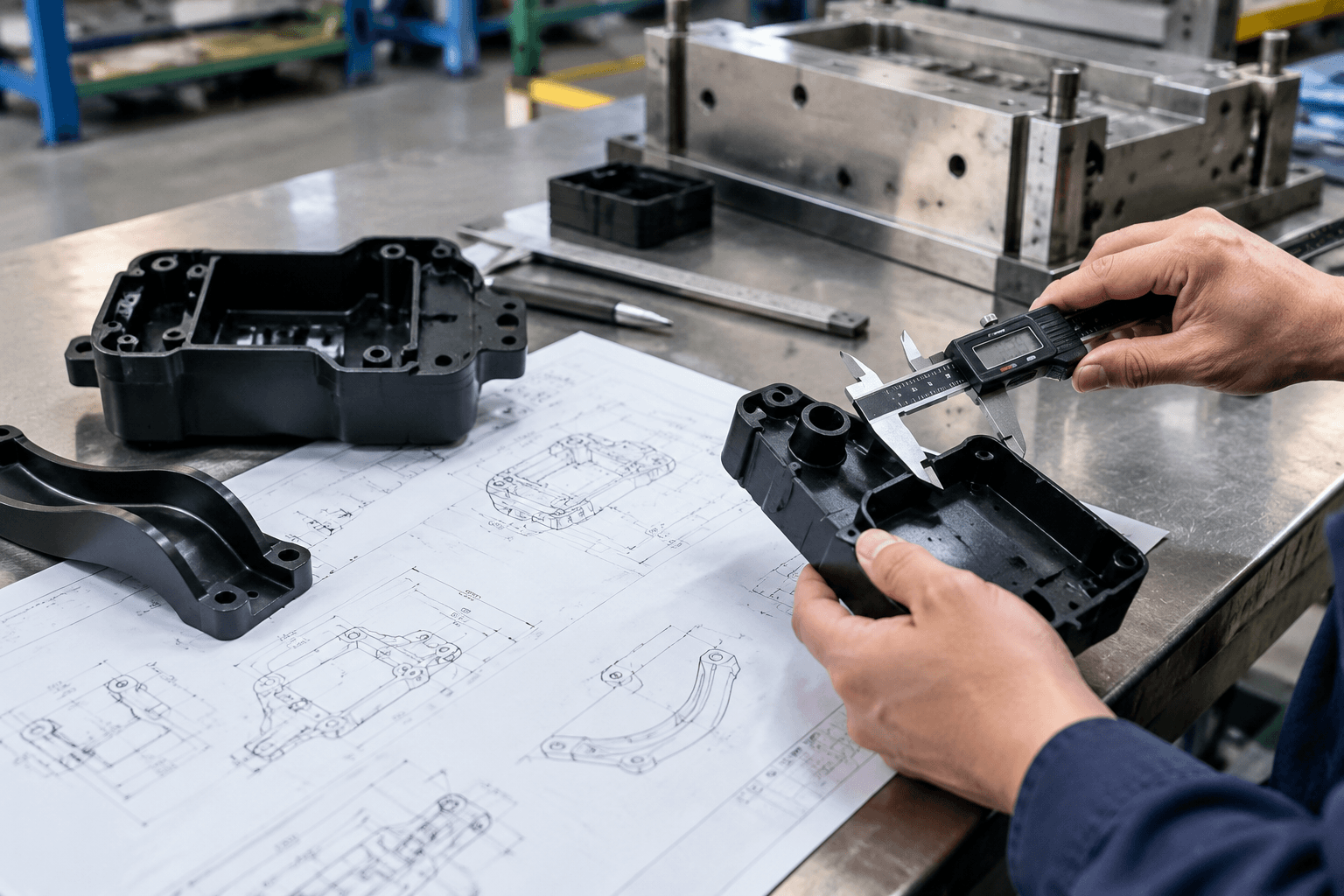
Inspection should reflect the part’s actual risks rather than relying only on a generic statement that it is made from ABS. Buyers may need to confirm material designation and color, critical dimensions, warpage, weight consistency, assembly fit, surface defects, and the condition of clips or bosses.
Cosmetic requirements are easier to manage when approved samples or clearly defined acceptance criteria establish the viewing surface, lighting expectations, texture, gloss, and allowable marks. Dimensional inspection should focus on functional datums and characteristics instead of treating every dimension as equally critical.
Common molding problems include sink marks, short shots, flash, weld lines, splay, burn marks, distortion, and visible gate or ejector evidence. Their causes can overlap. For example, distortion may involve geometry, uneven cooling, ejection, packing conditions, or material selection. Corrective action should follow process and tool analysis rather than changing one parameter without considering its effect elsewhere.
Before ordering production tooling, buyers should also clarify tool ownership, expected maintenance responsibility, cavity arrangement, approved resin grade, color control, change procedures, packaging, inspection records, and how first production samples will be approved. Requirements vary by project, so these items belong in the commercial and technical agreement.
Frequently Asked Questions
What is molded ABS?
Molded ABS is acrylonitrile butadiene styrene that has been heated and shaped using a mold or forming tool. The phrase most commonly means injection-molded ABS, although thermoformed ABS sheet may also be described as molded. The process should be confirmed from the drawing or supplier quotation.
Is ABS better than plastic?
ABS is itself a plastic, so it is not meaningful to call it universally better than plastic. It may be preferred over another resin when rigidity, impact behavior, appearance, or ease of molding suits the application. Other materials may perform better under ultraviolet exposure, elevated temperatures, chemical contact, low-friction service, or different cost constraints.
What should an RFQ for an ABS molded part include?
Include the part drawing and 3D model if available, the specified ABS grade or required service conditions, expected quantity, critical tolerances, color and finish, cosmetic surfaces, assembly interfaces, and whether the part is intended for injection molding or thermoforming. Tool ownership, sample approval, packaging, and inspection requirements should also be clarified when applicable.
Can an ABS molded part be assembled with sheet metal?
Yes. ABS covers, bezels, handles, and control components are frequently designed to interface with metal panels or frames. The design should account for locating datums, fastener access, edge conditions, bend variation, thermal movement, and the tolerance stack across both components. Reviewing the plastic and metal drawings together helps identify interface conflicts before production.