
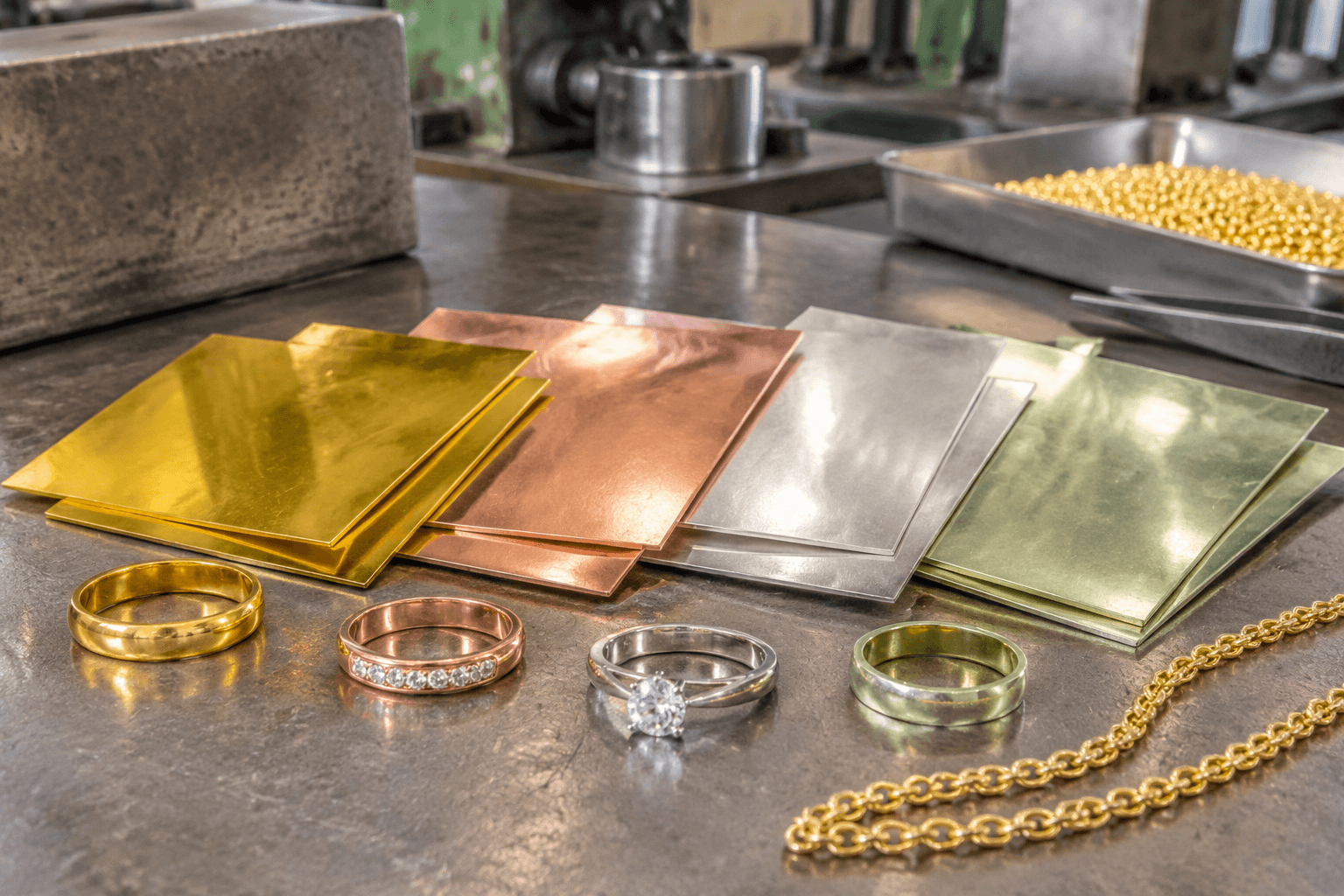
Alloy metal in jewelry is a mixture of a precious metal, such as gold or silver, with one or more additional metals. These additions can change color, workability, hardness, wear behavior, cost, and maintenance needs, while the karat or fineness mark normally tells you the precious-metal content—not the complete alloy recipe.
This distinction matters when comparing jewelry with similar labels. Two pieces marked 18K may both contain 75% gold, yet their remaining 25% can contain different combinations of copper, silver, palladium, nickel, zinc, or other metals. As a result, they may not have the same shade, price, plating, care requirements, or practical performance.
What Does Alloy Metal Mean in Jewelry?
An alloy is a metallic material made by combining elements, at least one of which is a metal. In jewelry, alloying allows a maker to retain a specified amount of precious metal while adjusting characteristics that pure metal alone may not provide.
Pure gold is naturally yellow and highly workable. It can be used in jewelry, but its relative softness may make it more susceptible to deformation or visible wear in some designs. Adding other metals can influence how the material is cast, formed, polished, set with stones, or used in thin and detailed sections. The result depends on the full formulation, manufacturing route, heat treatment, product geometry, and finishing process; the presence of one alloying element does not prove a particular performance level.
Color is another major reason for alloying. Copper can shift gold toward pink or red tones, while silver can produce paler or slightly greener tones. Metals such as nickel and palladium may help create white-gold alloys. Zinc can affect color and processing behavior and may be included as part of a multimetal recipe. Common industry formulations vary, so these elements should be understood as possible ingredients rather than a universal formula. ([gold.org](https://www.gold.org/about-gold/about-gold-jewellery?utm_source=openai))
Silver jewelry also uses alloys. Sterling silver, for example, is a specific silver alloy containing 92.5% silver and 7.5% other metal by mass. It is one type of alloy metal in jewelry, not another name for all jewelry alloys.
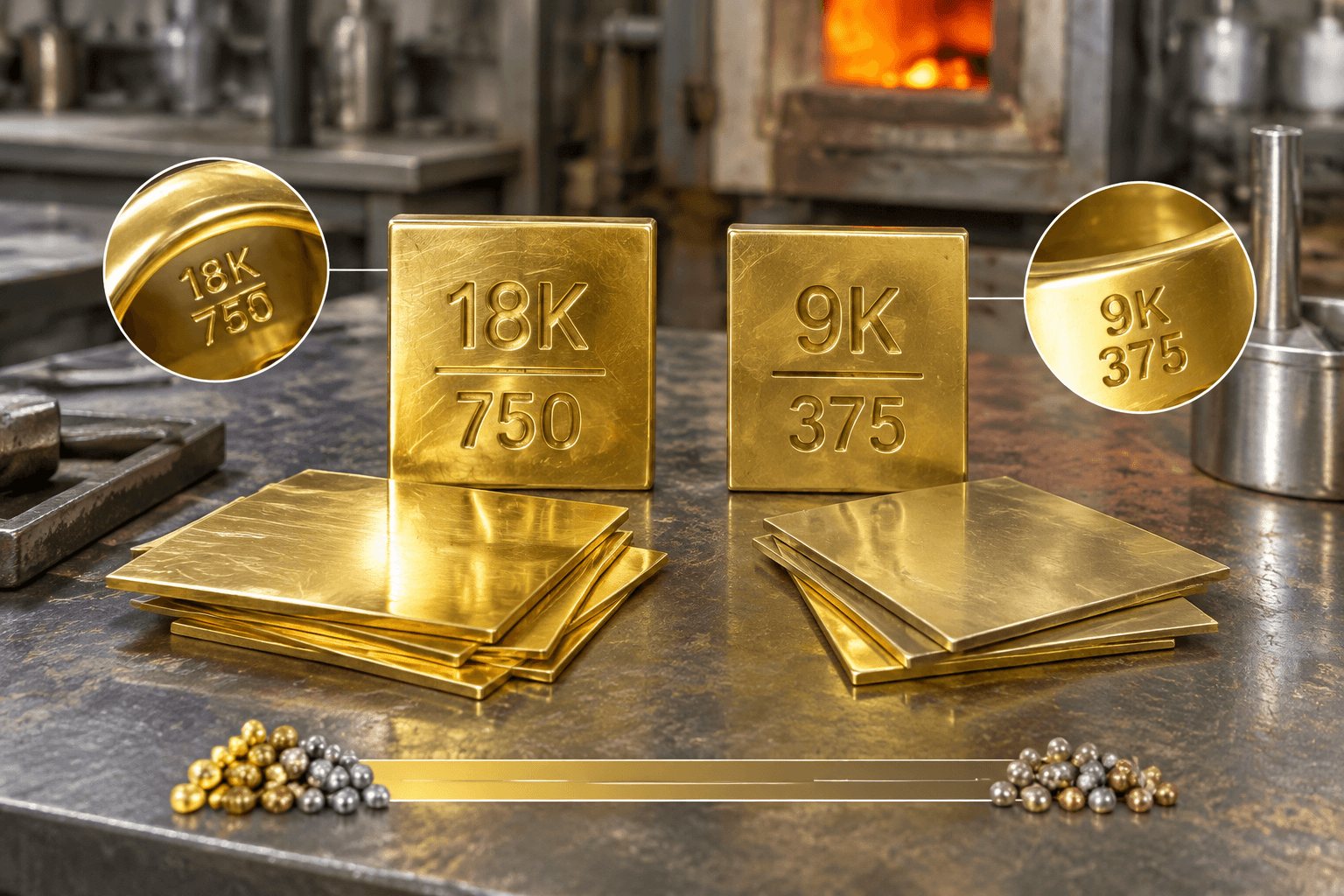
How to Read 18K, 9K, 750, and 375 Marks
Gold purity can be expressed in karats or as fineness in parts per thousand. Karat divides the material into 24 parts, while fineness states how many parts out of 1,000 are gold.
- 18K: 18 of 24 parts are gold. This equals 75% gold.
- 750: 750 parts per 1,000 are gold. It is the fineness equivalent commonly associated with 18K.
- 9K: 9 of 24 parts are gold. This equals 37.5% gold.
- 375: 375 parts per 1,000 are gold. It is the fineness equivalent commonly associated with 9K.
These figures describe the declared gold content, subject to the applicable marking rules, assay procedures, and permitted tolerances in the market where the jewelry is sold. The World Gold Council identifies 750 with 18-carat gold and 375 with 9-carat gold. ([gold.org](https://www.gold.org/about-gold/about-gold-jewellery?utm_source=openai))
The mark does not normally explain the other fraction. An 18K piece has 25% non-gold content, but the 750 mark alone does not tell you whether that portion is primarily copper and silver, a palladium-bearing blend, a nickel-containing formulation, or another recipe.
A formal hallmark may provide more information than a simple quality stamp. Depending on the jurisdiction, a hallmark can include a sponsor or maker mark, a fineness mark, an assay-office symbol, or a date-related mark. Requirements differ between countries, and a stamped number should not be interpreted as a complete chemical analysis.
Yellow, Rose, White, and Green Gold Compared
| Gold family | Possible alloying approach | Typical appearance | What buyers should verify |
|---|---|---|---|
| Yellow gold | Often combines gold with copper and silver; zinc may also be present | Warm yellow, with tone varying by karat and recipe | Gold purity, exact color, disclosed metals, and whether any surface coating is used |
| Rose or pink gold | Generally uses copper as the main color-shifting addition, often with silver or zinc | From subtle blush to deeper reddish pink | Copper-related color variation, full composition if available, and suitability for the intended wearer |
| White gold | May use nickel, palladium, silver, zinc, copper, or combinations of these | From warm grey-white to bright white when plated | Base alloy, nickel disclosure, rhodium-plating status, and future replating expectations |
| Green gold | Usually silver-rich relative to yellow or rose gold; some recipes also adjust copper or zinc | Often a subtle greenish-yellow rather than a vivid green | Actual sample color, named formulation, composition information, and whether the color is inherent or surface-applied |
Yellow gold is not simply pure gold made less expensive. Its copper-to-silver balance can be selected to preserve or modify the warm yellow appearance while supporting the maker’s production requirements.
Rose gold receives its characteristic tone largely from copper. A greater copper contribution can produce a pinker or redder appearance, although the visible result also depends on gold purity and the other additions. A proprietary rose-gold name therefore does not reveal an exact copper percentage. ([4cs.gia.edu](https://4cs.gia.edu/en-us/blog/yellow-gold-vs-rose-gold/?utm_source=openai))
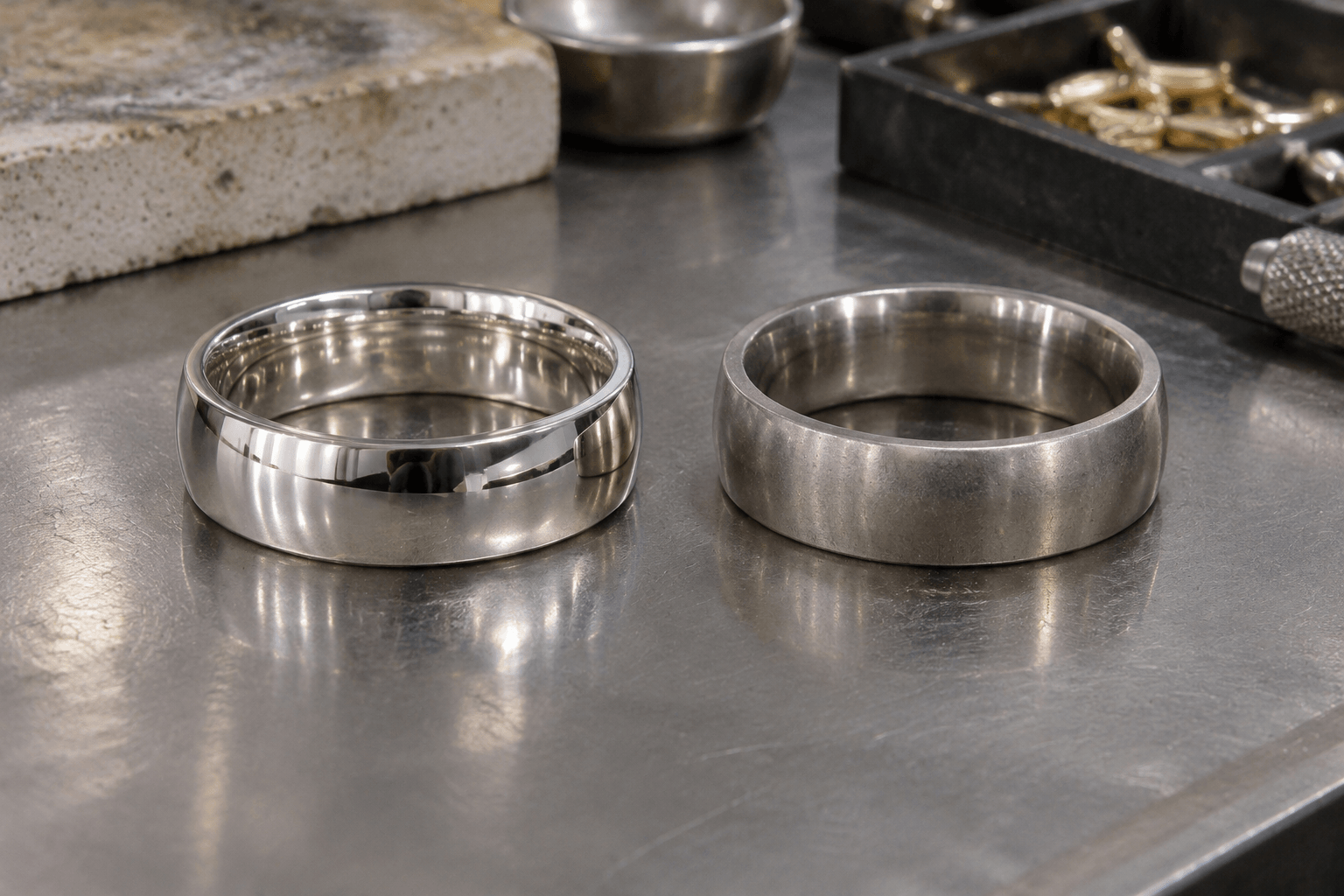
White gold is a family rather than one formulation. Nickel-based and palladium-based approaches can differ in color, material cost, processing behavior, and wearer considerations. White gold is often rhodium plated to produce a brighter, more neutral-white surface, but plating is not mandatory for every formulation or design. ([4cs.gia.edu](https://4cs.gia.edu/en-us/blog/buying-guide-white-yellow-rose-gold-engagement-rings/?utm_source=openai))
Green gold is generally more restrained than product photography may suggest. Silver-rich gold alloys can produce a pale greenish or cool yellow tone, sometimes modified with copper or zinc. The precise shade should be evaluated from a physical sample or controlled product image rather than inferred from the name alone. ([cameo.mfa.org](https://cameo.mfa.org/wiki/Green_gold?utm_source=openai))
Why the Same Karat Can Produce Different Results
Color: Two 18K alloys contain the same nominal percentage of gold, but different ratios of copper, silver, palladium, nickel, or zinc can produce noticeably different tones. Even two products sold under the same broad color category may not match when placed side by side.
Plating: A rhodium-plated white-gold ring has a surface layer that is distinct from the underlying alloy. If that layer wears locally, the base alloy may become more visible. An unplated white-gold product avoids this specific replating issue, but its natural color may be greyer or warmer than a rhodium finish.
Price: Gold purity is a major cost factor, but it is not the only one. Palladium-bearing alloys may carry a different raw-material cost from nickel-, silver-, or copper-based blends, depending on formulation and changing metal markets. Product weight, stone setting, design complexity, finishing, branding, and distribution also affect the final price.
Wear and maintenance: Statements such as “stronger,” “scratch-proof,” “tarnish-proof,” or “longer-lasting” need supporting conditions. Performance can change with alloy composition, heat treatment, section thickness, prong design, surface finish, wear pattern, chemical exposure, and maintenance. Karat alone is not enough to predict the ownership experience.
Wearer compatibility: A white-gold description does not establish whether nickel is present. Buyers with known sensitivities should request a specific disclosure rather than rely on the color name or assume that plating permanently isolates the base alloy.
How to Compare Jewelry Alloys Beyond the Karat Number
Use the following checks when two products share a purity mark or when a proprietary color carries a price premium.
| Comparison point | Information to request | Why it matters |
|---|---|---|
| Purity | Karat, fineness mark, and applicable hallmark information | Confirms the declared precious-metal fraction |
| Remaining alloy | Main alloying metals or an available composition range | Helps explain color, price, and possible wearer concerns |
| Visible color | Unedited images, physical samples, or comparison beside a known alloy | Color names are subjective and may conceal subtle differences |
| Surface treatment | Whether the piece is plated, coating material, and base alloy beneath it | Separates surface appearance from the underlying metal |
| Maintenance | Cleaning limits, polishing guidance, and likely replating needs | Shows whether initial price is the only significant cost |
| Performance claims | Test method, comparison material, product conditions, and limitations | Prevents unsupported terms from being treated as measured facts |
| Proprietary name | Documentation explaining what the name represents | A branded color name does not disclose exact percentages |
- Start with the purity mark. Confirm whether the product is 18K, 9K, 750, 375, or another fineness. Check whether the mark is a simple quality stamp or part of a recognized hallmarking system.
- Ask about the base alloy. For white gold, request nickel or palladium disclosure. For rose or green gold, ask which metals create the color and whether a composition range is available.
- Separate plating from solid composition. Ask whether rhodium or another surface layer is present. If it is, request realistic maintenance information and determine what color may appear as the coating wears.
- Examine the evidence behind premium claims. If a seller claims superior wear, brightness, color stability, or skin compatibility, ask what was tested, under which conditions, and against which comparison alloy.
- Compare total ownership requirements. Consider initial price alongside cleaning, polishing, possible replating, repairability, and the construction of the particular piece.
Accurate product descriptions should represent metallic content, treatments, durability, and other material characteristics truthfully. Buyers should therefore request written clarification when a listing uses vague alloy terminology or does not distinguish plating from the underlying material. ([ftc.gov](https://www.ftc.gov/news-events/topics/tools-consumers/jewelry-guides?utm_source=openai))
Before paying for a proprietary alloy or color premium, check the hallmark, request the underlying alloy and plating disclosure, and compare documented composition with the stated maintenance requirements. Make the decision from disclosed facts rather than assuming that a color name or higher karat is automatically better.
Frequently Asked Questions
What alloy is commonly used in jewelry?
There is no single standard jewelry alloy. Gold is commonly combined with copper, silver, zinc, nickel, or palladium in different formulations. Sterling silver is typically 92.5% silver with 7.5% other metal, commonly copper. Fashion jewelry may use brass, bronze, stainless steel, zinc-based alloys, or plated base metals, but the exact composition should be confirmed from the seller.
Does alloy gold rust, tarnish, or change color?
Gold does not rust in the iron-oxidation sense, but a gold alloy may tarnish, discolor, or show surface changes depending on its other metals, environmental exposure, cosmetics, chemicals, wear, and plating condition. A seller should qualify any tarnish-resistance or color-stability claim for the specific alloy and product.
Is alloy metal the same as sterling silver?
No. “Alloy metal” is a broad category covering metallic mixtures. Sterling silver is one particular alloy containing 92.5% silver and 7.5% other metal by mass. A 925 mark indicates silver fineness; it does not describe gold alloy content. ([4cs.gia.edu](https://4cs.gia.edu/en-us/blog/white-gold-vs-silver/?utm_source=openai))
Do yellow, rose, or white gold alloys require rhodium plating?
Unplated yellow and rose gold do not depend on rhodium to establish their primary color, although they can still require cleaning, polishing, or repair. Some naturally grey-white gold formulations may also be sold without rhodium. Maintenance depends on the exact alloy, finish, design, usage, and wearer expectations, so plating status and care instructions should be checked for the individual product.