
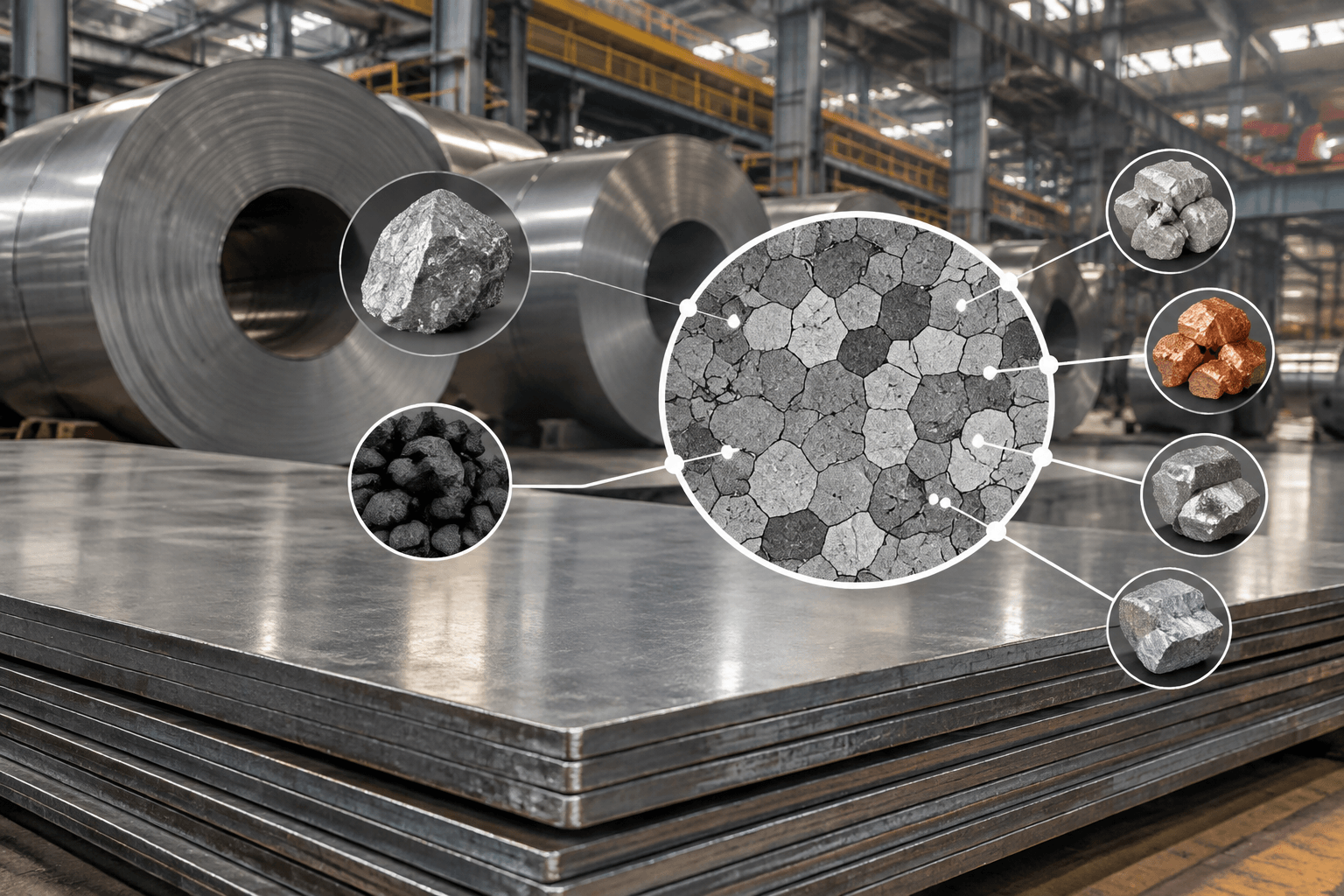
An alloy of steel is an iron-based material in which carbon and other elements are controlled to produce specific mechanical, thermal, corrosion, or manufacturing characteristics. Iron is the base metal, steel is an iron-carbon alloy, and alloy steel uses additional alloying elements to modify how the material performs.
Quick answer: An alloy of steel combines iron and carbon with controlled additions such as chromium, nickel, molybdenum, manganese, or silicon. The alloy name alone does not define final performance; the grade designation, supplied condition, heat treatment, section size, and manufacturing process must also be specified.
This distinction matters when a buyer or engineer moves from general material research to a production drawing. Two steels with similar chemistry may have very different hardness, toughness, machinability, or welding behavior because they were processed or heat treated differently.
What Makes a Steel an Alloy Steel?
Steel contains iron as its principal element and carbon as a defining constituent. Carbon strongly affects strength, hardness, ductility, weldability, and heat-treatment response, but carbon content alone does not provide a complete definition of alloy steel.
An alloying element is an element intentionally added or controlled to change material behavior. Chromium, nickel, molybdenum, manganese, and silicon are common examples. Some elements promote hardenability or carbide formation, while others support toughness, deoxidation, machinability, or performance at elevated temperature. The result depends on the complete chemistry and processing route rather than on one element in isolation.
The boundary between plain carbon steel and alloy steel is therefore handled through recognized material specifications and grade systems. A useful purchase specification should identify a grade or controlled chemistry rather than simply calling for “steel alloy.”
Alloy steel is also not interchangeable with iron, stainless steel, or every carbon steel. Cast iron generally contains more carbon and is produced and used differently. Stainless steel is itself alloyed steel, but it is normally treated as a separate category because its chemistry and specifications are designed around corrosion resistance and related service requirements.
How Alloying Elements Change Steel Behavior
Alloying elements can improve one property while making another manufacturing operation more difficult. Their effects also interact with carbon content, grain structure, heat treatment, cooling rate, and part thickness. The table describes common tendencies, not guaranteed properties for every grade.
| Element | Typical influence | Important qualification or tradeoff |
|---|---|---|
| Carbon | Supports hardness, strength, wear resistance, and response to hardening. | Higher carbon levels generally reduce ductility and weldability and may increase cracking risk. |
| Chromium | Can improve hardenability, wear behavior, carbide formation, and resistance to some service environments. | Its effect depends on concentration and the other alloying elements; chromium addition alone does not make every steel stainless. |
| Nickel | Often supports toughness and strength, including in steels intended to retain a tough core. | Final performance remains dependent on grade, condition, temperature, and heat treatment. |
| Molybdenum | Contributes to hardenability, stable carbide formation, wear performance, and elevated-temperature strength. | It is normally selected as part of a complete alloy system, not as an isolated solution. |
| Manganese | Supports hardenability and strength and assists steelmaking by controlling undesirable effects from sulfur. | Excessive or inappropriate levels can affect forming, welding, and processing behavior. |
| Silicon | Acts as a deoxidizer and can contribute to strength or elastic behavior in suitable steel families. | Its influence on surface condition, forming, and other properties must be reviewed by grade. |
| Sulfur | Controlled sulfur additions can improve chip breaking and machinability in free-machining steels. | They may reduce ductility, toughness, weldability, formability, and surface quality. |
| Lead | Can improve machining behavior and surface finish in designated free-machining grades. | Leaded grades may be unsuitable for welding, forming, or heat-treatment routes expected for other steels. |
These interactions explain why a material should not be selected from a generic steel-alloy list. A shaft that needs fatigue strength, a welded bracket that must bend without cracking, and a wear component that needs a hard surface may require different grades and supplied conditions even when all three are described broadly as alloy steel parts.
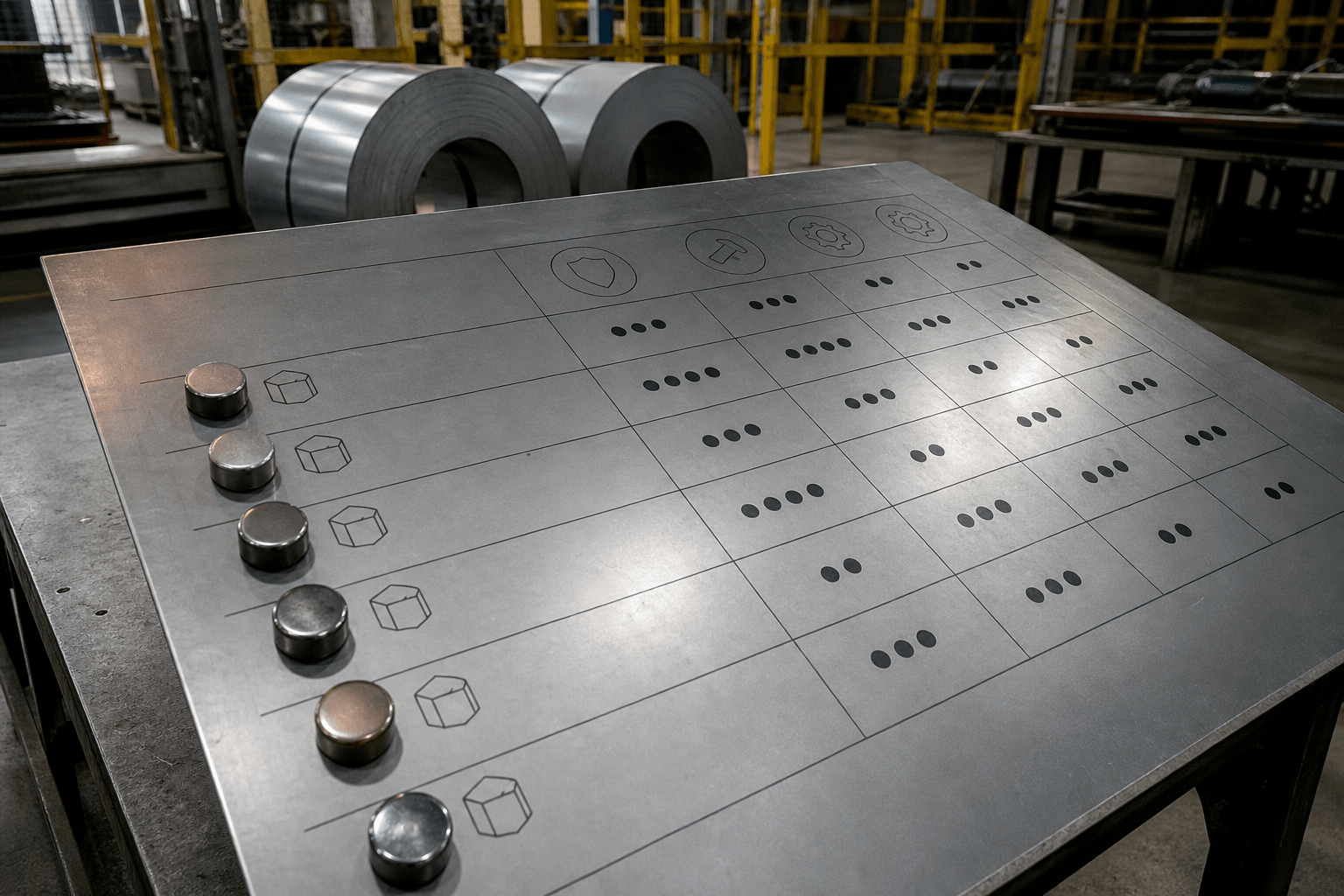
Composition, Condition, and Heat Treatment Work Together
Chemistry establishes the potential response of steel, but processing develops the final structure and properties. Hardness describes resistance to indentation or localized deformation. Hardenability describes the ability of a steel to develop hardness to a required depth under a defined heat-treatment and cooling process. A steel can have useful hardenability without being delivered in a hardened condition.
A practical material route usually follows this sequence:
- Select a recognized grade. Match the chemistry and grade family to the intended strength, toughness, wear, joining, and processing needs.
- Define the supplied condition. Annealed, normalized, cold-finished, or quenched-and-tempered material can behave differently during cutting, bending, welding, and subsequent heat treatment.
- Machine or fabricate at the appropriate stage. Some components are easier to form or machine before final hardening. Welding may need to occur before heat treatment or under a controlled procedure.
- Apply the specified heat treatment. Heating, quenching, tempering, carburizing, or another controlled process develops the required surface and core properties.
- Verify the result. Inspection may include material documentation, hardness testing, dimensional inspection, or other checks defined by the drawing and application risk.
Case hardening and through hardening solve different problems. Case hardening develops a hard outer layer while retaining a comparatively tougher core. Carburizing is one route used with suitable grades, such as designated case-hardening steels including AISI 8620. It is often considered for gears, pins, bushings, or wear surfaces where the exterior and core have different performance targets.
Through hardening aims to develop properties deeper through the section. Grades such as AISI 4140 may be supplied in several conditions and may be quenched and tempered for an application-specific balance of strength and toughness. Achievable uniformity depends on hardenability, section size, geometry, and the defined heat-treatment process.
From Part Requirement to Steel Property: A Material-Definition Matrix
Material selection should begin with the part’s function and likely failure mode. Strength values alone do not show whether the part can tolerate impact, welding heat, bending, repeated loading, abrasive contact, or final machining.
| Part requirement | Properties to define | Specification and process questions |
|---|---|---|
| High static or repeated load | Yield or tensile requirements, fatigue behavior, toughness, and section consistency | Is the load steady, cyclic, or impacted? What material condition applies to the required properties? |
| Abrasion or sliding contact | Surface hardness, wear resistance, case depth where applicable, and core toughness | Does the complete section need hardness, or is a hardened surface with a tougher core preferable? |
| Welded fabrication | Weldability, ductility, heat-affected-zone behavior, and crack resistance | Will preheating, controlled consumables, post-weld treatment, or a qualified procedure be required? |
| Bent or formed geometry | Ductility, bendability, edge quality, and supplied hardness | Can forming occur before hardening? Are bend direction, radius, and grain orientation important? |
| Extensive machining | Machinability, chip control, dimensional stability, and achievable surface condition | Would a free-machining grade conflict with later welding, forming, or heat treatment? |
| Impact or shock loading | Toughness, ductility, notch sensitivity, and temperature-dependent behavior | Is a high hardness value creating brittleness or reducing the safety margin? |
| Elevated-temperature service | Strength retention, creep behavior, oxidation conditions, and dimensional stability | What operating temperature, exposure time, load, and environment must the specification address? |
For automotive and transportation components, the material definition may need to balance repeated loading, impact, wear, weldability, and weight. In material handling and logistics equipment, concentrated loads, abrasion, shock, and field repair requirements can shift the priority toward a different combination of toughness, hardness, and joining behavior.
No single steel grade is automatically best for these conditions. The suitable choice is the grade and condition that meet the necessary performance without adding alloy content, heat treatment, cost, or production controls that the part does not need.
What a Manufacturing-Ready Material Specification Should Include
A usable specification gives purchasing, manufacturing, heat-treatment, and inspection teams the same technical target. “Alloy steel,” “high-strength steel,” or “hardened steel” is rarely precise enough for production release.
Before releasing the drawing, define the following information where it is relevant:
- Recognized grade designation or controlled chemistry: State the applicable grade system and revision rather than relying on a trade description.
- Material form: Identify sheet, plate, bar, tube, forging, or another product form because availability and properties may differ.
- Supplied condition: Specify whether the material is annealed, normalized, cold-finished, prehardened, or delivered in another controlled state.
- Required mechanical properties: Define only the properties needed for function, including the location, direction, temperature, or test condition when these affect interpretation.
- Heat-treatment requirement: State whether the part requires carburizing, through hardening, tempering, stress relief, or another process, together with the acceptance criteria provided by the engineering specification.
- Critical surfaces and zones: Identify wear faces, bearing fits, weld areas, bend lines, threaded features, and surfaces requiring machining or controlled hardness.
- Manufacturing constraints: Note any welding, forming, machining, or heat-treatment sequence requirements that may be limited by the selected grade or material condition.
- Inspection expectations: Define the required material documentation and any hardness, dimensional, surface, or process verification needed for the application.
Frequently Asked Questions
Is alloy steel better than regular steel?
Not universally. Alloy steel may provide useful hardenability, toughness, wear resistance, or elevated-temperature performance, but another carbon steel may be easier to weld, form, purchase, or process. “Better” depends on the part function, failure risk, manufacturing route, material condition, and total production requirements.
Is stainless steel an alloy of steel?
Yes. Stainless steel is an alloyed steel category, but it is generally specified separately because its controlled chemistry is intended to provide defined corrosion-resistance characteristics and other service properties. Stainless steel and other alloy steels should not be treated as interchangeable without reviewing the applicable grade and condition.
What is the difference between alloy steel and iron?
Iron is a chemical element and the base metal in steel. Steel combines iron with carbon and controlled levels of other elements. Alloy steel uses additional alloying elements to modify properties or heat-treatment response. Cast iron has a different carbon range, structure, production route, and typical application profile.
Can alloy steel be welded, machined, formed, and heat treated in the same condition?
Sometimes, but not as a general rule. A condition that supports machining may not be suitable for final service, and a hardened condition may make forming or machining difficult. Welding can also alter heat-treated properties near the joint. The manufacturing sequence should therefore be planned around the selected grade, section, geometry, and final property requirements.