
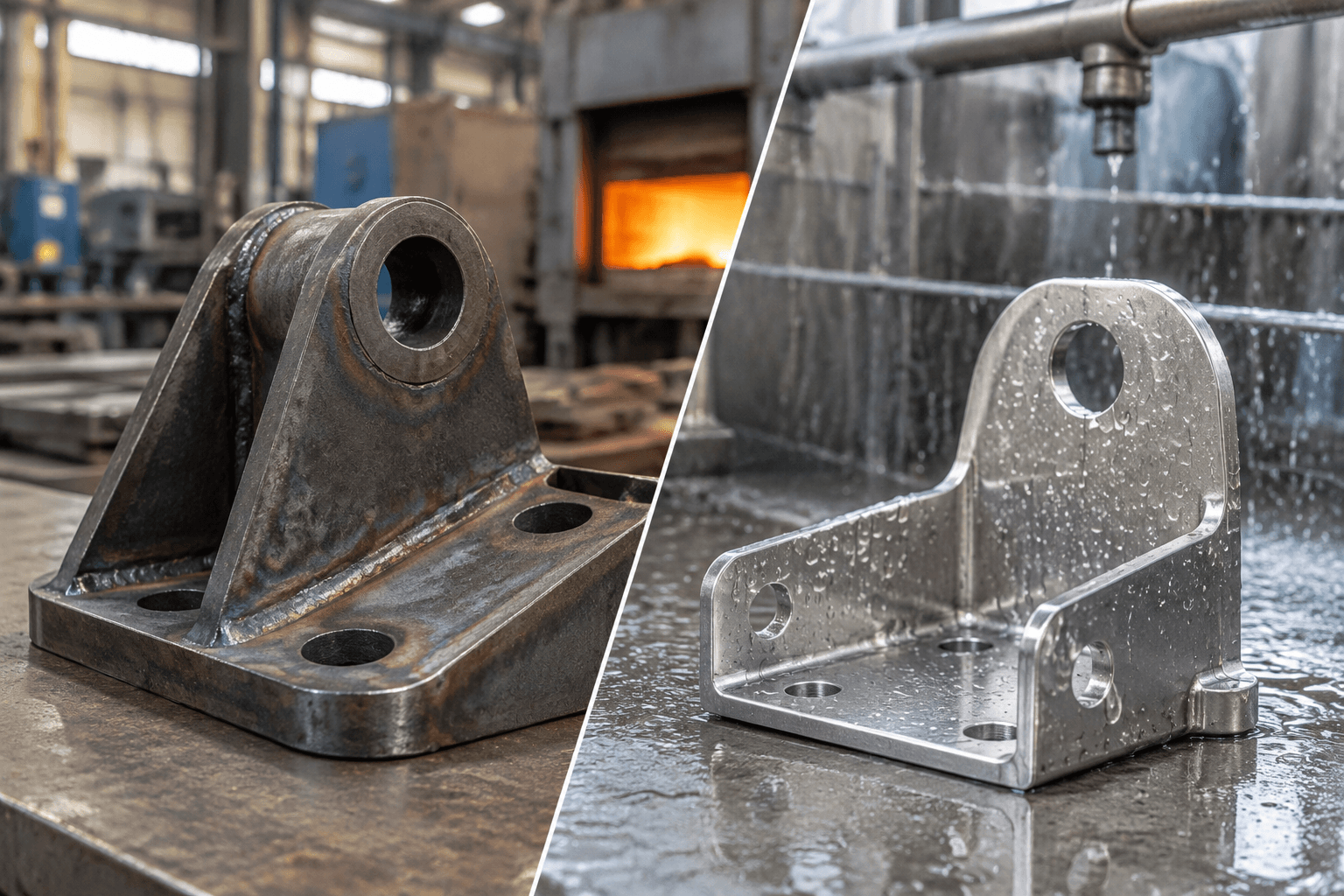
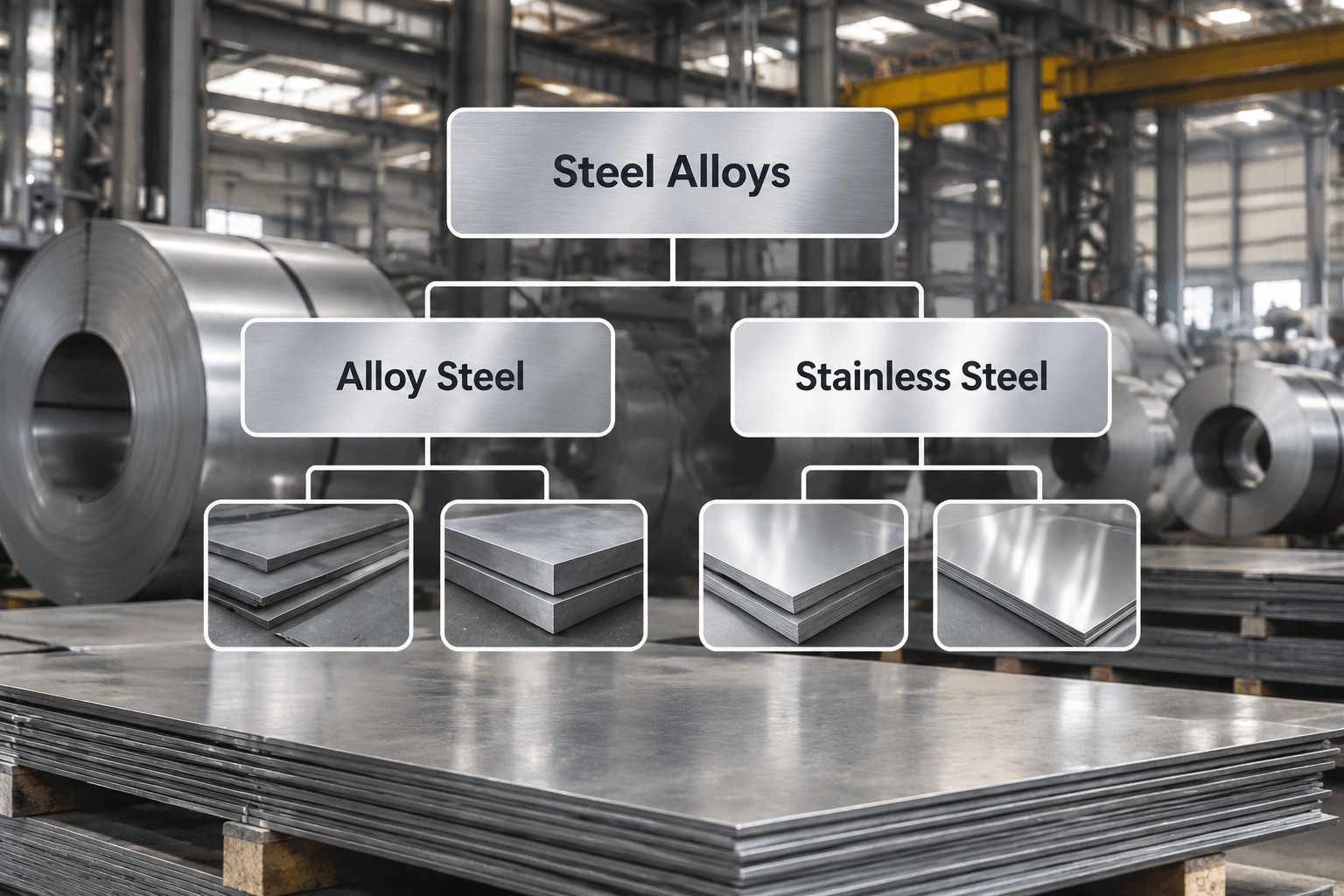
Stainless steel is technically a type of alloy steel, but the terms are usually treated as commercially distinct. In engineering and purchasing discussions, “alloy steel” commonly means non-stainless alloy grades, while “stainless steel” means chromium-containing grades designed to maintain a corrosion-resistant passive surface.
Neither category is automatically stronger, harder, easier to fabricate, or more economical. A valid alloy steel versus stainless steel comparison must identify the grade, supplied condition, service environment, required properties, and manufacturing route.
Are Alloy Steel and Stainless Steel the Same?
All steels contain iron and carbon, and many also contain elements added to control properties or processing behavior. In that broad metallurgical sense, stainless steel belongs within the alloy steel landscape.
The practical distinction comes from corrosion behavior and commercial terminology. Stainless steels contain enough chromium to develop a thin, self-renewing passive film when the surface has suitable access to oxygen. This film can greatly reduce general corrosion, but it does not make every stainless grade rustproof. Chlorides, chemicals, crevices, heat tint, contamination, surface damage, and unsuitable cleaning practices can still initiate corrosion.
Non-stainless alloy steels use combinations of elements such as chromium, molybdenum, nickel, manganese, or vanadium to obtain particular mechanical or heat-treatment responses. Some contain chromium, but not necessarily in a combination that produces stainless behavior. They may therefore need paint, plating, conversion coating, oil, or another protection system when exposed to moisture.
The useful question is not simply, “Is alloy steel or stainless steel better?” It is, “Which named grade and condition provide the required performance after forming, machining, welding, finishing, and assembly?”
Which Properties Actually Matter to the Part?
Broad category comparisons can support early screening, but they should not become drawing requirements. Selected grades can reverse a general trend, particularly after cold work or heat treatment.
| Selection factor | Non-stainless alloy steel | Stainless steel | What must be confirmed |
|---|---|---|---|
| Corrosion resistance | Often depends on a coating, plating, oil, or controlled environment. | Generally offers stronger inherent corrosion resistance, but performance varies substantially by grade and exposure. | Moisture, chlorides, chemicals, temperature, crevices, cleaning method, and surface condition. |
| Strength potential | Many grades can reach high strength through quenching and tempering or other controlled treatments. | Strength varies by stainless family. Cold working, precipitation hardening, or martensitic heat treatment may increase strength in appropriate grades. | Named grade, product form, heat-treatment condition, section size, and required test values. |
| Hardness and wear | Heat-treatable grades may be selected for gears, pins, shafts, tooling interfaces, and wear-loaded components. | Some stainless grades can provide useful hardness or wear resistance, while common annealed austenitic grades prioritize corrosion resistance and formability. | Hardness method, target range, case versus core requirements, friction, lubrication, and mating materials. |
| Ductility and forming | Depends strongly on grade and supplied condition. A hard or high-strength condition may restrict bending and forming. | Many stainless sheet grades form well, but springback and work hardening may increase forming loads. | Bend radius, grain direction, thickness, tooling, surface protection, and final condition. |
| Impact and toughness | Some heat-treated grades are chosen for shock, vibration, and high-load service. | Performance depends on stainless family, temperature, heat treatment, and section geometry. | Service temperature, notch sensitivity, impact requirement, welds, and cyclic loading. |
| Maintenance | Protective finishes may require inspection, repair, or replacement during service. | May reduce coating maintenance, but cleaning and preservation of the surface remain important. | Maintenance access, downtime cost, cleaning frequency, appearance, and expected service life. |
For example, a quenched-and-tempered alloy steel may exceed an annealed stainless grade in strength and hardness. A precipitation-hardening stainless grade, however, may provide a very different combination of strength and corrosion resistance. Comparing categories without conditions hides these differences.
Heat Treatment Can Change the Selection
Material condition describes more than how steel arrives at the factory. It affects cutting forces, bendability, welding response, dimensional stability, hardness, strength, ductility, and inspection results.
An annealed condition generally provides greater softness, ductility, and processability. Normalizing can refine and equalize the structure of suitable steels before further manufacturing or treatment. Quenching and tempering can raise the strength and hardness of heat-treatable alloy steel, with the tempering stage used to balance hardness against toughness and brittleness. The final result depends on grade, section size, heating and cooling control, and the required property location.
This creates production choices. Machining a component before hardening may improve tool life and cycle time, but heat treatment can cause distortion that requires grinding or finish machining. Processing after hardening may protect final dimensions, yet it can demand different tools and machining strategies.
Stainless steel must also be considered by family rather than as one heat-treatment system. Common austenitic stainless grades are generally not hardened by conventional quench-and-temper treatment, although cold work can raise their strength and hardness. Martensitic stainless grades can respond to hardening treatments, while precipitation-hardening grades use controlled aging cycles. Ferritic grades behave differently again.
A drawing should therefore avoid a vague note such as “alloy steel, hardened.” It should state the grade, required supplied or final condition, applicable mechanical or hardness requirements, and whether testing applies before or after welding, machining, or finishing.
Fabrication Checks for Each Operation
Forming
Confirm the grade, thickness, rolling direction, bend geometry, surface finish, and supplied condition before selecting tooling. Stainless sheet can work-harden during forming and may show greater springback than a softer steel condition. Heat-treated alloy steel may have limited formability, so forming may need to occur before final hardening.
Machining
Machinability depends on microstructure, hardness, alloy content, work-hardening tendency, product form, and tooling. Some stainless grades generate heat and work-harden at the cutting zone if the tool rubs instead of cutting. Hardened alloy steel may require rigid setups, suitable inserts, controlled cutting parameters, or a planned sequence of rough machining, treatment, and finishing.
Welding
Do not approve welding from the category name alone. Alloy steels vary in carbon content, hardenability, cracking sensitivity, and preheat or post-weld requirements. Stainless grades differ in filler selection, thermal expansion, distortion behavior, heat-affected properties, and resistance to service corrosion. The joint design and welding procedure must match the grade and project requirements.
Surface Finishing
Non-stainless alloy steel frequently relies on coatings or plating for environmental protection. The finish specification should address pretreatment, coverage, edges, threads, contact surfaces, and areas masked for assembly.
Stainless finishing may involve directional brushing, polishing, blasting, pickling, or passivation-related processing, depending on the part. Fabrication marks, embedded iron contamination, weld heat tint, and rough crevices can reduce appearance or corrosion performance even when the base grade is suitable.
Inspection and Documentation
Material identification should remain traceable through production when grade or condition is critical. Depending on the project, documentation may include material certificates, heat-treatment records, hardness results, dimensional reports, finish requirements, or inspection of critical weld and surface areas. The drawing should also distinguish base-material properties from properties required after processing.
Match the Material to Service Conditions
A non-stainless alloy steel is often a reasonable starting point when high loads, impact, wear, or heat-treatment response dominate and the part can be protected from corrosion. Candidate uses include load-bearing brackets, pins, shafts, tooling interfaces, transmission components, and wear-loaded mechanisms. In automotive and transportation metal fabrication, loading, vibration, impact, weldability, weight, and environmental exposure may all affect the final grade decision.
Stainless steel becomes a stronger starting point when moisture, cleaning, chemicals, appearance, or limited maintenance access makes inherent corrosion resistance valuable. This does not establish suitability for a regulated application by itself. For food and beverage equipment fabrication, the grade, finish, cleanability, joint design, chemicals, temperature, and applicable project requirements must be reviewed together.
Outdoor products create a lifecycle decision rather than a simple material-price comparison. A coated alloy steel component may satisfy the project when finish damage is unlikely and maintenance is practical. Stainless may be preferable where water traps, scratches, coastal exposure, appearance, or difficult maintenance increase the risk of coating failure. These tradeoffs frequently arise in garden and outdoor metal products.
Compare Candidate Grades by Service Condition and Fabrication Route
| Project question | Candidate A | Candidate B | Decision evidence |
|---|---|---|---|
| What exact grade and product form are available? | Record specification, grade, thickness, bar size, or sheet form. | Record the same information. | Supplier documentation and drawing requirements. |
| What is the supplied and final condition? | Annealed, normalized, cold-worked, quenched-and-tempered, or other specified condition. | Document the applicable stainless condition. | Required strength, hardness, ductility, toughness, and treatment sequence. |
| What environment reaches the part? | Identify whether a protective finish is required. | Check whether the grade resists the defined exposure. | Water, salt, chemicals, temperature, cleaning, crevices, and contact materials. |
| How will the part be manufactured? | Review forming, machining, welding, treatment, coating, and assembly order. | Review work hardening, distortion, welding, surface protection, and finishing. | Process plan, critical dimensions, cosmetic surfaces, and post-process inspection. |
| What happens during maintenance? | Estimate coating inspection, repair, cleaning, and downtime needs. | Estimate cleaning and surface-restoration needs. | Lifecycle cost rather than material price alone. |
Submit Grades and Drawings for a Material Review
For a material and drawing review, provide the candidate grades and supplied conditions, 2D drawings or 3D files, operating environment, mechanical requirements, surface-finish expectations, and planned fabrication and assembly operations.
Yishang supports B2B OEM and ODM custom manufacturing projects and has more than 26 years of experience producing custom sheet metal parts and metal products for customers in more than 50 countries. A specification review can help identify whether the grade, condition, finish, and process sequence are aligned before production planning; it is not a substitute for the engineering approvals or regulatory requirements applicable to the finished product.

Frequently Asked Questions
Is stainless steel technically an alloy steel?
Yes. Stainless steel is an alloyed steel family containing enough chromium to support passive-film formation. Commercial discussions usually separate stainless steel from “alloy steel,” with the latter term referring to non-stainless alloy grades.
Which is stronger: alloy steel or stainless steel?
There is no category-wide winner. A heat-treated non-stainless alloy grade may be stronger than an annealed stainless grade, while selected precipitation-hardening or cold-worked stainless grades may exceed other alloy steels. Compare named grades, conditions, product forms, temperatures, and test requirements.
What are the disadvantages of non-stainless alloy steel?
Potential disadvantages include corrosion risk, dependence on protective finishes, maintenance of damaged coatings, difficult processing in hard conditions, heat-treatment distortion, and grade-specific welding concerns. These disadvantages are conditional and may be acceptable when mechanical performance and controlled service conditions are the priorities.
Can alloy steel replace stainless steel when a coating or finish is applied?
Sometimes, but the coating must suit the environment, geometry, handling, assembly, and maintenance plan. Edges, holes, threads, welds, scratches, and crevices can become weak points. Compare coating durability and repair access with the corrosion behavior and lifecycle cost of a suitable stainless grade.