
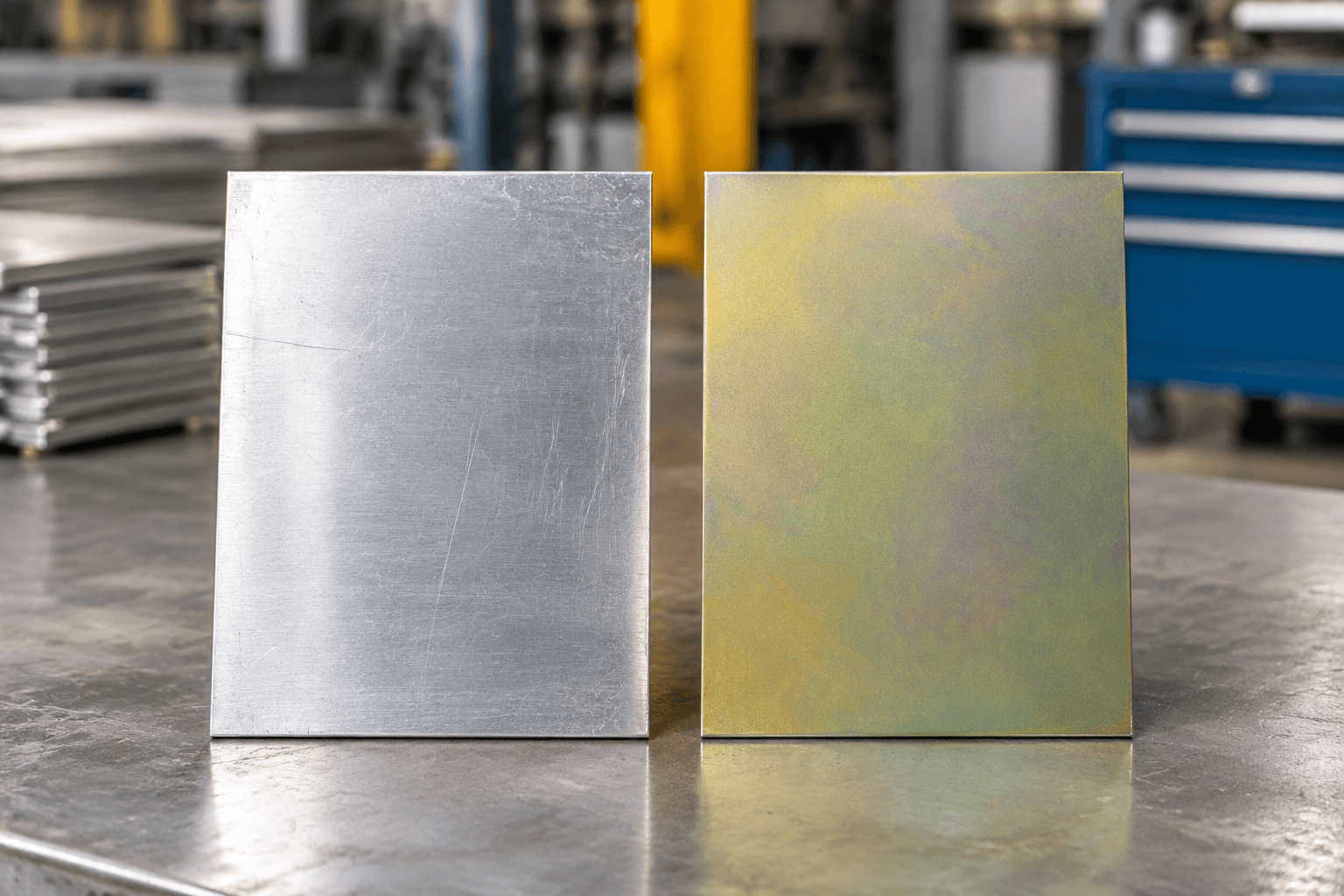
Alodine is a trade name commonly associated with chem film, or chromate conversion coating, applied mainly to aluminum and its alloys. It chemically converts the metal surface into a thin protective film that can improve corrosion resistance, support paint adhesion, and preserve electrical contact where the selected coating and application require it.
Choose Alodine when a thin conversion treatment is appropriate. Evaluate anodizing or another finish when wear resistance, a more controlled decorative appearance, or different surface performance is the priority.
What Happens to Aluminum During Alodine Treatment?
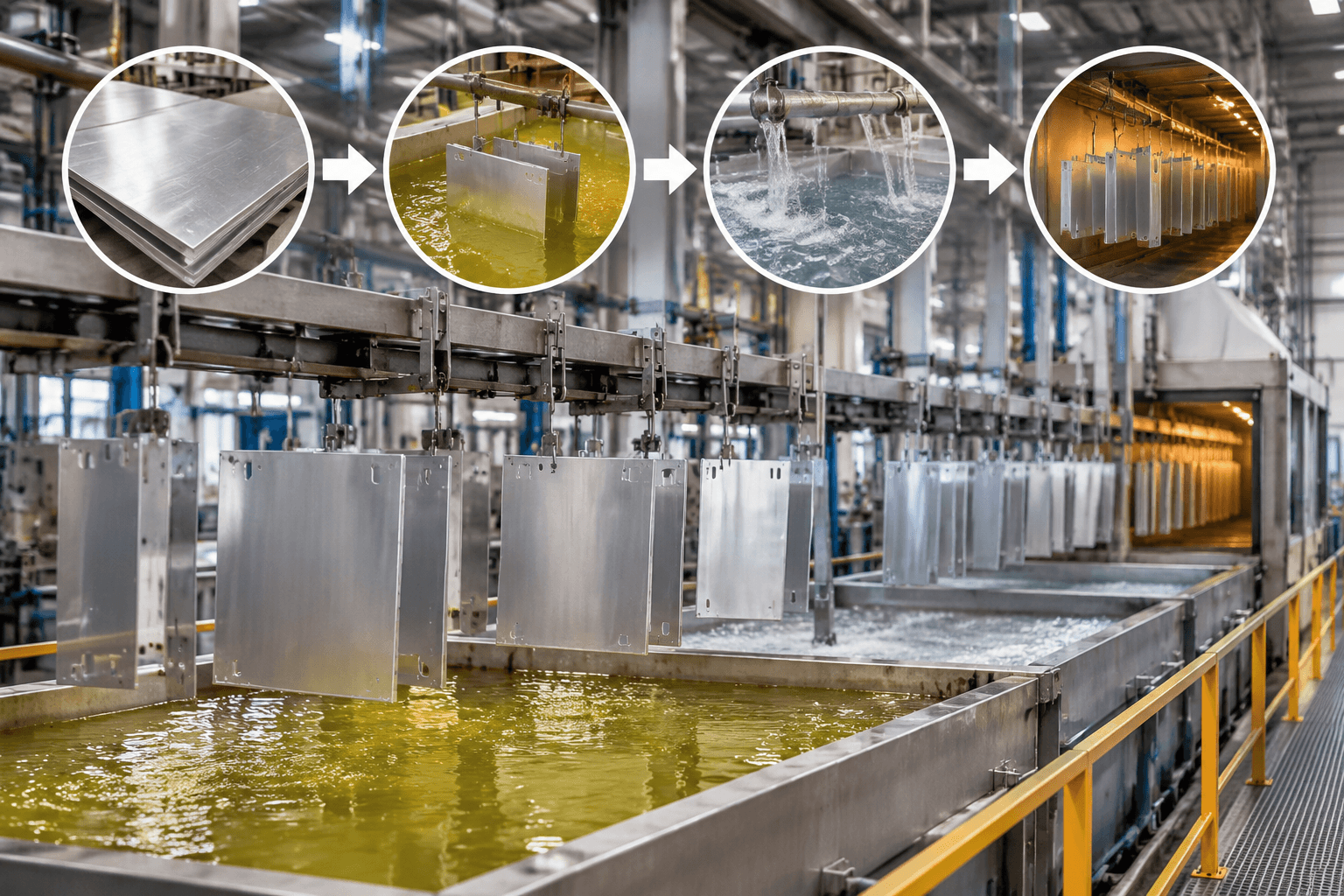
Alodine coating is not paint, powder coating, or electroplating. Instead of placing a separate decorative layer over the part, the chemical treatment reacts with the prepared aluminum surface and forms a conversion film. Authoritative maintenance guidance also uses terms such as chemical conversion coating, chromate conversion coating, chemical film, and pretreatment for this type of process. ([faa.gov](https://www.faa.gov/documentLibrary/media/Advisory_Circular/AC_43-4B.pdf?utm_source=openai))
A typical process sequence includes cleaning, rinsing, chemical treatment, another rinse, and controlled drying. The surface must be free from oils, shop soil, oxidation, and residues that could interrupt the reaction. Processing details depend on the alloy, selected chemistry, part geometry, required result, and governing specification.
The finished film is commonly selected for one or more of three functions:
- Corrosion protection: It helps protect exposed aluminum, although actual performance depends on the complete material, process, environment, and acceptance specification.
- Paint preparation: The converted surface can provide a suitable pretreatment before liquid paint or powder coating. It supports the coating system but does not guarantee adhesion if cleaning, curing, paint selection, or handling is inadequate.
- Electrical contact: Some conversion-coating systems are used where electrical continuity or bonding must be maintained. The required contact performance still needs to be defined and verified for the application.
Alodine does not repair scratches, flatten a distorted panel, fill machining marks, or hide substrate defects. Surface condition before finishing remains visible and may influence both cosmetic and functional acceptance.
Suitable Materials and Expected Appearance
Aluminum and aluminum alloys are the primary substrates associated with Alodine treatment. However, buyers should not assume that every aluminum grade, casting condition, or surface will react identically. Alloy composition, temper, heat treatment, surface preparation, prior processing, and conversion chemistry can all affect the result.
| Part or substrate | Specification consideration | Possible visual result |
|---|---|---|
| Wrought aluminum sheet or plate | State the alloy and temper. Identify brushed, grained, polished, or mill-finish surfaces that must remain cosmetically controlled. | May appear clear, faintly iridescent, yellow, gold, or brown depending on chemistry and processing. Uniform decorative color should not be assumed. |
| Aluminum extrusion | Confirm the alloy, cut and machined areas, visible faces, contact zones, and whether the finish is applied after fabrication. | Extruded faces and newly machined surfaces may not look identical. The drawing should identify which surfaces are cosmetic and what variation is acceptable. |
| Aluminum die casting | Identify the casting alloy and acceptable surface condition. Porosity, flow lines, polishing, blasting, and local machining can influence appearance. | Color and texture may vary across cast and machined regions. The drawing should distinguish cosmetic expectations from coating coverage requirements. |
| Steel component | Do not apply an aluminum Alodine callout as if steel were an interchangeable substrate. Select a treatment designed for the steel grade and service condition. | Not applicable under a conventional aluminum conversion-coating instruction. |
Alodine 1200 is a recognized product-family term, but it is not a synonym for every chem-film formulation. Chromate, trivalent-chromium, and chrome-free conversion systems can have different processing, appearance, environmental, and performance characteristics. If the specific chemistry matters, identify it through the approved product, customer requirement, or governing specification rather than using “Alodine” as an incomplete blanket instruction.
Alodine or Anodizing: Which Process Fits the Part?
Both processes modify an aluminum surface, but they do not create the same finish. Alodine uses a chemical conversion reaction. Anodizing uses an electrochemical process to increase the aluminum oxide layer, commonly followed by coloring or sealing when required. Anodizing is associated with corrosion protection, abrasion protection, electrical insulation, and aesthetic finishes, depending on the anodizing system. ([next.henkel-adhesives.com](https://next.henkel-adhesives.com/us/en/industries/metals/aluminum-components.html?utm_source=openai))
| Decision point | Alodine or chem film | Anodizing |
|---|---|---|
| Coating formation | Chemically converts the prepared metal surface. | Electrochemically grows a controlled oxide layer from the aluminum surface. |
| Dimensional effect | Usually selected where a very thin treatment and limited dimensional change are important. Critical features must still be evaluated. | The engineered oxide layer can affect precision holes, threads, fits, and edge conditions more significantly. Drawing dimensions must reflect the required before- or after-finish condition. |
| Wear behavior | Not normally selected as a substitute for a wear-resistant engineered surface. | Often more appropriate when abrasion or wear performance is a primary requirement, subject to the anodizing type and specification. |
| Electrical interface | Can be suitable for designated bonding or grounding areas when the specified system and acceptance test support that function. | The oxide layer is electrically insulating, so contact areas may require masking, removal, inserts, or another planned interface. |
| Appearance | Often subtle and chemistry-dependent. Color variation may be acceptable for functional parts but unsuitable for tightly controlled decorative surfaces. | Can provide a more intentional decorative finish, although alloy, surface preparation, geometry, coloring, and sealing still influence consistency. |
| Common selection logic | Consider for corrosion protection, paint pretreatment, or electrically functional surfaces with minimal finish buildup. | Consider when wear, insulation, decorative color, or a more substantial engineered oxide finish is required. |
Neither finish is automatically “better.” The appropriate choice follows the part’s service environment, assembly interfaces, cosmetic class, wear exposure, electrical function, and governing requirements.
Masking, Fits, Contact Areas, and Cosmetic Requirements
A finish note should be reviewed together with the part design rather than added after fabrication decisions are complete. The following hypothetical situations show where ambiguity commonly appears:
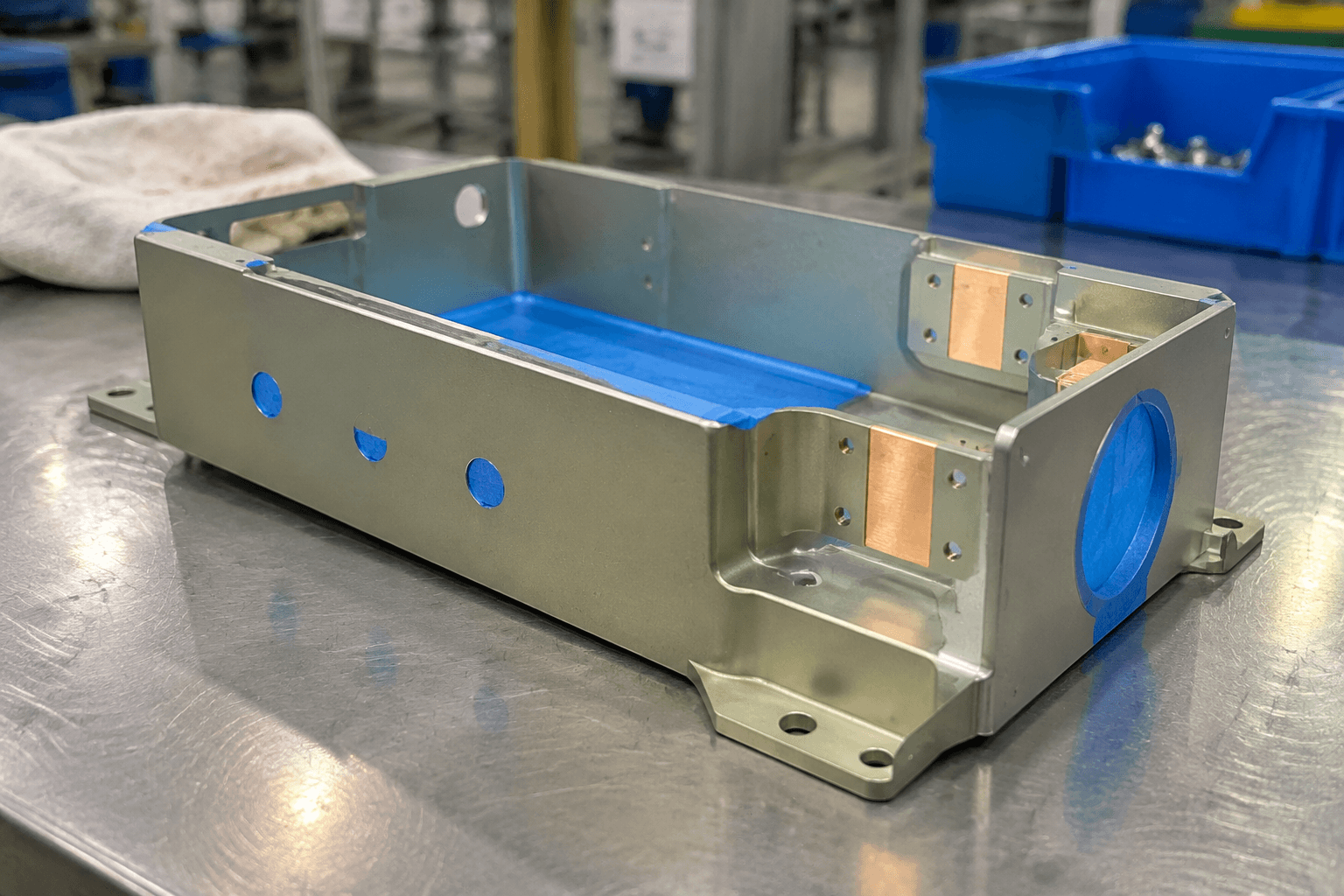
- Threaded holes: If a fastener must achieve a defined fit or electrical connection, state whether the threads are coated, masked, chased, or inspected after finishing. Do not assume a thin coating makes the issue irrelevant.
- Grounding points: Mark the exact contact face, hole, stud location, or perimeter that performs the bonding function. Also define whether that area receives conversion coating, remains bare, or requires a measurable acceptance test.
- Precision fits: Identify dimensions that apply after finishing. This matters at locating holes, dowel interfaces, bearing seats, connector cutouts, and close-fitting assembly features.
- Cosmetic faces: Define the viewing surface and acceptable variation. A functional conversion coating should not automatically be judged by the same visual standard as decorative anodizing or paint.
- Welded or fabricated areas: Heat tint, grinding, weld cleanup, scratches, and different surface textures may remain visible after treatment. Finishing does not erase fabrication history.
- Post-finish assembly: Riveting, pressing hardware, adhesive bonding, labeling, sealing, or installing electronic components may introduce handling marks or change electrical interfaces. State the required operation sequence.
For aluminum enclosures and similar assemblies, a marked drawing can distinguish exterior cosmetic panels, internal conductive zones, masked threads, grounding studs, gasket lands, and painted regions much more clearly than a general note such as “Alodine all over.”
What to Include in an Alodine Finish Callout
There is no universal callout that fits every component. Use the following drawing-note builder to turn the design intent into auditable production and inspection requirements.
1. Substrate: Aluminum alloy [identify alloy and temper or casting designation].
2. Required treatment: Chemical conversion coating [identify approved coating type, product family, customer specification, or governing document when applicable].
3. Finish location: Apply to [all aluminum surfaces / listed surfaces / surfaces identified on the drawing].
4. Masking: Do not coat [threads, holes, contact pads, sealing faces, press-fit features, adhesive zones, or other marked areas].
5. Electrical requirement: Designated contact areas must [receive the specified conversion coating / remain uncoated / meet the stated test method and acceptance limit].
6. Appearance: [Functional appearance acceptable / visible faces require an agreed reference sample / define permitted variation, stains, handling marks, and rack or contact evidence].
7. Post-finish operations: Complete [painting, powder coating, hardware insertion, labeling, assembly, or testing] in the specified sequence.
8. Acceptance: Inspect by [visual method, coverage check, coating-process documentation, electrical test, corrosion test, paint-adhesion test, or another customer-defined method].
Keep visual and functional acceptance separate. A part may show acceptable color variation while meeting its functional coating requirement; alternatively, an attractive surface may still fail a required contact, corrosion, or paint-system test. The purchase requirement should state which characteristics control acceptance.
Frequently Asked Questions
What does Alodine do?
Alodine chemically converts a prepared aluminum surface into a thin protective film. Depending on the selected chemistry and specification, it may be used for corrosion protection, paint preparation, or preservation of electrical contact. It does not correct dimensional errors or conceal scratches, porosity, weld marks, or other substrate defects.
What is the difference between anodizing and Alodine?
Alodine is a chemical conversion treatment, while anodizing is an electrochemical process that grows an oxide layer on aluminum. Chem film is generally considered where limited dimensional effect, paint pretreatment, or designated conductive interfaces matter. Anodizing is often considered for wear, insulation, decorative color, or a more substantial engineered surface.
Can Alodine be applied directly to steel?
An aluminum Alodine process should not be specified for steel as though the materials were interchangeable. Steel requires a conversion coating or protective finish selected for its grade, condition, environment, and downstream coating system. In mixed aluminum-and-steel assemblies, specify each component’s treatment separately.
What does Alodine do to skin, and how should exposure be handled?
Separate exposure to processing chemicals from normal contact with a properly processed finished component. Some chromate conversion chemicals, especially hexavalent-chromium-containing solutions, can irritate or damage skin and may cause allergic dermatitis; workers must follow the current safety data sheet, required protective equipment, hygiene rules, and site exposure controls. ([osha.gov](https://www.osha.gov/OshDoc/data_General_Facts/hexavalent_chromium.pdf?utm_source=openai)) If chemical contact occurs, follow the product-specific first-aid instructions and obtain professional medical guidance when indicated. For a finished part, handling requirements should follow the specified coating chemistry, supplier documentation, customer rules, and intended use rather than assumptions based only on the word “Alodine.”