
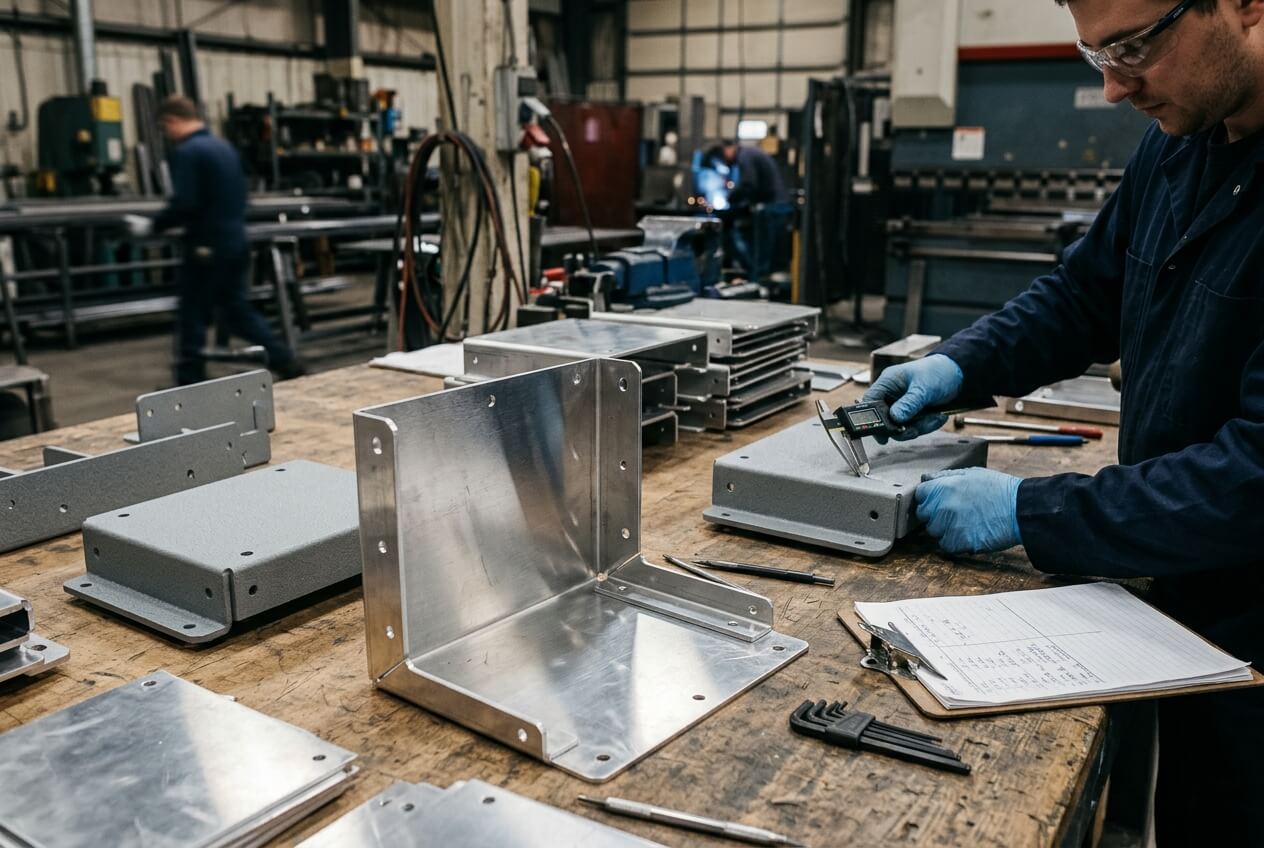
An overseas OEM sends an RFQ for an aluminium equipment enclosure. The drawing shows 2.0 mm panels, vent slots, bent flanges, welded corners, a matte black powder coated body, and a brushed front trim. The note says aluminium, clean visible surface, powder coating. Three suppliers quote quickly. The lowest price looks useful until the prototype arrives with coating build-up in mounting holes, handling marks on the front face, and a brushed grain direction that does not match the product photo.
The rejection did not start in the coating booth. It started when the RFQ left aluminium grades, visible surfaces, coating thickness, masking, and inspection rules open to interpretation. One supplier priced 5052-H32 with protective film. Another assumed 6061-T6 because the buyer mentioned strength. A third included weld sanding and extra packing. Procurement compared three unit prices, but each supplier quoted a different finish risk.
This article focuses on one procurement risk: RFQ ambiguity that makes aluminium sheet metal quotes look comparable when they are not. That ambiguity can turn into finish rejection, assembly delay, rework cost, and lead time pressure after the purchase order. The goal is not to list every aluminium alloy. The goal is to help buyers lock down the assumptions that affect custom sheet metal fabrication, metal enclosures, brackets, frames, cabinets, and welded assemblies before prototypes and batches move forward.
Where Vague Aluminium Grades Turn a Quote Into a Hidden Assumption
Many RFQs define the part shape better than the material risk. A drawing may include hole sizes, bend lines, and overall dimensions, yet still say only aluminium. That single word forces the supplier to choose a grade, temper, surface condition, and handling method. The choice affects bending, welding, sanding, coating, anodizing, cost, and lead time.
For sheet metal enclosures and covers, 5052-H32 often gives a practical balance. It bends well and supports powder coated cabinet work. For machined plates or higher-strength mounting features, 6061-T6 may make sense. It machines well, but it can crack or mark more easily at tight bends. If the buyer expects sharp flanges near a visible front edge, the material decision becomes a finish decision.
Other aluminium grades create different risks. 3003 may suit non-structural covers and light-duty panels. 6063 often appears in extrusion-related designs and decorative trim. Anodized assemblies may show color variation when suppliers mix grades, lots, or surface conditions. Powder coating can hide some surface variation, but it will not fix poor edge prep, weld marks, or coating build-up in functional areas.
Example: bent control box with visible front edge
A buyer requested a small control box with a brushed front panel and powder coated side panels. The RFQ did not define the grade or grain direction. The supplier used available aluminium sheet and formed the parts correctly. After assembly, the front panel showed a different brush direction from the product render. The buyer saw a cosmetic defect. The supplier saw an unspecified requirement.
The cost chain became predictable. Procurement requested a fast replacement. The supplier needed new sheet, new brushing, and revised packing. The launch date slipped by two weeks. A simple RFQ note could have prevented the dispute: 5052-H32 for bent panels, visible grain horizontal after assembly, protective film during cutting and bending, inspection at normal viewing distance.
Why Finish Words Alone Do Not Make Supplier Quotes Comparable
Finish terms sound clear until the buyer compares quotations. Powder coated, brushed, anodized, and clean surface all leave room for interpretation. Suppliers may include very different preparation steps under the same finish word. Those steps change price, yield, and production time.
Powder coating an aluminium cabinet can mean basic cleaning and coating. It can also mean weld sanding, edge deburring, chromate-free pre-treatment, masking of grounding points, controlled thickness around hinges, and foam-separated packing. Both quotes may say black powder coated aluminium enclosure. They do not describe the same delivered part.
Anodizing creates a sharper risk. It does not hide surface marks like powder coating can. It can highlight scratches, polishing variation, weld heat effects, and alloy differences. If the buyer approves one clear anodized prototype but does not freeze grade, lot control, surface preparation, or sample standard, the first batch may look different from the sample.
Quote gaps often come from excluded controls
A 12 percent lower price may not reflect better sourcing. It may reflect fewer controls. The quote may exclude masking, cosmetic handling, sanding, inspection time, or protective packaging. It may also assume industrial finish on all faces, while the buyer expects consumer-facing appearance on one face.
Buyers should avoid judging aluminium grades and finish prices from the item total alone. The RFQ should ask suppliers to state their assumptions. Which grade and temper did they price? Which surfaces receive cosmetic handling? What coating thickness range did they assume? Which holes, threads, inserts, or grounding areas require masking? How will visible faces be packed?
These questions do not turn the RFQ into a long textbook. They make the quote auditable. They also help procurement separate a real cost saving from a hidden exclusion. If two suppliers price the same grade, finish, masking, and inspection standard, the buyer can compare more confidently.
How Unclear Finish Assumptions Become Assembly Fit Problems
Finish ambiguity does not only create cosmetic rejection. It can also stop parts from assembling. Aluminium sheet metal parts often need coating, brushing, or anodizing after cutting and bending. Those processes can change the functional result at holes, slots, contact faces, hinges, and sliding joints.
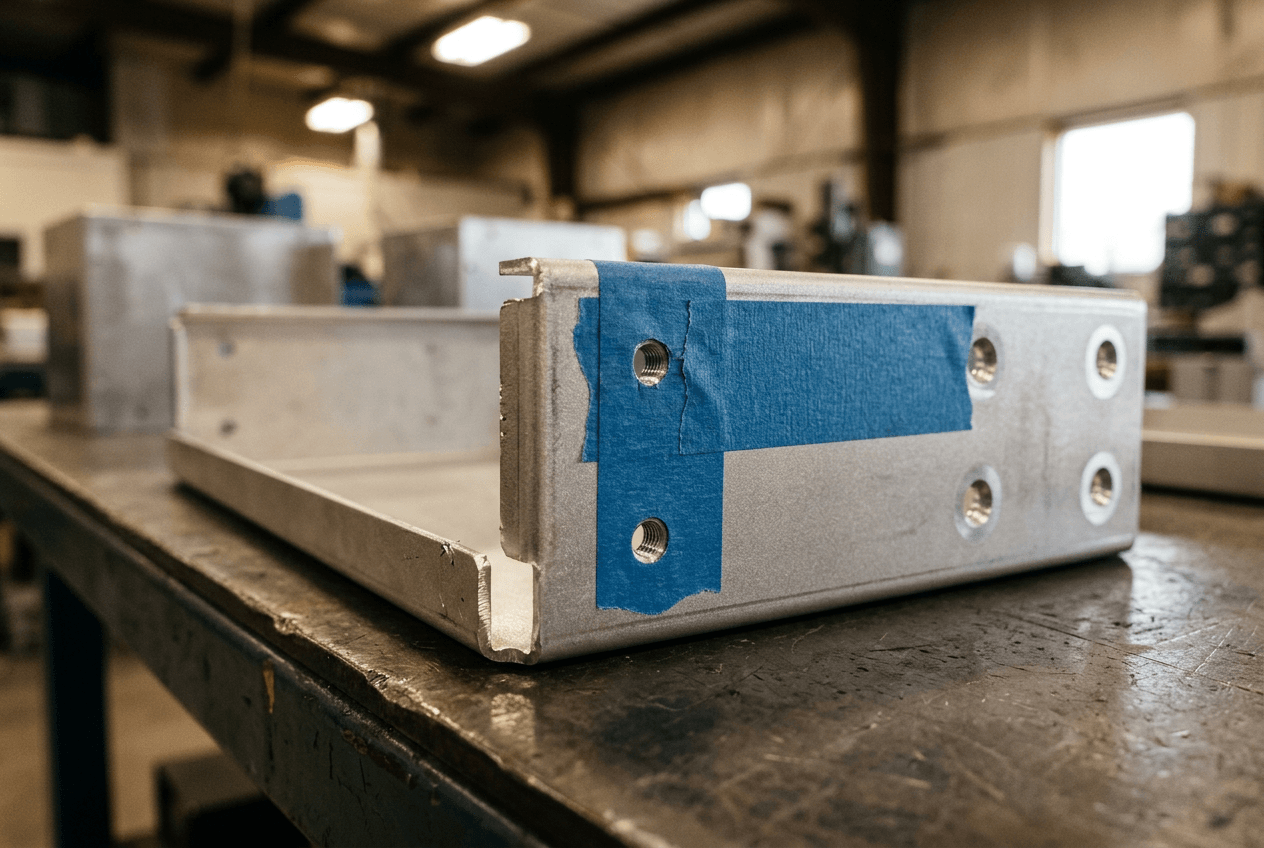
Powder coating thickness creates a common problem. A drawing may specify a hole diameter, but the supplier cuts the hole before coating. If the coating builds on the hole wall, the finished diameter becomes smaller. Loose clearance holes may still work. Tight locating holes, countersinks, hinge holes, PEM hardware, and sliding panels may not.
Masking decisions also affect function. Electrical enclosures may need bare aluminium grounding points. Gasket surfaces may need a controlled coating edge. Threaded holes may need masking or chasing. Bracket contact faces may need no coating build-up because another part seats against them. When the drawing does not identify these zones, the supplier must choose between finish coverage and assembly clearance.
Example: outdoor cabinet with hinge interference
An OEM sourced a powder coated outdoor cabinet with welded aluminium doors. The prototype opened correctly. During batch assembly, several doors rubbed against the hinge side after coating. The drawing controlled the raw gap but did not define finished clearance or coating thickness on two mating faces. The supplier coated both sides normally. The total build-up reduced the gap enough to cause friction.
The team first blamed bending tolerance. Measurement showed the bends were within drawing limits. The missing item was finish allowance. The buyer later added a finished clearance requirement, a coating thickness range, and a masking note at the hinge contact area. Those details would have changed the quote slightly, but they would have protected the assembly schedule.
Procurement should treat critical dimensions as finished or unfinished, not both. If the final assembly uses the coated part, the RFQ should say where dimensions apply after finishing. If the supplier must hold raw dimensions before coating, the drawing should show coating allowance or clearance strategy. This point matters for metal enclosures, rack panels, brackets, welded frames, and cabinet doors.
Why One Approved Prototype Does Not Freeze Batch Consistency
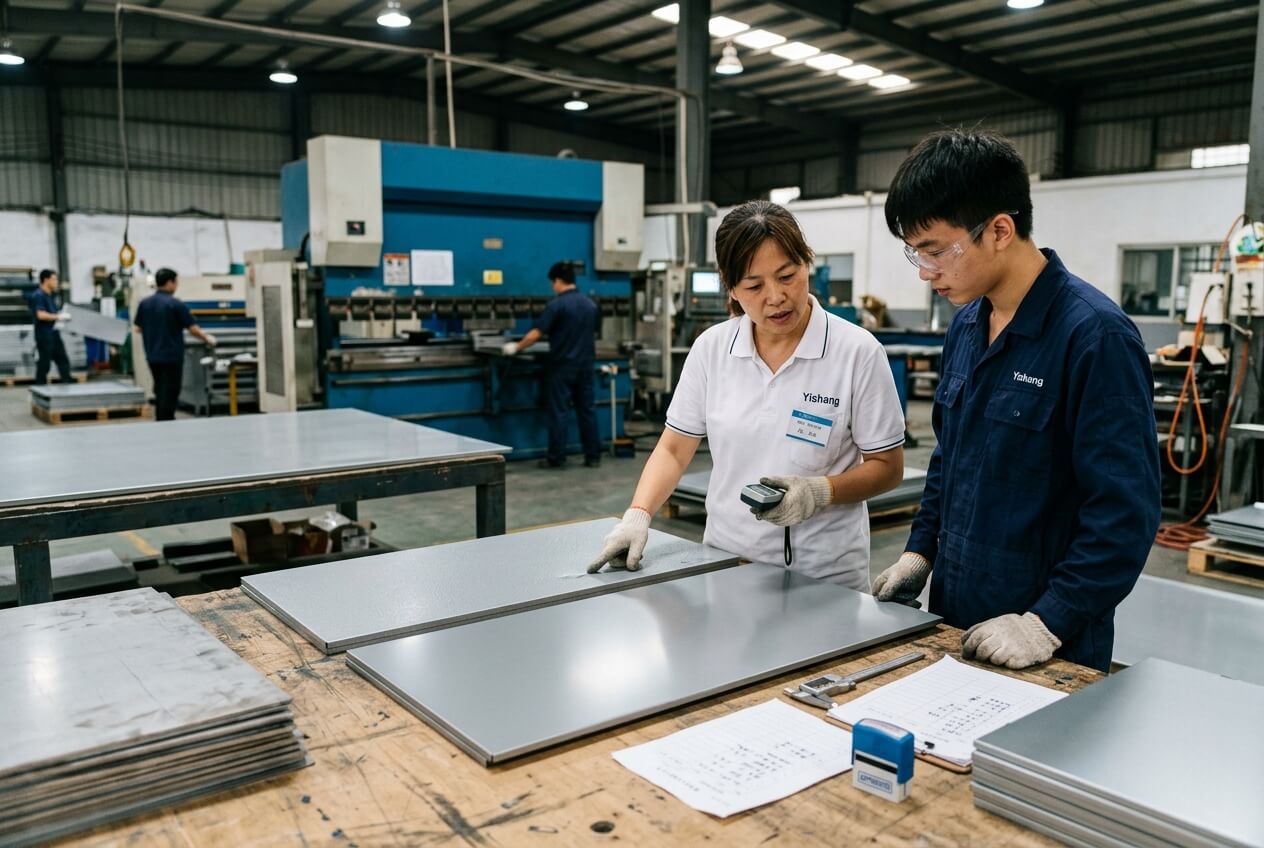
A good prototype can create false confidence. The sample may use selected sheet, slower handling, and extra operator attention. Batch production uses full sheets, nesting, repeated bending, welding fixtures, coating racks, and faster packing. If the RFQ and approval record do not freeze the real controls, the approved sample becomes a memory instead of a standard.
Aluminium grades can shift between prototype and batch when the purchase order allows alternatives without rules. A supplier may use 5052-H32 for a bent prototype, then buy another grade because of availability or price. The part may still meet broad dimensional requirements, but the surface or bend quality may change. If anodizing is involved, color variation may become visible across components.
Finish samples also need stronger control than photos. Photos help communication, but lighting, screen settings, and angle change the appearance. A more stable approval package may include a powder code, gloss range, texture description, physical color chip, brushed direction mark, anodized sample, or signed first article. The buyer should also define which surfaces the sample represents.
Prototype approval needs production notes
For a wall-mounted control housing, the buyer may approve one raw fabrication sample for hole alignment and bend fit. A second finished sample can confirm powder texture, masking, coating thickness, and packaging. For a welded aluminium frame, the sample should also confirm weld sanding level and coating coverage inside corners. These checks connect prototype approval to batch repeatability.
Yishang can review drawings, aluminium grades, finish notes, and prototype comments before batch release when buyers provide enough detail. That review should not replace the buyer specification. It should expose the assumptions that still need agreement, such as visible zones, finished tolerances, masking lines, acceptable marks, and packing method.
Lead time also changes when buyers clarify these controls late. A supplier may need extra material, new masking tools, revised coating racks, or a second sample round. Early clarification may add a small quotation line. Late clarification can add rework, inspection sorting, freight pressure, and missed installation dates.
What Buyers Should Lock Down Before Comparing Aluminium Sheet Metal Quotes
The safest time to reduce finish rejection risk is before quote comparison. At that point, the buyer can still align suppliers on the same deliverable. After award, every missing detail becomes a negotiation about cost, schedule, or responsibility.
Start with material language. State the required aluminium grade and temper where known. If alternatives are acceptable, define the allowed grades and where suppliers may use them. For example, 5052-H32 may suit bent cabinet panels, while 6061-T6 may apply only to machined mounting blocks. Do not let suppliers mix visible components that must match after anodizing unless the finish standard allows it.
Next, mark the surfaces that matter. Use A-surfaces for customer-facing areas, B-surfaces for secondary visible areas, and hidden surfaces for internal faces. Add inspection distance, lighting expectation, grain direction, and acceptable minor marks when cosmetics affect acceptance. This prevents the supplier from pricing every surface as premium while still protecting the surfaces that the customer sees.
Then link finish to function. Define coating thickness where clearance matters. Mark masking around threads, grounding points, gaskets, hinge areas, bearing faces, and assembly contact surfaces. State whether critical dimensions apply before or after finishing. These notes reduce arguments when coated parts do not fit or when anodized surfaces show unexpected variation.
Finally, make the quote response reveal assumptions. Ask each supplier to confirm grade, temper, finish process, surface protection, masking, inspection method, packing, and any exclusions. A quote that looks higher may include controls that protect batch quality. A quote that looks lower may leave those controls for later discussion.
If your RFQ involves aluminium enclosures, panels, brackets, frames, cabinets, or welded assemblies, send the details before you lock the supplier price. Share drawings, material requirements, quantities, tolerances, finish expectations, prototype notes, photos, samples, and assembly concerns with Yishang. Yishang can review the fabrication and finishing assumptions against the actual part drawings, so procurement can compare quotes on the same basis.
Frequently Asked Questions
Why is saying aluminium not enough in a sheet metal RFQ?
Different aluminium grades bend, weld, machine, brush, coat, and anodize differently. If the RFQ says only aluminium, suppliers must assume the grade, temper, and surface condition. Those assumptions affect cost, finish appearance, assembly fit, and rejection risk.
Which aluminium grade works best for powder coated enclosures?
Many powder coated sheet metal enclosures use 5052-H32 because it bends well and offers good corrosion resistance. Some designs need 6061-T6 for machined or higher-strength areas. Buyers should confirm grade, bend radius, visible surfaces, and coating requirements together.
How can buyers make powder coating quotes more comparable?
Ask suppliers to confirm coating thickness, pre-treatment, masking, weld sanding, cosmetic surface zones, inspection rules, and packing. Two quotes that both say powder coating may include very different process controls. Those controls change price and batch risk.
When should dimensions apply before or after finishing?
If coating, anodizing, or masking affects assembly, state whether critical dimensions apply before or after finishing. This matters around mounting holes, hinges, slots, countersinks, PEM hardware, sliding panels, grounding points, and gasket surfaces.
Why can an approved prototype still lead to batch finish rejection?
A prototype may use selected material, careful handling, and slower processing. Batch production may use different lots, nesting, coating racks, and faster packing. Buyers should freeze grade, finish sample, inspection rules, masking zones, and packing before release.
What information should buyers send for RFQ review?
Send drawings, aluminium grade requirements, allowed alternatives, quantities, tolerances, finish codes, cosmetic surface marks, masking needs, prototype comments, assembly notes, and packing expectations. This helps the manufacturer quote the real requirement instead of guessing.