
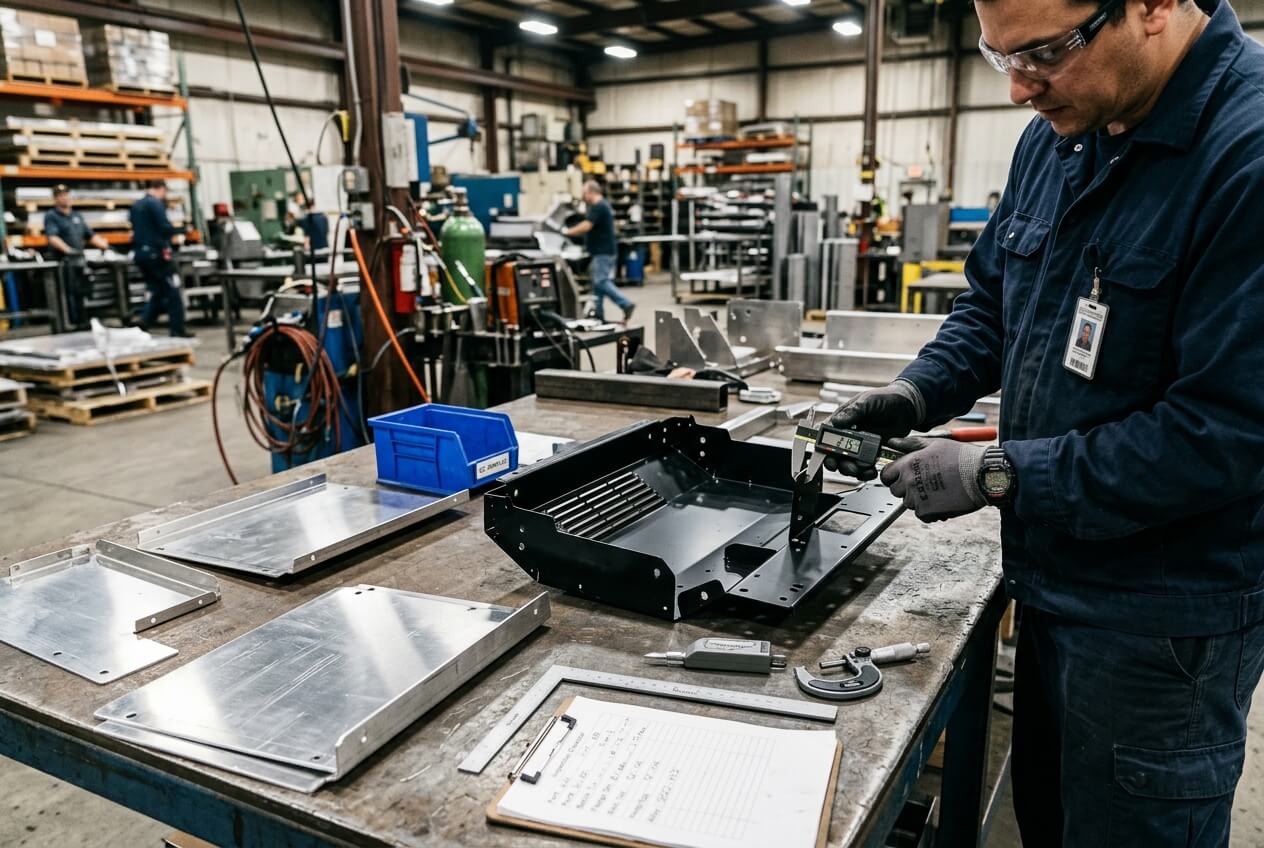
An OEM buyer searches for what’s the melting point of aluminium while preparing an RFQ for a powder coated control enclosure. The question sounds technical and useful. Pure aluminum melts at about 660°C, or 1220°F. Common aluminum alloys melt across a range because alloy content changes thermal behavior.
Yet most procurement problems in aluminum sheet metal fabrication start far below that temperature. A part can survive cutting, bending, welding, coating bake, packing, and overseas transport. It can still fail at incoming inspection because the RFQ left too much room for supplier assumptions.
This article focuses on one buyer risk: unclear RFQ assumptions that make suppliers quote different versions of the same aluminum part. The risk often appears as a finish dispute, tolerance argument, assembly fit problem, or prototype-to-batch mismatch. The root cause usually starts earlier, when the drawing does not define what the buyer expects the supplier to include.
Why the Melting Point Question Can Hide the Bigger RFQ Risk
Buyers often ask about aluminum’s melting point when they worry about welding, powder coating, or service temperature. That concern makes sense for heated equipment, outdoor cabinets, battery housings, and welded frames. But melting point rarely decides whether a fabricated aluminum enclosure passes inspection.
Powder coating temperatures sit far below aluminum’s melting range. Welding creates local heat, but the buyer usually rejects parts for distortion, discoloration, visible grinding waves, poor masking, or tight assembly features. Those failures do not require aluminum to melt. They require unclear expectations before quotation.
The number does not define the purchased result
Pure aluminum melts near 660°C. Fabrication alloys such as 5052, 6061, 6063, and 7075 behave differently during bending, welding, and finishing. A buyer who only confirms melting point may still miss the real purchasing question: what process result must the supplier price?
For example, an aluminum control box may use 5052 sheet because it bends well and resists corrosion. Another supplier may quote a different aluminum grade if the RFQ only says aluminum. Both quotes may look compliant. However, the bend behavior, weld response, surface preparation, and final appearance can change.
The same problem affects finish. A drawing may show holes, bends, welded corners, and a black powder coated exterior. It may not define visible A-side surfaces, gloss range, texture, coating thickness, masking zones, or acceptable handling marks. One supplier prices a basic industrial finish. Another includes weld dressing, masking plugs, extra inspection, and protective packing. The unit prices cannot be compared fairly.
The buyer sees a price gap. The suppliers see different assumptions. That gap becomes dangerous when the buyer selects the lowest price without confirming what it excludes.
Where Supplier Assumptions Start to Distort Aluminum Quotes
Aluminum sheet metal RFQs often look complete because they include 3D files, 2D drawings, material callouts, and annual quantities. Those documents still may not tell the supplier how much cosmetic work, tolerance control, masking, inspection, and packaging the buyer expects.
Quote distortion starts when a missing note lets each supplier choose its own standard. One factory may assume normal fabrication marks are acceptable after coating. Another may assume customer-facing panels need controlled sanding and handling. A third may include special packaging for export because the part has visible powder coated faces.
A low quote may exclude hidden finish labor
Finish labor often hides outside the geometry. CAD shows the enclosure shape, but it does not always show weld grinding level, surface sanding, pretreatment, hanging position, masking time, inspection lighting, or protective film. These steps can change cost and lead time.
Consider a welded aluminum display frame for retail equipment. The drawing specifies black powder coating and welded corners. Supplier A grinds the welds flush, sands visible edges, masks threaded inserts, and packs each frame in foam. Supplier B leaves slight weld witness marks because the drawing does not ban them. Supplier B wins on price, but the buyer later rejects the visible corners. The dispute did not start in production. It started in the RFQ.
A second example involves a wall-mounted aluminum cabinet with hinge holes, cable gland openings, and a removable cover. The buyer requests a fast prototype and then releases 300 units. The prototype receives careful hand sanding and individual handling. Batch parts move through coating and packing at higher speed. Several covers show small scratches under the powder coat. The supplier says the parts meet normal industrial finish. The buyer compares them with the best-looking prototype.
Both cases share the same risk. The RFQ allowed the supplier to decide which cosmetic and handling effort belonged in the price.
Comparable quotes need comparable assumptions
Buyers do not need to write a long textbook specification. They need to remove the assumptions that change cost, lead time, and acceptance. Mark A-side surfaces on drawings or photos. Define whether weld seams may remain visible. State coating color, texture, gloss, and thickness range when appearance or fit matters.
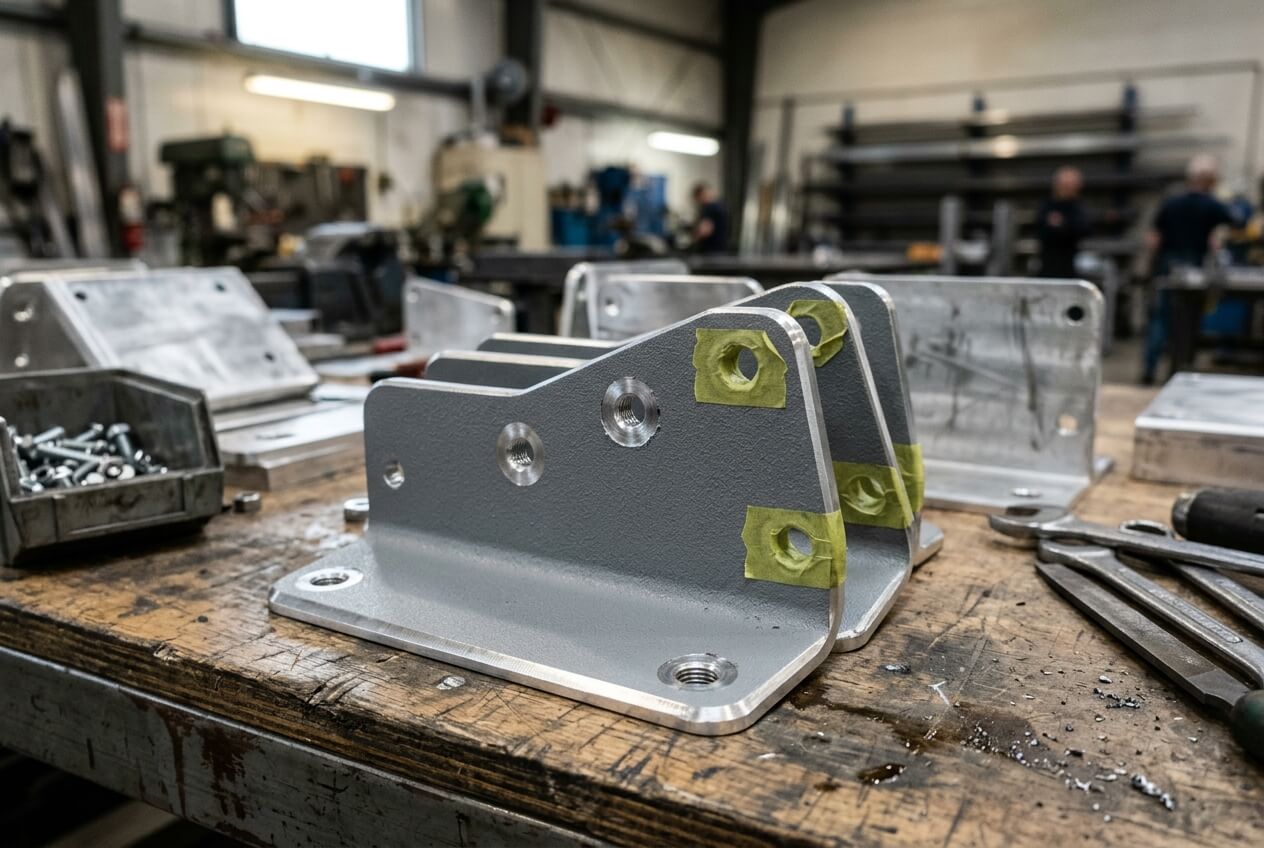
Also identify masking zones. Threads, grounding points, hinge seats, latch areas, sliding surfaces, and tight mounting holes may need protection from coating buildup. If one supplier masks those areas and another coats everything, the quotes describe different products.
Ask each supplier to list exclusions and finish assumptions in the quotation. This single request often reveals whether a low price covers the actual part the buyer expects.
How Unclear RFQs Become Production and Assembly Problems
RFQ ambiguity does not stay inside the purchasing file. It moves into cutting, bending, welding, coating, inspection, packing, and final assembly. Each step can amplify an early assumption.
Aluminum gives buyers useful strength-to-weight, corrosion resistance, and formability. It also reacts quickly to heat and surface handling. When the drawing stays vague, the supplier chooses practical process settings that meet dimensions at the quoted cost. Those settings may not match the buyer’s visual or assembly expectations.
Welding heat can change fit before anyone checks the finish
Aluminum conducts heat quickly during welding. Local heat input can soften the heat affected zone and pull corners out of square. A welded enclosure may look acceptable before coating, but powder coat can make surface waves and corner mismatch easier to see.
Assembly fit can also suffer. A welded aluminum frame may pass a loose dimensional check but bind when brackets, panels, or sliding covers mount to it. If the RFQ does not define critical interfaces, the supplier may inspect general dimensions instead of the features that control assembly.
This problem often appears on welded assemblies with doors, hinges, removable trays, or mating brackets. The buyer should identify the features that drive fit, not only the outer size. Critical holes, slots, tabs, hinge planes, and mating faces deserve tolerance notes that match the assembly function.
Coating thickness can turn a good bare part into a bad assembly
Powder coating adds thickness. That thickness can close holes, reduce slot clearance, change hinge movement, and affect grounding. A bare aluminum part can pass inspection and fail after finishing if the RFQ does not connect coating to tolerance.
For a bracket, this may only create a minor installation delay. For an electrical enclosure, it can block fasteners, weaken grounding, or stop a door from closing cleanly. Rework after coating costs more than prevention because it can damage the finish and delay shipment.
Buyers should define which dimensions apply before finishing and which apply after finishing. They should also state where coating must not build up. This does not overcomplicate the RFQ. It tells the supplier where process control matters.
Yishang can review aluminum enclosure, bracket, frame, and welded assembly drawings for these assumption gaps before quotation. The useful output is not a longer document. It is a clearer price basis.
Why Prototype Approval Does Not Remove Batch Consistency Risk
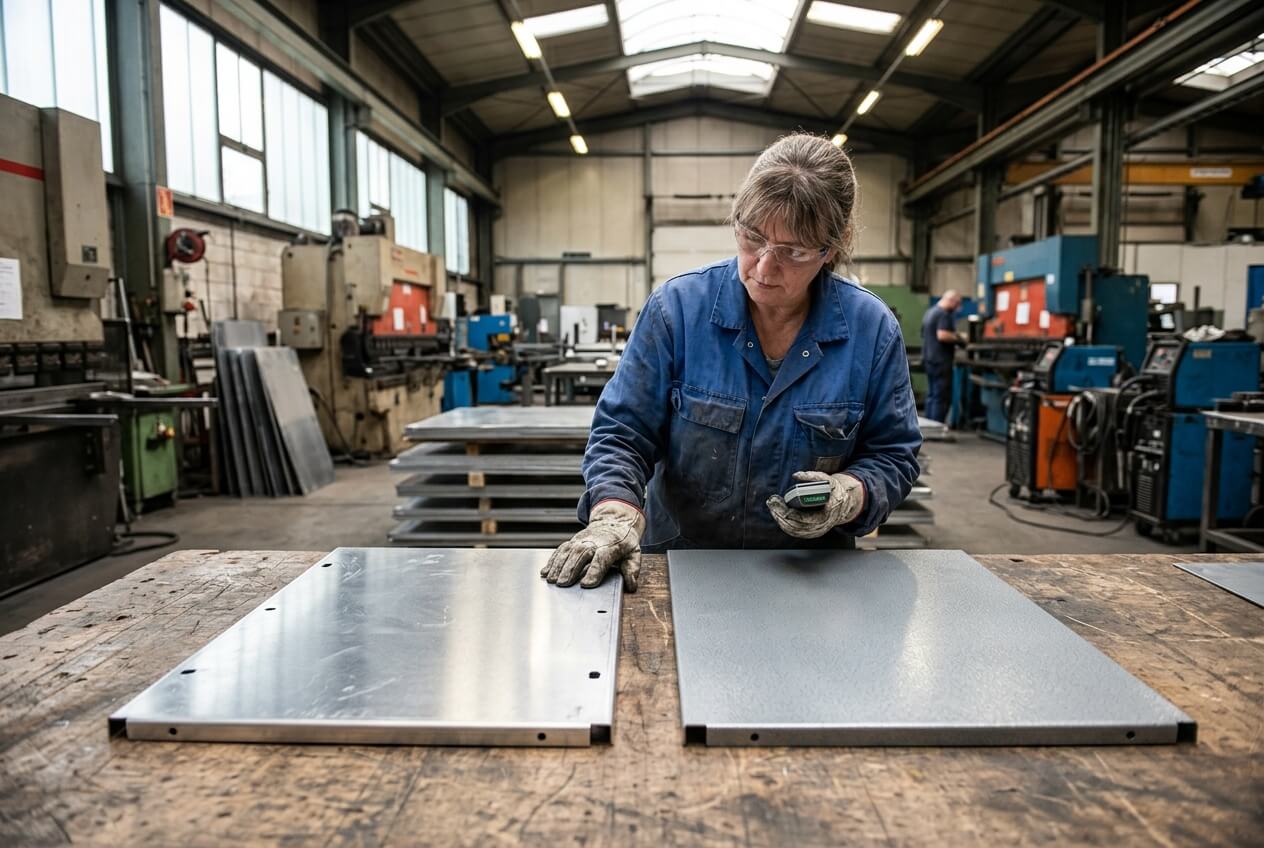
A prototype can reduce design risk, but it can create a false sense of procurement safety. Prototype approval often confirms that one part can be made. It does not always confirm that the same visible result, coating thickness, assembly fit, and packaging method will repeat across a batch.
Suppliers may spend extra time on a first sample. They may sand more carefully, hang the part separately, inspect under better lighting, or pack it by hand. Batch production changes the rhythm. More parts move through laser cutting, bending, welding, coating, inspection, and packing. Small variations become more visible.
The approved sample must become a written production standard
Buyers should separate design approval from finish approval. Design approval covers dimensions, hole positions, bend locations, interface points, and assembly fit. Finish approval covers color, gloss, texture, coating thickness, weld dressing, masking quality, visible surface protection, and packaging.
If the sample sets the cosmetic standard, record that standard. Use photos, marked drawings, coating samples, inspection distance, and defect limits. Otherwise, the buyer may expect the batch to match the best prototype surface while the supplier follows its normal production standard.
Lead time also changes when the prototype standard becomes the batch standard. Extra sanding, masking, inspection, and protective packing all take time. If the buyer discovers these needs after approval, the project can face schedule pressure or unplanned cost increases.
For example, a buyer approves an aluminum instrument enclosure after checking PCB tray fit and cable openings. During batch assembly, coated screw holes feel tight and hinge movement becomes inconsistent. The drawing did not show which holes needed masking or post-coating clearance control. The supplier made the geometry correctly, but the RFQ did not define the finished assembly condition.
Another buyer approves a brushed-looking prototype frame before switching to powder coating for batch production. The batch hides some marks but highlights grinding waves near welds. The finish decision changed the inspection risk. The RFQ should have defined the expected surface after the final finish, not before it.
What Buyers Should Clarify Before Comparing Aluminum Fabrication Quotes
The safest quote comparison starts before price review. Buyers should force hidden assumptions into the open. This protects both sides. The buyer avoids surprise rework, and the supplier avoids pricing a part that the customer will later judge by a different standard.
Start with material. If the design requires 5052, 6061, 6063, or another alloy, state it clearly with temper when needed. If the supplier may recommend an alternative, ask them to explain the effect on bending, welding, finish, strength, and cost. Do not let material substitution hide inside a cheaper quote.
Next, connect finish to function. Identify A-side cosmetic surfaces, allowable defects, weld dressing level, coating color, gloss, texture, and thickness. Mark masking zones for threads, grounding, hinge seats, latch surfaces, sliding areas, and tight holes. State whether inspection occurs before coating, after coating, or both.
Then define the assembly risks. Highlight critical dimensions, mating parts, installed hardware, and tolerance stack-ups. If a bracket, enclosure, frame, or cabinet must fit another product, provide the mating model, sample, or interface drawing. A supplier cannot protect an assembly condition that the RFQ does not show.
Finally, ask for a quote that lists assumptions. The supplier should state what the price includes and excludes: weld grinding, masking, pretreatment, coating control, inspection method, sample approval, packaging, and lead time assumptions. This turns a unit price into a decision document.
When buyers send Yishang drawings for custom sheet metal fabrication, the most useful details include material requirements, quantities, tolerances, finish expectations, prototype comments, and assembly concerns. Those inputs help identify whether the quoted process matches the purchased result.
Send Yishang your aluminum enclosure, cabinet, bracket, frame, panel, or welded assembly drawings before final quote comparison. Include material requirements, order quantities, tolerances, finish expectations, A-side surface notes, masking zones, prototype photos, and assembly concerns. Yishang can review the RFQ for hidden assumptions so the quote reflects the part you need to receive, inspect, and install.
Frequently Asked Questions
What is the melting point of aluminium?
Pure aluminum melts at about 660°C, or 1220°F. Aluminum alloys melt across ranges because alloying elements change thermal behavior. For sheet metal buyers, this number helps with basic material understanding, but it does not define fabrication acceptance.
Why does aluminum melting point matter less than RFQ clarity for enclosures?
Most enclosure disputes happen far below melting temperature. Welding distortion, bend marks, coating buildup, masking errors, and surface scratches usually cause rejection. Buyers should define the finished condition, not only the aluminum grade or thermal limit.
How can two suppliers quote the same aluminum drawing at very different prices?
They may include different assumptions. One supplier may price basic fabrication and coating. Another may include weld dressing, cosmetic sanding, masking, tighter inspection, and export packaging. Buyers should ask each supplier to list finish, tolerance, inspection, and packaging assumptions.
What should buyers mark on drawings to reduce finish disputes?
Buyers should mark A-side surfaces, visible edges, weld areas, masking zones, coating thickness requirements, and critical assembly features. Annotated photos also help. These details show suppliers where appearance and fit matter most.
Why can a prototype pass but the batch still fail inspection?
A prototype may receive extra manual care that the batch quote does not include. Batch production introduces repeated handling, coating loads, inspection rhythm, and packaging variation. Buyers should turn prototype approval notes into written batch standards.
What information should an RFQ include for custom aluminum sheet metal fabrication?
An RFQ should include drawings, 3D files when available, material grade, quantities, tolerances, finish expectations, coating and masking notes, prototype requirements, assembly interfaces, inspection criteria, packaging needs, and requested lead time.