
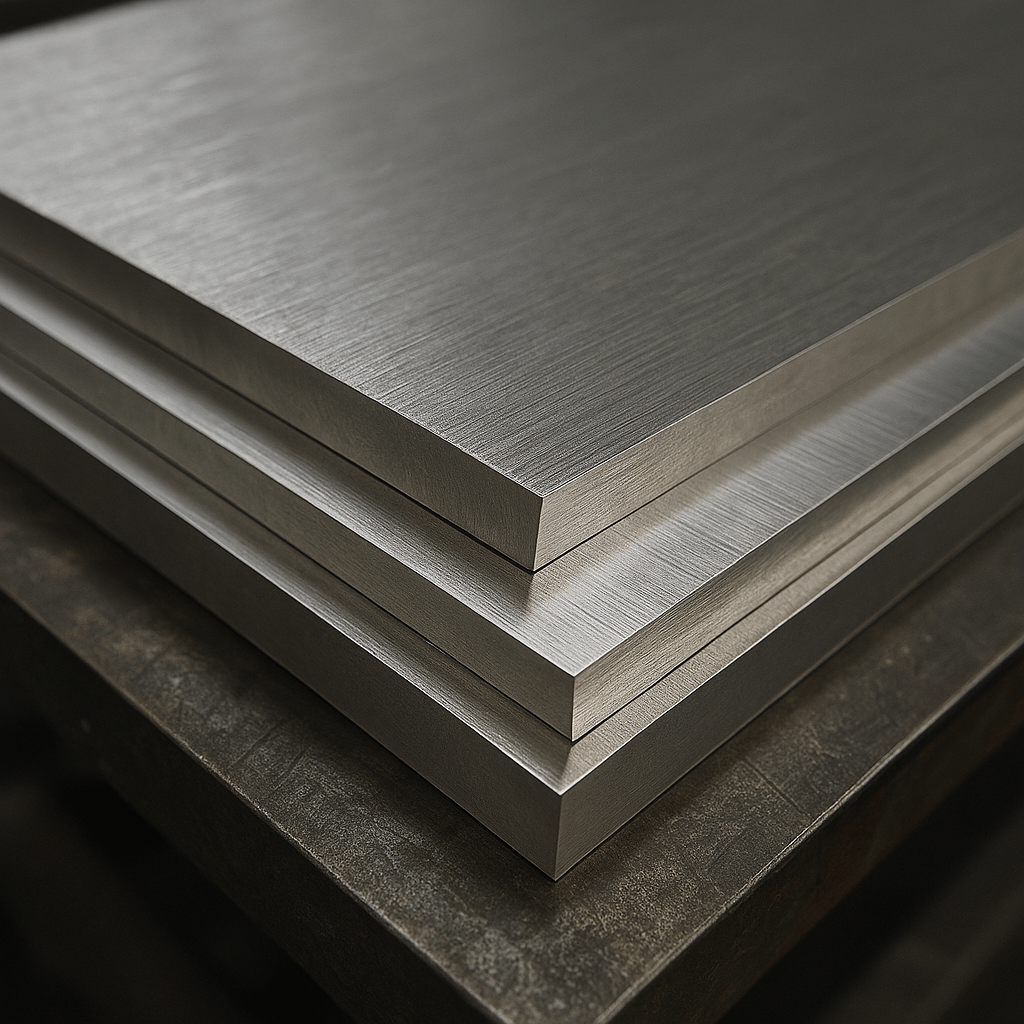
When buyers discuss aluminum sheet, the conversation often sounds simple: 1.6 mm or 2.0 mm, 14 gauge or 16 gauge, lighter or stronger.
In practice, that thickness choice reaches much further than most teams expect.
A small change in aluminum sheet thickness can affect raw material cost, freight weight, tool wear, bending behavior, assembly fit, durability in service, and even the supplier’s ability to source the material quickly. That is why thickness is not just an engineering input. It is a procurement variable with real financial consequences.
This article looks at aluminum sheet thickness from the perspective of wholesale buyers, OEM teams, and sourcing managers who need more than a conversion chart. The real question is not simply “Which thickness works?” It is:
Which thickness gives the best balance of manufacturability, cost control, structural reliability, and supply stability for the product being built?
Sheet Thickness: A Lever for Bulk Procurement Optimization
Thickness selection influences much more than whether a panel feels rigid in the hand.
For bulk buyers, it also affects:
cutting speed and machine utilization
bending difficulty and springback behavior
nesting efficiency and scrap rates
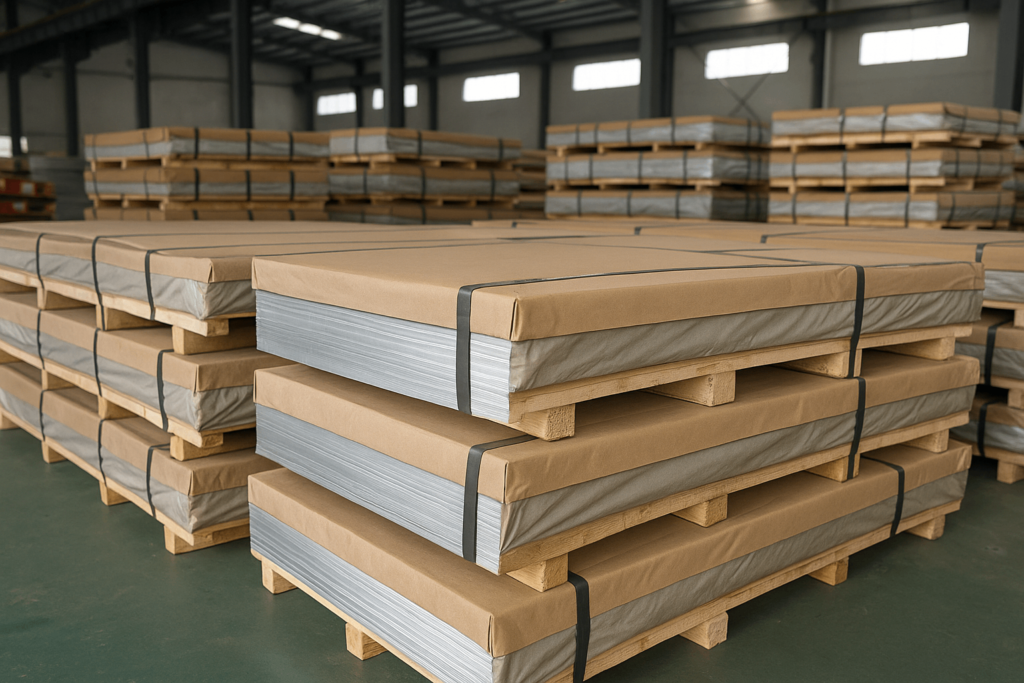
packaging density and freight economics
availability from mills and stockholders
how easily suppliers can match repeat orders later
In high-volume programs, these effects accumulate quickly. A small thickness adjustment may produce lower material usage, but it can also change forming stability or reduce impact resistance in the field. That trade-off needs to be evaluated as a system, not as an isolated number.
Procurement teams that handle thickness this way usually make better decisions than teams that simply ask suppliers for the cheapest workable option.
Gauge vs. Millimeter: Why Precision Wins
Gauge terms still appear in many conversations, especially in older purchasing habits and regional quoting practices. The problem is that gauge is not universal across materials.
That is where mistakes begin.
A buyer may assume a gauge number means one thing, while the supplier interprets it through a different material standard. In aluminum sourcing, that can lead to quoting errors, fabrication mismatch, or rework after material arrives.
For that reason, millimeter-based specifications are usually safer in modern RFQs.
Common Gauge to mm Equivalents (from Aluminium Sheet Gauge Chart)
12 gauge = 2.67 mm
14 gauge = 1.98 mm
16 gauge = 1.60 mm
18 gauge = 1.27 mm
Using millimeters does not remove every risk, but it does remove a major source of avoidable confusion. For B2B buyers, clearer units usually lead to cleaner quotations and fewer disputes after production starts.
Reframe Cost: Thickness as a Margin Lever
Thickness affects cost in more than one direction.
A thinner sheet may lower raw material spend, but that does not automatically mean it creates the strongest total result. Buyers need to evaluate what changes together with the thickness:
freight weight may drop
cutting speed may improve
forming force may decrease
dent resistance may weaken
field-life expectations may shift
support structures or flanges may need redesign
This is where thickness becomes a margin lever rather than a simple cost input.
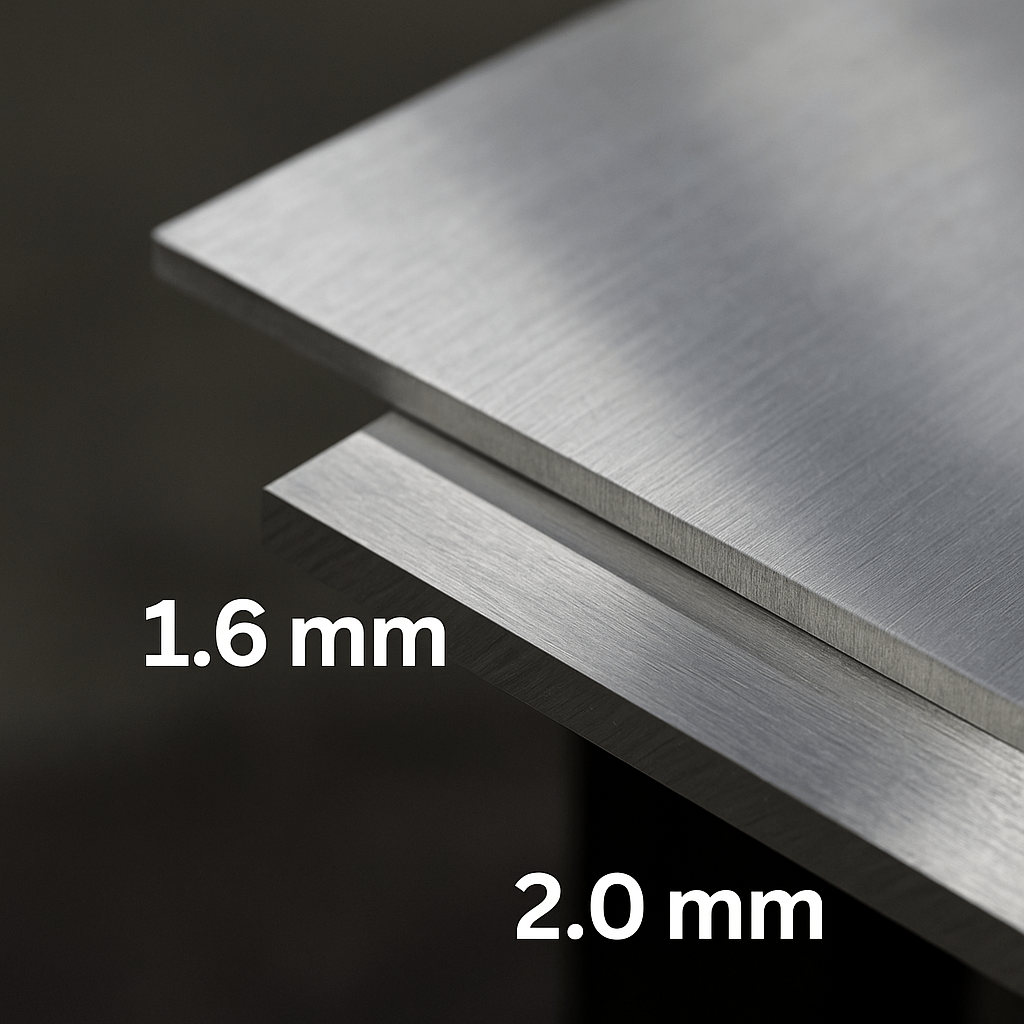
In some projects, stepping down from 2.0 mm to 1.6 mm creates real savings with no meaningful performance loss. In others, that same decision causes avoidable returns, deformation, or assembly instability. Good sourcing decisions come from comparing thickness against use condition—not against supplier quotation alone.
Engineering Meets Finance: Data Over Guesswork
Thickness decisions become stronger when engineering and procurement use the same evidence.
That usually means validating the choice against:
load requirement
deflection allowance
bend safety
surface-finish needs
assembly tolerance
expected service environment
In real projects, finite element analysis, prototype testing, and bend trials often reveal that the “safe” thickness is not always the thickest one. Sometimes a thinner sheet with better flange design performs well enough. In other cases, a small increase in thickness prevents long-term issues that would cost far more later.
The key for procurement is simple: thickness should be justified by function, not by habit.
Fabrication Time: How Thickness Affects Throughput
Thickness directly changes how fast a supplier can process the job.
Cutting speed, pierce time, bending force, deburring effort, and even handling convenience are all affected by sheet thickness. That means the chosen gauge influences not only the cost of material, but also the cost of making the part.
In production planning, thinner material often brings:
faster laser cutting
easier bending
lower forming force
lighter manual handling
But these gains only matter if the thinner material still meets the product’s strength and durability requirements.
How to Cut Aluminium Sheet Metal in Bulk Efficiently
For volume production, the cutting method should match the sheet thickness and the quality target.
Fiber laser cutting is often efficient for thinner and medium aluminum sheet, especially when speed and edge quality both matter.
Nitrogen-assisted cutting can help reduce oxidation and improve edge cleanliness.
Water jet cutting may be preferred for thicker sections or where heat input must be minimized.
In B2B sourcing, thickness and cutting method should be considered together, not separately.
Logistics Meets Spec: What RFQs Often Miss
Many RFQs state thickness clearly but leave out the sourcing conditions around it.
That is where trouble starts.
A thickness that works perfectly on the drawing may still create procurement friction if:
the mill MOQ is too high
the thickness is uncommon in the destination market
lead times are longer than expected
the supplier needs to substitute with the nearest stock size
not all sheet metal fabricators can process that range efficiently
This is why experienced buyers also confirm:
stock availability
mill origin
substitution rules
MOQ thresholds
tolerance range
repeat-order sourcing security
A well-written RFQ does not just define the ideal thickness. It also shows the supplier how much flexibility exists if sourcing conditions change.
Enclosures and Cabinets: Choosing the Right Thickness
For aluminum enclosure fabrication, thickness decisions should follow use condition rather than appearance alone.
A housing that looks acceptable in sample form may still be too thin for transport vibration, door alignment, field handling, or repeated opening cycles.
Common enclosure needs include a balance between:
structural stability
thermal behavior
corrosion resistance
weight control
formability
installation practicality
For many cabinets, control boxes, kiosk structures, and operator enclosures, the decision is not just about maximum strength. It is about choosing a thickness that remains practical to fabricate while still protecting the equipment inside.
This is where procurement, design, and manufacturing need to stay aligned.
Durability Meets ESG: Why Thicker Can Be Smarter
There are projects where thicker aluminum looks less efficient on paper but performs better across the full lifecycle.
A thicker panel may:
reduce denting during shipping or installation
improve perceived quality at the customer site
lower warranty claims
extend service life
produce cleaner recovery value at end-of-life
In those cases, the “lighter is always better” assumption breaks down.
For ESG-driven sourcing teams, lifecycle durability matters just as much as material reduction. A part that lasts longer and fails less often can be the more sustainable choice, even if it uses slightly more aluminum up front.
Buyer Outcomes: Data from Real Projects
Real project outcomes often show what thickness decisions actually do better than abstract specification tables.
Battery Tray Project
A thicker section improved stiffness and reduced downstream service exposure.
Retail Display Program
A thinner gauge combined with better flange design reduced freight weight without sacrificing acceptable field performance.
Agricultural Structural Plate Project
A heavier section extended service life and reduced reinforcement frequency in harsh operating conditions.
The pattern is consistent: the right thickness is rarely “always thicker” or “always thinner.” It is the one that fits the product’s real use case.
Recommended Spec Template for RFQs
A good RFQ reduces waiting time, quotation mismatch, and avoidable clarification rounds.
For aluminum sheet procurement, a practical RFQ should usually include:
Material grade
Thickness in mm
Tolerance range
Sheet or panel size
Surface finish requirement
Fabrication steps required
Volume forecast
Inspection or certification needs
Delivery term and target timing
Example RFQ Structure
| Item | Example |
| Material | 5052-H32 aluminum sheet |
| Thickness | 1.60 mm ±0.04 mm |
| Finish | Anodized, 15 μm per side |
| Panel Size | 1000 × 2000 mm |
| Fabrication | Cutting, bending, punching, deburring |
| Volume | 20 metric tons, monthly release |
| Certifications | ISO 9001, RoHS, SGS optional |
| Delivery Term | FOB Shenzhen |
The clearer the RFQ, the faster buyers get accurate answers.
Conclusion
Aluminum sheet thickness is not a small detail in a drawing. It is a sourcing decision with structural, financial, and operational consequences.
It affects:
quoting accuracy
fabrication efficiency
freight economics
assembly behavior
durability in service
repeat-order sourcing stability
That is why the best thickness decision is rarely made by cost alone and never by guesswork.
For wholesale buyers and OEM teams, the stronger approach is to evaluate thickness as part of a complete system: material, design, fabrication, logistics, and end-use performance.
At YISHANG, we help procurement teams review aluminum sheet specifications with manufacturing reality in mind, so thickness choices support both product performance and long-term sourcing stability.