
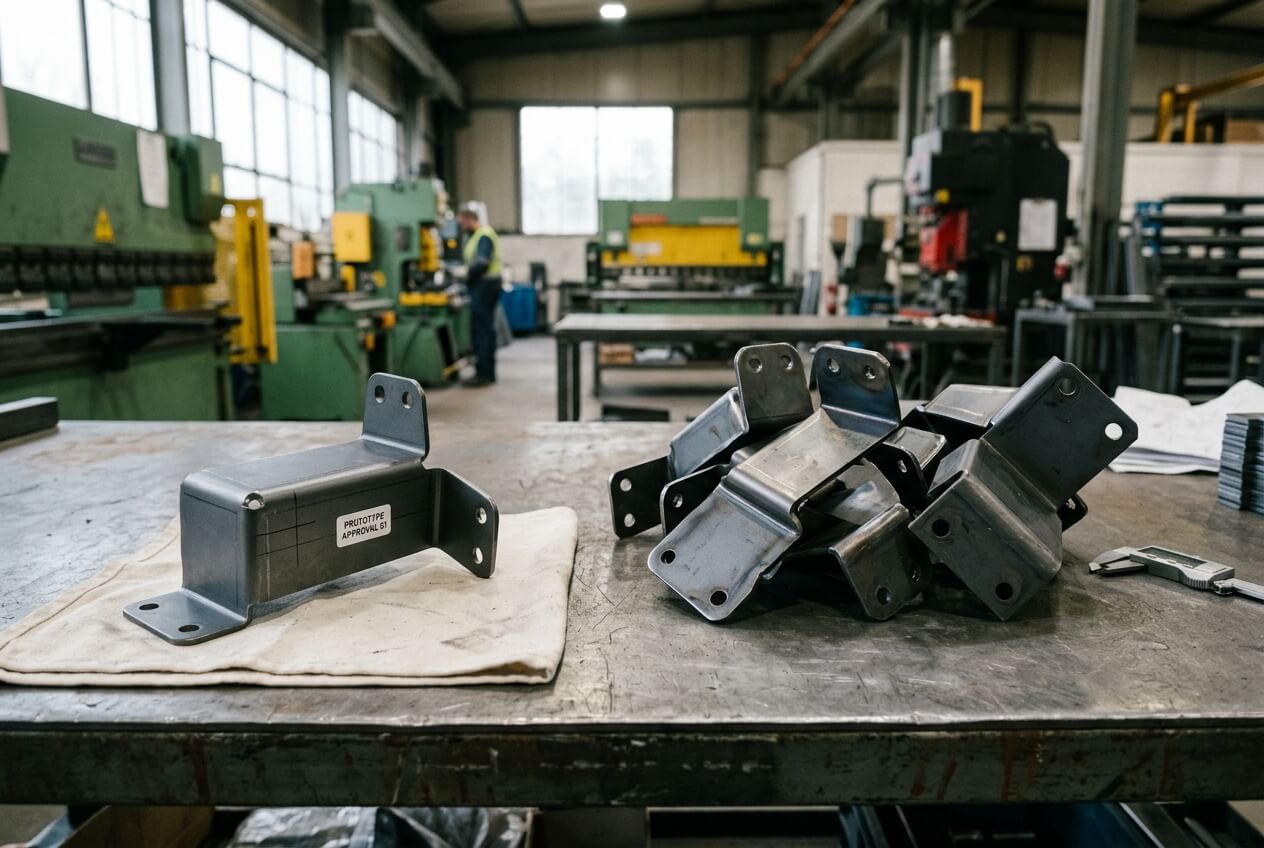
Annealing meaning sounds simple: heat the metal, hold it, and cool it in a controlled way. In sheet metal fabrication, that simple step can decide whether a part still fits after welding, bending, and coating. Buyers get into trouble when they approve a sample that a technician corrected by hand. The prototype looks right. The batch does not. The real risk is not the heat step itself. It is the assumption that the quoted route will repeat without extra fixtures, extra inspection, or extra rework.
That is why annealing meaning matters in procurement. It changes springback, flatness, weld stress, oxide, and surface prep. It also changes how a supplier prices the part. If the RFQ leaves the heat-treatment stage open, two vendors may quote very different processes and still both sound correct. The cheapest number can hide the least repeatable route.
Where Annealing Meaning Changes the Quote Before the First Part Ships
Annealing can mean stress relief, a full anneal, or a post-weld heat step. Those are not the same process. They do not create the same grain structure, the same distortion risk, or the same cleaning burden. If a buyer writes only “annealed” on a drawing, the supplier must guess the route. One shop may price light stress relief after welding. Another may assume a full thermal cycle before forming. A third may add cleaning because oxide will affect the finish. The quote gap can look like a cost difference, but it often reflects a process difference.
That gap matters most on parts with assembly features. A laser-cut bracket may need hole position to hold after cooling. A welded frame may need the corners to stay square. An enclosure panel may need its flatness to survive both heat and coating. If the RFQ does not name the stage for annealing, the buyer cannot compare quotes on equal terms. The result is not just a pricing problem. It becomes a fit problem that shows up after the PO is already released.
Why the cheaper quote can be the riskier route
A lower number often means the supplier left out one of three things: fixture control, post-anneal inspection, or surface cleanup. Any one of those can seem optional on paper. In production, they decide whether the same part can repeat. A supplier may also shorten the soak time or change part spacing to reduce cost. That can be fine for a sample. It is less safe for a batch.
For example, a 1.5 mm cold-rolled steel bracket can look stable in a small trial. Once the load size increases, the same bracket can move after cooling because the furnace layout changed. The quote did not change. The hidden assumption did. That is why buyers should treat annealing as a route decision, not a single line item.
Why a Prototype Can Pass When Batch Parts Fail Fit Checks
The prototype often passes because someone fixed it quietly. A technician may bend one corner back by hand. Another operator may set the part in a better location inside the furnace. An inspector may accept a cosmetic mark because the piece is only a sample. None of those corrections scale. When the batch starts, the hidden labor disappears. Then the parts land in the fixture differently, the hole pattern drifts, or the mating face no longer sits flush.
This is the most common procurement trap with annealed sheet metal parts. Buyers approve the sample because the part looks right on the bench. Later, the batch creates assembly friction. A bracket stops a fastener from dropping through. A door needs force to close. A welded cabinet frame arrives square enough to ship, but not square enough to assemble cleanly. The defect did not begin at the shipping dock. It began in the sample stage, where manual correction masked the real process capability.
Prototype fit hides manual correction
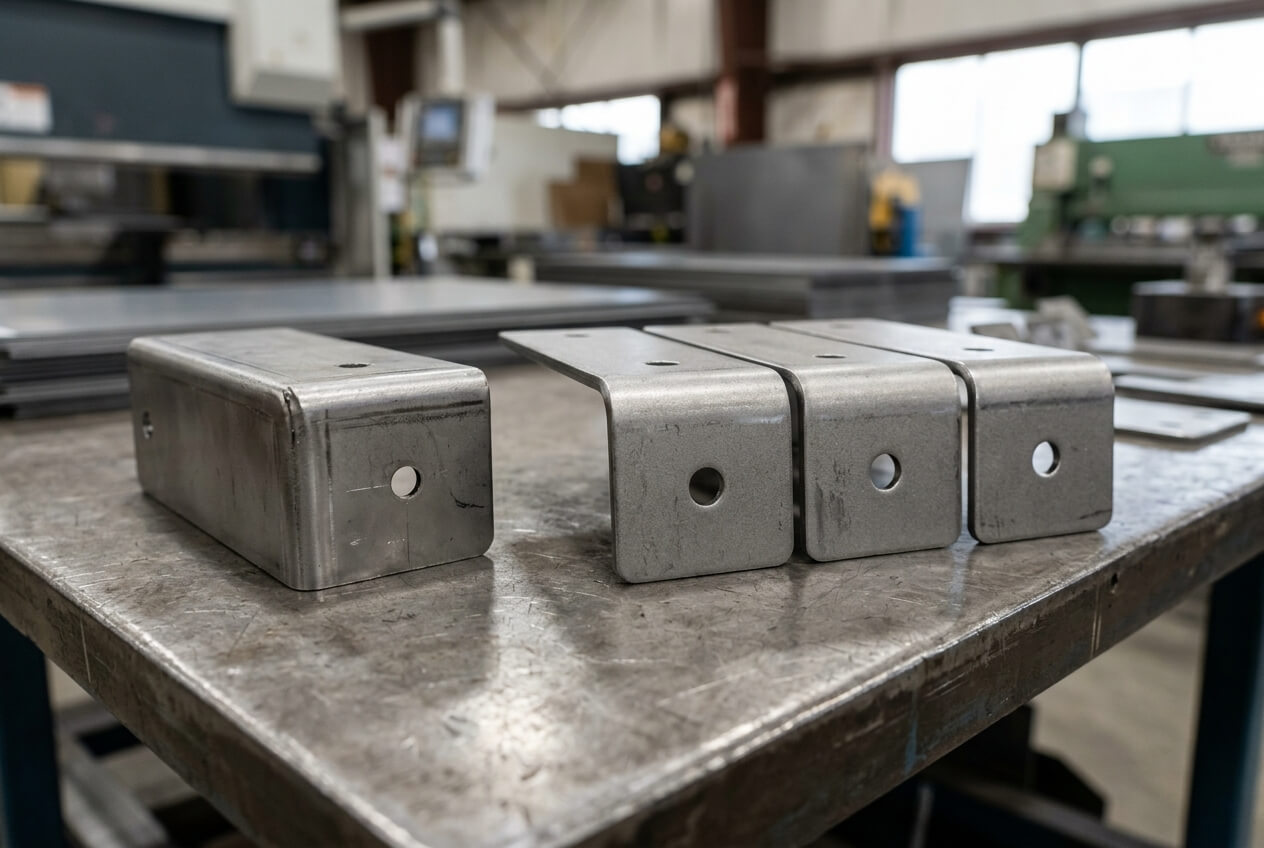
Take a mounting bracket for an equipment frame. The prototype may show perfect hole alignment after a technician compensates for springback. In batch production, the same part may need a fixture to hold the bend angle during cooling. Without that fixture, the hole-to-hole distance drifts just enough to slow assembly. The extra minutes at the line are real cost. Scrap is worse. Rework is worse still.
Now consider a stainless enclosure door. The sample may close cleanly, but the trial run may only include one part with generous spacing in the furnace. A full batch can show more warp at the hinge side and more oxide on the surface. The door still exists. The finish path changes. If powder coating follows, the part may need extra prep before coating. If the buyer never asked for that step in the quote, the later correction becomes a chargeable surprise.
Batch drift shows up at assembly, not in the photo
Buyers often review photos from the sample and feel confident. Photos do not reveal clamping pressure, load density, or cooling rate. They also do not reveal whether the approved part relied on hand fitting. Batch drift appears where the part meets another part. That is why the critical dimensions must be the ones that matter after annealing, after welding, and after cooling. If the assembly fit is only checked before heat treatment, the approval can be misleading.
A good rule is simple. If a dimension affects assembly, inspect it after the thermal step. If a surface will be visible, judge it after cleaning and coating prep. If a hole carries fastener load, confirm it after cooling, not before. That approach turns the sample into a process reference instead of a cosmetic sample.
What to Lock in the RFQ So the Same Geometry Survives Cooling
The RFQ needs more than material and thickness. It must tell the supplier where annealing sits in the route and which dimensions matter after the part cools. Otherwise, the quote may include the wrong sequence. That is especially dangerous on custom sheet metal fabrication jobs where bending, welding, and finishing all touch the same feature. One unclear note can shift the whole process.
Start with the drawing. Mark the dimensions that must hold after heat treatment. Identify whether annealing comes before forming, after forming, after welding, or after both. State the material grade and thickness, because those two variables change springback and distortion. Then name the surface expectation. If the enclosure is visible, say whether scale, oxide tint, or cleaning marks are acceptable. If the part will be coated, define what surface prep must happen before paint or powder coat. That level of detail keeps quotes comparable.
Lock the route, not just the part shape
A supplier can only price what the RFQ makes visible. If the route is vague, the supplier fills the gap with assumptions. A manufacturability review from Yishang or another fabricator can help flag where the assumptions sit. That review is most useful when the drawing contains tight holes, formed flanges, or welded corners. Those areas are the ones most likely to move after annealing.
Buyers should also state quantity and release pattern. A one-off prototype, a pilot lot, and a recurring batch are not the same job. A prototype may justify more manual attention. A recurring lot needs a repeatable fixture and a stable inspection plan. If the RFQ does not separate those stages, the quote may look competitive but fail on repeatability later.
Write the finish rule before the finish quote appears
Finish expectations matter because annealing often changes the surface in ways the buyer can miss early. Mild steel may scale. Stainless may discolor. Thin panels may show small warps that only become obvious after coating. If the RFQ does not say whether the supplier must remove scale, pickle, polish, or clean before coating, the finish price can rise later. More importantly, the buyer may accept a sample that cannot be repeated at volume without the same cleanup step.
The best RFQ language is specific. It says what the part must do after cooling, not just what it should look like in a photo. That keeps the quote tied to the real production risk: whether the geometry survives the thermal cycle and still assembles correctly.
How to Release the First Batch Without Turning One Good Sample into a False Promise
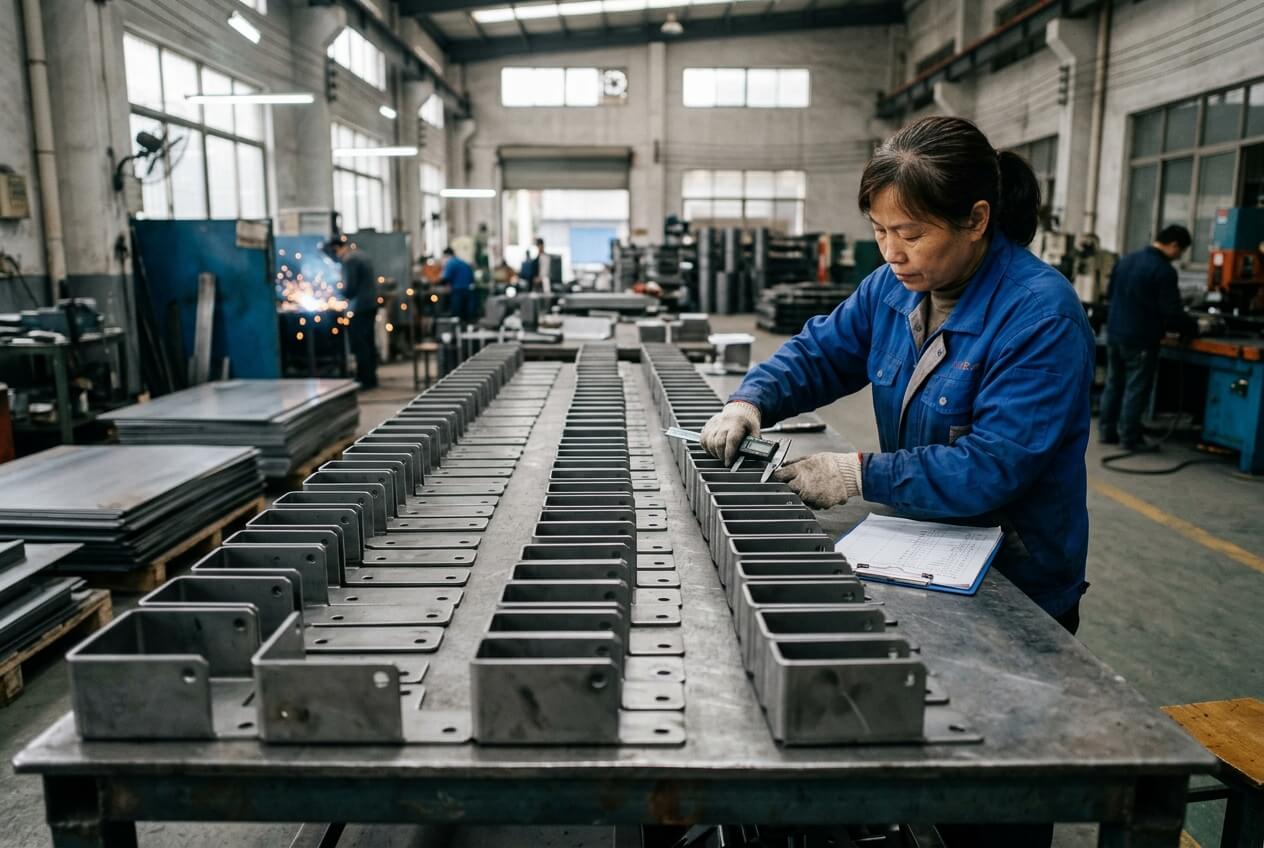
The first batch should act like a controlled production trial. It should not act like a bigger sample. If the buyer approves batch production too fast, the same hidden issues can spread across the order. A small pilot lot gives the team a chance to see whether the furnace load, fixture, and post-anneal inspection all repeat the sample result. That is cheaper than finding the problem after full shipment.
Use the first batch to test the exact production conditions. Confirm the part orientation in the furnace. Confirm the spacing between parts. Confirm the clamp points and cooling method. Then inspect the dimensions that affect assembly. Flatness matters on enclosures and panels. Hole position matters on brackets and frames. Weld distortion matters on welded assemblies. If any of those move, the buyer still has a chance to correct the route before volume ramps up.
For example, a welded machine frame can pass a sample check when the parts are spaced loosely in the furnace. The same frame may twist more in a fuller load. If the buyer discovers that after the full order ships, the result is delayed assembly and extra welding correction. If the buyer discovers it in the pilot lot, the fix may be a better fixture or a different cooling support. That is the difference between a controlled release and a production headache.
Cost and lead time follow the same logic. A supplier may quote a faster cycle, but that speed can vanish if the batch needs rework, extra cleaning, or more inspection. A lower unit price is not a win if the parts arrive with the wrong fit or the wrong surface condition. Buyers should compare not just the quoted part price, but the repeatability of the route behind it.
If you are evaluating custom sheet metal fabrication for brackets, frames, enclosures, cabinets, or welded assemblies, send the drawings, material requirements, quantities, tolerances, finish expectations, and any assembly photos or sample notes. Yishang can review those details before quote release so the annealing route, fixture plan, and post-treatment steps match the part you actually need.
Frequently Asked Questions
What does annealing meaning change for a sheet metal RFQ?
It changes the process assumption. Annealing can happen before forming, after forming, or after welding, and each route affects fit, distortion, and surface condition differently. If the RFQ does not name the stage, suppliers may quote different processes.
Why can a prototype fit while the batch misses assembly holes?
A prototype may receive hand correction, looser furnace spacing, or extra inspection. Those conditions often disappear in batch production. When they do, springback and cooling movement can shift hole position or bend angle enough to affect assembly.
Which RFQ details matter most when annealed parts must stay accurate?
State the material grade, thickness, annealing stage, post-anneal dimensions, finish expectation, and inspection points after cooling. Quantities matter too, because a pilot lot and a recurring batch need different levels of process control.
Does annealing always improve the surface on enclosures and brackets?
No. Annealing can reduce internal stress, but it can also create oxide, tint, or slight warpage. If the part will be visible or coated, the buyer should define cleaning and prep steps before the quote is approved.
What should a buyer ask before approving the first batch?
Ask whether the batch will use the same fixture, load size, part spacing, and cooling method as the sample. Then confirm which dimensions will be measured after annealing and whether any hand fitting was used on the prototype.