
Why Choosing the Right Structural Tubing Isn’t Just About the Spec
ASTM A500 tubing plays a major role in steel-based construction, structural frames, OEM fabrication, and modular support systems. Yet in many procurement discussions, it is still treated as a generic line item: “A500 tube, quoted by size and wall thickness.”
That approach is risky.
Structural tubing is not only a material purchase. It affects welding quality, frame alignment, load capacity, coating performance, logistics cost, and final assembly efficiency. If the grade, tolerance, wall thickness, or surface condition is wrong, the problem may not appear until fabrication or installation.
For global buyers, choosing ASTM A500 tubing means thinking beyond the datasheet. The better question is not only “Does it meet the spec?” but also “Will it work in my production process, my coating system, my assembly line, and my end-use environment?”
That is where an engineering mindset becomes valuable.
A500 Tubing: Structure, Format & What It’s Really Used For
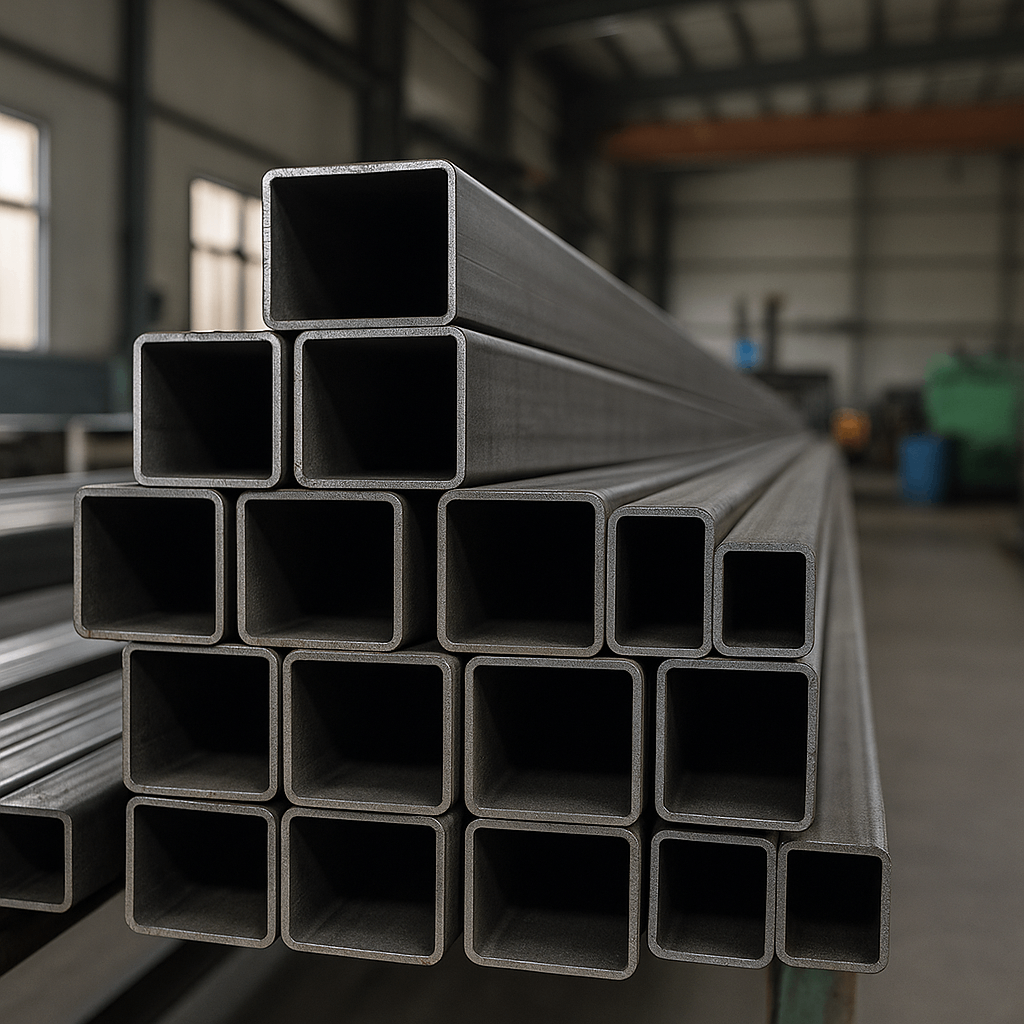
ASTM A500 covers cold-formed welded and seamless carbon steel structural tubing. It is commonly supplied in round, square, and rectangular shapes.
Its main advantage is structural consistency. Compared with some hot-rolled steel options, A500 tubing generally offers better dimensional control and stronger mechanical properties for structural applications.
This makes it useful for:
- modular building frames;
- solar racking structures;
- telecom support frames;
- commercial signage structures;
- machinery bases;
- industrial workstations;
- trailer and equipment frames;
- architectural support systems.
In high-volume structural projects, consistency matters as much as strength. Tubes must fit jigs, align during welding, and assemble without repeated correction. Even a small dimensional variation can slow down robotic welding, create fixture problems, or increase rework.
For wholesale buyers, this affects total landed cost. A cheaper tube that requires more correction, grinding, re-cutting, or alignment work may not be cheaper in the final project.
Grades A, B, C, and D: Which One Works for Your Project?
ASTM A500 includes several grades. Each grade reflects different mechanical properties and use-case suitability.
| Grade | Yield Strength (ksi) | Typical Use |
|---|---|---|
| A | 33 | Lightweight, decorative frames |
| B | 46 | Universal structural components |
| C | 50 | Telecom towers, solar support frames |
| D | 36, round only | High-load round columns |
Grade B is often the practical default for general structural tubing. It offers a good balance of strength, availability, and fabrication friendliness.
Grade C provides higher yield strength and may be preferred for longer spans, exterior bracing, solar supports, and projects where rigidity matters. However, higher strength can also change fabrication behavior. Welding settings, bending expectations, and forming plans should be reviewed before production.
Grade A may suit lighter or less demanding frames, while Grade D is limited to round tubing and tends to be used in more specific column-style applications.
For buyers working across North America, ASTM A500 Grade B is often compared with CSA G40.21 Grade 350W. Cross-standard compatibility should still be checked through documents, not assumed from a supplier’s verbal claim.
The basic rule is simple: choose the grade according to the load, fabrication method, coating plan, and final environment—not just according to what is easiest to buy.
Fabrication Compatibility: What Buyers Must Consider
Not all A500 tubing behaves the same in fabrication. Wall thickness, weld seam quality, corner radius, internal stress, and grade selection can all affect downstream processes.
A tube may meet the ASTM requirement but still create production trouble if it does not match your equipment or assembly method.
Buyers should pay attention to the following areas.
Cutting and coping
CNC coping, laser tube cutting, sawing, and end profiling all require stable dimensions and predictable wall thickness.
Welding
Robotic welding lines depend on repeatable tube geometry. Poor seam consistency, out-of-square profiles, or dimensional drift can create misalignment.
Bending and forming
Grade A and Grade B tubing may handle moderate cold bending more easily than higher-strength material. Grade C can be less forgiving and may require larger bend radii or process trials.
Fit-up and plug-in joints
For modular frames, OD/ID consistency is critical. If cross-members, inserts, or telescoping parts are involved, small tolerance differences can become assembly failures.
Surface preparation
Mill scale, oil, weld seams, and coating residue can affect powder coating, painting, or galvanizing.
Procurement teams should avoid assuming that “A500” alone guarantees fabrication success. For important projects, request samples or process trials, especially when bending, robotic welding, mitered assembly, or insert-fit structures are involved.
Fabrication success is not theoretical. It is proven when the tubing runs smoothly through the buyer’s actual production workflow.
Surface Treatment & Coating Considerations
Unlike stainless steel, ASTM A500 carbon steel must be protected if the part will face moisture, outdoor exposure, chemicals, or long-term storage.
Common coating options include:
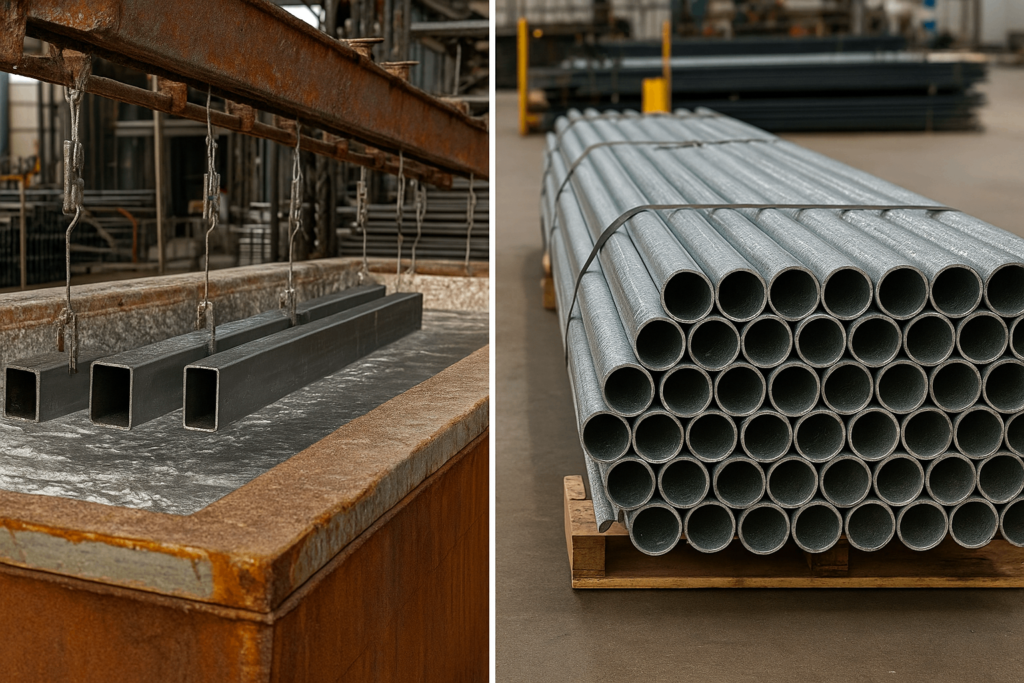
- hot-dip galvanizing;
- pre-galvanized finishes;
- zinc-rich primer;
- powder coating;
- industrial paint systems;
- duplex coating systems.
For exposed structural frames, coating choice should be defined clearly in the RFQ. It is not enough to say “anti-rust finish.”
Hot-dip galvanizing offers strong corrosion protection, especially for outdoor structures, solar supports, agriculture frames, and coastal-adjacent installations. However, the design must allow proper zinc flow and drainage. Closed sections may require vent holes. Welded areas must be prepared correctly. Threads, mating surfaces, and tolerance-sensitive zones may need masking or post-processing.
Powder coating provides good appearance and protection for commercial, industrial, and architectural applications. Surface preparation is critical. Poor cleaning or rough weld areas can reduce coating adhesion.
For buyers used to stainless steel tubing, A500 should be viewed differently. It can be very cost-effective structurally, but it depends on coating quality for long-term corrosion resistance.
A good RFQ should define:
- coating type;
- coating thickness if required;
- exposure environment;
- color or finish standard;
- venting requirements for galvanizing;
- surface preparation level;
- packaging protection after coating;
- inspection or salt spray expectations.
Coating is not just a finishing step. It is part of the performance specification.
Assembly & Logistics: What Global Buyers Often Overlook
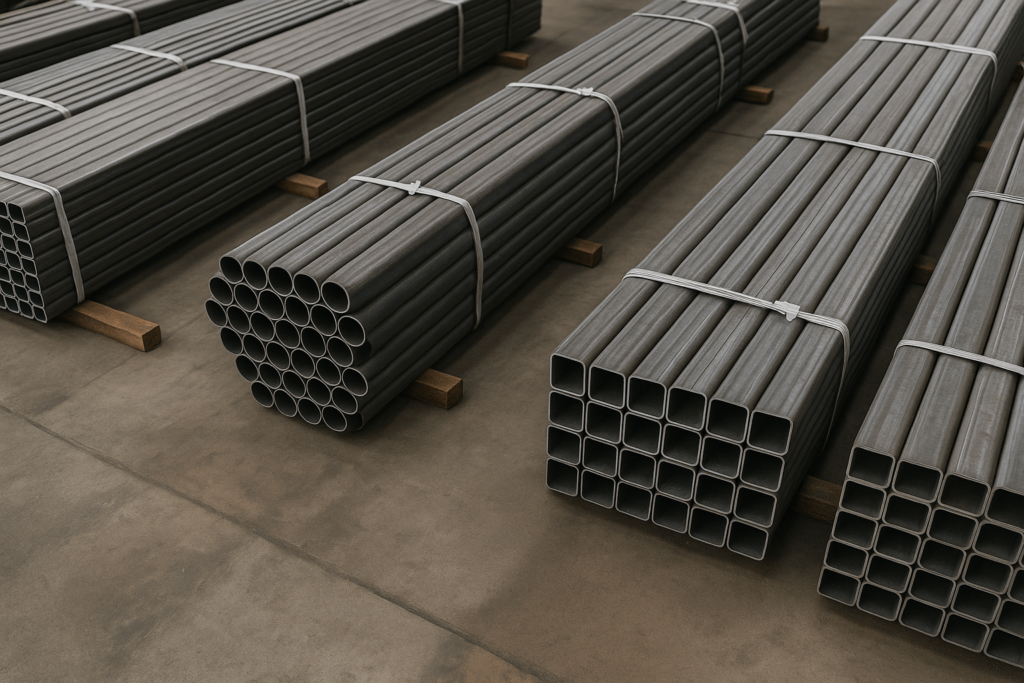
ASTM A500 tubing is commonly supplied in stock lengths, but many export buyers benefit from cut-to-length or project-specific preparation.
Custom-cut tubing can reduce waste, simplify assembly, and lower labor cost at the destination. This is especially useful for modular construction, signage frames, racking systems, equipment bases, and prefabricated structural kits.
For global buyers, logistics planning should begin before production. Tube length affects container loading, packaging, handling, and freight cost. Long tubing may seem efficient from a fabrication standpoint but can create loading inefficiency or higher damage risk.
Procurement teams should review:
- standard mill lengths vs. custom cut lengths;
- container loading efficiency;
- bundle weight;
- end protection;
- coating protection;
- labeling by assembly position;
- port-of-entry handling;
- moisture protection during sea freight.
OD/ID consistency should also be checked when tubes must connect with inserts, plugs, sleeves, or cross-members. This is especially important if the project is switching from seamless tubing or stainless tube to A500 structural tubing.
A supplier that understands export packaging and assembly logic can help reduce on-site sorting, cutting, and rework.
ASTM A500 vs Other Tubing Types: A Practical View
A500 is often compared with other tubing or steel specifications. The correct choice depends on whether the part is structural, mechanical, architectural, or cosmetic.
Compared to ASTM A513
A513 tubing is often used for mechanical applications, not primary structural load-bearing use. It may look similar to A500, but visual similarity does not mean structural equivalence. Buyers should not substitute one for the other without engineering review.
Compared to ASTM A36
A36 is a general structural steel, often supplied as plate, bar, or shapes. It has lower yield strength than A500 Grade B or C and may not offer the same tube dimensional consistency. A36 can still be useful, but it may require more fabrication correction in tubular frame applications.
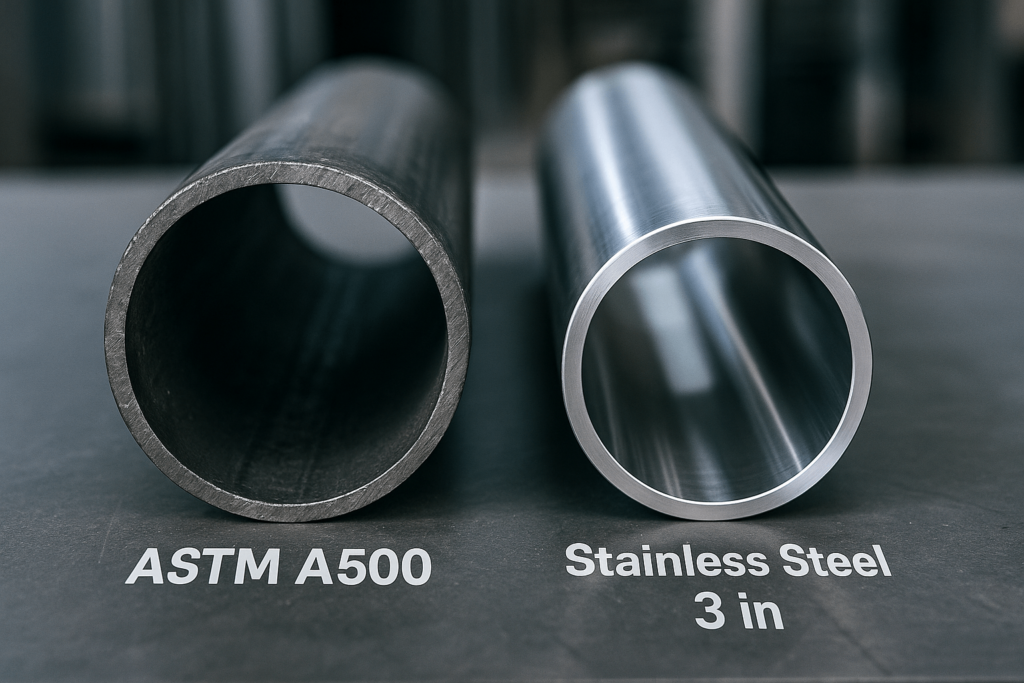
Compared to stainless steel tubing
Stainless steel provides corrosion resistance without coating, but it costs significantly more. For many structural frames, A500 with galvanizing or powder coating can offer a better cost-performance balance. It is often used in telecom frames, advertising structures, and support systems where stainless steel would be excessive.
Compared to EN standards
In Europe, EN 10219 is a common reference for cold-formed structural hollow sections. ASTM A500 Grade B may be compared with S355JRH in some contexts, but buyers must verify mechanical properties, dimensional standards, and documentation before accepting equivalency.
The safe approach is to compare based on strength, tolerance, manufacturing route, weldability, coating, and certification—not only on shape and price.
Qualifying Your Supplier: Beyond the Basics
A supplier saying “ASTM A500 available” is not enough. Procurement teams should qualify the mill, fabricator, or exporter based on documentation, process capability, and consistency.
Useful supplier qualification checks include:
- Mill Test Reports;
- dimensional inspection records;
- wall thickness checks;
- straightness and squareness reports;
- coating certificates;
- weld seam integrity testing where required;
- cut-to-length capability;
- miter cutting or coping capability;
- export-grade packaging;
- traceable batch numbers.
For high-volume or structural projects, buyers should also ask whether the supplier can support:
- tolerance charts with each shipment;
- pre-shipment inspection;
- third-party inspection;
- bundled labeling by part number;
- surface preparation before coating;
- packaging suited for port handling and long-distance transport.
A good supplier does not only deliver tubing. They help prevent mismatch between specification, fabrication process, and final installation.
That partnership mindset saves time during QC, assembly, and rectification.
FAQs: What Procurement Teams Often Ask
Q1: Is ASTM A500 suitable for automated welding lines or robotic assembly?
Yes, ASTM A500 can work well in automated welding lines because its cold-formed consistency helps reduce alignment variation. However, buyers should verify wall thickness, straightness, seam condition, and tube geometry against their welding fixtures and robot settings.
Q2: What is the typical MOQ when sourcing ASTM A500 from China-based suppliers?
MOQ depends on size, grade, finish, length, and customization. For containerized export orders, many projects begin around several metric tons. Custom cutting, coating, or special packaging may affect MOQ.
Q3: Can A500 tubing be bent similarly to stainless steel tubing or alloy tubing?
Grade A and Grade B A500 tubing can usually handle moderate cold bending, but tight-radius bending should be tested. Grade C may be less forgiving because of higher strength. Always confirm bend radius, wall thickness, and tooling before production.
Q4: What is the typical lead time for exporting ASTM A500 tubing from China?
Typical lead time may range from 4–6 weeks depending on order quantity, grade, coating, cutting requirements, and export schedule. Projects requiring galvanizing, custom cutting, or special inspection may need additional time.
Q5: What documents should buyers request?
Buyers should request Mill Test Reports, dimensional records, coating certificates if applicable, packing lists, inspection reports, and any cross-standard comparison documents required by the project.
Think Application, Not Just Specification
ASTM A500 tubing is more than a line item on a drawing. It affects structural performance, fabrication speed, coating durability, assembly accuracy, and logistics cost.
For procurement teams, the smartest approach is to evaluate the full application. What load will the tube carry? How will it be cut, welded, bent, coated, packed, shipped, and assembled? Which grade gives enough strength without creating unnecessary fabrication difficulty?
When these questions are answered early, buyers reduce rework, avoid supplier mismatch, and build more reliable structures.
YISHANG supports global buyers with structural tubing sourcing guidance, fabrication review, cut-to-length service, coating coordination, and export packaging for industrial and OEM projects. For high-volume structural tubing orders, early technical alignment is often the difference between a smooth supply chain and a costly correction cycle.