
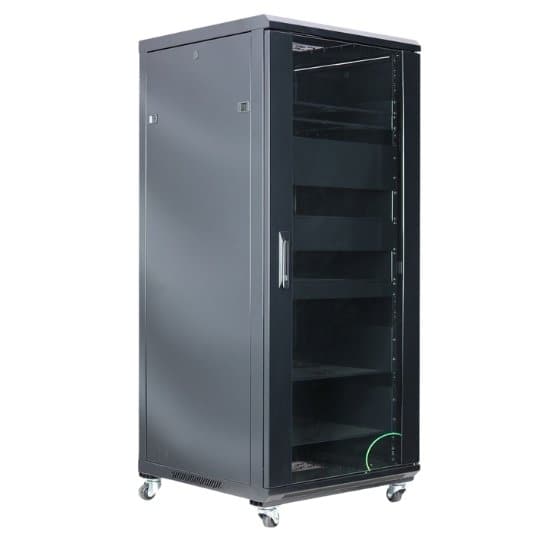
An Expensive Accident Scene: Why Your Clients’ AV Systems Might Be Failing
A high-value AV system can fail even when every electronic component is premium. Overheating, cable interference, poor service access, vibration, and unstable power distribution often come from the structure that holds the system—not from the equipment itself.
For integrators, distributors, and procurement teams, the AV rack is therefore not a cosmetic accessory. It is the physical infrastructure that determines whether the entire system remains reliable, serviceable, and scalable.
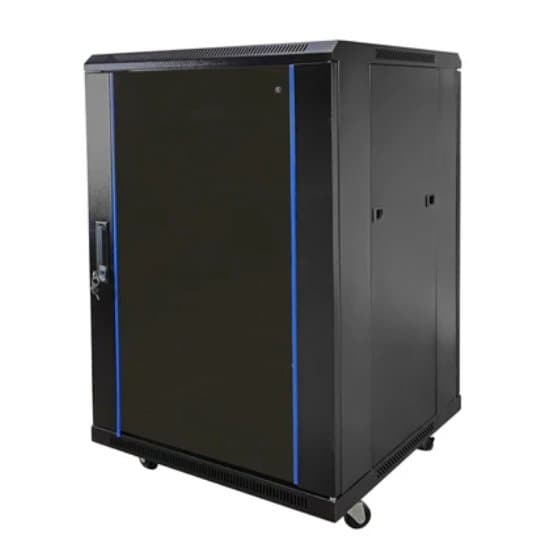
Chapter 1: The Cognitive Leap—Why an AV Rack is an Active Component, Not Passive Furniture
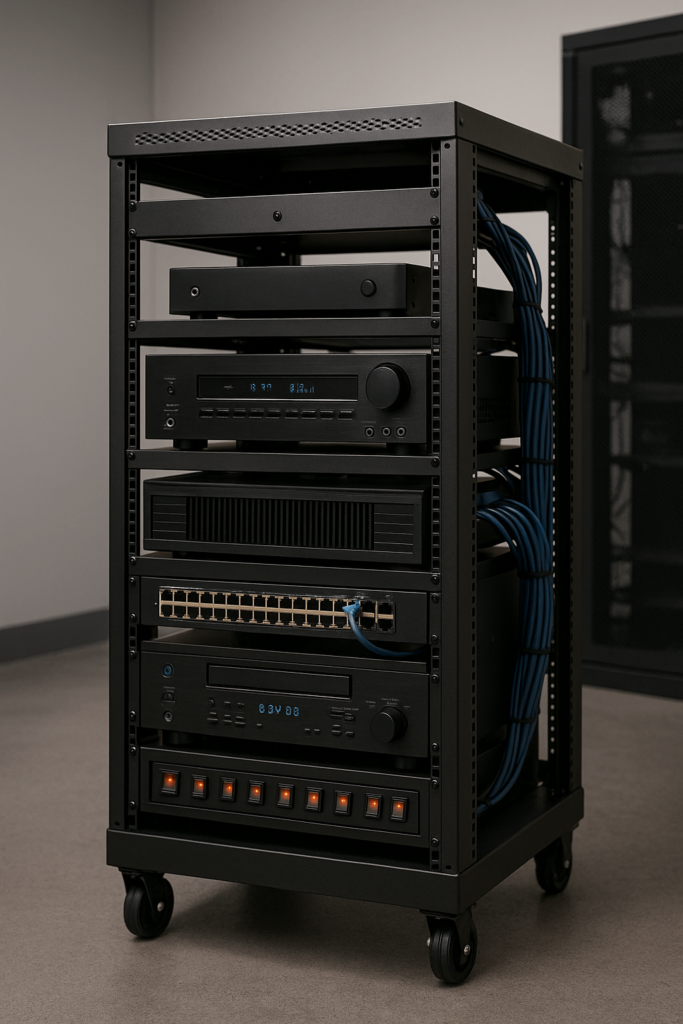
The first step is to stop viewing the AV rack as furniture. A professional audio video equipment rack is an active part of the system architecture. It manages weight, heat, vibration, cable routing, power distribution, and service access.
For B2B buyers, this changes the value equation. A well-designed rack protects equipment investment and reduces downstream maintenance risk.
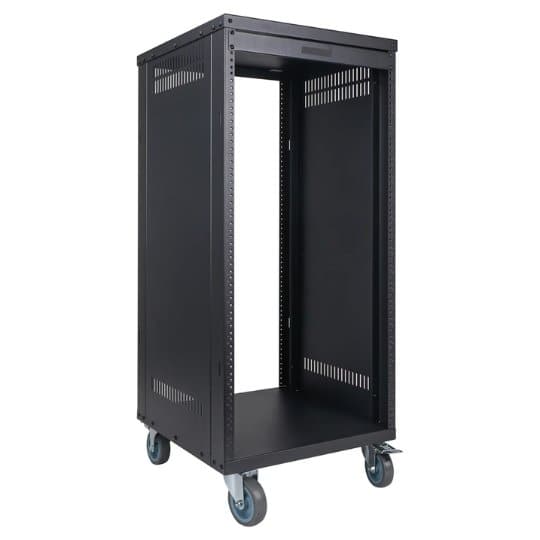
Shattering the Myth: The Rack as Your System’s Foundation
A rack supports more than equipment placement. It creates the mechanical and electrical foundation for the entire AV system.
- Vibration control helps reduce mechanical stress and potential signal interference in sensitive installations.
- Thermal management keeps amplifiers, processors, servers, and control units operating within safer temperature ranges.
- Cable organization and EMI separation help protect signal integrity and simplify future servicing.
When these issues are ignored, the rack becomes a hidden source of failure.
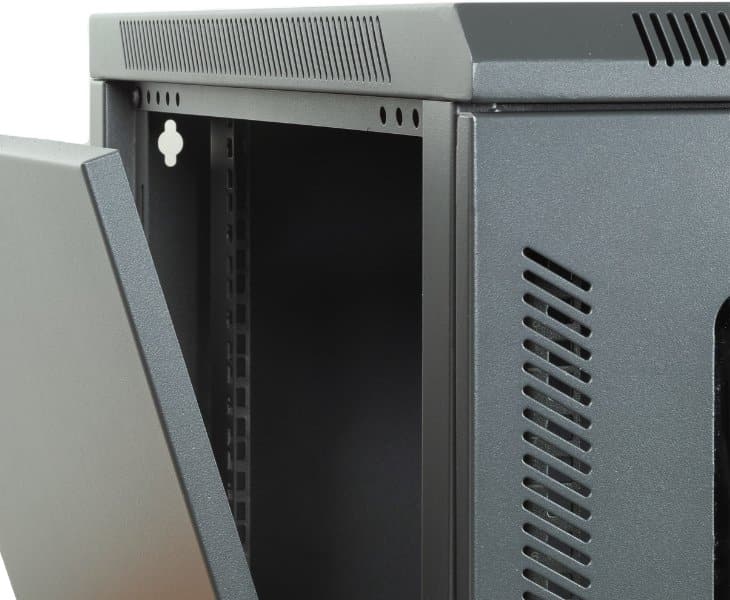
The Expert’s Perspective: From Stacking to Architecture
Professional AV infrastructure is not about stacking devices neatly. It is about designing a controlled operating environment for electronics.
A properly engineered rack can improve reliability, reduce service calls, and give integrators a stronger technical argument when specifying complete systems for commercial, residential, or institutional projects.
Chapter 2: The Decision Compass—A Procurement Framework for Specifying the Right Rack
Choosing an AV rack should be a procurement framework, not a quick catalog selection. The right rack depends on equipment size, heat load, installation environment, accessibility requirements, and long-term expansion plans.
Step One: Draft the Equipment Blueprint
Start by mapping the equipment list before selecting rack size. Height is only one variable. Buyers also need to consider equipment depth, total load, heat output, access requirements, cable clearance, and future expansion.
| Rack Units | Height (Inches) |
| 1U | 1.75″ |
| 4U | 7.0″ |
| 27U | 47.25″ |
| 42U | 73.5″ |
The Rack Unit (U or RU) remains the standard reference for rack-mounted equipment. However, a good rack design also leaves room for airflow, cable bend radius, and service access.
Step Two: A Dialogue with the Application Environment
Different AV environments require different rack strategies.
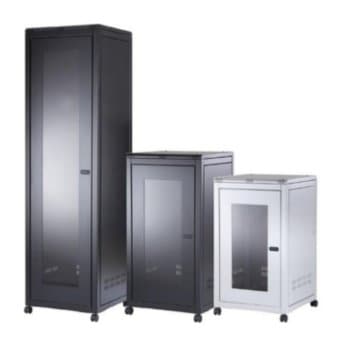
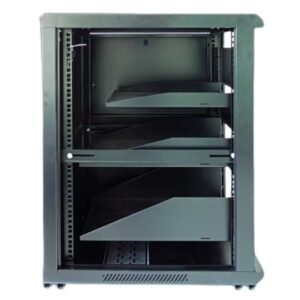
- Boardrooms and high-end residential projects often need enclosed racks with good appearance, quiet operation, and controlled ventilation.
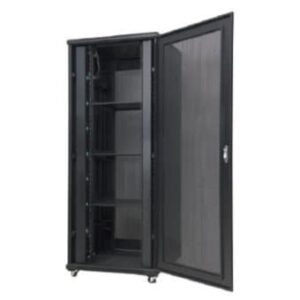
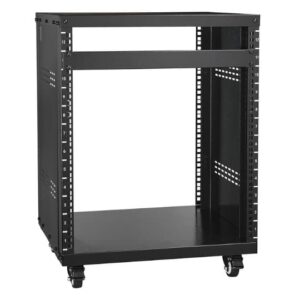
- Control rooms and equipment closets usually benefit from open-frame racks that maximize airflow and service access.
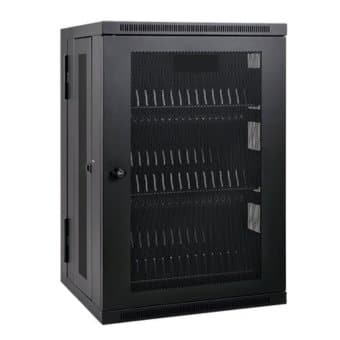
- Classrooms and small offices may need wall-mounted racks where floor space is limited.
The rack should match the environment, not just the equipment list.
Step Three: The Procurement Pitfall Prevention Guide
Common procurement mistakes include underestimating depth, ignoring cable clearance, choosing weak load capacity, overlooking thermal design, and selecting a rack that cannot support future accessories or layout changes.
Before confirming an order, buyers should verify mounting compatibility, ventilation design, load rating, customization options, packaging method, and installation requirements.
Chapter 3: Installation Engineering—Why Assembly and Integration Determine System Longevity
Even a well-made rack can fail to deliver value if it is assembled or integrated poorly. Installation quality affects vibration control, airflow, cable routing, grounding, and future maintenance.
Mechanical Assembly: It’s More Than Bolting Panels
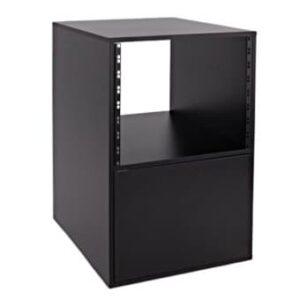
Mechanical assembly should preserve frame alignment and structural stability. Uneven support, loose fastening, or over-tightened hardware can distort the rack and place unnecessary stress on mounted equipment.
For commercial systems, leveling feet, anchoring points, vibration control, and consistent fastener practices all matter.
Thermal Zoning and Airflow Architecture
Thermal zoning means placing equipment according to heat output and airflow behavior. High-heat devices should not be packed together without airflow planning.
Enclosed racks should use vents, perforated panels, fan trays, or blanking panels where appropriate. The goal is to prevent hot spots, reduce fan stress, and extend equipment life.
Structured Cabling and Signal Isolation
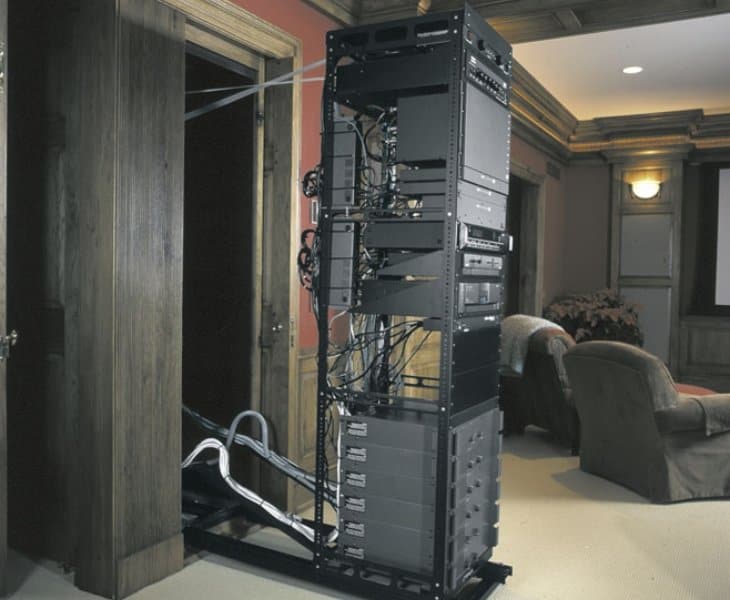
Cable management is a technical requirement, not just a visual preference. Clean routing improves airflow, reduces troubleshooting time, and helps separate power cables from low-voltage signal lines.
Durable labeling, reusable cable ties, cable managers, and clear routing paths all improve serviceability.
Grounding, Surge Suppression, and Power Distribution
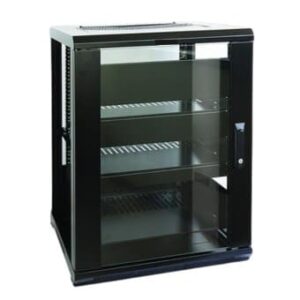
Power and grounding design should be standardized early. Proper grounding reduces EMI and ESD risk, while rack-mounted PDUs, surge protection, and organized power routing improve safety and maintenance.
For larger deployments, consistent power architecture across racks makes service work easier and reduces operational risk.
Assembly Verification and Final Quality Check
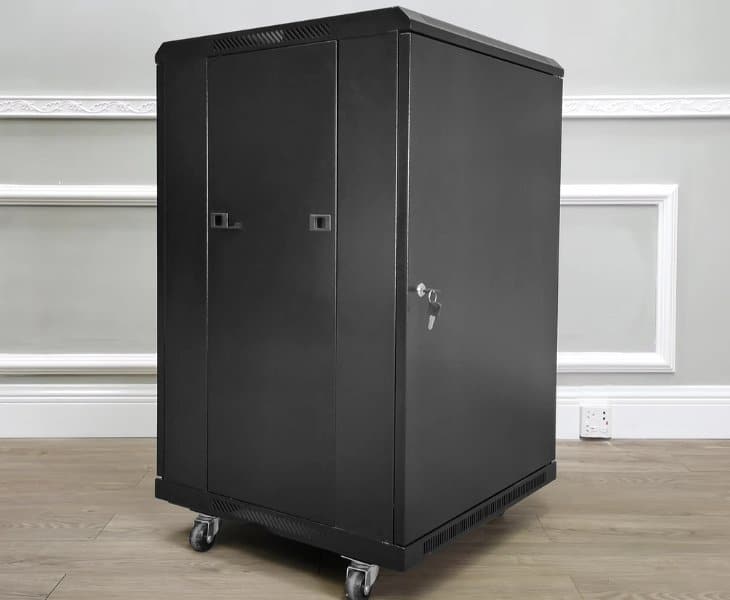
Before handover, the rack should be checked as a complete system. Confirm secure mounting, unobstructed airflow, clear cable labels, verified grounding, protected power circuits, and accessible service paths.
Photo documentation and rack elevation diagrams also make future support faster and more professional.
Chapter 4: Beyond the Rack—Trends and Innovations Reshaping AV Infrastructure
AV racks are becoming smarter, more modular, and more design-aware. Buyers who plan only for today’s equipment may face limitations as systems become more networked, monitored, and service-driven.
The Rise of Smart Racks
Smart racks support monitoring for temperature, humidity, power use, access status, and operating conditions. These features are increasingly useful in enterprise AV, command centers, education systems, and managed-service environments.
Modular Design and Tool-Free Assembly
Modular rack design helps reduce installation time and simplify expansion. Tool-free panels, adjustable rails, removable shelves, and flat-pack packaging can improve deployment efficiency for multi-site projects.
Sustainability and Passive Cooling Design
Sustainable rack design often starts with passive cooling, recyclable materials, efficient packaging, and durable finishes. Better airflow design can reduce fan dependence and improve lifecycle efficiency.
Design Aesthetics Meet Engineering Discipline
In visible installations, appearance and engineering must work together. Finish quality, color, acoustic control, and form factor should not compromise structure, airflow, or service access.
Chapter 5: The Engineering Mindset—Elevating AV Rack Procurement from Commodity to Strategy
A professional AV rack should be specified as infrastructure, not as a commodity frame. It supports thermal stability, vibration control, cable discipline, power safety, service access, and future system growth.
For procurement teams, the best rack is not always the cheapest rack. It is the one that lowers total system risk and supports long-term project performance.
Frequently Asked Questions (FAQ)
Q1: What is the standard size for an AV rack in commercial applications?
Common commercial rack heights include 27U and 42U. Depth depends on equipment size, rear cable clearance, airflow needs, and access space.
Q2: How do I ensure proper airflow and cooling in an enclosed AV rack?
Use thermal zoning, perforated panels, ventilation paths, blanking panels, and fan trays where needed. Always leave enough clearance for airflow and service access.
Q3: What’s the difference between an AV cabinet and an open-frame rack?
An enclosed AV cabinet improves appearance, security, and acoustic control. An open-frame rack improves accessibility, airflow, and cable management.
Q4: Can I order a custom AV rack system in bulk with specific materials and dimensions?
Yes. Custom AV racks can be manufactured in different sizes, materials, finishes, mounting structures, ventilation layouts, and packaging formats for OEM or wholesale programs.
Q5: What certifications should I look for in a wholesale AV rack supplier?
For international sourcing, buyers commonly look for ISO 9001 quality management, RoHS compliance, material traceability, and clear inspection documentation.
Conclusion
At Yishang Metal Products Co., Ltd., we support OEM and wholesale customers with custom metal fabrication for AV racks, equipment cabinets, display frames, control housings, and other industrial sheet metal structures. With 26+ years of manufacturing experience, we support processes including laser cutting, bending, stamping, welding, CNC machining, surface treatment, assembly, packaging, inspection, and shipment.
For AV rack projects, we help customers align material selection, load-bearing structure, ventilation design, surface finish, assembly method, and export-ready packaging with real application needs.
📩 If you are evaluating custom AV racks or equipment enclosures for your next project, send us your drawings or requirements to discuss the most suitable manufacturing approach.