
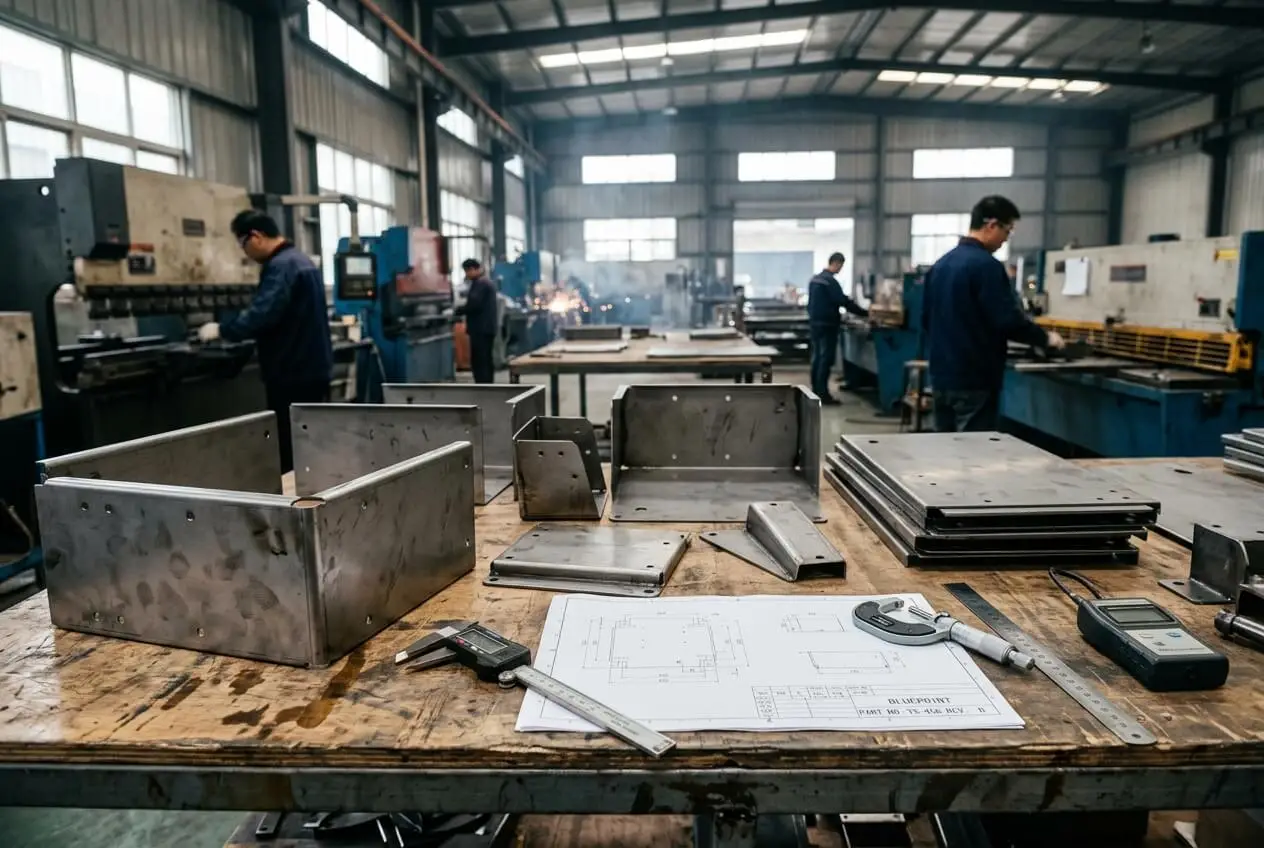
An OEM buyer sends one sheet metal enclosure drawing to three suppliers. The drawing shows laser-cut panels, bent flanges, PEM-style hardware, welded corners, and one finish note: “black powder coating.” The quotes arrive within a narrow range, so the buyer compares unit price and lead time. That comparison looks simple, but it may not be valid.
One supplier may include only degreasing and standard indoor powder. Another may include pretreatment, threaded-hole masking, and outdoor polyester powder. A third may allow extra inspection time for the visible front door. All three quote “powder coating,” but they do not quote the same production scope.
This is the procurement risk behind the benefits of powder coating. Powder coating can improve durability, corrosion resistance, appearance, handling protection, and batch consistency. Those benefits depend on choices that many RFQs leave undefined. If the buyer does not define environment, pretreatment, film thickness, masking, cosmetic zones, and inspection, the lowest price may only mean the most assumptions were left out.
For custom sheet metal fabrication, the finish is not a final decoration. It affects fabrication sequence, assembly fit, packaging, inspection, and field performance. Buyers reduce risk when they treat powder coating as part of the drawing package, not as a one-line note added after the part design is complete.
The Real RFQ Risk: Powder Coating Quotes May Not Price the Same Finish
A powder coating RFQ often fails before production starts. The drawing may define bend radii, hole sizes, weld locations, and tolerances, yet the finish note may only list a color. That short note leaves suppliers to guess the coating system, preparation level, masking effort, and cosmetic standard.
These guesses change cost. They also change the buyer’s ability to compare quotes. A lower quote may exclude masking for threaded inserts. A faster quote may assume an indoor coating for a cabinet used near an open warehouse door. A neat-looking quote may omit batch color control for panels installed side by side.
When the same words create different scopes
Consider a wall-mounted electronics enclosure. The RFQ says “RAL 9005 black powder coat.” The enclosure includes a hinged door, grounding points, threaded studs, and vent openings. Supplier A assumes a standard black finish and no special masking. Supplier B masks studs and grounding pads. Supplier C adds surface preparation around weld seams and defines the outside door as a cosmetic face.
The buyer sees three prices for one part number. In reality, the suppliers priced three different risk levels. If the project later fails grounding checks or the hinge binds after coating, the issue did not start at assembly. It started when the RFQ allowed each supplier to define the finish scope differently.
A clear RFQ does not need to become a long coating manual. It should tell suppliers where the part will be used, which surfaces customers see, which interfaces must remain clear, and which coating result controls acceptance. That information makes the benefits of powder coating measurable instead of assumed.
Missing Pretreatment Assumptions Can Turn Finish Benefits into Warranty Cost
Many buyers ask for powder coating because they expect a tougher finish than liquid paint. That expectation can be reasonable. Powder coating often provides strong coverage, good abrasion resistance, and clean appearance on sheet metal enclosures, brackets, frames, and cabinets. Yet the coating only performs as well as the surface beneath it.
Pretreatment creates one of the largest hidden differences between quotes. Cold-rolled steel, galvanized sheet, aluminum, and stainless steel need different preparation methods. Welded steel also brings heat tint, spatter, scale, and local roughness. If the RFQ does not define the service environment, suppliers may choose different preparation levels.
Outdoor use changes the quote logic
Take a folded and welded control box used under a sheltered outdoor canopy. The buyer may believe “powder coating, grey” covers the requirement. One supplier may price an indoor epoxy-polyester powder and basic cleaning. Another may quote an outdoor polyester powder with stronger pretreatment and extra attention around seams and bottom edges.
The second quote will look higher. It may also reflect the actual corrosion risk. If the lower-priced enclosure rusts around welds after installation, the cost moves from purchasing to warranty. The buyer may pay for replacement parts, customer labor, delayed commissioning, and damaged supplier relationships.
Procurement teams can prevent this chain by stating the environment before comparing prices. Useful phrases include “indoor dry office use,” “warehouse handling with occasional humidity,” “outdoor sheltered use,” or “customer-facing equipment near cleaning chemicals.” If the project needs a test target, state it early. Examples include salt spray hours, cross-cut adhesion grade, UV exposure expectations, or a film thickness range.
Yishang reviews finish notes with fabrication drawings because pretreatment choices often depend on welds, edges, hardware, and material grade. That review helps buyers avoid quotes that look cheaper only because corrosion risk never entered the scope.
Coating Build-Up Can Change Fit, Tolerances, and Assembly Labor
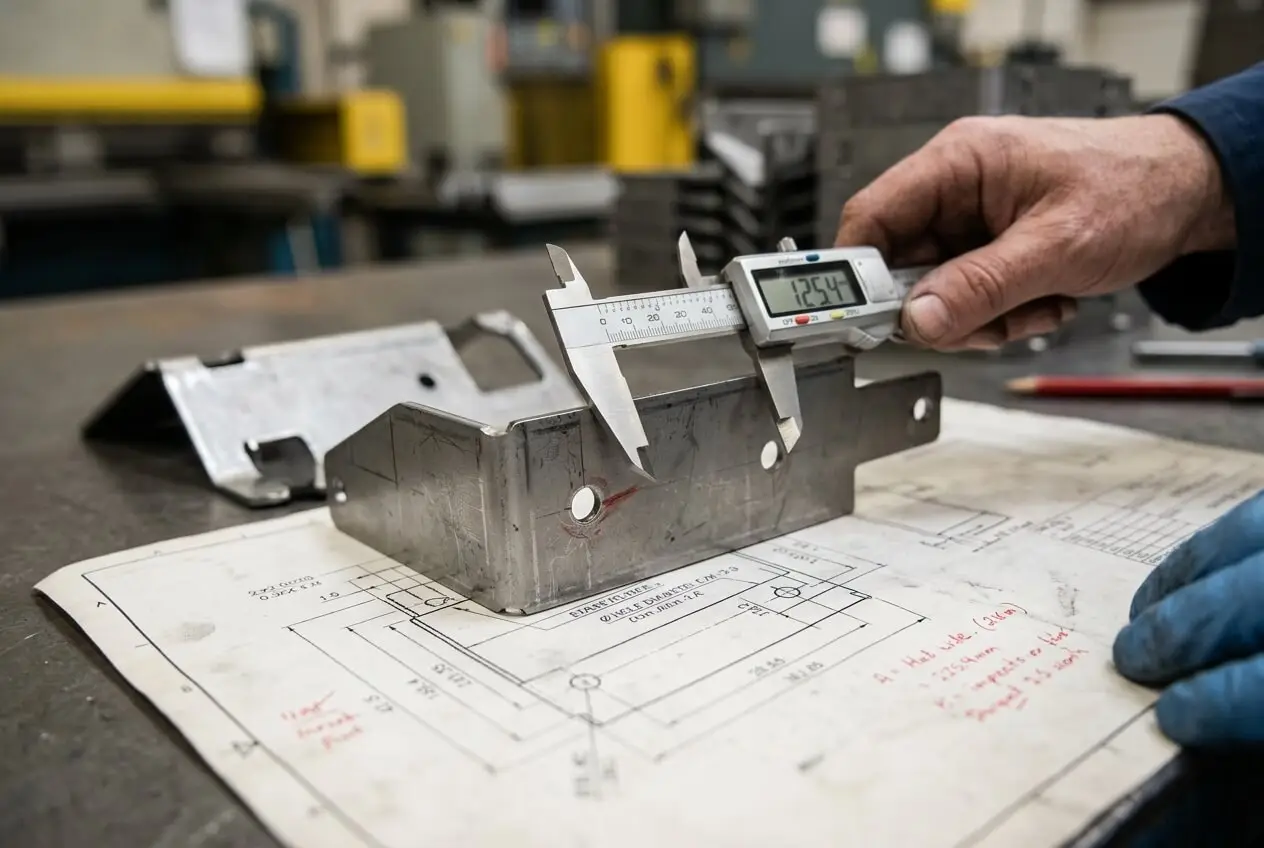
A sheet metal part can meet the drawing before coating and fail after coating. Powder adds thickness. That thickness may look small on an open panel, but it can disrupt hinges, slots, covers, rails, threaded holes, grounding pads, and mating brackets.
Many industrial powder coatings fall around 60 to 100 microns, depending on powder type and process. The exact range can vary. Build-up can become heavier at edges, corners, and recesses. Narrow gaps may coat unevenly. Threaded features may need masking or post-coating cleanup.
Fit problems often appear too late
Imagine a small instrument cabinet with a sliding rear cover. The prototype slides well because the coating build-up stays light on the rails. During batch production, operators hang parts differently and the rails receive more powder. The cover now feels tight. Assembly workers add force, scratch the coating, and lose time sorting parts.
This problem does not come from a bad powder color. It comes from an undefined functional interface. The RFQ should identify sliding surfaces, hinge locations, close-fitting covers, threaded holes, and any areas that need masking. It should also show whether final inspection includes a post-coating assembly check.
Grounding points create another common risk. A powder-coated enclosure may look excellent but fail electrical continuity because the grounding pad received coating. If the drawing does not mark that area as uncoated or masked, the supplier may treat it as a normal surface. Rework then requires sanding, masking repair, inspection, and sometimes recoating.
Masking also changes cost and lead time. Threaded studs, weld nuts, internal threads, bearing seats, nameplate zones, and conductive areas all require labor. A quote that includes masking will not match one that omits it. Buyers should not force suppliers to guess this labor. A marked-up drawing or photo often works better than a long email.
Powder coating does not hide poor edge preparation. Burrs, sharp corners, deep scratches, and uneven grinding can remain visible. Sharp edges may also receive thinner coverage. If cosmetic appearance and corrosion resistance both matter, buyers should clarify deburring, weld dressing, and visible surface expectations before awarding the order.
Prototype Approval Does Not Automatically Control Batch Appearance
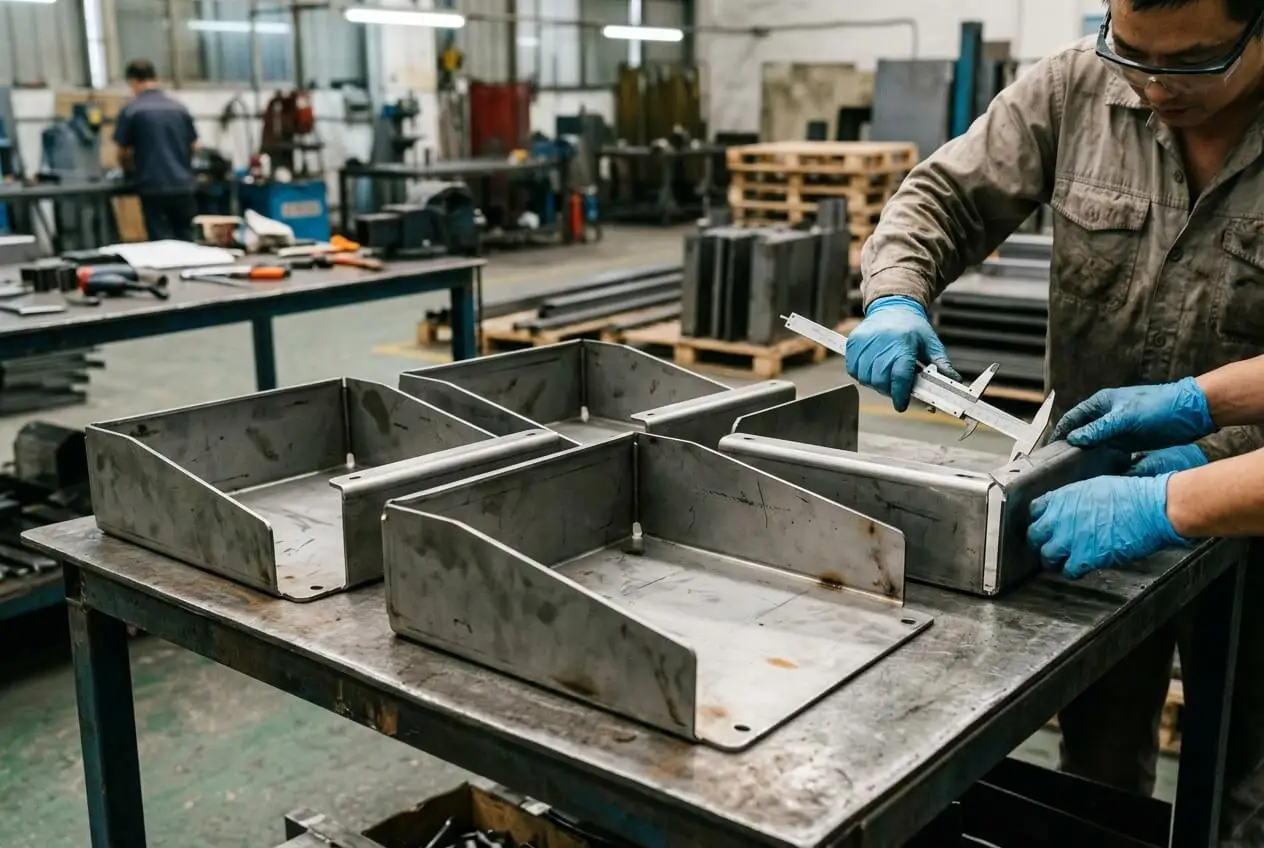
Prototype approval can reduce uncertainty, but it does not replace a finish specification. A buyer may approve one powder-coated sample and then expect every batch part to match it. That expectation can fail when production volume changes the coating process.
Batch coating introduces new variables. Operators may change rack density, hanging points, curing load, spraying angle, or inspection time. Large flat panels can show gloss differences, texture variation, or orange peel more clearly than small brackets. Cabinet doors installed side by side make slight color differences more visible.
“Same as sample” needs supporting details
A retail display frame shows the risk. The prototype frame receives careful weld grinding and a single coating run. The buyer approves the sample. Later, the batch includes many welded frames. Grinding marks vary, small spatter remains in corners, and the black coating highlights inconsistent weld dressing. The supplier points to normal production variation. The buyer points to the approved prototype.
Both sides lack a usable inspection record. The approval should have recorded visible surface zones, weld dressing expectations, accepted texture, gloss, color reference, hanger mark locations, and viewing distance. Without those details, “same as sample” becomes a weak control method.
Hanger marks deserve specific attention. A mark on a hidden inside flange may not matter. A mark on a front cabinet door can trigger rejection. Suppliers need allowed hanging areas before batch production, especially for enclosures, doors, front covers, and customer-facing panels.
Yishang often asks buyers to send prototype comments and approved samples or photos before batch quoting. That information helps align production assumptions with the buyer’s actual acceptance standard. It also prevents a sample from becoming the only reference for a much larger production run.
Clarify the Coating Scope Before You Compare Final Sheet Metal Quotes
Buyers do not need to become coating engineers to manage this risk. They need to remove the assumptions that change quotation and acceptance. The best time to do that is before final quote comparison, not after the first batch arrives.
Start with the drawing package. Add material grade, part quantity, tolerance notes, coating color, gloss or texture, and service environment. Mark cosmetic surfaces, hidden surfaces, and functional interfaces. Show threads, grounding pads, sliding surfaces, hinge areas, nameplate locations, and mating faces that need masking or protection.
A practical RFQ note for powder-coated sheet metal parts
- State the service environment, such as indoor dry use, warehouse use, or outdoor sheltered use.
- Identify the powder type when performance matters, such as indoor epoxy-polyester or outdoor polyester.
- Define the target film thickness range where fit, corrosion resistance, or appearance depends on it.
- Mark cosmetic, semi-cosmetic, and hidden surfaces on drawings or photos.
- Show masking requirements for threads, grounding pads, sliding rails, bearing seats, and mating faces.
- Confirm color reference, gloss level, texture, approved sample control, and allowed hanger mark zones.
- Ask whether post-coating assembly checks apply to covers, hinges, frames, or welded assemblies.
Cost drivers become easier to evaluate after these points are clear. Pretreatment, masking, hanging, inspection, rework allowance, packaging protection, and batch color control all affect price. Small batches may carry higher setup cost. Large batches may require stricter process control to keep color and texture consistent.
Lead time also becomes more predictable. Missing masking details can stop production. Late color changes can delay powder purchasing. Unclear cosmetic zones can create extra inspection and rework. Supplier communication improves when the RFQ shows the real part function, not only the flat pattern and bend lines.
The benefits of powder coating become strongest when the finish supports the product’s use, assembly, and acceptance standard. If the RFQ only says “powder coating,” the buyer may not receive a durable, consistent, assembly-ready finish. The buyer may receive whichever assumptions the supplier chose while quoting.
Before you award a powder-coated sheet metal project, send Yishang your drawings, material requirements, quantities, tolerances, finish expectations, color reference, masking needs, assembly interfaces, prototype notes, and inspection concerns. The team can review where coating assumptions may affect quote comparison, corrosion risk, cosmetic acceptance, or assembly fit for enclosures, brackets, frames, cabinets, panels, and welded assemblies. Contact Yishang to request a quote based on the real fabrication and powder coating scope.
Frequently Asked Questions
Why does a powder coating RFQ need more than a RAL color?
A RAL color only defines appearance direction. It does not define powder type, pretreatment, film thickness, masking, cosmetic zones, service environment, or inspection level. Without those details, suppliers may quote different scopes under the same finish note.
How do the benefits of powder coating become a procurement risk?
The benefits depend on the coating system and process controls. If the RFQ leaves key details open, one quote may include corrosion protection and masking while another excludes them. The buyer may choose the lowest price without seeing the missing work.
What powder coating details affect assembly fit on sheet metal parts?
Film thickness, masking, edge build-up, and coating on threads or sliding surfaces can affect fit. Hinges, covers, rails, slots, grounding pads, and weld nuts need clear instructions. Buyers should mark these interfaces before production.
Should prototype approval control batch powder coating?
Prototype approval helps, but it should not stand alone. Batch production may use different hanging points, rack density, curing loads, and inspection methods. Record color, gloss, texture, film thickness, masking, cosmetic zones, and hanger mark locations.
What should buyers clarify for powder-coated welded assemblies?
Buyers should define weld dressing, spatter removal, visible surfaces, pretreatment expectations, coating around seams, and allowed hanger locations. Welded areas can show roughness or adhesion problems if preparation remains undefined.
How can buyers compare powder coating quotes more fairly?
Send the same finish scope to every supplier. Include material, environment, quantity, tolerances, color, gloss, texture, masking map, cosmetic zones, film thickness needs, and inspection expectations. Then compare price, lead time, and exclusions on the same basis.