
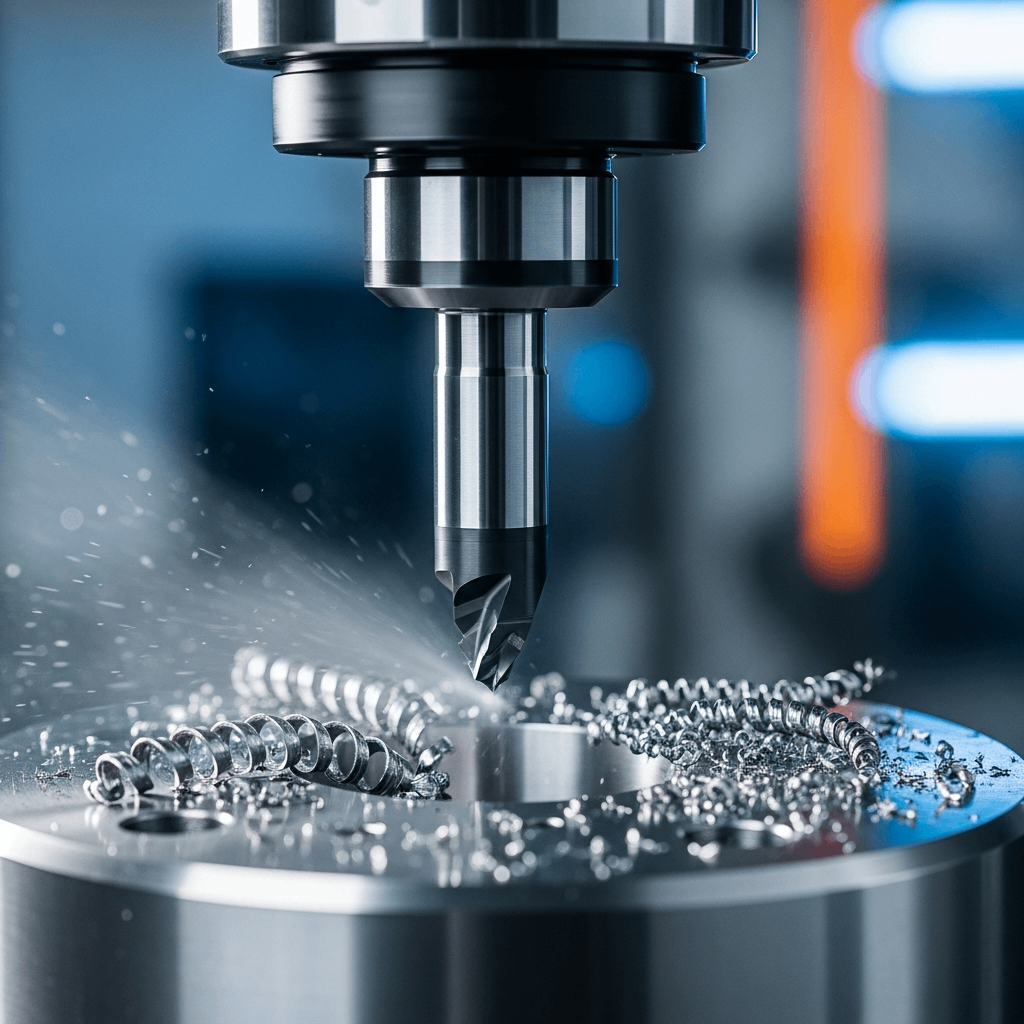
In the circles of precision metal fabrication, creating a hole is often the easy part. However, the real challenge lies in perfecting its internal geometry. This is not merely a technical metric. It directly dictates the final product’s service life and overall assembly stability. For industrial procurement managers, the true value of a component often hides in geometric precision that the naked eye cannot see. While standard drilling answers the basic need for an opening, meeting H7 or H6 tolerance standards relies entirely on the critical stage of precision boring.
At YISHANG, through our decades of factory floor experience, we recognize a fundamental truth. Wholesalers and buyers prioritize quality stability and material integrity over sheer volume. Consequently, boring machining has become the specialized solution for solving complex assembly puzzles. This is particularly true in precision components where a tiny fraction of a millimeter determines success or failure. We are not just mechanically cutting metal. Instead, we are reshaping geometric integrity to provide engineering solutions for the medical, automotive, and energy sectors.
Geometric Correction: Why Industrial Enclosures Rely on Boring
If your project involves manufacturing high-durability housing, such as a junction box NEMA or various stainless steel enclosure units, precision is mandatory. The alignment of internal components almost entirely dictates the product’s ultimate success. Therefore, the boring process performs a deep refinement of these critical entries. This ensure that hinges, specialized seals, and internal mounting plates interface with absolute accuracy. This is remarkably evident in an electrical meter box or power distribution system. Specifically, the Ingress Protection (IP) rating depends heavily on the perfect roundness and surface finish of the bored cable entries. Any minor imperfection becomes a direct gateway for moisture.
In high-stakes applications like a solar battery enclosure or control station enclosures, maintaining structural stability is often a primary headache. Unlike drilling, which can introduce localized stress or “hole wander,” boring utilizes a more uniform, single-point cut. This allows for the exact anchoring of the hole’s center axis. Consequently, whether it’s an enclosure aluminum enclosure or a steel enclosure carbon frame, this precision ensures flawless deployment. Parts delivered for rapid field use will not face assembly bottlenecks due to misalignment.
From a procurement perspective, the most immediate benefit of this process is a drastic reduction in the Total Cost of Ownership. By performing targeted boring optimization on precision milling or lathe machine setups, YISHANG effectively corrects axial deviations. These errors are often left behind during the initial casting or rough-drilling stages. This is especially vital when processing expensive material stainless steel or galvanized steel enclosure units. Raw materials are costly. Therefore, our pursuit of “first-time-right” manufacturing ensures we maintain competitive wholesale pricing without allowing scrap rates to drag down your supply chain.
Expertise in Method: Choosing the Perfect Boring Match
Choosing the right boring strategy requires an engineer to weigh the part’s size, weight, and tolerance requirements carefully.
Vertical Boring: The Heavyweight Specialist
For the “Goliaths” of the aerospace and automotive industry, the vertical boring method is usually the first choice. These parts often have large diameters and significant weight. In this layout, the workpiece is secured on a horizontal rotating table. This setup cleverly uses gravity to enhance stability. As a result, this effectively bypasses the centrifugal errors that often plague horizontal equipment when dealing with oversized frames or heavy-duty junction boxes.
Horizontal Boring: Flexibility for Intricate Parts
In contrast, when dealing with smaller and more complex parts like a push button enclosure, horizontal boring offers superior advantages. This method gives the operator more room to navigate complex multi-axis paths. YISHANG integrates digital boring heads and advanced boring machine programming here. Consequently, even in a wholesale order of thousands, the geometric precision of the last part is an exact clone of the first.
When selecting equipment, we do not just look for an open slot on the factory floor. We tailor the solution to the part’s geometry and tolerance stack-up. This thoughtful matching optimizes the cycle time. Additionally, it eliminates the need for secondary grinding or honing. These improvements result in tangible cost savings for every procurement contract.
The “Personality” of Metal: The Art of Boring Alloys
Stainless steel has always been a favorite for B2B clients, especially for corrosive marine environments. However, by material stainless steel is notoriously stubborn and prone to work-hardening. Therefore, the YISHANG engineering team equips specialized boring bar cutting inserts with advanced PVD coatings. These coatings specifically suppress the intense heat generated during the cut. Without this level of professional tooling, parts are prone to dimensional drift. Our experience is designed to cut out that uncertainty.
Meanwhile, carbon steel enclosure and galvanized units present a different set of challenges. These materials focus on chip evacuation and surface integrity. While they offer great cost-efficiency for bulk orders, improper calibration can lead to the “bell-mouth” effect. This occurs when the hole entrance becomes wider than the exit. We ensure every unit satisfies both NEMA and ISO compliance. Specifically, we do this by precisely controlling the tool’s geometric angles and coolant pressure.
| Material Type | Machinability | Common Application | Key Strategy |
|---|---|---|---|
| Stainless Steel 304/316 | Low (Difficult) | Medical/Marine Enclosures | Low RPM, High-Pressure Coolant |
| Carbon Steel | High (Excellent) | Industrial Junction Boxes | High-Speed, Coated Carbide |
| Aluminum Alloy | Very High | Control Station Enclosures | PCD Tooling, Rapid Evacuation |
| Galvanized Steel | Medium | Outdoor Infrastructure | Specialized Chip Breakers |
For projects focusing on jewellery aesthetic applications or high-end architectural hardware, surface roughness (Ra) is as critical as the diameter. In these cases, the boring machining is followed by a fine-tuning stage. This achieves a mirror-like finish without compromising the structural wall thickness. Whether your project is a steel enclosure aluminum hybrid or a pure enclosure carbon steel frame, YISHANG’s mastery ensures perfection. Functional alignment and aesthetics coexist in the same part.
Overcoming Manufacturing Hurdles: On-Site Diagnostics
In a real factory environment, solving problems in real-time defines true professionalism. Here is how we handle the toughest challenges on our boring machining lines.
- Chatter and Vibration: This is often caused by an excessive length-to-diameter (L/D) ratio. Our solution is to switch to anti-vibration boring bars. Additionally, we micro-adjust the tool’s rake angle to dissolve the resonance created by radial cutting forces.
- Hole Taper: This is usually the result of tool wear or thermal expansion. Therefore, we utilize real-time thermal compensation within the CNC system. This allows us to adjust the path and regularly rotate high-spec indexable inserts.
- Surface Roughness: Poor chip evacuation is often the culprit. Especially when handling a stainless steel enclosure, we engage high-pressure through-spindle coolant. This flushes out debris before it can scratch the processed surface.
From Blueprint to Delivery: The YISHANG Workflow
Translating your technical drawings into perfect physical parts requires a rigorous logical flow. From the moment you send your inquiry today, our engineering team steps in. We don’t just follow the print. Instead, we actively look for optimization opportunities.
- Technical Feasibility: We review your project needs to match the most suitable boring machine and material specs.
- Fixturing & Setup: For thin-walled parts like a solar battery enclosure, we design custom hydraulic fixtures. This prevents deformation caused by uneven clamping force.
- CNC Optimization: We program micro-level offsets. This dynamically cancels out deviations caused by tool wear.
- The Boring Process: We execute the cut under continuous vibration and load monitoring.
- Metrological Inspection: We utilize air gauges and Coordinate Measuring Machines (CMM). This ensures a full audit for H7/H6 compliance.
This final step 6 inspection is the ultimate gate for B2B buyers. It is vital for those managing complex supply chains. We don’t just check the diameter. Furthermore, we verify concentricity and Ra values. Consequently, when the shipment reaches your warehouse, every enclosure push button hole is in a plug-and-play state. This requires zero rework from your team.
Strategic Partnership: Solving Your Boring Challenges
Choosing a professional manufacturer like YISHANG means you’re buying more than just metal parts. You are securing a knowledgeable supply chain partner. We understand that procurement is always balanced against tight deadlines and rigid budgets. Therefore, our boring process is engineered to alleviate these pressures. We provide high-precision assurance through wholesale-scale production.
Whether your business serves the medical, automotive, or heavy infrastructure sectors, high-precision holes are a universal language for quality. We invite you to experience the qualitative change that professional boring brings to your product performance. Feel free to reach out to the YISHANG team for a quick inquiry now. Let us handle the geometric precision of your next production cycle.
Our commitment to RoHS and ISO 9001 ensures your project is compliant and reliable. From the first conversation to the final delivery of your stainless steel enclosure order, stability is our core color. We look forward to your inquiry and are ready to provide a tailored technical assessment and competitive quote.
FAQ: Boring Machining in Parts Manufacturing
Q1: What is the fundamental difference between boring and drilling? Simply put, drilling is “creating something from nothing.” It solves the basic problem of making a hole. In contrast, boring is “refining and correcting.” It takes an existing hole and corrects its alignment while locking in the exact dimension.
Q2: Why must NEMA-certified enclosures emphasize boring precision? NEMA ratings require excellent sealing. If a hole wall isn’t perfectly round, the seal won’t seat properly. This compromises waterproof and dustproof performance. Boring ensures these connections are absolutely reliable.
Q3: Can boring machining correct a hole that was drilled off-center? Yes. That is the true power of boring. Because it uses a rigid boring bar cutting tool, it can force a new, correct center axis. Unlike reaming, it does not simply follow the old path.