
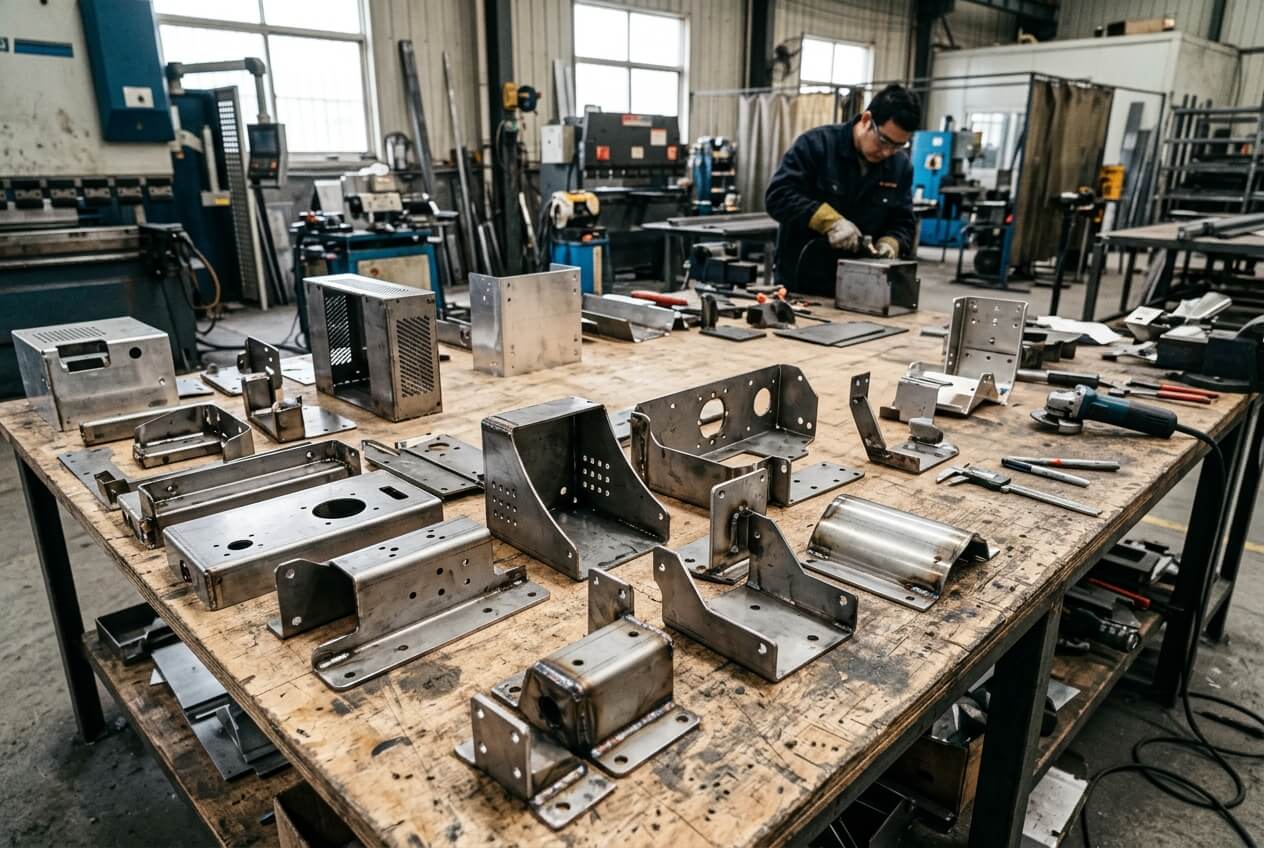
An OEM buyer sends a built to print RFQ for a powder coated equipment enclosure. The package includes a PDF drawing, STEP file, BOM, tight hole positions, welded corner seams, internal brackets, and a short finish note. Three suppliers return three very different prices.
The lowest quote looks attractive. The second price includes welding fixtures, thread masking, cosmetic inspection, and extra bend checks. The third supplier asks questions before pricing. None of these responses proves that one supplier misunderstood the job. More often, the RFQ left too much room for assumptions.
That is the main procurement risk in built to print sheet metal fabrication. The buyer believes the drawing defines the work. The supplier still has to decide which dimensions protect assembly fit, which surfaces need cosmetic control, which coating areas need masking, and which prototype features must repeat in batch production.
When the RFQ does not rank those requirements, suppliers price different versions of the same project. One quote may hide missing scope. Another may carry avoidable cost. A third may delay the process with questions that should have been answered in the RFQ. The buyer then faces quote gaps, change orders, sample disputes, late batches, or incoming inspection failures.
Where RFQ Assumptions Start to Distort Built to Print Quotes
A built to print drawing shows geometry, but it does not always show procurement intent. Sheet metal suppliers must still interpret bend control, weld sequence, coating coverage, hardware installation, packaging protection, and inspection evidence. Each interpretation changes price and lead time.
The risk starts when the RFQ uses broad language such as all dimensions per drawing, standard powder coat, or make to model. These phrases sound complete. In practice, they push decisions onto the supplier. A cautious supplier prices more control. A price-focused supplier assumes normal shop practice. Both may act rationally, yet their quotes no longer cover the same scope.
Example: equipment enclosure quote gap
Consider a control enclosure with a visible front door, internal DIN rail brackets, hinge cutouts, grounding studs, and a textured black powder coat. The drawing may show the same tolerance block for every feature. It may not identify the hinge line, door gap, lock cutout, grounding area, and front face as critical.
One supplier adds fixture time to hold the door opening square. It masks the grounding area and threads before coating. It also checks door closure after assembly. Another supplier prices the enclosure as a cut, bend, weld, and coat job. The second quote looks lower, but it may not include the controls that prevent a door from rubbing after coating.
The buyer sees a unit price difference. The real difference sits inside the assumptions. If the order goes to the lower quote without clarification, the missing scope appears later as rework, sorting, repainting, hardware misfit, or a disputed charge.
Quote comparison needs equal scope
Before comparing prices, buyers should ask what each supplier included for fixtures, masking, hardware, assembly checks, inspection reports, cosmetic standards, and packaging. This does not turn the RFQ into a long textbook. It prevents one supplier from pricing batch risk while another prices only a simple fabrication route.
Yishang can review built to print RFQ packages for sheet metal enclosures, brackets, frames, and welded assemblies when buyers need to locate these cost-driving assumptions before award. The useful question is not only whether the supplier can make the part. The better question is which requirements the quote actually protects.
When Drawings Do Not Rank Fit, Finish, and Inspection Risk
Many quote problems begin with equal-weight drawings. Every dimension appears important. Every surface appears controlled. Every note seems mandatory. The supplier cannot tell which features drive fit, safety, user appearance, or customer complaints.
This matters because sheet metal fabrication combines several variable processes. Laser cutting may hold tight locations. Bending adds variation from material thickness, grain direction, tooling, bend radius, and springback. Welding introduces heat distortion. Powder coating adds thickness and may affect slots, hinges, inserts, studs, and threaded holes.
If the RFQ does not separate critical and non-critical features, the supplier must choose a control level. Some suppliers price the whole part as critical. Others protect only the most obvious features. Neither approach gives procurement a clean comparison.
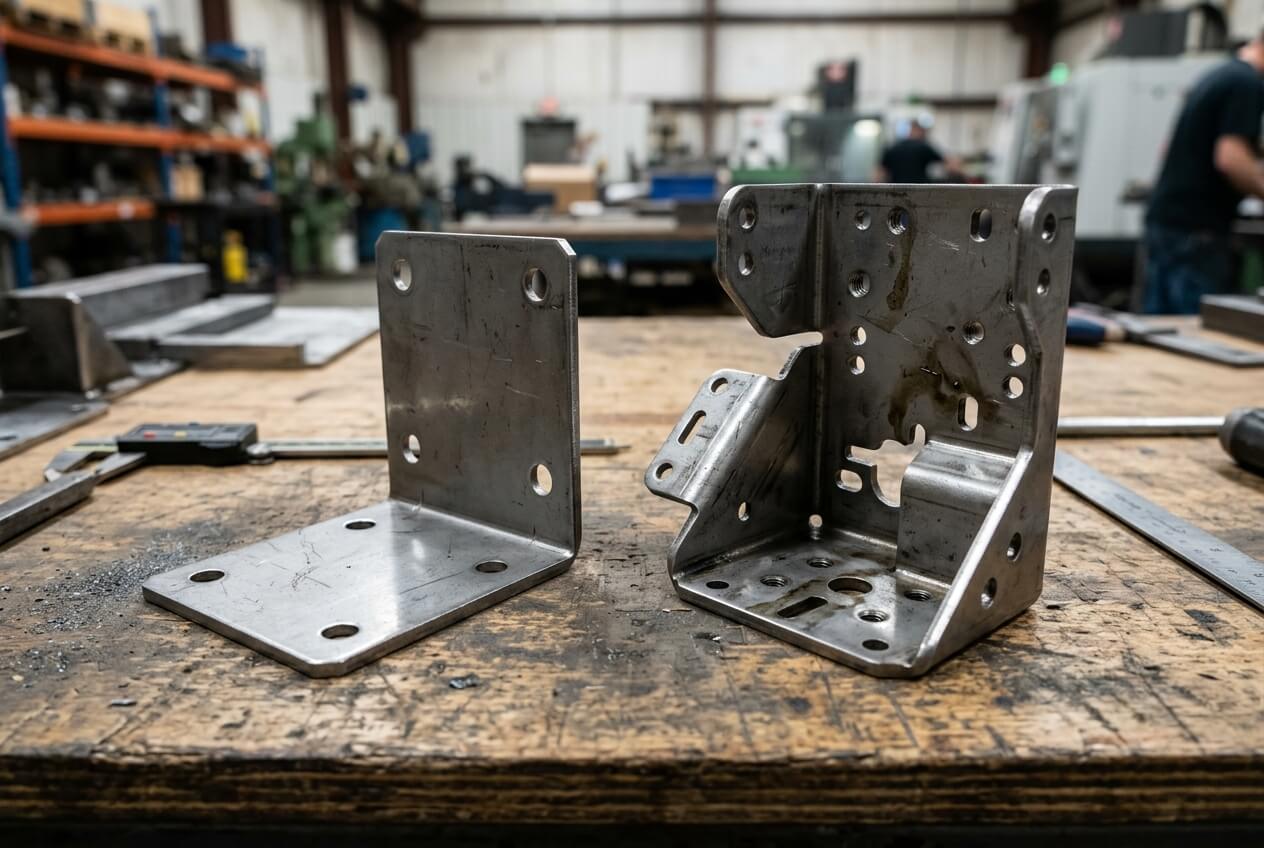
Example: mounting bracket with default tolerances
A buyer may send a laser cut and bent mounting bracket with ±0.1 mm shown across the drawing. Only two slotted holes locate the bracket inside the final machine. The outside contour, rear flange, and small corner radii do not affect assembly.
If the supplier treats every feature as tight tolerance work, the quote may include slower bending setup, more in-process checks, and a higher scrap allowance. If another supplier treats the tolerance block as a template default, the price drops. Later, incoming inspection may reject parts because the drawing still says ±0.1 mm.
The issue did not start on the shop floor. It started when the drawing failed to rank the two locating slots above the rest of the geometry. A short RFQ note could have protected the fit while allowing standard fabrication tolerance on non-mating features.
Cosmetic zones also need rank
Finish expectations create the same problem. A powder coated cabinet may have a front panel that users see every day. Internal divider plates may only need corrosion protection and stable fit. If the RFQ does not identify cosmetic zones, one supplier may price the whole cabinet to front-panel appearance. Another may reject cosmetic claims on hidden or undefined surfaces.
Buyers should identify visible faces, accepted rack mark areas, texture expectations, color reference, masking points, and packaging needs. This information controls quote risk. It also reduces arguments after parts arrive, because both sides know where appearance matters most.
How Tight Tolerances and Finish Notes Become Hidden Production Scope
Tight tolerances often aim to prevent assembly failures. Poorly targeted tolerances can create a different risk. They add cost to features that do not affect the product, while still missing the features that do.
Sheet metal parts do not behave like machined blocks. A flat laser cut blank can change after bending. A welded frame can pull out of square. Powder coating can reduce clearances. Hardware insertion can shift local flatness. These effects do not make tight control impossible, but they make selective control essential.
Where tolerance cost actually appears
Tolerance cost rarely appears as one clear line item. It enters through fixture design, slower setup, additional inspection, rework allowance, part handling, and scrap risk. A welded assembly with a tight overall diagonal may need a fixture. A bent panel with tight perpendicularity may need controlled tooling and staged checks. A coated part with tight hole clearance may need masking or post-coating verification.
For example, a welded frame for a display rack may include four mounting plates. Only two plates locate the rack to the customer fixture. The other two support light accessories. If the drawing applies the same positional tolerance to all four plates, the supplier may fixture and inspect all of them at the highest level. That adds cost without improving installation.
The opposite risk also occurs. If the RFQ does not mark the two locating plates as critical, a low quote may use a basic weld sequence. The batch then reaches the customer with small accumulated distortion. The rack can no longer bolt into the fixture without forcing.
Finish notes can change fit after inspection
Powder coating creates another assumption trap. A panel may pass dimensional inspection before coating and fail assembly afterward. Coating thickness can close up rectangular cutouts, reduce clearance around hinges, fill threads, or affect grounding contact.
A short note such as powder coat black does not tell the supplier which holes need plugs, which threads need protection, or which bare metal areas must remain conductive. If the supplier protects every opening, the quote rises. If the supplier protects none, the buyer may receive coated parts that need tapping, scraping, or sorting before assembly.
Procurement should ask one practical question for each tight or finished feature: what happens if this feature varies within normal fabrication practice? If the answer includes interference, poor door closure, failed grounding, loose hardware, visible misalignment, or rejected installation, mark it as critical. If the answer has no functional or cosmetic consequence, do not force every supplier to price it as a high-risk feature.
Why Prototype Approval Can Still Leave Batch Consistency Unpriced
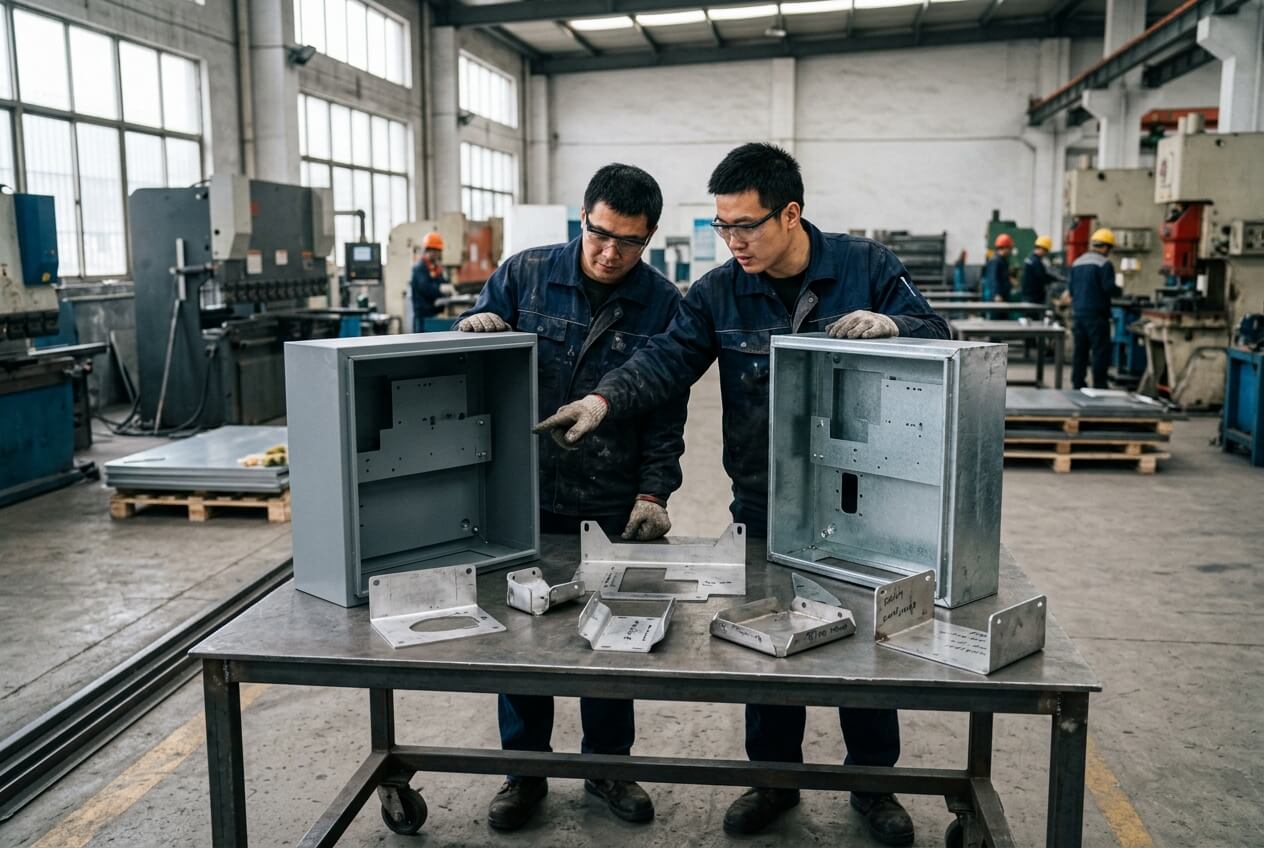
A prototype can reduce risk, but it can also hide it. Many sample parts pass because operators adjust, polish, straighten, re-drill, or handle them with unusual care. If the buyer approves the sample without recording those actions, the batch quote may not include the process needed to repeat the result.
This problem appears often in built to print metal enclosures, welded frames, brackets, and cabinet assemblies. The drawing controls one version of the job. The approved sample may represent another. Unless the buyer reconciles the two, production may follow the print while incoming inspection follows the memory of the sample.
Sample approval should capture process reality
A welded cabinet frame may look square after a technician straightens one corner and dresses several welds. The buyer sees a good sample. The supplier knows it required extra correction. If nobody updates the fixture plan, weld sequence, acceptance notes, or unit price, the batch will expose the gap.
At higher quantity, manual correction becomes expensive and unstable. A prototype can absorb extra attention. A 500-piece batch cannot depend on repeated hand fitting. That difference affects cost, yield, inspection time, and lead time.
Prototype records should capture accepted deviations, manual adjustments, finish comments, hardware fit, coating issues, and packaging observations. Photos help, but notes matter more. If the sample differs from the drawing, update the drawing revision or add controlled approval notes before releasing the batch order.
Batch consistency depends on the priced process
Buyers also need to clarify whether the prototype locks the drawing, the appearance, the process, or only the first accepted unit. This distinction prevents later disputes. A sample with an excellent front-panel finish may not define acceptable rack marks on hidden faces. A sample with smooth hinge movement may not prove that hinge alignment has enough tolerance for batch welding and coating.
Before batch release, ask the supplier which prototype controls required special handling. The answer may point to a fixture, masking step, packaging insert, inspection checkpoint, or drawing revision. Yishang can support this review during prototyping or pre-production when buyers share drawings, sample comments, finish expectations, and assembly feedback.
What to Clarify Before You Compare Supplier Quotes
The safest time to reduce RFQ ambiguity comes before price comparison. After the purchase order, every missing assumption becomes harder to change. The supplier may already have ordered material, planned tooling, scheduled coating, or locked a production slot.
Buyers do not need to over-document every flange and hole. They need to clarify the features that change consequence. A focused RFQ note can prevent suppliers from adding unnecessary cost or excluding necessary control.
Clarify the controlling package
Name the controlling drawing revision, STEP file, BOM, hardware list, finish specification, and quantity. Resolve conflicts before quotation. A 1 mm hole difference between a PDF and model may not matter on a loose cover plate. It can stop assembly on an enclosure with hinges, locks, studs, and internal brackets.
State the material grade, thickness, and any acceptable equivalent. If substitution may work, define the performance requirement instead of leaving the supplier to guess. Material assumptions affect bend behavior, welding response, finish preparation, price, and lead time.
Clarify the features that carry consequence
Mark functional dimensions such as mounting holes, hinge locations, mating edges, critical slots, threaded areas, grounding points, and interface surfaces. Identify surfaces that require cosmetic control. Confirm which openings need masking, which threads need protection, and which coating areas can accept normal rack marks.
Define the inspection evidence you expect. Some parts only need sample photos and key dimensions. Others require dimensional reports, coating checks, assembly fit checks, or pre-shipment approval. If inspection scope remains vague, suppliers will price different levels of proof.
Clarify one-time and recurring cost
Separate fixture cost, sample cost, unit cost, finishing cost, hardware assembly, packaging, and inspection reporting when they affect the decision. A low unit price may exclude a necessary welding fixture. A higher quote may include packaging protection for powder coated corners during sea freight. Without a breakdown, procurement may buy the cheapest number and inherit the missing scope.
The strongest commercial question is simple: which requirements are driving your price? That question exposes whether the supplier priced tight tolerance, cosmetic polishing, masking, fixtures, full inspection, conservative yield, or special packaging. Once buyers see those drivers, they can decide which controls protect the product and which only inflate the quote.
If your built to print quotes do not line up, send Yishang your drawings, material requirements, target quantities, tolerance notes, finish expectations, hardware list, assembly requirements, and prototype comments. The team can review where RFQ ambiguity may affect laser cutting, bending, welding, powder coating, assembly, inspection, packaging, cost, and lead time before you release prototype or batch production. Share your project details at https://zsyishang.com/.
Frequently Asked Questions
What is the biggest procurement risk in a built to print RFQ?
The biggest risk is not always missing geometry. It is unclear priority. If the RFQ does not show which dimensions, surfaces, and assembly points matter most, suppliers price different assumptions. That can create quote gaps, missing scope, rework, and batch disputes.
How should buyers mark critical dimensions without over-controlling the part?
Mark features that affect fit, safety, installation, or visible alignment. Common examples include mounting hole centers, hinge lines, mating edges, threaded areas, grounding points, and cutouts for purchased hardware. Let non-mating profiles and hidden flanges follow agreed sheet metal tolerance where possible.
Why can powder coating change the quoted scope?
Powder coating can affect fit as well as appearance. Coating buildup may reduce clearance around slots, hinges, inserts, locks, and threads. The RFQ should identify masking points, cosmetic zones, acceptable rack marks, coating texture, color reference, and any post-coating inspection needs.
Why do prototypes fail to guarantee batch consistency?
A prototype may pass because the supplier used manual adjustment, extra polishing, straightening, or special handling. If those actions do not enter the drawing, fixture plan, inspection scope, or quote, the batch may not repeat the approved sample consistently.
How should buyers handle conflicts between PDF drawings, STEP files, and BOMs?
Name one controlling drawing revision and confirm the matching STEP file, BOM, hardware list, and finish specification. Resolve differences in hole locations, cutouts, hardware, and assembly interfaces before quotation. Small file conflicts can create major assembly delays.
What should buyers send for a clearer sheet metal fabrication quote?
Send drawings, 3D files, material grade and thickness, target quantity, critical tolerances, finish expectations, hardware details, assembly fit points, inspection requirements, packaging needs, and prototype comments. This helps suppliers quote the same production scope instead of guessing.