
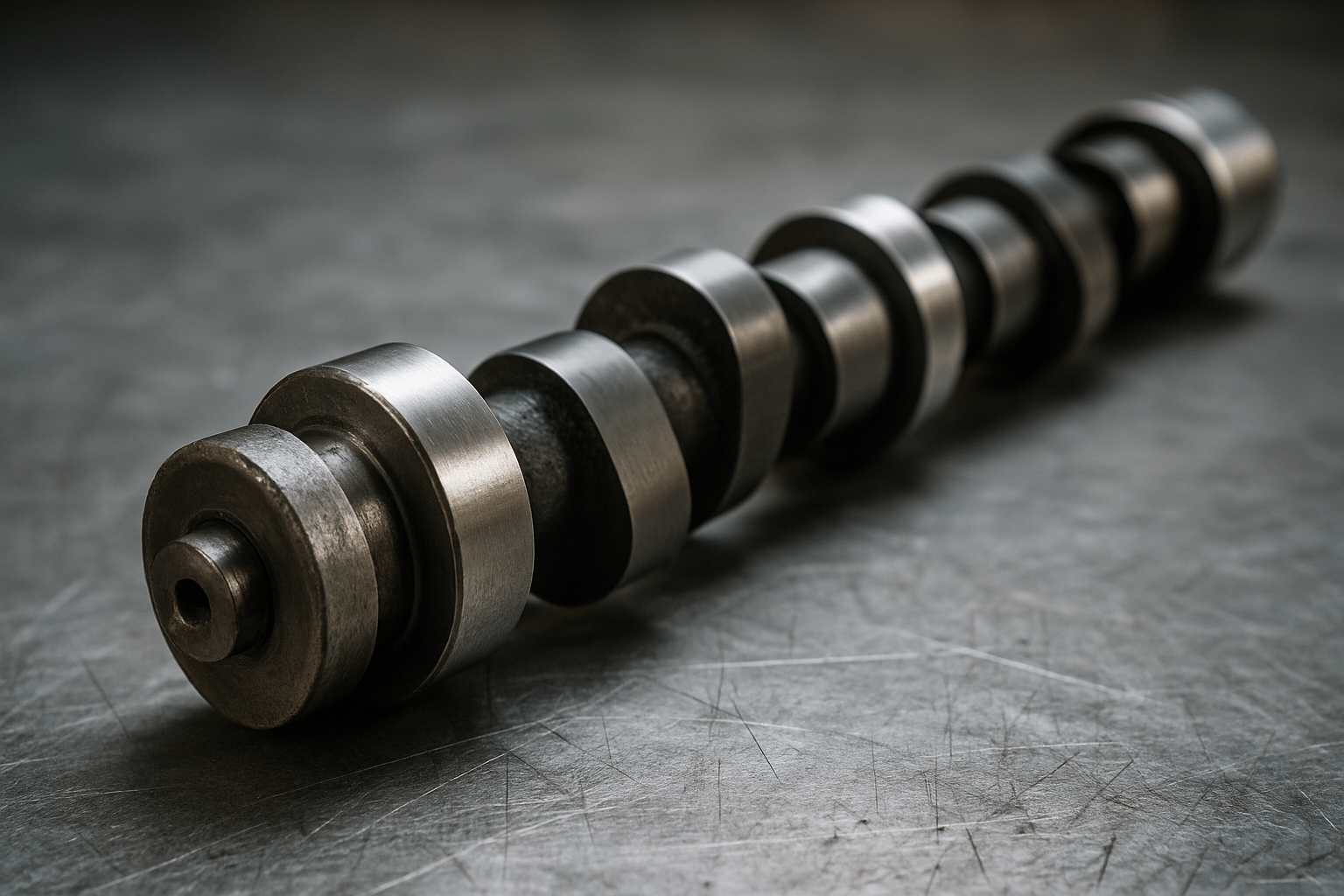
Chapter 1: What is a Camshaft and Why Does It Matter for Engine Control?
In any internal combustion engine, the camshaft functions as a core control element—regulating the opening and closing of intake and exhaust valves with precise timing. The core function of what is a camshaft lies in converting rotational motion from the crankshaft into linear actuation for the valvetrain.
This conversion governs valve timing and duration, which in turn affects everything from idle smoothness to peak power delivery. Camshaft design—particularly its lobe profile, base circle diameter, and surface finish—directly influences an engine’s operational efficiency, torque curve, and emissions behavior.
Chapter 1: What is a Camshaft and Why Does It Matter for Engine Control?
The camshaft is one of the components that most directly shapes how an internal combustion engine breathes, responds, and survives under load. Its job is not simply to rotate, but to control when the intake and exhaust valves open and close, how far they move, and how those events support combustion.
For buyers, this matters because camshaft design affects far more than horsepower. It influences idle stability, torque delivery, emissions behavior, wear rate, and service life. In other words, the camshaft is not just a metal part. It is a control component that can raise or reduce the value of the whole engine system.
Camshaft vs. Crankshaft: The Engine’s Power Couple Explained
The crankshaft converts piston motion into rotational output. The camshaft manages the valve events that make that power cycle work correctly. These two shafts are synchronized, usually through a belt, chain, or gear train, and in a four-stroke engine that relationship is normally maintained at a 2:1 ratio.
For procurement teams, understanding this difference is useful because timing stability is a system issue. If synchronization quality fails through wear, poor tension control, or weak component design, the result can quickly become a warranty or durability problem rather than a simple replacement part issue.
From Raw Metal to Rotating Masterpiece: A Glimpse into Camshaft Manufacturing
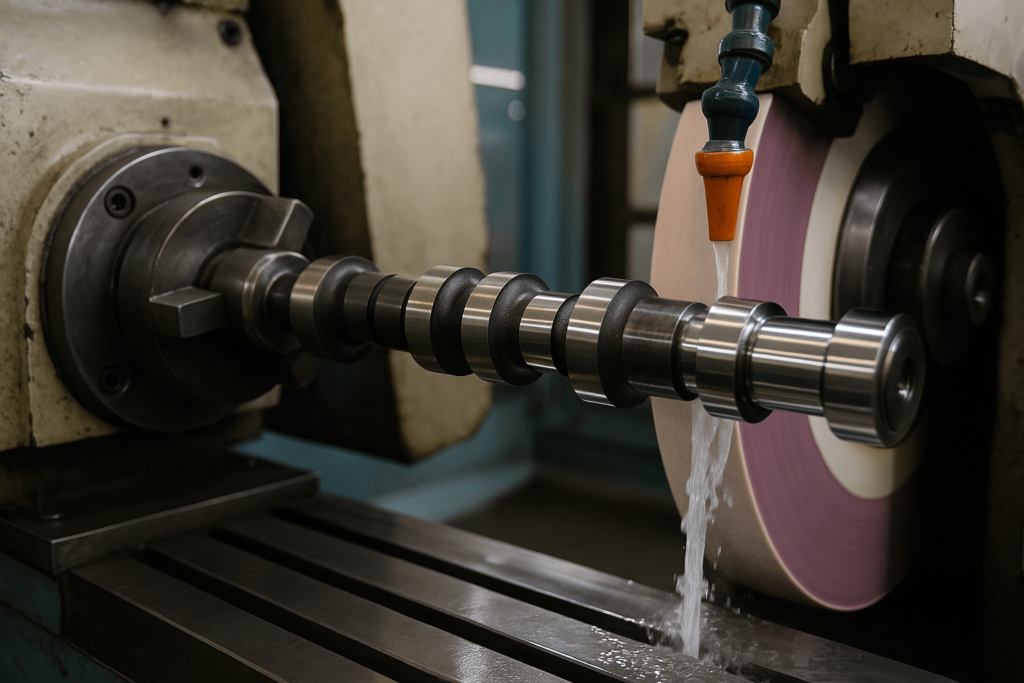
Camshaft manufacturing begins with material choice and continues through rough forming, precision machining, heat treatment, finishing, and inspection. The basic route may vary, but the principle is the same: the final camshaft must deliver stable lobe geometry, journal accuracy, and repeatable surface performance under real operating stress.
For B2B buyers, the important point is that manufacturing quality is inseparable from functional quality. A camshaft that looks correct but lacks proper hardening depth, grinding control, or concentricity discipline can still fail early in service.
Anatomy of a Camshaft: Decoding the Lobes and Journals
A camshaft is built around several core features.
- Lobes create the lift profile that controls valve motion.
- Journals support rotation within the engine and depend on a stable oil film.
- Drive features connect the camshaft to the rest of the timing system.
For buyers and engineers, these are not just component labels. They are the surfaces and features most closely tied to wear, lubrication, timing accuracy, and inspection priorities.
Chapter 2: The Language of Power – How to Read a Cam Card and Understand Performance
A cam card is the practical language of camshaft behavior. It tells engineers and buyers how the cam is intended to perform, where the powerband is likely to sit, and what kind of system behavior the engine will produce once installed.
Decoding the “Big Three” Specs
Three specifications usually matter most: lift, duration, and lobe separation angle.
- Lift defines how far the valve opens.
- Duration defines how long it stays open.
- Lobe separation angle (LSA) influences overlap, idle quality, vacuum behavior, and the way the torque curve develops.
For buyers, these numbers are useful because they show whether the camshaft is intended for broad drivability, top-end performance, smoother idle, or a more aggressive operating range.
The Overlap Secret: Where High-RPM Power and Asymmetrical Idles Are Born
Overlap is one of the most misunderstood camshaft behaviors. It helps high-RPM breathing by allowing exhaust flow to assist intake charge movement, but too much overlap can weaken low-speed stability, raise reversion risk, and complicate emissions behavior.
For procurement teams, this is important because a camshaft can look appealing from a performance perspective while still being poorly matched to the actual engine duty cycle or compliance target.
Chapter 3: A World of Designs – A Buyer’s Guide to Camshaft Architectures
Camshaft architecture determines more than packaging. It shapes valvetrain mass, response speed, complexity, maintenance demand, and the engine’s overall performance character.
Engine Architecture Showdown: Pushrod (OHV) vs. Overhead Cam (SOHC/DOHC)
Pushrod systems keep the camshaft in the block and use additional valvetrain components to move the valves. Overhead cam systems move the camshaft closer to the valves, reducing valvetrain mass and improving high-RPM control.
For buyers, the practical distinction is usually about cost, packaging, RPM demand, and maintenance philosophy rather than about one layout being universally better.
The Great Debate: Flat Tappet vs. Roller Cams
Flat tappet and roller systems differ most clearly at the contact point between lobe and follower.
- Flat tappet designs are more cost-sensitive and proven, but they depend heavily on lubrication quality and correct break-in.
- Roller systems reduce friction and allow more aggressive lobe behavior with less wear risk.
For wholesale buyers and OEM teams, the real comparison is not just component price. It is durability, maintenance exposure, lubrication sensitivity, and lifecycle cost.
Quiet & Maintenance-Free vs. High-RPM Stability: Hydraulic vs. Solid Lifters
Hydraulic lifters reduce maintenance by compensating for lash automatically. Solid lifters demand adjustment, but they reward the user with stronger stability in high-speed or more extreme operating conditions.
For buyers, this decision usually comes down to whether the application values low maintenance and quiet operation or high-RPM precision and controlled valvetrain behavior.
Chapter 4: Material Matters – Choosing the Right Camshaft for Your Application
Camshaft performance depends heavily on material engineering. The base material, hardening route, and surface treatment all influence fatigue resistance, wear performance, dimensional stability, and long-term reliability.
Cast Iron vs. Billet Steel – Functional Differences Beyond Price
Cast iron remains attractive for high-volume production because it balances cost and useful wear performance well in many standard applications. Billet steel is typically chosen where the engine faces higher spring loads, higher RPM, more severe duty cycles, or stronger fatigue demands.
For buyers, the real distinction is not “cheap versus expensive.” It is production efficiency versus maximum durability margin.
Surface Treatments – The Invisible Shield of Durability
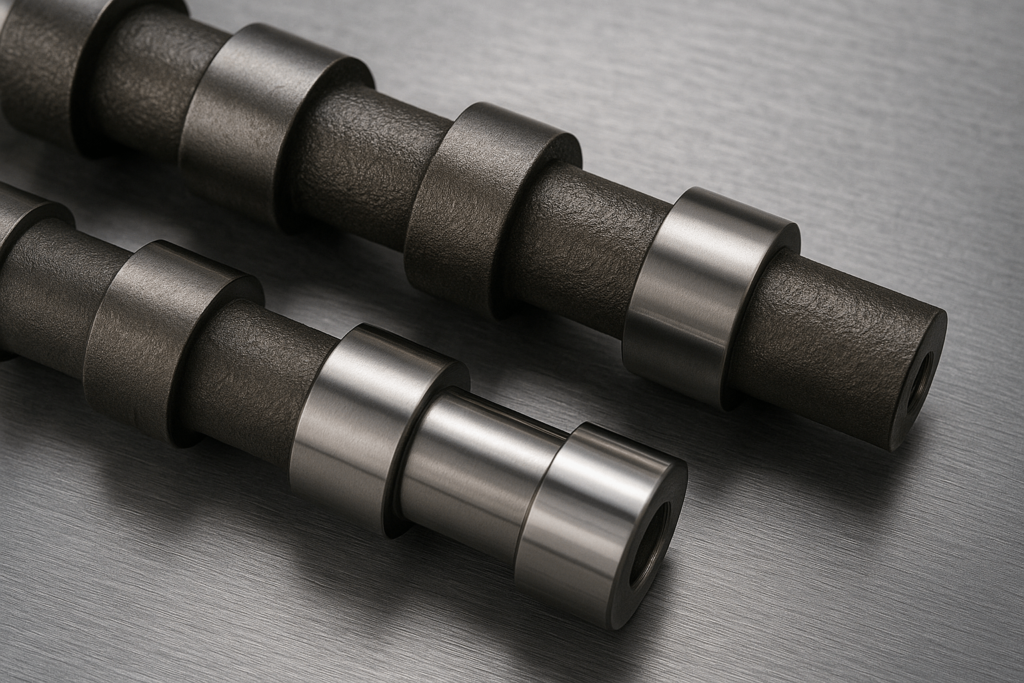
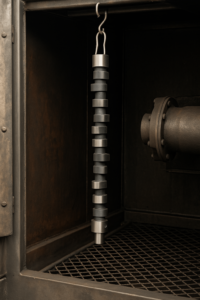
Surface treatment is one of the hidden performance drivers in a camshaft program. Nitriding, phosphate coating, and selective hardening all influence how the lobe and journal surfaces behave under load and lubrication stress.
For procurement teams, this means surface treatment should be reviewed as part of the engineering specification, not treated as an optional cosmetic step.
Matching Camshafts to Applications – Practical Reference Table
Different operating environments demand different combinations of material, lifter strategy, and finishing route.
| Application Type | Material | Lifter Type | Recommended Finish |
| Passenger car, naturally aspirated | Cast iron | Hydraulic flat | Chill-hardened lobes |
| Turbo diesel truck | Billet steel | Roller | Nitrided + phosphate |
| Off-highway generator | Billet steel | Mechanical roller | Deep nitriding + QA tracing |
| Agricultural machinery | Cast iron | Hydraulic roller | Chill + anti-rust coating |
This kind of application matching helps buyers avoid over-specifying parts in mild conditions while still protecting reliability in harder-duty programs.
Why Material Engineering Matters for Procurement
For procurement teams, good material engineering improves more than part life. It supports better predictability in warranty exposure, maintenance intervals, and batch-to-batch consistency. That is why buyers should review material, treatment depth, hardness route, and inspection evidence together.
Chapter 5: Diagnosing Trouble – Common Camshaft Failure Modes and Root Causes
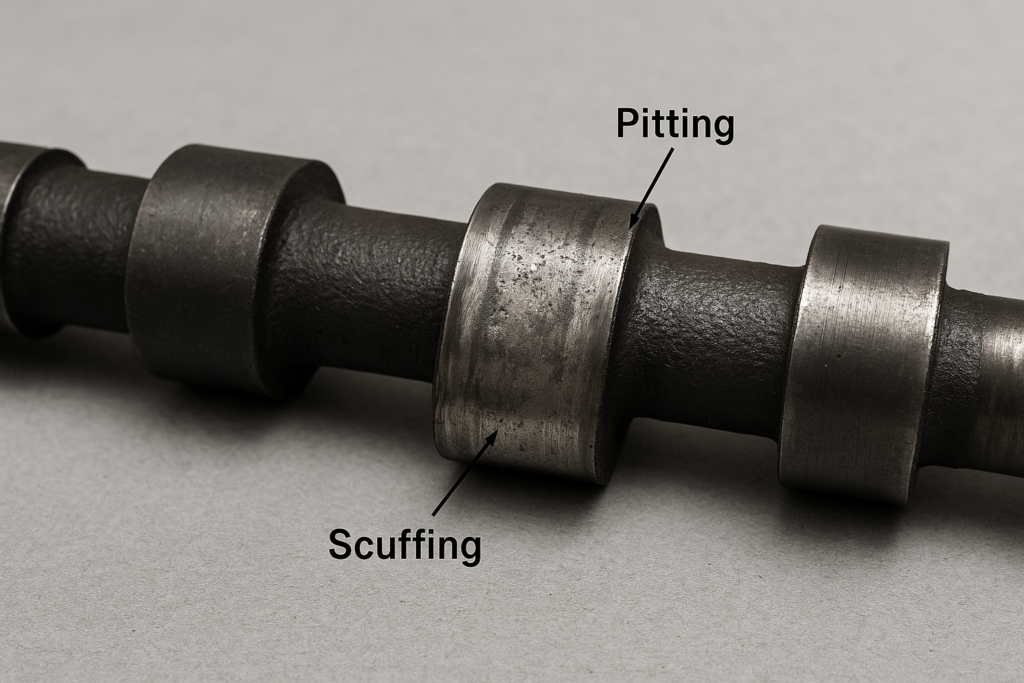
Camshaft failures rarely happen without leaving evidence. Wear patterns, scuffing, pitting, fracture, seizure, and thrust damage usually point back to a combination of lubrication conditions, installation quality, load mismatch, or material inconsistency.
Failure Doesn’t Lie – It Leaves Patterns
Wear on the lobe, scoring on journals, endplay-related damage, or fracture across a stressed section all provide diagnostic clues. For buyers and OEM teams, pattern recognition matters because the visible symptom is rarely the full story.
Root Cause Thinking – Engineering the Solution, Not the Symptom
A proper failure analysis should connect the part damage to the system conditions that caused it. That may include spring mismatch, oil contamination, incorrect assembly torque, poor hardening consistency, or timing-system issues.
For buyers, this is especially important in supplier discussions. Corrective action should address the real cause, not just replace the damaged camshaft.
Preventive Maintenance and Supplier Assurance
Preventive control starts with supplier process discipline, lubrication validation, dimensional checks, and traceability. The more severe the duty cycle, the more important it becomes to verify process consistency before the parts reach the field.
Chapter 6: Looking Forward – The Future of Camshaft Technology
Camshaft design is evolving alongside stricter efficiency, emissions, and control demands. Even where the camshaft remains a mechanical part, it now exists in a more electronically managed engine environment.
Variable Valve Timing (VVT) and Intelligent Control Systems
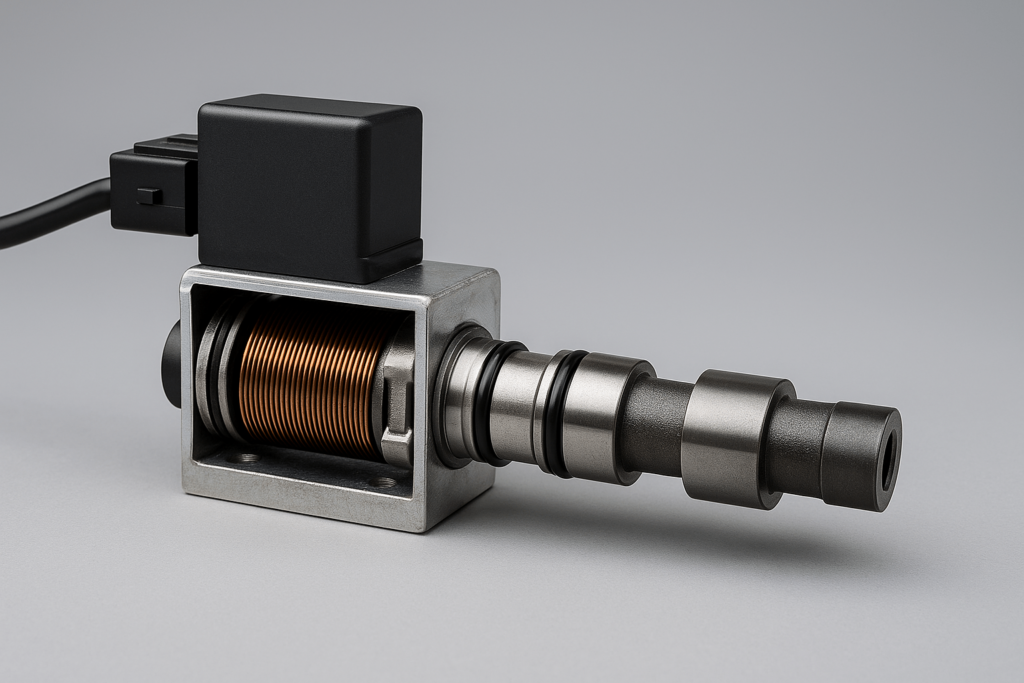
VVT systems allow the timing relationship to shift dynamically, improving efficiency across different load and speed conditions. For buyers, this means tighter requirements on camshaft precision, phasing control, and long-term synchronization stability.
The Camless Revolution – Emerging Electromechanical Actuation
Camless systems represent a more radical future direction by replacing fixed mechanical actuation with electronically controlled valve events. They remain limited in mainstream deployment, but they are important because they show where high-flexibility engine control may go next.
Hybrid Integration – A Future of Coexistence
For the foreseeable future, conventional camshafts, VVT systems, and more advanced control approaches are likely to coexist. That means buyers will continue to need camshaft-related components, but with growing emphasis on lighter structures, tighter precision, and system integration.
FAQ
Q1: Can I reuse a camshaft during engine rebuilds?
Reuse may be possible if the journals and lobes remain within specification and no serious wear patterns are present. Proper inspection is essential before making that decision.
Q2: What’s the best camshaft material for commercial heavy-duty engines?
Billet steel with an appropriate hardening route is often preferred where the engine faces high load, high cycle stress, or long service expectations.
Q3: What role does the camshaft play in emissions compliance?
Valve timing, overlap behavior, and phasing strategy all influence combustion cleanliness and exhaust characteristics.
Q4: Should I opt for hydraulic or solid lifters in industrial machinery?
That depends on whether the system values lower maintenance and quieter operation or stronger high-speed stability and lash control.
Q5: Do aftermarket camshafts require different oil?
In some cases, yes—especially where flat tappet systems or break-in sensitivity require oil chemistry suited to high-contact-pressure surfaces.
Conclusion
At Yishang Metal Products Co., Ltd., we support OEM and wholesale customers with custom metal fabrication for engine-related brackets, housings, structural parts, and other industrial metal components. With 26+ years of manufacturing experience, we support processes including laser cutting, bending, stamping, welding, CNC machining, surface treatment, assembly, packaging, inspection, and shipment.
For projects involving engine-component supports or related custom metal parts, we help customers align manufacturing precision, durability expectations, and export-ready quality control with actual application needs.
📩 If you are evaluating custom engine-component brackets, housings, or related metal parts for your next project, send us your drawings or requirements to discuss the most suitable manufacturing approach.