

An OEM buyer requests a black powder coated aluminum enclosure for a humid loading dock. The drawing shows aluminum sheet, a visible front door, several PEM inserts, and a color note. Three suppliers quote the job. One offers the lowest price. One includes standard pretreatment and powder coating. One asks about coating thickness, masked holes, salt exposure, drainage, packaging, and cosmetic inspection distance.
The keyword question, can aluminum rust, sounds simple. Aluminum does not rust like carbon steel because it contains no iron. It can still oxidize, pit, stain, discolor, or show coating failure. Those defects become commercial problems when the drawing leaves the finish standard open.
The dominant buyer risk is RFQ ambiguity. The buyer expects a clean visible part. The supplier quotes a functional industrial finish. Both sides may act reasonably, yet the batch can still fail incoming inspection. That gap usually starts before production, inside a short finish note such as “powder coat black” or “brushed aluminum clear coat.”
For overseas procurement teams, this risk often appears after freight, customs clearance, and internal assembly scheduling. A cabinet door may meet dimensions but show white oxidation around uncoated cutouts. A display panel may look acceptable to the fabricator but fail a retail cosmetic standard. A welded aluminum frame may fit before coating, then bind after coating buildup. The quote looked complete, but the acceptance condition was never fully priced.
This article treats “can aluminum rust” as a quotation and acceptance risk for aluminum sheet metal parts. It explains how buyers can define corrosion appearance, cosmetic faces, coating thickness, masking, prototype approval, batch consistency, and assembly fit before comparing supplier quotes.
Vague Finish Notes Turn a Corrosion Question Into a Quote Assumption
Aluminum resists red rust, but it does not resist every environment or every inspection standard. It naturally forms a thin oxide layer. That layer can protect the surface in many indoor applications. In salt air, trapped water, chlorine, chemical vapor, or mixed-metal contact, the surface can still corrode or stain.
Procurement trouble starts when the RFQ only names the material and coating. A note such as “aluminum, powder coat, outdoor use” leaves too much room for interpretation. One supplier may assume mild outdoor exposure under cover. Another may assume coastal air and add stronger pretreatment. A third may quote basic coating because the drawing does not mention salt, washdown, or customer-facing appearance.
Those assumptions change unit price, lead time, scrap allowance, inspection effort, and packaging. They also change the supplier’s responsibility when parts arrive with visible defects. If the RFQ never defines the rejection condition, both price and quality become unstable.
The Real Question Is What Would Fail Inspection
Buyers should not stop at asking whether aluminum can rust. They should define what visible condition would fail the part. White powder, grey clouding, pitting, water stains, color mismatch, exposed edges, handling scratches, and coating chips all carry different meanings. Some may be acceptable inside a cabinet. The same marks may fail on a front panel.
Consider an aluminum control cabinet installed in a damp warehouse. The buyer requests black powder coating and a neat visible door. The supplier coats the exterior well but leaves minor bare marks near internal grounding points. If the RFQ explains that only the exterior door and side panels are cosmetic, the parts may pass. If the buyer later treats every exposed area as cosmetic, the batch becomes a dispute instead of a controlled requirement.
The RFQ should connect the service environment to the acceptance standard. State whether the part works indoors or outdoors, sheltered or exposed, coastal or inland, dry or washdown. Then identify which surfaces the end user sees. This single step helps suppliers quote the finish system that matches the real risk.
Unmarked Cosmetic Faces Make Suppliers Price Different Products
A sheet metal drawing can define geometry well and still hide finish risk. Aluminum enclosures, brackets, cabinets, frames, and display panels rarely need the same appearance on every surface. A visible front panel may need tight cosmetic control. A rear flange may only need functional coating. An internal bracket may allow marks that would fail on a customer-facing door.
When buyers do not mark cosmetic faces, suppliers must guess. Some quote a normal fabrication finish. Others add sanding, polishing, cleaner hanging positions, extra masking, and tighter packaging. The drawing may look identical, but the quoted product is not identical.
This creates a procurement trap. The lowest quote may omit cost that the buyer assumes is included. A higher quote may include finish controls that the RFQ never requested clearly. Price comparison then rewards the supplier with the most optimistic assumption, not the supplier with the best manufacturing plan.
Cosmetic Geography Belongs on the Drawing
Mark A-surfaces, secondary visible faces, and hidden faces directly on the drawing or an attached inspection sheet. Add acceptance notes for scratches, stains, polishing lines, orange peel, hook marks, and color variation. Include an inspection distance and lighting condition when appearance matters. A visible display panel inspected at arm’s length needs different controls from a hidden mounting plate.
A brushed aluminum display rack shows the risk clearly. The RFQ says “brushed aluminum with clear coat.” The buyer expects consistent grain on all front-facing parts. The supplier assumes normal grain variation because the drawing does not mark grain direction or cosmetic faces. During batch production, a few panels show different brushing direction near bend lines. The parts function, but the retail customer rejects the display.
The cost did not come from aluminum corrosion alone. It came from undefined appearance control. A clearer RFQ could have required grain direction, visible face protection, approved sample photos, and packaging that prevents surface rubbing. The supplier would then quote the extra handling before production, not after rejection.
Yishang can review drawings for aluminum panels, enclosures, and display parts when buyers need cosmetic surfaces separated from hidden functional surfaces. That review works best when buyers provide photos, product use context, and any existing sample standard.
Masking and Coating Thickness Can Protect the Finish but Damage Assembly Fit
Finish decisions do not only affect corrosion appearance. They also affect assembly. Powder coating, paint, anodizing, and pretreatment can change dimensions around holes, slots, bends, seams, and mating surfaces. If the RFQ ignores those areas, the batch may look clean but assemble poorly.
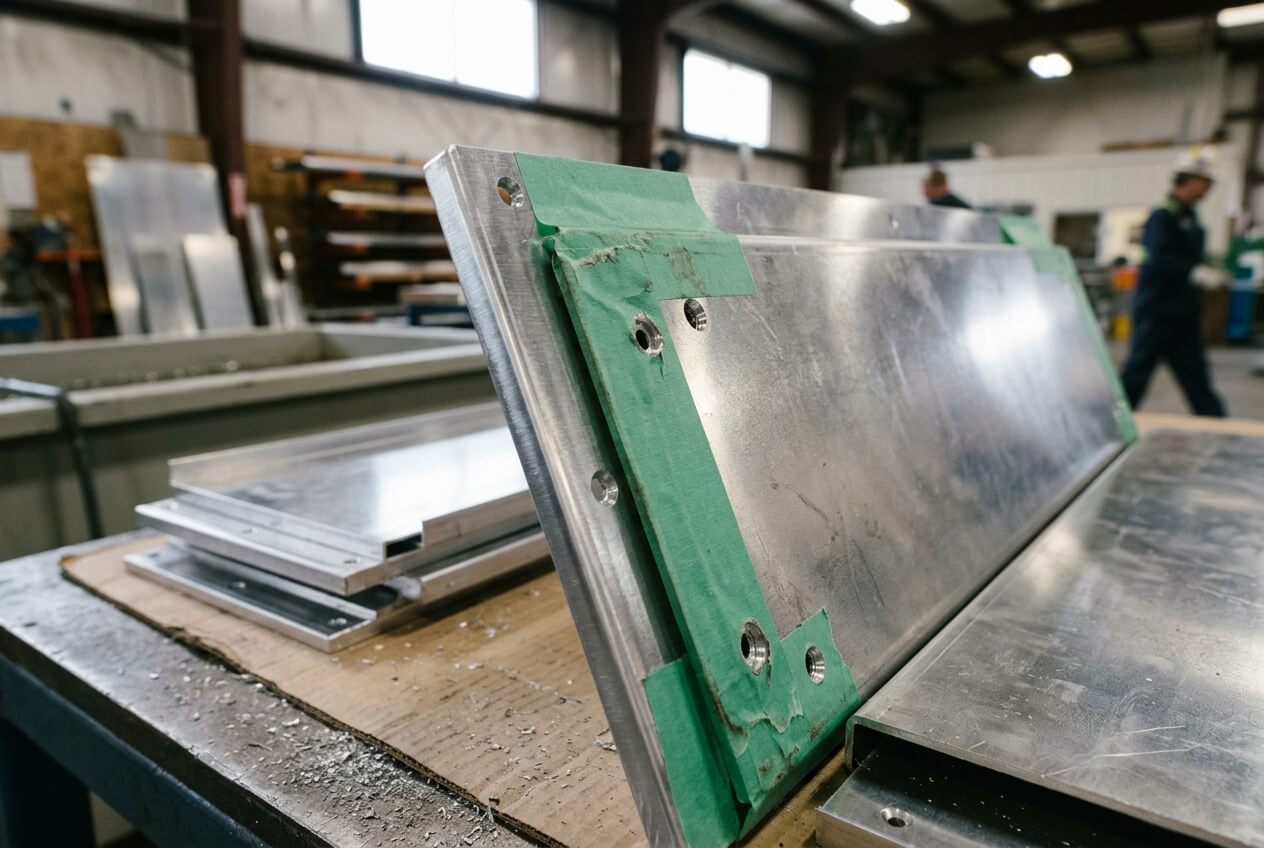
Powder coating can build on edges, inside corners, countersinks, threaded holes, hinge areas, and sliding features. A small buildup may matter little on a large cover. The same buildup can block a press-fit insert, tighten a slot, or make a removable panel scrape during installation. Aluminum buyers often discover this after approving a bare metal prototype.
Masking adds another layer of risk. Buyers may need bare aluminum for electrical grounding, flat contact, threaded engagement, or hinge movement. Bare areas can oxidize over time. Coated areas can interfere with assembly. Neither choice is automatically correct. The RFQ must tell the supplier which function matters more at each location.
Small Unclear Areas Create Large Rework Costs
Take an aluminum electronics enclosure with M4 threaded inserts and a removable cover. The drawing calls for powder coating but does not mark masked holes. The supplier coats the parts fully. During assembly, screws drag through coated threads, cover holes feel tight, and the coated edge chips around the opening. The buyer now faces sorting, tapping, touch-up, and delayed final assembly.
The problem started with one missing note. The drawing should have stated which threads, grounding pads, hinge pins, and mating faces require masking. It also should have stated whether critical dimensions apply before or after coating. Without that note, suppliers may quote different inspection logic. One checks the bare fabricated part. Another checks the finished part. A third adds clearance before coating but prices extra engineering time.
For brackets and frames, mixed-metal contact can create a different consequence chain. An aluminum bracket may mount to stainless steel hardware or a carbon steel frame. In damp service, galvanic corrosion risk can rise. The answer may involve isolation washers, coating separation, sealant, drainage changes, or a revised joint design. The RFQ should describe the mating materials and environment so the supplier can flag the risk before tooling, welding, or finishing.
Buyers should connect tolerance notes to finish notes. List critical holes, slots, tabs, hinge areas, sliding covers, PEM fasteners, and mating surfaces. State the required finished condition. This protects the buyer from receiving attractive parts that fail the assembly station.

Prototype Approval Can Hide the Batch Conditions That Cause Rejection
Prototype approval reduces risk only when it records the right details. A single aluminum prototype may receive extra attention. A technician may polish one panel carefully, choose the best hanging position, clean threads by hand, or pack the sample separately. The buyer approves the part. Batch production then uses normal handling, normal hanging, and normal packaging.
This difference can surprise procurement teams. The approved sample becomes an emotional benchmark, but the RFQ never converted it into production rules. The supplier compares the batch to a general shop standard. The buyer compares it to the best-looking prototype. That mismatch can trigger finish rejection even when the base process stayed consistent.
Approval Notes Should Control Repeatability
Strong prototype approval notes define what must repeat and what may vary. They can state that color is approved, front face hook marks are not allowed, inside flange marks are acceptable, M4 threads require masking, and coating thickness must stay within a defined range because cover fit is tight. These notes give production staff a practical standard.
A welded aluminum frame offers a useful example. The prototype fits the customer’s equipment after hand adjustment. The buyer approves the sample and orders 500 pieces. In batch production, weld distortion, coating buildup near mounting pads, and small hole-location variation combine. The frames require force during installation. The supplier argues that each individual feature sits within a broad tolerance. The buyer sees a failed assembly.
The earlier clarification should have focused on the finished assembly condition. The RFQ needed fixture requirements, critical mounting dimensions after finish, coating restrictions on contact pads, and first-article inspection photos. It also needed a decision on whether the prototype represented visual appearance, fit, or both.
Batch packaging deserves the same discipline. Aluminum shows scratches, rub marks, fingerprints, and oxidation spots when large visible faces touch during transit. Flat cabinet doors and display panels need separators, film, foam, or individual wrapping when appearance matters. If packaging requirements enter the discussion after rejection, they become a cost dispute. If they enter the RFQ, they become a quoted control.
Yishang supports prototype and first-article review for custom sheet metal fabrication projects when buyers need finish appearance, masking, and assembly fit carried into batch production. The useful input is specific: drawings, sample photos, critical dimensions, finish limits, and packaging expectations.
Compare Aluminum Quotes Only After the Rejection Risk Is Priced
A low aluminum fabrication quote may be accurate for the assumptions behind it. The problem arises when those assumptions do not match the buyer’s acceptance standard. “Can aluminum rust” becomes a useful sourcing question only when it leads to clearer RFQ details.
Before comparing prices, buyers should send the supplier the full rejection context. Include drawings, quantities, material grade, thickness, exposed environment, mating materials, finish type, color, coating thickness range, masked zones, cosmetic faces, tolerance-sensitive features, prototype requirements, inspection rules, and packaging expectations. Add photos of the final product or installation area when drawings do not explain use conditions.
This does not mean every aluminum part needs premium finishing. Many internal brackets, frames, and hidden covers only need practical corrosion resistance and clean fabrication. Over-defining low-risk parts can raise cost and slow lead time. The goal is to define the risk that would actually cause rejection, rework, field complaints, or assembly delays.
What Belongs in the RFQ Before Price Comparison
For humid or outdoor products, describe the environment in plain language. Mention coastal air, rain exposure, washdown, chlorine, chemical vapor, or trapped moisture. For visible products, mark cosmetic faces and define acceptable marks. For tight assemblies, state which dimensions apply after finishing. For electrical or mechanical contact, identify grounding pads, threaded holes, hinges, slots, and mating faces that need masking or special control.
Cost drivers then become visible. Better pretreatment, tighter cosmetic inspection, masking labor, controlled hanging, thicker packaging, first-article reporting, and post-finish assembly checks all require time. Lead time may also change when suppliers need approved samples, finish panels, or special packaging materials. Clear RFQ information lets procurement compare complete quotes instead of discovering omitted controls later.
Yishang can review aluminum enclosures, sheet metal parts, brackets, frames, cabinets, and welded assemblies during RFQ preparation. Send drawings, material requirements, quantities, tolerances, finish expectations, masking needs, prototype notes, and service environment details. The goal is to align the quoted process with the rejection risk before production begins.
The practical answer to “can aluminum rust” is this: aluminum will not develop red steel rust, but it can still fail through oxidation, corrosion marks, coating defects, or assembly interference. Buyers prevent that failure by pricing the real acceptance standard into the RFQ from the start.
Frequently Asked Questions
Can aluminum rust on powder coated sheet metal parts?
Aluminum does not rust like carbon steel because it contains no iron. Powder coated aluminum can still show white oxidation, pitting, staining, edge corrosion, or coating failure. Buyers should define the service environment, cosmetic faces, pretreatment, coating thickness, masking, and inspection standard before approving a quote.
Why do aluminum finish requirements change supplier quotes so much?
Suppliers price different assumptions when the RFQ lacks detail. Cosmetic sanding, pretreatment, masking, controlled hanging, coating thickness checks, protective packaging, and stricter inspection all add cost and time. A low quote may exclude controls that the buyer expects during incoming inspection.
What should buyers mark on drawings for visible aluminum panels?
Buyers should mark A-surfaces, secondary visible faces, hidden faces, grain direction, acceptable scratches, color variation limits, hook mark locations, and inspection distance. These notes help the supplier distinguish a customer-facing panel from a normal functional sheet metal surface.
Should aluminum part dimensions apply before or after coating?
For critical assembly features, buyers should state whether dimensions apply after coating. Powder coating can tighten holes, slots, hinges, sliding covers, countersinks, and mating surfaces. Finished-condition requirements reduce disputes when a part looks good but fails during assembly.
Why can an approved aluminum prototype still fail in batch production?
A prototype may receive extra polishing, hand fitting, manual thread cleanup, careful hanging, or special packaging. Batch production needs written controls for cosmetic faces, masking, coating thickness, critical dimensions, acceptable variation, and packaging. Approval should record what must repeat.
What RFQ details should buyers send for aluminum enclosures or welded assemblies?
Send drawings, material grade, thickness, quantities, tolerances, finish expectations, coating thickness, masking zones, mating materials, assembly photos, prototype notes, service environment, inspection criteria, and packaging requirements. These details help the supplier price the real rejection risk.