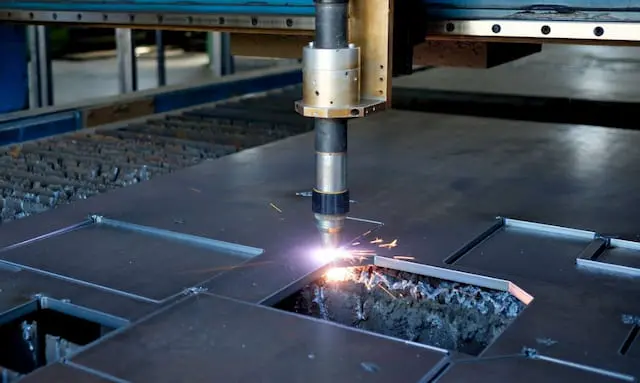
Yes, aluminum can be cut with a plasma cutter. However, aluminum behaves differently from many other metals, so the cutting result depends strongly on thickness, machine setup, operator control, and final part requirements.
In some projects, plasma cutting is acceptable for thicker parts or rougher industrial use. In other projects, especially those requiring tighter tolerances, cleaner edges, or better cosmetic quality, laser cutting is often the more suitable option.
This guide explains how plasma cutting works on aluminum, why aluminum can be more challenging to process, and how buyers can decide between plasma cutting and laser cutting based on quality, thickness, post-processing, and procurement needs.
Why Aluminum Is More Difficult to Plasma Cut
Compared with some other metals, aluminum can be more difficult to plasma cut consistently. Key reasons include:
high thermal conductivity, which spreads heat quickly;
surface oxide layer, which can affect arc behavior;
reflective surface characteristics, which make process stability more sensitive depending on equipment and setup.
Because of these factors, aluminum plasma cutting may produce more dross, rougher edges, or greater distortion risk than buyers expect, especially on thinner sheets or visible parts.
When Laser Cutting Is Better for Aluminum Parts
Laser cutting is often preferred when the project requires:
tighter dimensional control;
cleaner edge quality;
lower post-processing demand;
more consistent results across repeated batches;
better appearance on visible or finished parts.
For many thin to medium-thickness aluminum parts, laser cutting is better suited to OEM production where precision, repeatability, and downstream assembly matter.
How Process Control Affects Aluminum Cutting Quality
Whether laser or plasma is used, cutting quality depends heavily on process control. Important factors include:
stable machine settings;
suitable material preparation;
clean sheet condition;
correct cutting parameters for thickness and alloy;
inspection after cutting;
proper handling before packaging.
Post-Processing After Cutting
Depending on the final part requirement, aluminum parts may still need:
deburring or brushing;
machining of critical areas;
anodizing or powder coating;
protective packaging for visible surfaces.
Plasma vs Laser Cutting for Aluminum
Feature
Laser Cutting
Plasma Cutting
Precision
Higher
Lower
Edge Quality
Cleaner
Rougher in many cases
Distortion Risk on Thin Sheets
Lower
Higher
Post-Processing Demand
Usually lower
Usually higher
Suitability for Thin and Visible Parts
Better
More limited
Suitability for Thicker Rough-Cut Parts
Depends on equipment and thickness
Often more practical
When Plasma Cutting Still Makes Sense
Plasma cutting may still be suitable in some aluminum projects, especially when:
the material is relatively thick;
the part is a rough prototype or non-cosmetic industrial component;
portability or field cutting matters more than fine edge quality;
later grinding or secondary processing is already expected.
In these cases, plasma can be a practical process, but buyers should expect more cleanup and less precision than with laser cutting.
How Cutting Method Affects Procurement Efficiency
For repeat OEM orders, cutting method affects more than the first-cut edge. It may also influence:
rejection rate;
rework demand;
consistency between batches;
downstream assembly fit;
lead time stability.
When the project needs repeatable accuracy and better appearance, laser cutting often supports smoother procurement and fewer downstream corrections.
What Buyers Should Check for Quality
Quality Point
What Buyers Should Confirm
Edge condition
Is the edge clean enough for the end use, or will grinding be required?
Dimensional control
Does the supplier define realistic tolerance by thickness and process?
Flatness
Will the part remain stable after cutting?
Surface appearance
Are burn marks, oxidation, or scratches acceptable for the application?
Material traceability
Can the supplier identify alloy and batch clearly?
Packaging
Is the part protected well enough for export shipment and final assembly use?
Common Aluminum Alloys for Cutting Projects
Different aluminum alloys may behave differently during cutting and later fabrication.
Alloy
Typical Characteristic
Common Use Direction
5052
Good corrosion resistance and formability
Enclosures, covers, fabricated panels
6061
Better structural strength and machinability
Structural and mechanical parts
3003
Good ductility for formed or decorative parts
Panels, light-duty formed shapes
FAQ
Can aluminum be cut with a plasma cutter?
Yes, but the result is usually rougher than laser cutting and may require more post-processing depending on thickness and end-use requirement.
Why does aluminum plasma cutting create more dross or distortion?
Because aluminum transfers heat quickly and can be more difficult to control consistently during plasma cutting.
Which is better for aluminum parts, plasma or laser?
It depends on the project. Laser is usually preferred for cleaner edges, tighter tolerances, and repeat production. Plasma can still be practical for thicker or less appearance-sensitive parts.
What should buyers include in an RFQ for aluminum cutting?
Material grade, thickness, drawing file, tolerance expectation, surface requirement, quantity, and whether later bending, welding, coating, or machining will be required.
Custom Aluminum Cutting Support from YISHANG
YISHANG Metal Products Co., Ltd. is a metal products factory with more than 26 years of experience in custom metal manufacturing for wholesale and OEM/ODM projects.
We support custom aluminum fabrication for parts such as enclosures, brackets, covers, display structures, vending machine panels, energy equipment parts, and other OEM metal components.
Our manufacturing capabilities include:
sheet metal laser cutting;
bending;
deep drawing;
stamping;
welding;
CNC machining;
surface finishing;
design support;
prototyping;
assembly;
packaging;
quality inspection;
shipment support.
We are certified to ISO 9001 and RoHS. For custom aluminum cutting projects, we can support drawing review, process evaluation, sample development, and repeat bulk production.
If you have any questions or need a quote, please send us a message. One of our specialists will get back to you within 24 hours and help you select the correct valve for your needs.