
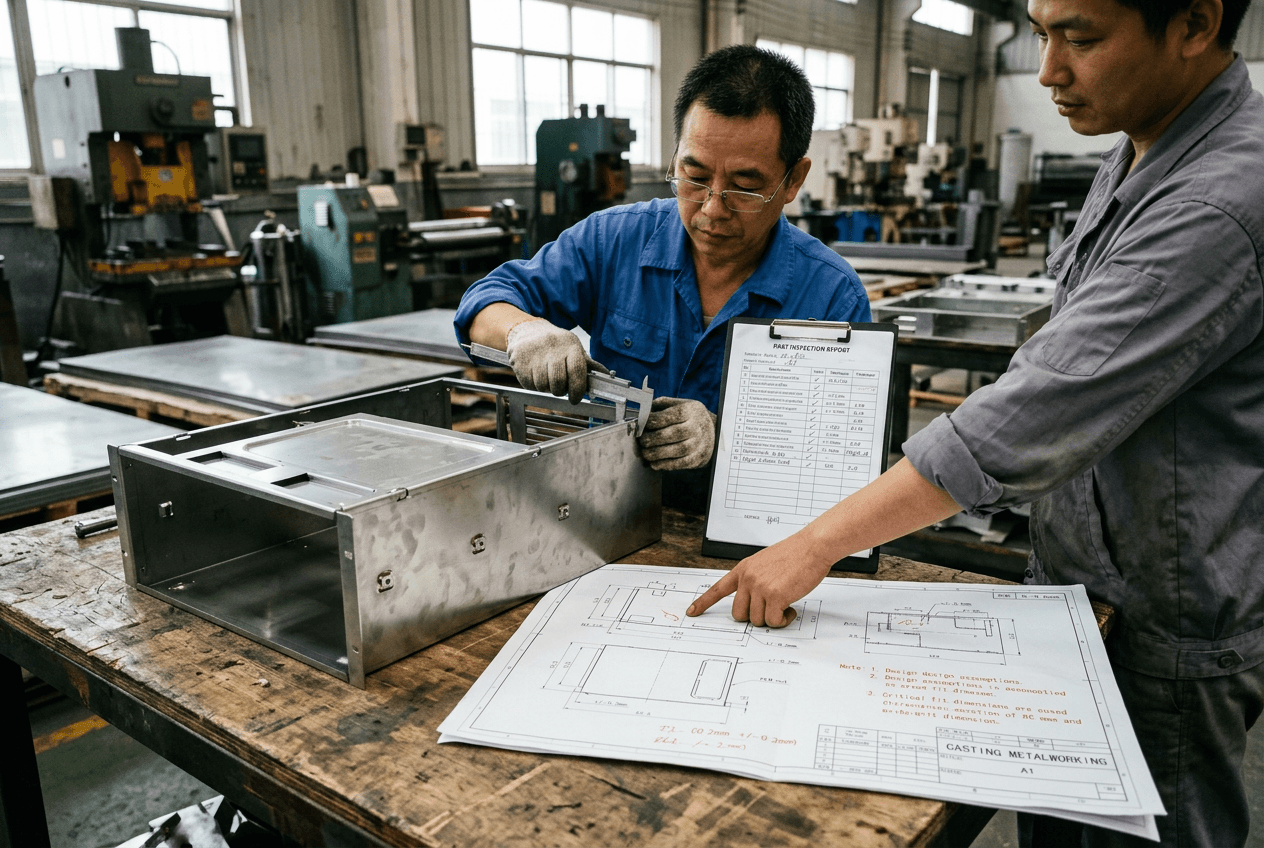
Buyers often compare casting metalworking quotes with sheet metal fabrication quotes and assume the cheapest number tells the story. It usually does not. The real risk starts earlier, when the RFQ leaves too much room for interpretation. One supplier prices a cast-like housing with tooling in mind. Another prices a bent enclosure with laser cutting and forming. A third adds welding and coating assumptions that the buyer never asked for. The result is not just a price gap. It is a mismatch in scope, inspection, and fit.
That is why the dominant procurement risk is assumption drift. If the drawing, mating part, finish target, and inspection point are not clear, each supplier fills the gaps in a different way. The quote then looks comparable when it is not. Later, the buyer pays for revision cycles, late clarification, rework, or a batch that fails assembly.
Where casting metalworking assumptions start to distort a sheet metal RFQ
The problem often begins when the buyer describes the part by function only. A team asks for a control cabinet, a mounting bracket, or a welded frame and expects the supplier to choose the right process. That works only when the scope is already obvious. In casting metalworking, the supplier may think in terms of mold cost, draft angle, and machining allowance. In sheet metal fabrication, the real quote depends on flat pattern development, bend allowance, hole location after forming, weld access, and the amount of cleanup needed on visible faces.
Once those assumptions split, the quote loses meaning. One supplier may include tooling that is not needed. Another may omit secondary work that the assembly absolutely needs. A low quote can then hide the cost of correction. The buyer sees the issue only after sample approval, or worse, after production parts arrive and do not fit the mating frame, door, or backplate.
Force the process route into the RFQ
Buyers should state whether the part must be cut and bent from flat sheet, welded from multiple panels, or built as an assembly around other components. That does not mean over-specifying every operation. It means removing the guesswork that drives the quote in two different directions. If the RFQ looks like a cast housing request, the supplier may price the wrong process path. If it looks like a fabrication request but the actual geometry needs post-forming alignment, the quote may miss the work that protects assembly fit.
A practical example is a wall-mounted enclosure. Outside dimensions alone do not tell the full story. If the panel must accept a lock, hinge, gasket, and backplate, the supplier needs to know which holes control fit and which surfaces are cosmetic. A welded machine guard frame creates the same risk. If the buyer does not say which face will be visible after coating, one supplier may leave weld blending minimal while another adds extra grinding and rework. The two quotes will not describe the same part.
This is where a drawing review becomes valuable. Yishang can help a buyer separate a true sheet metal route from a drawing that still reads like a cast part. That review matters because it exposes the hidden process assumptions before the quote comparison starts.
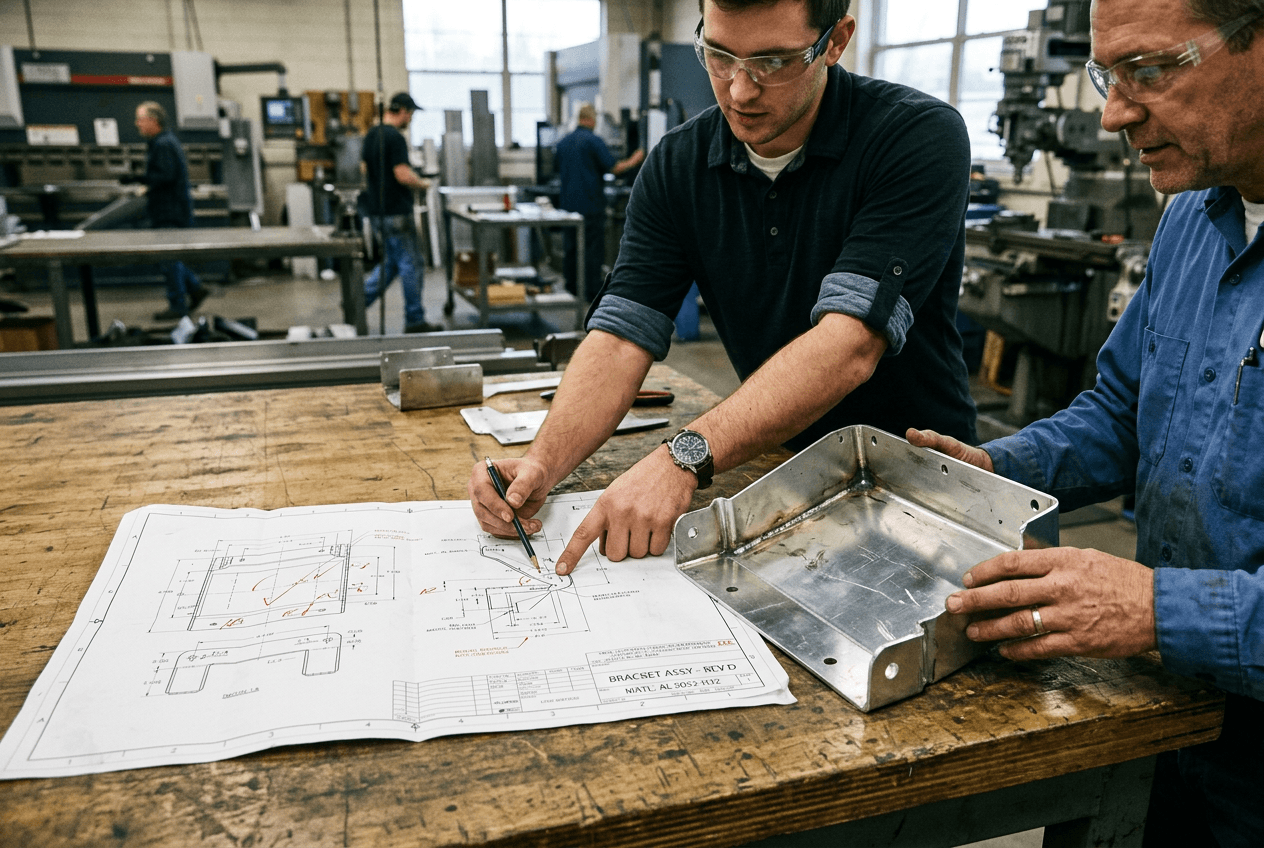
Why a low quote often means work moved out of sight
Many buyers focus on unit price and miss the missing scope. The issue is not only what the supplier included. It is also what the supplier assumed would happen later, somewhere else, or not at all. One shop may outsource coating. Another may subcontract welding. A third may price inspection only at the end of the line. Each choice changes cost, lead time, and risk.
That matters in sheet metal fabrication because secondary work drives a large share of the real cost. Laser cutting is only the first step. Bending changes geometry. Welding adds distortion. Deburring changes edge condition. Powder coating adds film build. If the supplier does not own the full chain, it may not price the interaction between those steps correctly. The quotation can look clean while the actual production path becomes messy.
Look for missing secondary work
A buyer should read the quote line by line, but not as a price hunt. The goal is to see which operations are real and which are implied. If a bracket must align with a mating panel after coating, the supplier needs to state whether coating happens before or after assembly, and whether the hole position is controlled before bend or after. If a welded frame has visible faces, the buyer should ask whether weld cleanup, grinding, and surface blending are included. Without that clarity, the supplier may price a structurally acceptable part that still fails the cosmetic or assembly target.
Project-style examples make the risk easier to see. A cabinet enclosure may quote low because the supplier leaves masking, hardware insertion, or final fit checks out of scope. An equipment rack may look inexpensive because the supplier does not include straightening after welding. In both cases, the first real cost appears after the quote is accepted, when the buyer discovers that the promised part still needs extra work.
Lead time also shifts when scope is unclear. If one supplier has to ask for clarification after order placement, the schedule moves. If another supplier discovers that a coating requirement affects hole size or thread recovery, it may pause production for a revised drawing. Those delays are usually avoidable when the RFQ states the process route, the mating interface, and the finish condition with enough precision to compare like with like.
Why prototype approval can hide batch inconsistency
Prototype approval feels reassuring because the sample often looks correct. That does not mean the process is stable. A technician may hand-fit the sample, over-grind a weld, nudge a bend into position, or select the best part from a small group. Those corrections can make one piece pass. They do not prove that twenty or two hundred parts will behave the same way.
This risk is especially visible in welded assemblies and cosmetic enclosures. A control cabinet door may close properly on the sample, but batch parts may shift once weld shrinkage repeats across multiple units. Powder coating may add enough film build to tighten clearances. A bracket may fit one mating plate, then drift when the production fixture wears or when the material batch changes. The prototype was not wrong. It was just too hand-adjusted to predict batch behavior.
Test repeatability, not just appearance
Buyers should use the sample to answer a different question: can the same part repeat with the same material, the same forming sequence, the same weld order, and the same finishing path? If the answer is not clear, then the sample approval is incomplete. A single perfect part can hide a process that is still unstable. A short pilot run often reveals that instability faster than a polished one-piece sample.
Consider a telecom cabinet frame. The sample may show proper door gap because the operator corrected alignment before shipment. In a batch run, that same frame may need a fixed hole-to-edge tolerance and a clear rule on when coating occurs. A machine base frame can show the same problem. The first piece may sit flat on the fixture, yet later pieces twist enough to require rework. The buyer does not want a nicer sample. The buyer wants a process that repeats without hidden manual rescue.
At this stage, buyers should compare the approved sample against the drawings, the revision note, and the actual assembly photos. If the part came from a different setup, a different sheet thickness, or a different weld sequence, the sample cannot prove batch consistency. Yishang can review those details with the buyer so the prototype decision reflects production reality instead of a one-off adjustment.
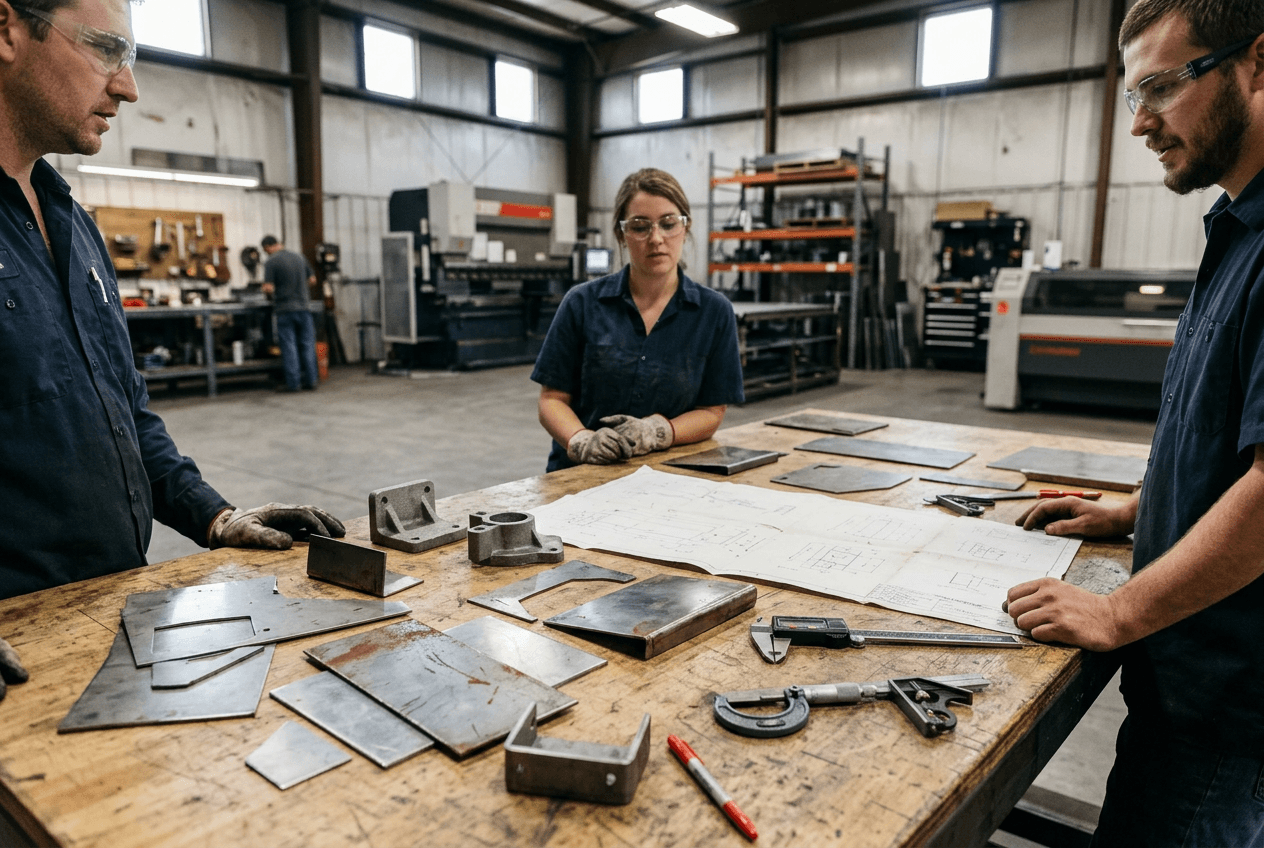
What must be frozen before you compare suppliers
The best RFQs do not try to describe every process step. They freeze the details that control fit, appearance, and repeatability. For sheet metal parts, those details usually sit at the interface between the part and the assembly. Hole position relative to bends matters. Weld access matters. Visible face quality matters. Coating build matters when the part slides, locates, or seals against another component.
That is why buyers should avoid vague language such as general tolerance when the real issue is assembly fit. A supplier can still produce to a broad tolerance and miss the actual need. If a bracket stack-up controls the position of a cover, then the relevant dimension is not just size on the drawing. It is size after bending, after welding, and after finishing. If the buyer does not freeze that chain, the quote comparison will reward the wrong assumptions.
Put the mating part into the decision
One of the fastest ways to reduce ambiguity is to send photos of the mating assembly. A panel that looks simple on paper can become difficult once the fastener head, hinge clearance, or cable path is visible. A sheet metal enclosure may need one hole location to stay fixed before coating and another to be adjusted after forming. A welded assembly may need a set of inspection points that prove the frame still matches the mating base. The drawing alone often misses that context.
When buyers prepare the RFQ, they should include the drawing revision, material requirement, thickness target, quantity, tolerance notes, and finish expectation. If the project starts from a casting metalworking search, that detail becomes even more important. It helps the supplier decide whether the part really belongs in a fabrication route. It also helps the buyer see whether the quote includes the same scope on every line. Yishang can use that package to review manufacturability before the buyer accepts the lowest number.
This is the stage where hidden cost stops being hidden. If the drawing still leaves room for interpretation, the supplier will price that uncertainty in its own way. If the buyer removes the uncertainty first, the quote becomes much easier to compare. The real goal is not a cheaper quote. It is a quote that survives production without surprise additions.
If you are comparing casting metalworking quotes against a sheet metal fabrication option, send Yishang the drawings, material requirements, quantities, tolerances, and finish expectations. Ask for a manufacturability review before release so the RFQ matches the real fabrication route and the part can be quoted against the same assumptions from the start.
Frequently Asked Questions
Why do casting metalworking assumptions cause problems in sheet metal quotations?
Because the supplier may price the part as a cast housing instead of a fabricated assembly. That changes the assumed tooling, machining, bend logic, and secondary work. The quote may look complete, but it is based on a different production route.
What detail most often changes a quote without the buyer noticing?
Missing secondary work is the most common cause. Weld cleanup, deburring, masking, hole recovery after coating, and inspection records can all move out of scope if the RFQ does not define them clearly. That creates a low quote that later grows through change orders.
Why does a prototype sometimes pass while the batch fails?
A prototype often receives hand fitting, extra grinding, or selective part picking. Those fixes hide process variation. Batch production removes the manual rescue, so distortion, springback, coating build, or fixture variation starts to show up in the real parts.
What should buyers freeze before comparing quotes?
Buyers should freeze the process route, the mating interface, the revision number, the finish expectation, and the fit-critical dimensions. Hole position relative to bends, weld access, and post-coating clearance matter more than vague general tolerance notes.
How can a buyer reduce quote risk on an enclosure or bracket project?
Send the drawing PDF, material and thickness requirement, quantity, tolerance notes, and finish target together with assembly photos. That gives the supplier enough context to identify where the quote may drift and whether the part belongs in a sheet metal route.
Can Yishang help if the RFQ started from a casting metalworking search?
Yes. Yishang can review the drawing set for manufacturability, prototype risk, and assembly fit. That review helps buyers compare sheet metal fabrication quotes against the same assumptions instead of comparing different process interpretations.