In precision metal fabrication, even minor details can have significant impacts on product performance, assembly, and appearance. One of the most critical decisions is whether to use a chamfer or a countersink. While they may seem like small design features, their correct implementation can prevent costly delays and ensure seamless assembly.
At YISHANG, we have witnessed situations where subtle oversights—such as omitting a countersink on a mounting panel or selecting a cosmetic chamfer instead of a functional one—led to shipment delays, installation failures, or expensive rework. For procurement teams handling custom metal components across industries, mastering this choice is essential for operational efficiency.
This article goes beyond basic definitions, providing practical insights into how chamfers and countersinks affect sourcing strategies and product outcomes, based on real-world design and production experience.
Understanding Functional Impact Before Design Lock
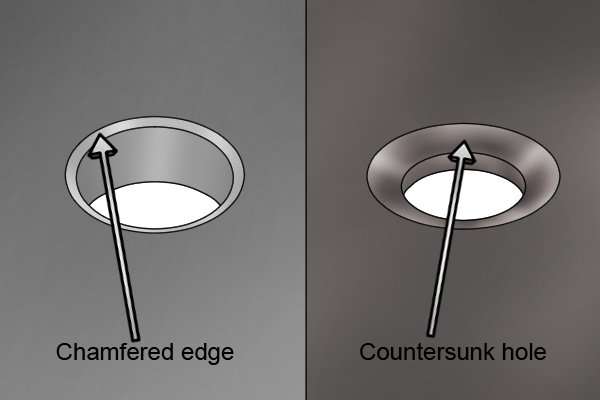
Chamfers and countersinks may look similar geometrically, but their functions differ significantly. A chamfer smooths the transition between intersecting surfaces, typically at a 45° angle, enhancing safety, guiding parts into alignment, and protecting edges during handling and assembly.
In contrast, a countersink is a conical recess designed to allow a flat-head screw or bolt to sit flush with a surface, preventing interference with mechanical function, visual alignment, or safety-critical tolerances.
Ignoring these distinctions can lead procurement teams to face post-machining issues during first-article inspections or pre-assembly testing, often causing costly project delays.
Real-World Scenarios: When Edge Features Become Project-Saving Decisions
In one case, a European customer shipped 10,000 stainless steel panels with drilled holes but no countersinks. During final assembly, screws protruded, preventing door modules from closing. This mistake resulted in $12,000 in rework and several weeks of delay.
Another client in the vending industry used aesthetic chamfers on all edges for branding purposes. However, key joints lacked structural countersinks, compromising bracket rigidity. After correcting the specifications, assembly time decreased by 30%.
These examples emphasize that chamfers and countersinks are not interchangeable, and buyers must clearly document design intent to avoid costly errors.
Procurement-Centered Design: What Buyers Should Prioritize
From a procurement perspective, chamfers are generally simpler and more cost-efficient to machine, especially when combined with deburring operations. They enhance visual appeal, remove burrs, and facilitate easier assembly.
Countersinks, on the other hand, require precise control of angle, depth, and diameter. Any mismatch with fasteners can compromise product reliability, sealing, and aesthetics. Proper tolerance management is crucial, as it directly affects QA pass rates and customer returns.
YISHANG advises that all RFQs clearly specify whether an edge feature is cosmetic, structural, or functional, helping to avoid tooling mismatches, over-engineering, and unnecessary costs.
Design Integration: Avoiding Drawing Errors That Delay Production
Many buyers assume that 3D models automatically capture all machining details. However, 3D CAD files often show edge features visually but omit critical dimensioning or feature callouts in 2D drawings.
Common issues include:
Countersinks missing due to undefined angles
Chamfers misapplied to the wrong surfaces
Features assumed but not quoted or machined
To prevent errors, always pair 3D models with detailed 2D drawings. Specify whether features are on one or both faces, highlight functional zones, and use standard notations such as ISO 13715 or ASME Y14.5 where relevant.
Scaling from Prototype to Production: How Small Deviations Create Big Problems
Features that perform well in prototypes may fail in high-volume production. Common causes include:
Inconsistent manual deburring across thousands of parts
At YISHANG, chamfers and countersinks are treated as critical-to-function dimensions (CTQs). For batch production, we use CNC chamfer/countersink tools with feedback calibration and conduct First Article Inspections using optical comparators and CMMs to ensure precision.
Finishing Compatibility: Why Edge Design Affects Coating and Appearance
Edge features influence finishing processes, which is often overlooked:
Powder coating on sharp edges may result in thin films or flaking, while chamfers promote smoother flow and better coverage
Anodizing may darken or discolor countersinks, especially where geometry traps solution
Electroplating can change internal diameters, affecting fastener fit
We recommend testing finishes on edge-featured parts during pilot runs to detect potential visual or dimensional issues early.
Common Countersink Angles and Matching Screw Standards
Countersink Angle
Common Screw Standard
Typical Application Area
82°
Unified Thread (ANSI)
U.S. enclosures, aerospace frames
90°
ISO Metric (DIN 963)
European sheet metal, electronics
100°
Military Spec (MS)
Aviation, defense, specialty use
Selecting the incorrect countersink angle can lead to fastener seating problems. Ensure that fastener and countersink standards are properly aligned. If uncertain, consult your supplier, as tooling mismatches are a common cause of rejection.
Final Takeaways for Strategic Buyers
While chamfers and countersinks may appear minor, they significantly impact safety, reliability, yield, and packaging fit.
Key takeaways for strategic buyers:
Clear specifications prevent quality issues before the first cut
Edge conditions affect coating, fit, and regulatory compliance
Communicating design intent in both RFQs and CAD saves time, reduces rework, and lowers costs
At YISHANG, we go beyond machining parts—we collaborate to safeguard your product’s functionality, timeline, and reputation.
If your project requires precise edge design and you are unsure whether a feature should be chamfered or countersunk, let our engineering team provide guidance before cutting metal.
→ Contact YISHANG today for expert feedback on your drawings or request a free quote with specification review.
If you have any questions or need a quote, please send us a message. One of our specialists will get back to you within 24 hours and help you select the correct valve for your needs.