
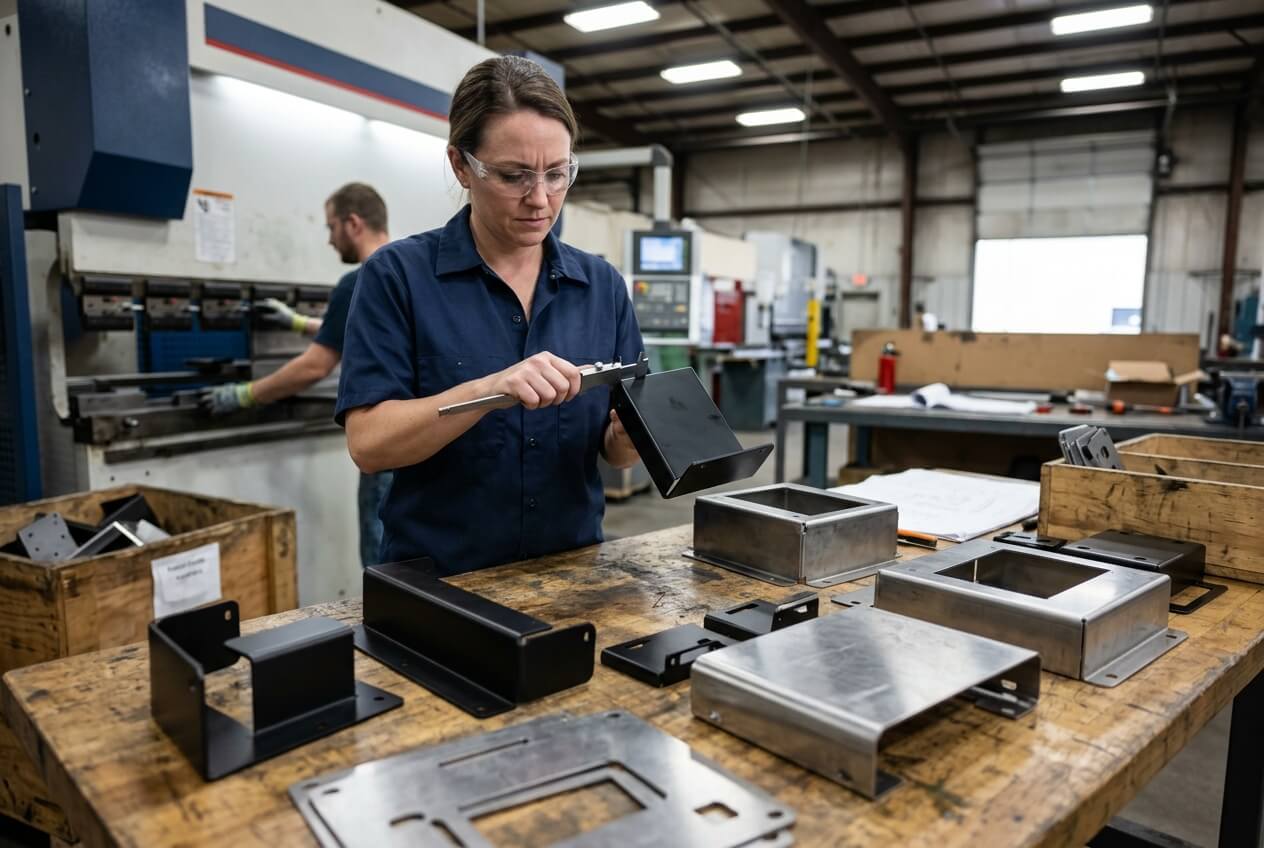
An overseas OEM sends an RFQ for a powder coated control enclosure, two bent brackets, and a CNC machined aluminum mounting plate. The 3D model looks complete. The 2D drawings show dimensions, tolerances, material grades, and a short finish note: black powder coating. Three suppliers quote the package. One price looks better, so procurement approves it.
The first shipment creates a dispute. The enclosure doors show small hook marks near visible edges. Some threaded holes contain powder. The gloss does not match the approved prototype. A hinge area rubs after assembly because coating has built up on a folded flange. The supplier calls these normal fabrication and coating results. The buyer rejects the parts because the enclosure faces the end customer.
This risk appears often in cnc machine and fabrication projects. Buyers review cutting, bending, machining, welding, tolerances, and assembly fit. Yet they often leave finish acceptance too vague for quotation. That gap changes price, lead time, inspection effort, and batch consistency. It can also turn a cosmetic disagreement into a functional failure.
The main procurement risk is not powder coating itself. The risk is accepting quotes before cosmetic surfaces, masking areas, coating limits, and finish inspection rules are clear. Once production starts, each supplier has already priced a different assumption.
Where Finish Ambiguity Distorts CNC Machine and Fabrication Quotes
A low quote can hide a finish assumption. One supplier may quote standard industrial handling. Another may include extra weld dressing, masking, protected racking, careful packing, and tighter visual inspection. Both quotes may look like they cover the same drawing. In reality, they describe different products.
RFQ ambiguity usually starts with drawings that define shape but not visibility. A part may have six faces, but only two faces matter to the end customer. If procurement does not mark those faces, the supplier must guess. That guess affects labor, coating preparation, rework allowance, packaging, and inspection time.
Visible surfaces change the fabrication route
Consider a wall-mounted electronics enclosure. The front door, side edges, and screw areas remain visible after installation. The rear panel sits against the wall. If the RFQ does not separate Class A surfaces from hidden surfaces, the supplier may process all panels to a standard industrial level. A small scratch on the side edge then becomes a rejection, not because the supplier ignored the drawing, but because the drawing did not define the buyer’s visual standard.
A welded display frame creates the same problem. The front-facing tube joints may need smooth grinding before powder coating. Hidden rear joints may only need spatter removal and safe edges. If one supplier includes full cosmetic weld dressing and another does not, procurement cannot compare the prices fairly. The cheaper quote may simply exclude the work that the final customer expects.
The consequence chain starts before the PO
The chain is predictable. The buyer sends a drawing with a broad finish note. The supplier prices normal production handling. The prototype receives extra care and passes review. Batch production then uses normal racks, normal stacking, and normal visual criteria. Incoming inspection rejects visible marks. At that point, both sides debate an expectation that should have appeared in the RFQ.
Buyers can reduce the risk with simple documents. Mark cosmetic faces on PDFs or assembly photos. Identify hidden surfaces. Add notes for unacceptable marks on customer-facing areas. Ask suppliers to confirm where hooks, clamps, or contact points will appear. These details do not make the RFQ complicated. They make supplier prices comparable.
Masking and Coating Limits Can Turn a Finish Dispute Into an Assembly Failure
Finish ambiguity does not only affect appearance. It can also change how sheet metal parts fit with machined components, hinges, locks, gaskets, grounding points, and fasteners. Many cnc machine and fabrication assemblies fail because drawings show nominal geometry but do not say how coating affects final interfaces.
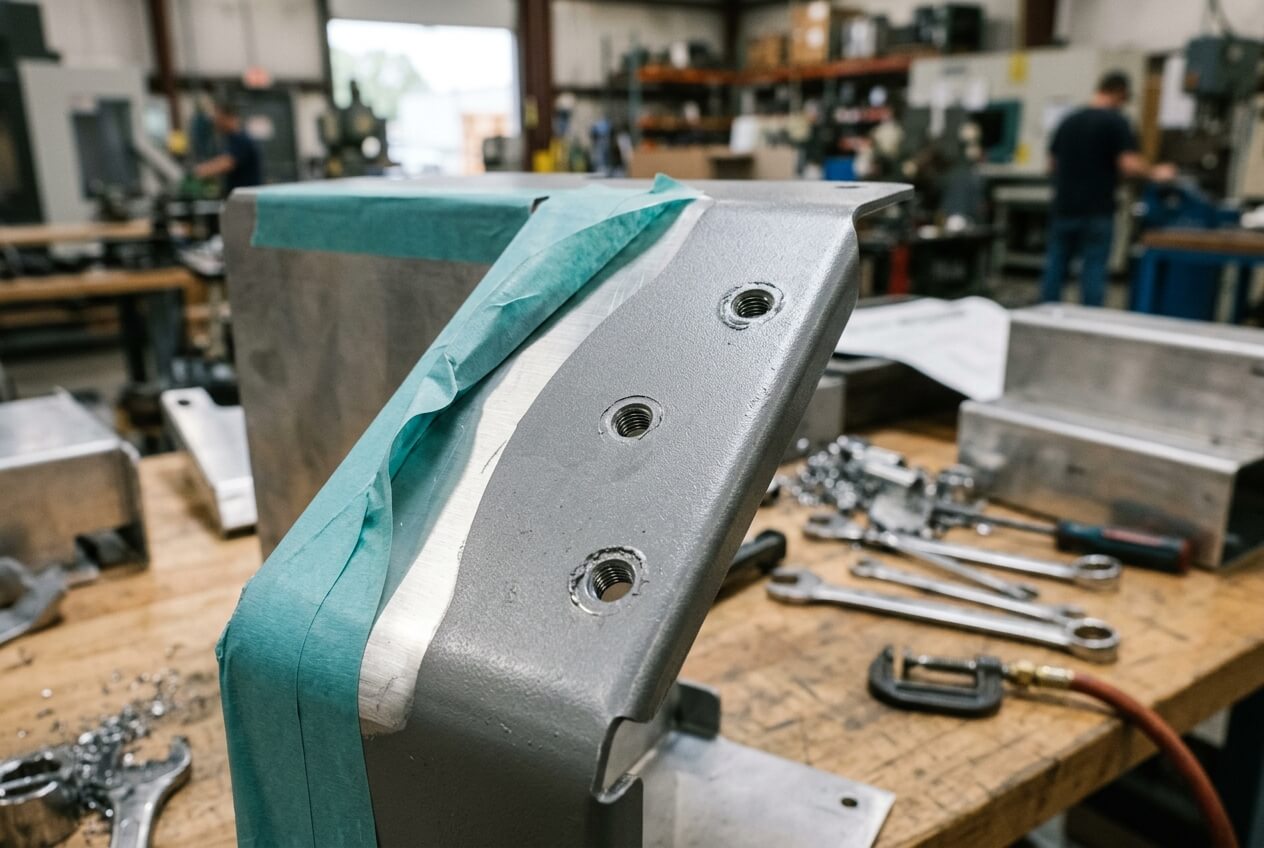
Powder coating adds thickness. On a large exterior panel, that thickness may not matter. Around a hinge hole, countersink, threaded insert, gasket channel, or sliding slot, it can create a functional problem. If the drawing shows a hole diameter before finish but the inspection team checks after coating, the supplier and buyer use different rules.
Critical interfaces need finish rules, not assumptions
Take a battery cabinet door with two hinges, a lock, and a gasket channel. The door prototype fits well. During the batch, powder builds up around the folded return and hinge holes. The hinge screws still install, but the door gap changes. The gasket compresses unevenly. The issue looks like a bending or tolerance problem, but the root cause sits in finish control.
A second example involves a CNC machined aluminum nameplate mounted onto a coated steel panel. The drawing controls the hole pattern, but it does not specify whether holes must remain clear after coating. In production, powder narrows the holes and leaves buildup around the mounting area. The nameplate no longer sits flush. Procurement may blame machining, while production sees a masking decision that nobody priced.
Masking affects cost, inspection, and lead time
Masking ten threaded holes on a prototype looks minor. Masking ten holes across 1,000 panels becomes real labor. It also adds inspection steps and rework risk. A supplier that includes masking will quote differently from a supplier that assumes post-coating thread chasing or no masking at all.
Buyers should define masking areas before comparing supplier prices. Include grounding points, threaded holes, PEM hardware, countersinks, hinge areas, sliding surfaces, machined mating faces, and gasket seats. Also state whether critical dimensions apply before or after coating. If the product needs post-coating reaming, thread chasing, or continuity testing, the supplier should quote that work upfront.
Yishang can review drawings and assembly notes before quotation to flag areas where coating buildup, masking, bending variation, or machined mating parts may affect final fit. That review works best before the PO, not after the first shipment.
Prototype Approval Does Not Protect Batch Finish Consistency Without Written Limits
A prototype can prove a concept. It cannot replace batch acceptance rules. Many buyers approve a sample that one technician handled with extra care. Later, the batch moves through laser cutting, CNC punching, bending, welding, grinding, coating, inspection, and packing in larger quantities. More people touch the parts. More racks hold the parts. More variation appears.
Prototype approval often captures color, texture, and general workmanship. It rarely captures the production method behind those results. If procurement does not record the approved finish conditions, the supplier may change hanging points, powder lot, pretreatment method, packing materials, or inspection lighting during the batch. Those changes may improve throughput but create visible differences.
Approved samples need measurable anchors
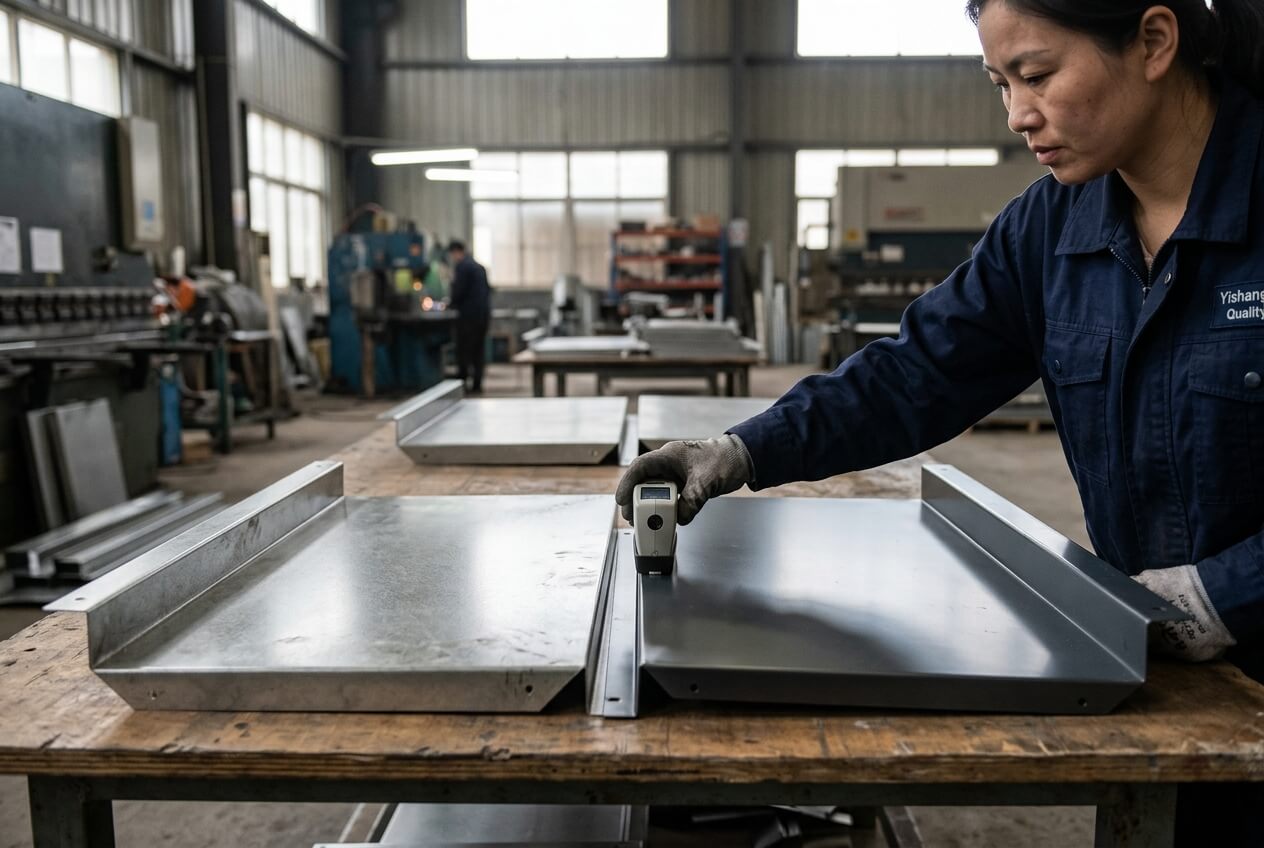
A signed powder coated sample helps, but buyers should support it with written limits. Define the color reference, gloss range, texture, coating thickness range, cosmetic face map, rack mark location, and masking requirements. Add inspection distance and lighting conditions if appearance matters. This avoids debates over whether a mark is visible enough to reject.
For brushed stainless steel, written limits matter just as much. A drawing that says brushed stainless may not define grain direction. If several panels install side by side, one horizontal grain panel can look wrong next to vertical grain panels. The material may meet specification, yet the assembly still fails customer inspection. Mark the installed orientation and protect the film during forming, assembly, and packing when appearance matters.
Batch production exposes hidden handling risks
A retail kiosk frame shows the problem clearly. The prototype has clean weld transitions and a smooth black coating. During batch production, the supplier changes the hanging point to increase coating capacity. The new hook mark lands near the upper front rail. The coating protects the steel, but the mark faces shoppers after installation. Rework delays shipment because the RFQ never defined acceptable rack locations.
Another case involves server cabinet side panels. The first sample arrives with no scratches because the supplier packs it alone. The batch ships with panels stacked face-to-face, separated by thin foam. Ocean freight vibration creates rub marks. The coating process was acceptable, but packing did not match the cosmetic requirement. Finish acceptance must therefore include internal handling and export packing, not only the coating callout.
Buyers should ask suppliers to confirm any production change that can affect appearance. This includes powder brand, color batch, rack design, masking method, pretreatment, grinding method, protective film, and packaging. The point is not to freeze every shop process. The point is to control changes that affect the customer-facing result.
What Buyers Should Clarify Before They Compare Supplier Prices
Procurement teams often ask for a fast quotation, then try to solve finish details during production. That sequence creates avoidable risk. Suppliers build quotes around assumptions. If the buyer changes finish expectations after award, cost and lead time change as well.
A stronger RFQ does not need a long specification book. It needs the finish decisions that affect acceptance, assembly, cost, and schedule. Buyers should send drawings, 3D files, quantities, material requirements, tolerances, finish expectations, and assembly context together. Photos of installed orientation often help more than a long email.
Clarify the surfaces that drive rejection risk
Start with visibility. Mark Class A surfaces, secondary surfaces, and hidden surfaces. Identify customer-facing doors, covers, front panels, rails, side faces, handles, screw areas, and logo panels. State whether visible welds require cosmetic grinding or only spatter removal. This tells the supplier where to spend labor and where standard industrial finish is acceptable.
Then connect finish to fit. Mark holes, threads, grounding points, gasket channels, hinges, locks, sliding slots, and machined mating surfaces that need masking or post-finish inspection. Specify whether tolerances apply before or after coating when coating thickness affects assembly. These notes prevent incoming inspection from using a standard that production never saw.
Make exclusions visible before award
Ask each supplier to state what the quote includes and excludes. Does the price include special color matching, sample approval, masking, cosmetic weld dressing, individual wrapping, film protection, post-coating thread chasing, or coating thickness checks? Does the lead time include sample approval and powder procurement? Clear exclusions help procurement avoid a false saving.
Supplier communication should also cover inspection conditions. Ask how the supplier checks cosmetic faces, what lighting they use, what defect size they allow, and how they handle rack marks. For overseas shipments, ask how coated parts move from inspection to packing. A good coating can still fail if finished panels rub during transit.
Yishang supports custom sheet metal fabrication, metal enclosures, brackets, frames, and welded assemblies. For RFQ review, send the full drawing pack before final quote approval. Include material requirements, quantities, tolerances, finish expectations, cosmetic surface markings, assembly photos, prototype feedback, and packing needs. The earlier these details appear, the easier it becomes to price the real scope and reduce finish-related rejection risk.
Planning a sheet metal enclosure, cabinet, bracket set, frame, or welded assembly? Send Yishang your 2D drawings, 3D files, material requirements, order quantities, tolerances, finish expectations, cosmetic surface notes, assembly requirements, and packing needs. The team can review where finish acceptance may affect quotation, manufacturability, masking, assembly fit, prototype approval, and batch consistency.
FAQ: Finish Acceptance in CNC Machine and Fabrication RFQs
What finish details should buyers include in a sheet metal fabrication RFQ?
Include color reference, gloss or texture expectation, cosmetic surface markings, masking areas, coating thickness limits, unacceptable visible defects, sample approval needs, and packing requirements. Also identify interfaces where coating can affect fit, grounding, fastener engagement, or gasket compression.
How do cosmetic surface markings affect supplier quotations?
They tell the supplier where extra care is required. Visible faces may need better deburring, protected handling, weld dressing, stricter inspection, and improved packing. Hidden faces may not need the same labor. Without markings, suppliers quote different assumptions and prices become hard to compare.
Should hole tolerances apply before or after powder coating?
That depends on the assembly requirement. If coating affects screw clearance, countersinks, hinges, locks, grounding points, or machined mating plates, state whether dimensions apply before or after coating. Also define masking, thread chasing, reaming, or post-coating inspection if needed.
Why can an approved prototype still lead to batch finish disputes?
A prototype often receives more manual attention than batch production. Batch work introduces repeated racking, larger part movement, more operators, powder lot changes, and packing variation. Support prototype approval with written limits for color, gloss, rack marks, masking, coating thickness, and cosmetic zones.
How should buyers handle rack marks on powder coated enclosures or frames?
Define acceptable rack locations before production. Mark customer-facing surfaces where hook marks cannot appear. Ask the supplier to confirm hanging points for parts with visible doors, rails, side panels, or logo areas. This prevents a production-efficient rack point from becoming a customer rejection.
When should finish acceptance be reviewed with the fabrication supplier?
Review it before quote approval, prototype release, and batch production. Early review gives the supplier time to price masking, weld dressing, coating checks, packing, and inspection correctly. Late review usually creates cost changes, rework, shipment delays, or acceptance disputes.