
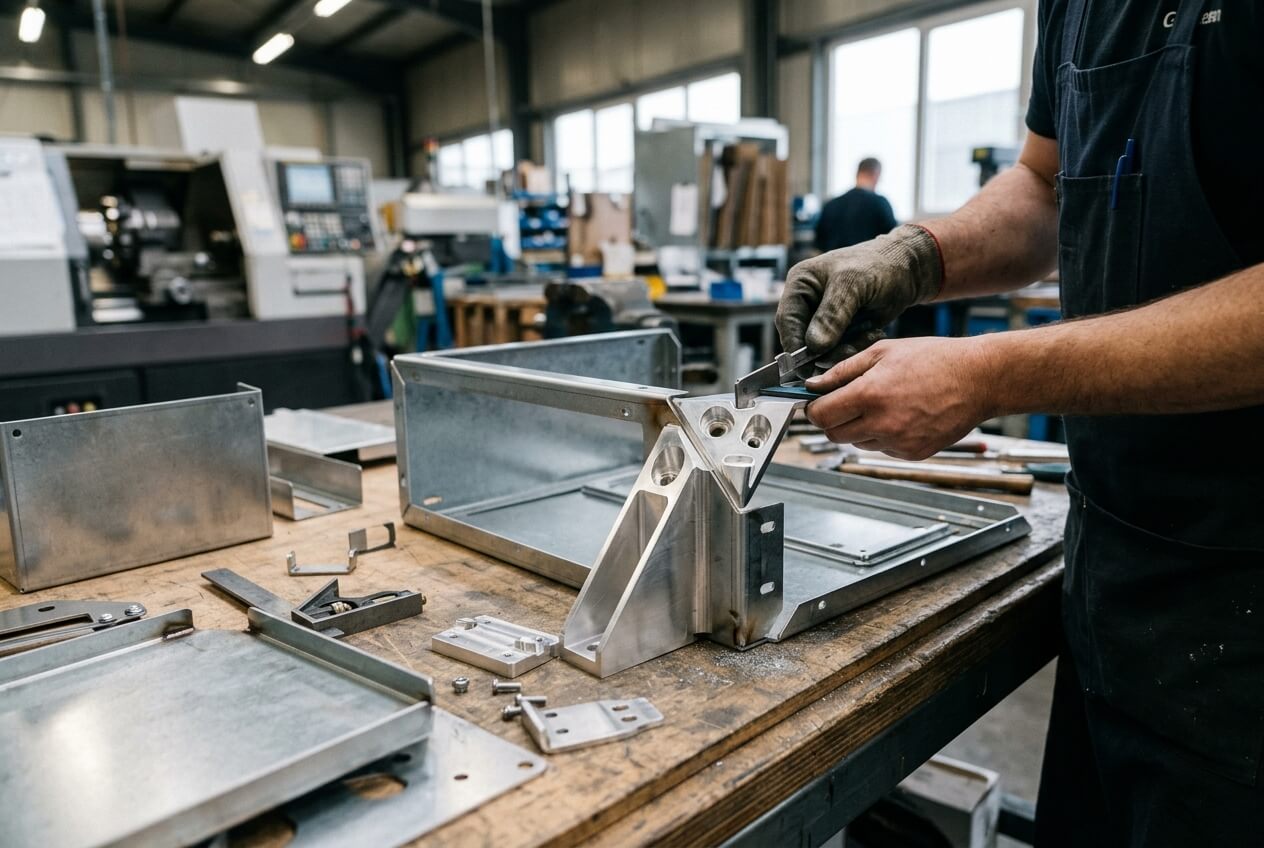
An OEM buyer sends an RFQ for a powder-coated control enclosure. The package includes laser-cut panels, bent brackets, a welded frame, hinges, and several small threaded spacers made by cnc swiss machining. The drawings show hole sizes, outside dimensions, material grade, color, and quantities. The prototype looks acceptable during a bench check, so procurement approves the supplier.
The problem appears during installation. The Swiss-machined spacers meet their tolerances, but the bracket holes no longer line up after bending and coating. A cabinet door rubs against the frame. A mounting plate needs force to assemble. Each part can pass its own inspection while the finished assembly still fails.
This article focuses on one procurement risk: assembly fit hidden inside RFQ assumptions. Buyers often compare unit prices before they confirm how suppliers will control mating holes, bend datums, weld movement, coating thickness, and prototype changes. That gap can turn a low quote into rework, delayed shipment, or inconsistent batch production.
Assembly Fit Fails When the RFQ Treats Mating Parts as Separate Jobs
Sheet metal assemblies rarely fail because one dimension looks wrong on paper. They fail because several acceptable variations meet at the same interface. A laser-cut panel shifts during bending. A welded stud moves slightly during cooling. Powder coating reduces hole clearance. A precision spacer then exposes the accumulated error.
The RFQ often starts this chain. Procurement may send separate drawings for the door, base, internal bracket, and machined spacer. One supplier quotes each item as an individual part. Another supplier asks for the full assembly drawing and prices a fit-up check. The two quotes look comparable, but they cover different risks.
Example: electrical enclosure with PCB spacers
Consider a wall-mounted electrical enclosure. Four welded studs hold an internal mounting plate. Swiss-machined threaded spacers support a PCB. The spacers hold tight thread and diameter tolerances, but the PCB still sits under stress when the stud pattern shifts after welding. If the RFQ only states part dimensions, the supplier may inspect the studs before final coating, not after the box reaches its finished condition.
Buyers should mark the functional relationships, not only the nominal dimensions. Show which holes align with hinges, rails, spacers, brackets, customer equipment, or PCB mounts. State whether inspection should happen after bending, welding, and finishing. This does not overcomplicate the RFQ. It tells the supplier which relationships must survive production.
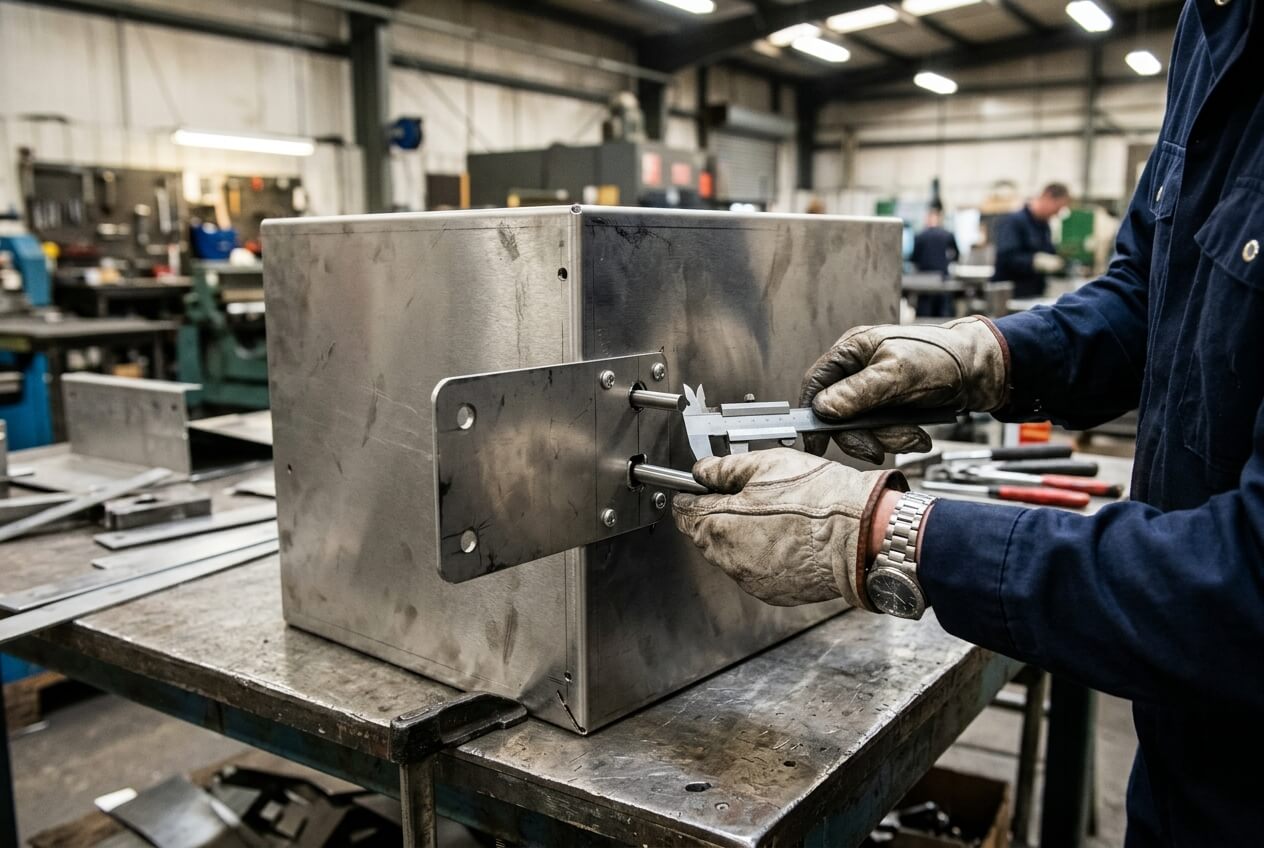
Low Quotes Often Hide Different Assumptions About Holes, Bends, and Coating
A cheaper sheet metal quote may reflect efficient production. It may also exclude the controls needed for assembly fit. One supplier may include fixture welding, post-weld inspection, masking around threads, and a trial assembly. Another may assume standard shop tolerances and visual alignment. Both may answer the same RFQ, yet they do not quote the same finished condition.
This difference matters when fabricated parts mate with cnc swiss machining components. Precision pins, bushings, shafts, inserts, and spacers do not absorb much variation. They often require the sheet metal side to hold a stable hole pattern after forming and finishing.
Where quote assumptions change cost
Fit controls add cost in specific places. Fixtures increase setup time. Tighter hole-position checks add inspection time. Masking adds finishing labor. A trial assembly can extend lead time. These costs may look unnecessary if the drawing only shows hole diameter and color. They become necessary when the buyer expects the assembly to bolt together without filing, reaming, or forced fastening.
Material and finish details also influence the quote. Stainless steel, aluminum, and mild steel respond differently during bending and welding. Powder coating, plating, and brushing affect clearance, cosmetic faces, grounding points, and thread protection. If buyers leave these details vague, suppliers fill the gaps with their own assumptions. The lowest price may simply reflect the least protective assumption.
Before comparing unit price, ask each supplier how they will control the same interface. Will they inspect critical holes from the assembly datum? Will they mask threaded areas? Will they check bend direction and radius against the mating part? Clear questions turn supplier communication into risk control, not paperwork.
Precision Machined Parts Can Make Sheet Metal Movement More Visible
CNC Swiss machining suits small cylindrical parts, slender components, fine threads, concentric features, and repeatable small-diameter parts. Buyers use it when they need precision. However, that precision does not correct movement in a bent bracket, welded cabinet, or powder-coated frame.
A spacer can hold its length within a tight tolerance while the mounting flange rotates after bending. A bushing can meet its bore tolerance while the welded frame pulls the pivot points out of line. A threaded insert can pass inspection before coating, then receive paint buildup that prevents clean assembly.
Example: welded guard with machined pivot bushings
A machinery OEM orders a welded safety guard with two pivot bushings. The bushings come from a Swiss machining supplier and measure correctly. During welding, the frame pulls inward. The guard still accepts each bushing, but the two pivot axes no longer align. At installation, the guard binds and the operator adds washers to make it swing.
The earlier clarification should focus on the final pivot relationship. The drawing should state whether the supplier must inspect pivot alignment after welding and finishing. It should also define the datum faces, flatness needs, and acceptable movement. Tightening every dimension on the frame would raise cost. Controlling the pivot relationship protects the function more directly.
Yishang can review sheet metal drawings with mating machined parts to identify these fit-critical interfaces before quotation. That review works best when buyers provide the assembly drawing, mating hardware details, tolerance notes, finish expectations, and installation photos.
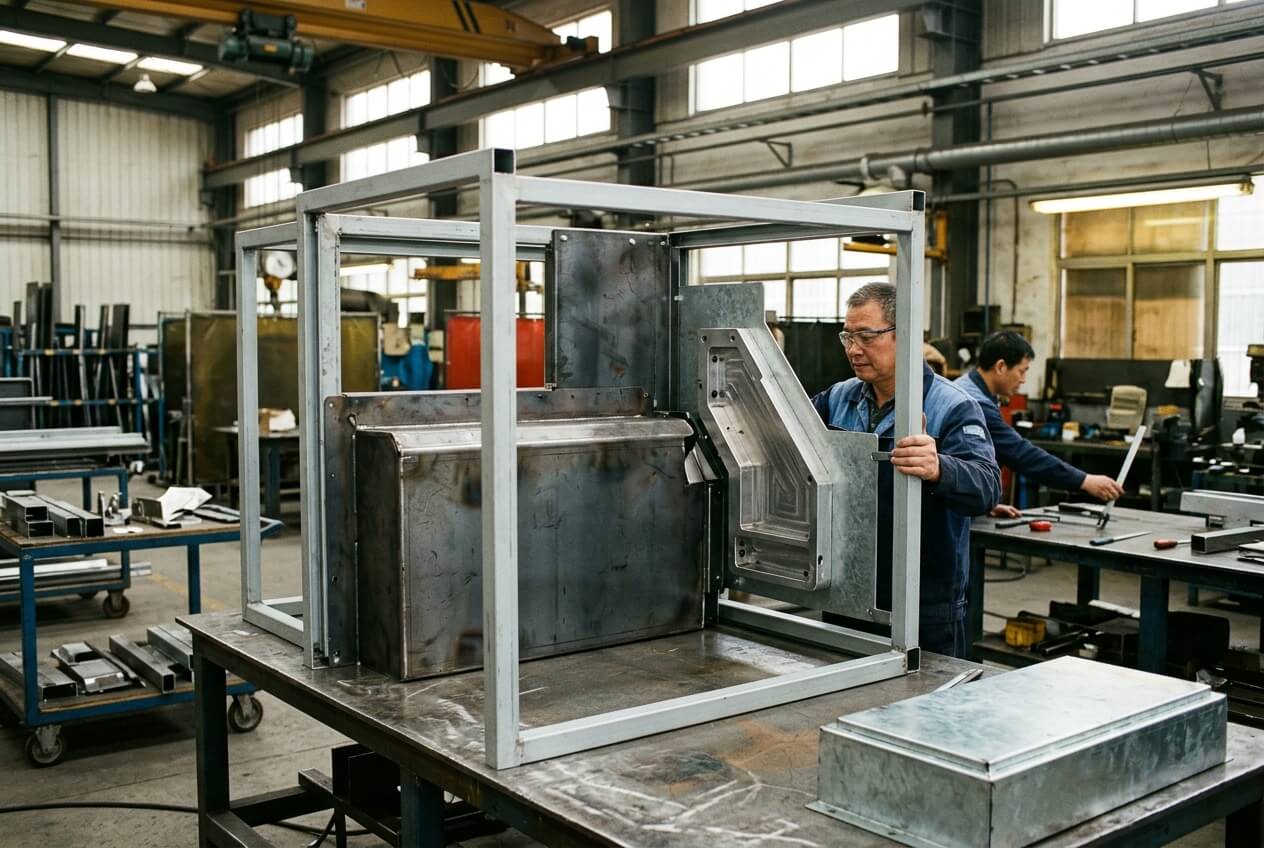
Prototype Approval Does Not Protect Batch Fit Unless It Records the Process
A prototype can reduce risk, but it can also create false confidence. One sample may fit because an operator adjusted a slot, selected the best matching parts, or corrected distortion during assembly. If the buyer approves the sample without recording those changes, batch production may return to the original drawing.
Batch production introduces new variation. Different operators may bend parts. Fixtures may replace hand alignment. Powder coating may use different hanging points. Packing pressure may distort long flanges or exposed mounting ears. None of these changes are unusual, but each can affect assembly fit.
Turn sample lessons into production controls
For a batch of metal cabinets, one smooth-closing prototype door does not define the production target. The RFQ or drawing should record hinge datum, door gap, frame opening, coating masking, and final inspection method. If the sample needed an extra 1 mm of slot clearance, update the drawing before the production order.
The same rule applies to brackets that carry precision machined rails. A prototype bracket may fit the rail during a manual check. Later, production workers may inspect holes from a convenient edge instead of the functional datum. The rail then sits unevenly. Procurement can prevent this by asking for inspection from the assembly datum and by documenting the accepted prototype condition.
Lead time also changes when prototype learning becomes formal. A supplier may need time for fixture changes, coating masks, first-article inspection, or packaging tests. That time costs less than sorting non-fitting parts after shipment. Batch consistency depends on recorded process controls, not memory.
Clarify the Fit Condition Before You Use Unit Price to Choose a Supplier
Procurement teams do not need to make every dimension tight. They need to make the important relationships clear. Identify the interfaces that control installation, movement, sealing, grounding, door closure, or PCB support. Then let suppliers quote the controls needed to hold those interfaces.
A practical RFQ should include part drawings, the assembly drawing, material requirements, finish expectations, tolerance notes, quantities, hardware details, and prototype comments. It should also show where cnc swiss machining parts connect to sheet metal parts. Photos or marked-up samples often explain the risk faster than another paragraph of notes.
Use the supplier’s response as part of the evaluation. A strong response will ask about mating parts, inspection stage, coating buildup, fixture needs, and trial assembly. A weak response may return a low price without addressing the fit condition. The second quote may still work for simple parts, but it carries more risk for enclosures, cabinets, frames, and welded assemblies.
Packaging deserves attention as well. A perfect cabinet can arrive out of fit if the door, flange, or bracket ear carries the shipping load. Mark no-load areas and request packing that protects functional faces and mounting points.
Need custom sheet metal fabrication for an enclosure, cabinet, bracket, frame, or welded assembly that must align with precision spacers, rails, hinges, PCB mounts, or customer equipment? Send Yishang your drawings, assembly files, material requirements, quantities, tolerances, finish expectations, mating-part details, and prototype notes. Yishang can review the RFQ for assembly-fit risk before price comparison or batch production. Start at https://zsyishang.com/.
Frequently Asked Questions
Why can cnc swiss machining parts be accurate while the sheet metal assembly still does not fit?
The machined part may meet its own tolerance, but the sheet metal interface can move during bending, welding, coating, packing, or fastening. Buyers should define the mating datum, inspection stage, coating condition, and final assembly requirement.
What should an RFQ include when Swiss-machined spacers mount inside a powder-coated enclosure?
Include the enclosure drawing, PCB or mating-part layout, spacer locations, welded stud details, coating-free areas, grounding points, tolerances, material grade, quantity, and inspection requirements after finishing. Do not rely only on individual part drawings.
How can buyers avoid paying for unnecessary tight tolerances?
Separate cosmetic dimensions from fit-critical dimensions. Tighten the hole patterns, datums, flatness, bend angles, or welded relationships that control assembly. Leave non-critical features under standard fabrication tolerances where they do not affect function.
Why does powder coating create assembly-fit risk?
Powder coating adds thickness around holes, threads, returns, hinge areas, and contact faces. If the coating condition matters, specify masking, thread protection, post-coating checks, grounding areas, or added clearance before suppliers quote.
What prototype information should buyers record before batch production?
Record slot changes, bend direction, bend radius, hinge gap, weld sequence, fixture use, coating masks, packing concerns, and the inspection datum used during sample approval. Add these points to the drawing or purchase specification.
When should buyers send assembly drawings instead of only part drawings?
Send assembly drawings whenever sheet metal parts must align with hinges, rails, bushings, spacers, PCB mounts, customer equipment, or other precision components. The supplier needs that context to quote the real fit-up work.