
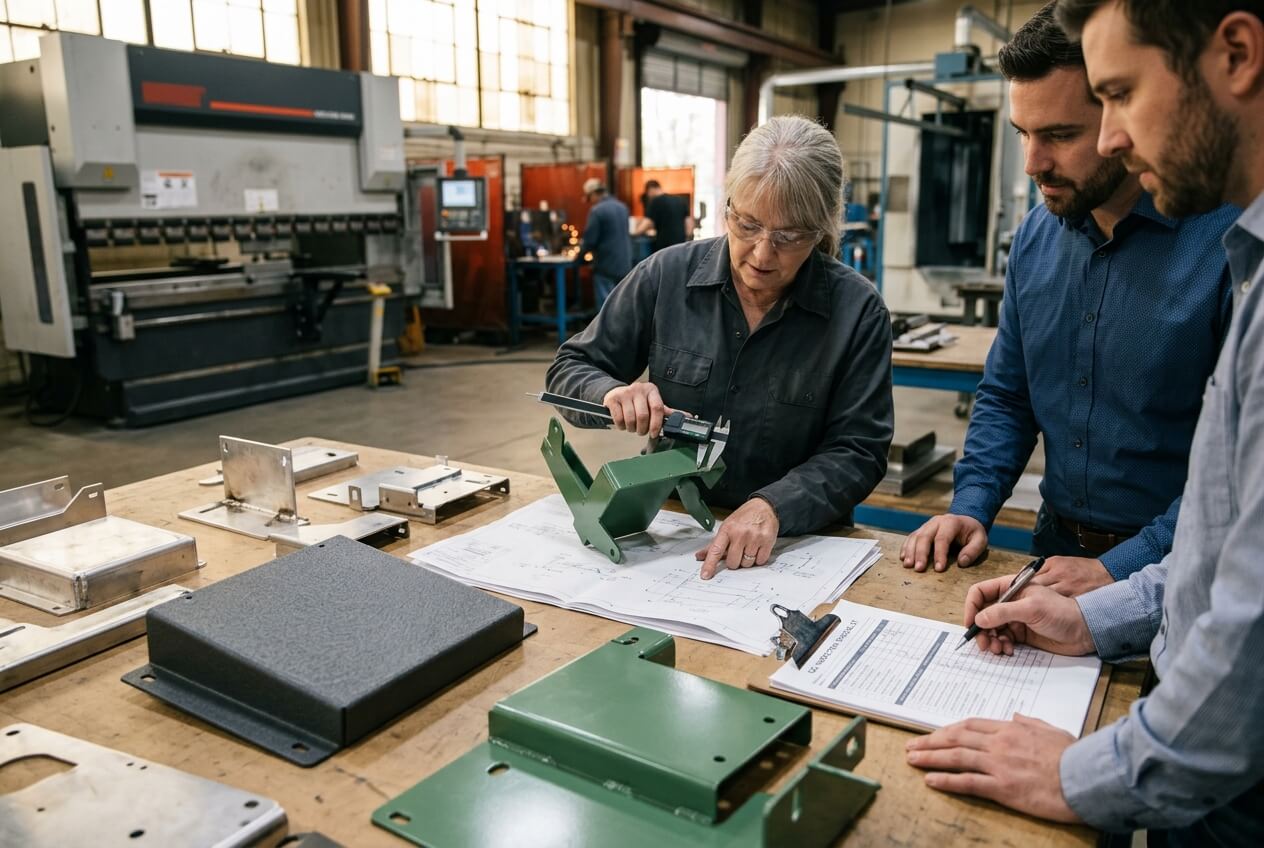
An OEM buyer sends the same cabinet enclosure drawing to three sheet metal suppliers. The drawing shows laser-cut panels, formed flanges, PEM fasteners, welded brackets, and a black coated metal finish. One supplier returns a much lower price. The lead time looks similar, and the material thickness matches the print.
The real difference appears after sample approval. The first production batch shows coating cracks near tight bends, exposed cut edges around holes, and gloss variation between the door and side panels. The supplier argues that the RFQ never defined the coating route, cosmetic faces, bend performance, or color batch control. The buyer assumed those items came with the words coated metal.
That assumption creates the main procurement risk. A vague finish note lets each supplier price a different production method. The buyer then compares numbers that do not represent the same part. Cost, lead time, inspection scope, rework allowance, and assembly fit all move before anyone notices the gap.
Where unclear coated metal RFQs start to distort supplier quotes
A coated metal RFQ often looks complete because the drawing includes dimensions, hole patterns, bends, and a finish callout. Yet the finish callout may hide the biggest cost difference. Suppliers still need to choose the substrate, coating route, pretreatment, handling method, masking plan, color control method, and packing standard.
Two suppliers can quote the same enclosure without dishonest intent and still price different parts. One may assume prepainted galvanized sheet, laser cutting with protective film, and no coating after fabrication. Another may assume bare cold rolled steel, fabrication first, then powder coating after welding and deburring. Both options can work, but they carry different risks.
The quote changes before the buyer sees the risk
Prepainted material can reduce finishing cost on simple panels. It also creates exposed cut edges and bend-crack risk if the design pushes the coating too far. Post-fabrication powder coating can cover cut edges and weld areas better, but it adds masking work, hanging marks, coating build-up, and longer process flow. A low quote may simply exclude the protection another supplier included.
Consider a wall-mounted electrical enclosure. The buyer writes black coated steel on the RFQ and sends a 3D model. Supplier A prices prepainted sheet and bulk packing. Supplier B prices powder coating after fabrication, masks threaded holes, protects the front door, and packs each visible panel separately. Supplier A wins on unit price, but the first shipment shows scratches and tight cover gaps. The quote comparison failed because the RFQ never forced both suppliers to price the same route.
Buyers should not wait for the supplier to guess correctly. The RFQ should state the intended coating route when known. If the route remains open, ask each supplier to state its assumption in the quote. That one line helps procurement compare cost against risk, not cost against silence.
Why a short finish note can move cost into rework, sorting, and late assembly
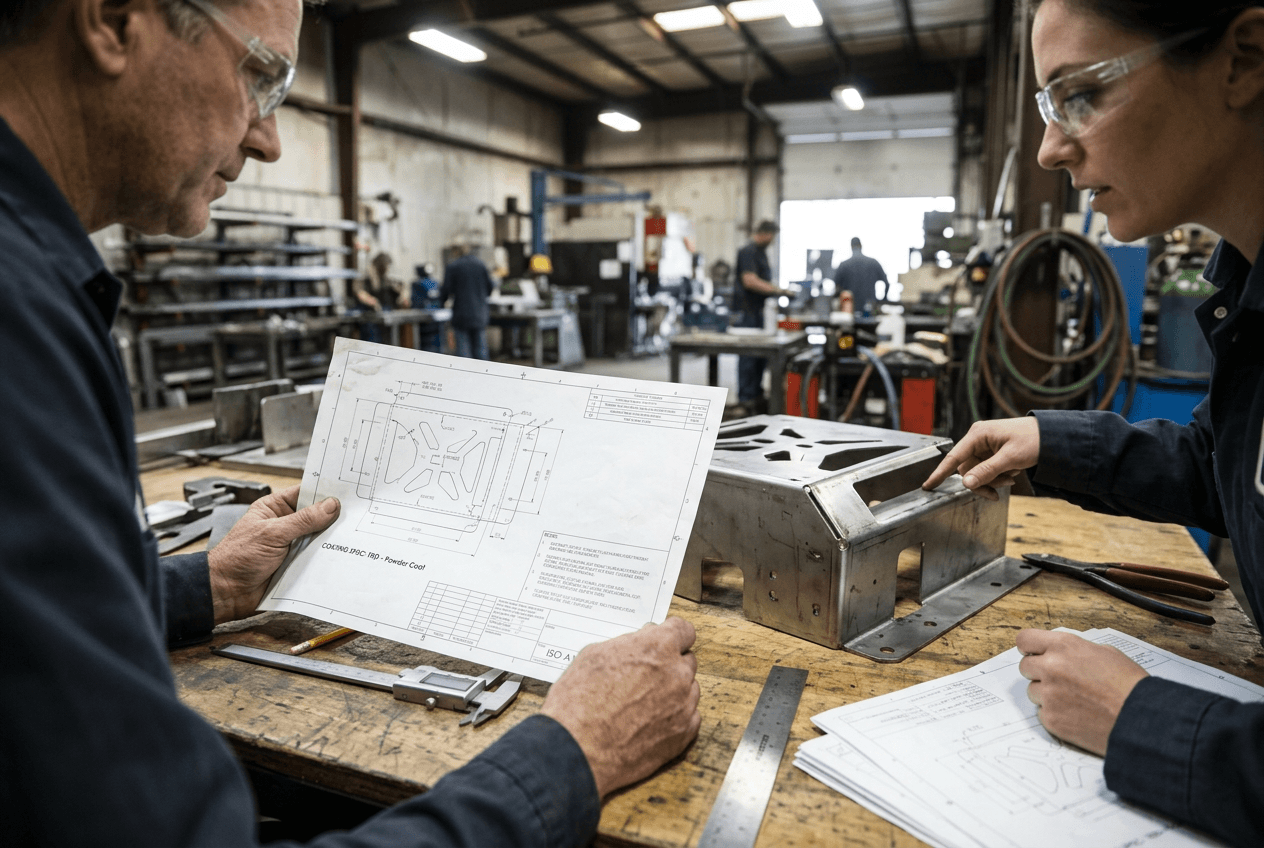
The words coated metal describe the desired appearance, not the production controls needed to achieve it. Fabrication steps interact with the coating choice. Cutting exposes edges. Punching can leave burrs that chip coating around holes. Bending stretches the coating on the outside radius. Welding burns coating and changes surface texture. Packing can damage visible faces after inspection.
When the RFQ ignores those interactions, the supplier may remove cost from the quote by accepting risks the buyer never approved. The result can look like a quality problem, but the root cause often sits in procurement scope.
Bends and edges need more than a color name
Prepainted coil performs well on flat covers, cabinet liners, simple shelves, and panels with generous bends. It becomes less forgiving on tight radii, countersinks, hems, and visible outside corners. If the drawing does not define minimum bend radius, grain direction, T-bend expectation, or visible bend lines, the supplier may quote a route that meets the dimension but fails the appearance target.
Cut edges create another hidden assumption. A prepainted sheet can look uniform on the face while the substrate remains exposed at holes, slots, and profiles. Some indoor products tolerate that condition. Outdoor cabinets, retail fixtures, and customer-facing housings may not. If the RFQ does not mention edge protection, touch-up, or corrosion expectations, buyers may receive a cheaper part with a shorter service margin.
Welded assemblies make the route decision more expensive to change
A welded display frame shows the consequence chain clearly. The buyer expects a smooth black decorative frame. The supplier prices prepainted tube or sheet components, then welds after cutting. Heat damages the coating near welds, and touch-up paint does not match the original gloss. Repainting the frame adds cost and time, while accepting it creates customer complaints.
That issue should surface before quote approval. The RFQ should tell suppliers whether weld zones remain visible, whether grinding marks are acceptable, and whether the final finish must look continuous. For welded assemblies, post-fabrication powder coating often gives better visual continuity. It still needs masking, drainage, racking, and thickness planning. The route choice affects both the quote and the production calendar.
Yishang can review drawings and RFQ notes for these route conflicts when buyers share the assembly use, visible surfaces, quantities, and finish expectations. That review matters most before material purchase, fixture planning, or prototype release.
How coating assumptions affect tolerances, holes, and production-line fit
Many coated metal problems appear during assembly, not at the coating line. A drawing may pass dimensional inspection before finishing. After coating, holes shrink, slots tighten, hinges bind, covers rub, and threaded inserts need chasing. If the quote did not include masking or post-coating inspection, the buyer pays through line delays or rework.
Coating thickness sounds small, but it can close gaps on mating parts. Powder coating on both sides of a tab and slot can reduce clearance enough to slow assembly. Paint on hinge leaves can change movement. Coating around PEM fasteners can interfere with seating, grounding, or screw engagement. These issues grow when batch workers must assemble parts quickly.
Tolerance decisions should match the selected coating route
A procurement drawing may specify a 0.5 mm gap between a removable cover and an enclosure body. That gap may work on bare metal. It may also work with prepainted material if the edges remain controlled. With post-fabrication powder coating on both mating edges, the final fit can change. The design did not change, but the manufacturing route did.
Buyers should identify functional interfaces before suppliers quote. Note threaded holes, grounding points, slide tracks, hinge areas, press-fit features, gasket surfaces, and tight cover gaps. Ask whether the supplier will mask them, compensate dimensions, or inspect after coating. If each supplier assumes a different answer, the quote spread will not reflect equal capability.
Prototype assembly can hide batch effort
A prototype often receives extra attention. A technician may clean holes by hand, adjust a cover, polish a visible edge, or select the best-looking panel. That sample can pass buyer approval while the production method still lacks repeatability. During batch production, the same hidden labor becomes a cost dispute or delivery delay.
A bracket project offers a simple example. The buyer needs coated steel brackets that slide into an aluminum rail. The prototype fits after light sanding. The batch arrives with thicker coating near the bends, and operators must force the brackets into place. The supplier says the drawing tolerance allowed the metal shape. The buyer says the finished assembly does not work. Both sides lose time because the RFQ did not define the tolerance after coating.
To reduce this risk, define whether critical dimensions apply before or after coating. Include coating thickness range when fit matters. Mark no-coat zones and masked surfaces on the drawing. For line-assembled parts, ask for a small assembly trial before full batch release.
Why one approved coated metal prototype may not protect batch quality
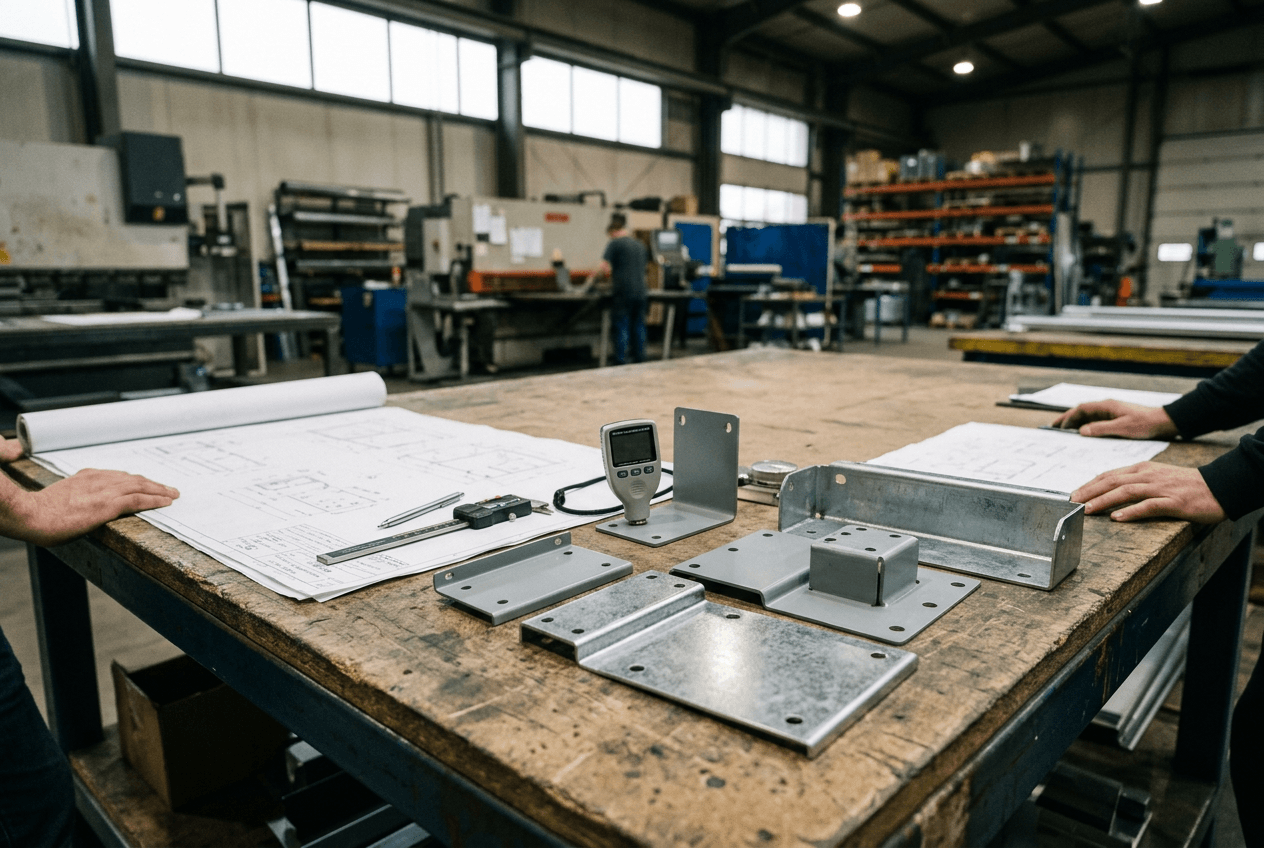
Prototype approval reduces uncertainty, but it does not freeze batch quality by itself. A single good sample may use a different sheet lot, coating batch, operator method, packing material, or inspection distance than production. If the buyer approves appearance without locking the control points, the batch can drift.
Color and gloss create the most visible drift. A door and side panel may match under factory lighting but look different in a retail store. A display rack shelf may pass from one angle and show orange peel from another. Adjacent panels expose shade differences that would not matter on hidden brackets.
Batch consistency needs a reference, not a memory
Procurement should define the reference for color and gloss. Use RAL, Pantone, a powder code, or an approved physical sample. When appearance matters, add gloss range, inspection distance, viewing angle, and Delta E target if the project justifies it. Do not rely on words such as smooth black or semi-gloss for customer-facing panels.
The reference should also connect to production control. State whether all visible parts must come from one coating batch or match a master sample. Confirm whether replacement parts must match earlier shipments. Those details affect purchasing, scheduling, and inventory. They also explain why one quote may cost more than another.
Packing belongs in the quality plan
Packing often receives too little attention in coated metal projects. Parts can leave inspection in acceptable condition and arrive with rub marks, pressure marks, or chipped corners. Bulk packing may work for hidden brackets. It may fail for cabinet doors, retail display panels, and polished front covers.
Buyers should describe cosmetic faces and handling expectations. Mark A-surfaces on drawings or photos. Define whether protective film, foam separation, corner guards, or individual wrapping must be included. If packing is not in the quote, it may become an added charge after the first damaged shipment.
For prototype-to-batch transfer, ask the supplier to document the coating route, color reference, masking points, inspection criteria, and packing method used on the approved sample. Yishang can support this review when buyers send drawings, sample feedback, and assembly notes before batch release.
Clarify these assumptions before comparing coated metal unit prices
The safest quote comparison starts before the first number arrives. Buyers do not need to write a long specification for every part. They do need to remove the assumptions that change cost, quality, and production risk. A short, precise RFQ usually beats a broad finish note.
Ask suppliers to state their coating route in the quotation. The answer should say whether they plan prepainted coil, post-fabrication powder coating, wet painting, primer-only, or another route. It should also mention the substrate, pretreatment if relevant, color standard, cosmetic surfaces, edge expectations, masking, and packing.
Drawings should separate functional needs from preferences. Tight color matching may matter on adjacent enclosure panels but not on internal brackets. A strict salt spray requirement may matter outdoors but add unnecessary cost indoors. A tight post-coating tolerance may protect assembly, while the same tolerance on a noncritical flange only raises inspection effort.
Supplier communication should focus on consequences, not only confirmations. Instead of asking whether the supplier can make the part, ask what coating assumptions affect price, lead time, and inspection. Ask which surfaces carry the highest scratch or bend-crack risk. Ask whether the prototype process will match batch production. Strong answers reveal process judgment before the purchase order creates leverage problems.
Lead time also changes with the assumption set. Powder coating after welding adds queue time, racking, curing, cooling, inspection, and packing. Prepainted material may move faster if the right coil exists, but special colors can create material lead time. Batch color control may require grouping parts together. These details should appear before procurement compares delivery promises.
A useful RFQ for coated metal parts should include 2D drawings, 3D files if available, material grade, thickness, quantities, tolerances, finish expectations, color reference, visible surfaces, assembly function, prototype requirements, batch release plan, and packing needs. If the buyer does not know the best coating route, the RFQ should ask suppliers to recommend one and list the risks behind it.
Send the missing coating assumptions before the lowest quote becomes the baseline
If your coated metal project includes enclosures, brackets, frames, cabinets, or welded assemblies, send the details that affect the finished part. Share drawings, material requirements, quantities, tolerances, finish expectations, color references, visible surfaces, assembly notes, and prototype feedback. Yishang can review the RFQ for fabrication and coating assumptions before you compare supplier prices or approve batch production.
Frequently Asked Questions About Coated Metal RFQ Risk
How should an RFQ describe a coated metal finish?
State the coating route, color reference, substrate, cosmetic faces, edge expectations, masking needs, and packing method. If you want suppliers to recommend the route, require them to list their assumptions in the quote. This prevents prepainted, powder coated, and wet painted options from appearing as equal prices.
When does prepainted metal create procurement risk?
Prepainted metal can create risk when the part has tight bends, visible outside radii, exposed cut edges, welds, countersinks, or high cosmetic expectations. It may still work well for simple panels and covers. The RFQ should define bend performance, edge protection, and visible surfaces before quoting.
Why can powder coating affect assembly fit?
Powder coating adds thickness to holes, slots, tabs, hinge areas, and mating edges. On tight assemblies, that thickness can reduce clearance or interfere with fasteners. Buyers should mark critical interfaces and define whether dimensions apply before or after coating.
How can buyers control color and gloss across a batch?
Use a clear standard such as RAL, Pantone, powder code, or an approved physical sample. For appearance-critical panels, add gloss range, inspection distance, and Delta E target if needed. Also state whether adjacent panels must match one coating batch or a master sample.
What should change between prototype approval and batch release?
The buyer should lock the coating route, color reference, masking plan, inspection criteria, packing method, and any post-coating fit checks. A good prototype does not guarantee batch consistency unless the supplier repeats the same controlled process.
What files should buyers send for a coated metal RFQ review?
Send 2D drawings, 3D files if available, material and thickness requirements, quantities, tolerances, finish expectations, color references, photos or samples, assembly notes, and packaging needs. These details help the supplier price the same production scope you expect to receive.