

A buyer sends an enclosure RFQ to three sheet metal suppliers. The drawings include laser-cut panels, bent flanges, welded corners, hinges, PEM nuts, vents, and one finish note: concept powder coating, black. All three quotations include fabricated and powder coated parts. The unit prices look close enough for a normal comparison.
The problem starts inside that short finish note. One supplier assumes a standard indoor polyester powder and basic cleaning. Another includes thread masking, grounding-pad protection, and tighter cosmetic inspection. A third adds stronger pretreatment because the enclosure may sit near a humid warehouse door. Procurement sees three prices for the same drawing, but production receives three different risk profiles.
For custom sheet metal fabrication, powder coating does more than add color. It changes clearances, visible quality, corrosion expectations, packaging needs, inspection points, and assembly behavior. The dominant procurement risk is RFQ ambiguity. If the coating scope stays vague, the buyer may award the cheapest quote without seeing which assumptions created the price.
Vague Coating Notes Create False Quote Equivalence Before Fabrication Starts
A finish note such as “black powder coat” feels efficient during sourcing. It also gives every supplier permission to fill in missing information. That creates a false comparison. The quotation may show one line for “fabrication and powder coating,” while the actual scope hides decisions about powder type, pretreatment, masking, gloss, film thickness, inspection, and packing.
This risk matters most when the buyer compares suppliers mainly by unit price. A supplier can quote lower by assuming a simple indoor coating, no protected threads, standard hanging marks, and loose appearance standards. Another supplier may price the same part with masked hardware, controlled gloss, better cleaning, and foam-separated export packing. Both quotations may be technically responsive, yet only one may match the product’s real use.
Example: a customer-facing display rack
Consider a welded metal display rack with tube frames and sheet metal shelves. The RFQ states “black powder coat” but does not identify front-facing surfaces. One supplier grinds visible welds, protects cosmetic faces, and inspects the rack under brighter lighting. Another coats after basic cleaning and accepts minor marks on rear-facing areas. The cheaper quote may look attractive until the retail customer rejects visible scratches, weld shadows, or gloss mismatch.
The buyer could have reduced that risk with a few clear notes: “front and side faces cosmetic,” “no visible spatter after coating,” “semi-gloss black, approved sample required,” and “foam separation between coated parts.” Those notes do not turn the RFQ into a long coating manual. They make the comparison honest.
Example: a control enclosure with functional interfaces
A bent sheet metal control housing creates a different problem. The drawing includes hinges, PEM nuts, tapped holes, and an earth bonding point. If the RFQ does not mention masking, one supplier may coat every exposed area to keep throughput high. During assembly, hinge movement becomes tight, threads need chasing, and the grounding pad fails continuity testing.
That problem did not begin in the coating booth. It began when the finish note failed to separate cosmetic surfaces from functional surfaces. Procurement can prevent this by marking protected areas and stating whether critical dimensions apply before coating, after coating, or both.
Pretreatment Assumptions Can Hide Corrosion and Adhesion Risk Inside the Price
Powder coating performance depends heavily on what happens before powder reaches the part. Degreasing may suit a dry indoor bracket. A welded outdoor cabinet may need more controlled cleaning, blasting, phosphating, primer, or another project-specific pretreatment route. If the RFQ does not define the use environment, each supplier prices its own default process.
This creates a procurement trap. The low price may not reflect better efficiency. It may reflect a lighter pretreatment assumption. The difference may stay invisible until the product faces humidity, handling, cleaning chemicals, or outdoor exposure. At that point, adhesion loss, rust bleed, or pinholes become quality disputes instead of sourcing questions.
Welded assemblies increase this risk. Scale, spatter, grinding dust, oils, and trapped residue can create coating defects after curing. A supplier that prices extra cleaning and weld preparation may look expensive next to one that assumes basic processing. Without a clear pretreatment requirement, procurement may penalize the supplier that understood the operating risk more accurately.
Use environment belongs in the RFQ, even when the drawing focuses on geometry. State whether the part will work indoors, outdoors, near a loading door, inside a humid warehouse, in a coastal location, or near cleaning chemicals. Also state whether corrosion resistance affects warranty or customer acceptance. These details help suppliers price the same coating intent instead of guessing.
Material and fabrication details also matter. Aluminum, galvanized sheet, mild steel, stainless steel, laser-cut edges, ground welds, and perforated panels may require different preparation. The RFQ should not force suppliers to guess from CAD alone. When buyers send material requirements, weld expectations, and finish expectations together, suppliers can identify coating risks before they become quote gaps.
Yishang may raise these questions during drawing review for custom enclosures, frames, brackets, and welded assemblies. The goal is not to add unnecessary process cost. It is to expose coating assumptions before procurement compares prices that are not built on the same basis.
Film Build and Masking Decisions Can Turn a Good Part Into a Bad Assembly
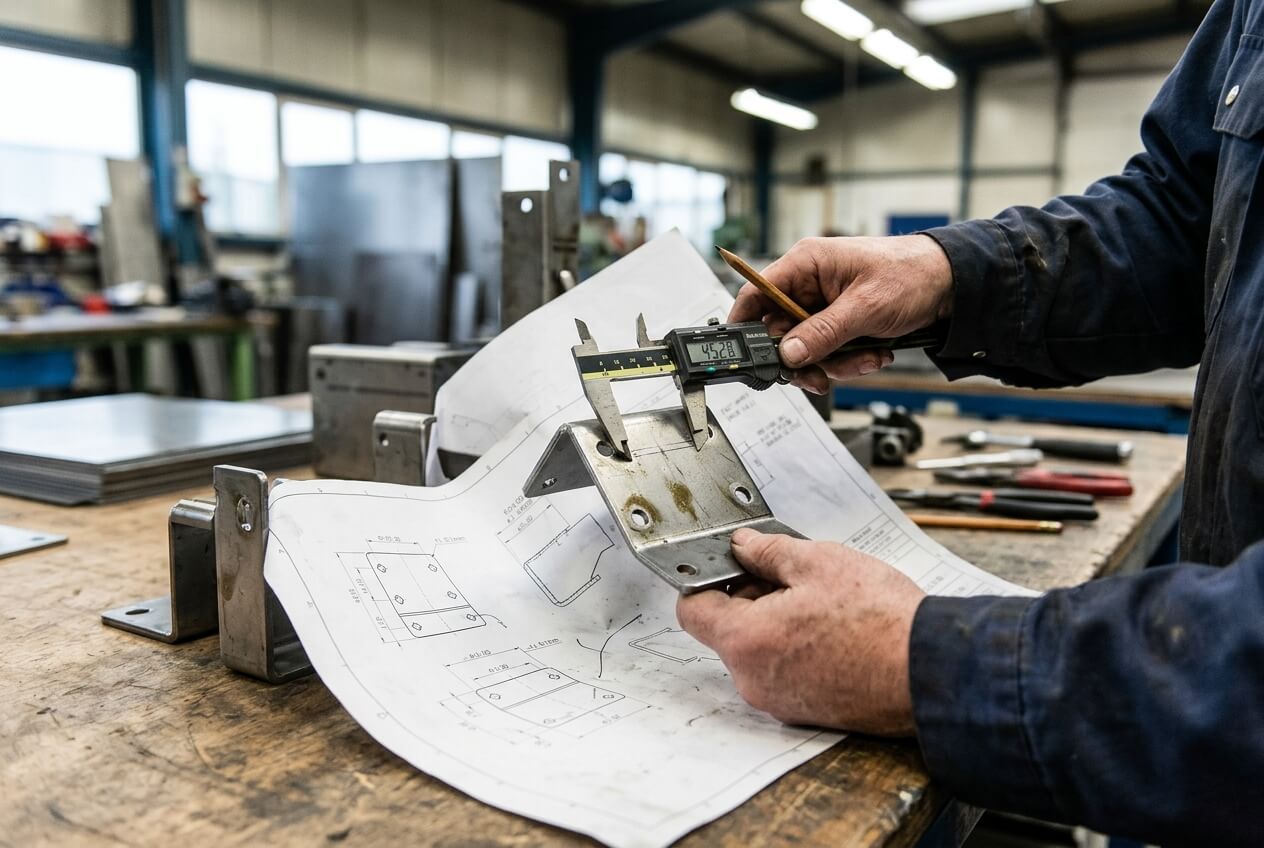
A sheet metal part can pass bare-metal inspection and still fail after coating. Powder adds thickness to surfaces, edges, holes, slots, hinge areas, and mating faces. A coating range of 60–100 microns sounds small, but it can close clearance on both sides of a hole or slot. Tight assemblies feel this change immediately.
The RFQ should tell the supplier which dimensions must function after coating. If it does not, the supplier may inspect the fabricated part before coating and treat the finish as separate. The buyer then discovers the real problem during assembly, when covers bind, screws scrape coating, tabs do not seat, or latch brackets need hand adjustment.
Where coating build-up creates the most disputes
Threaded holes, PEM nuts, studs, hinge barrels, sliding surfaces, press-fit zones, latch contact points, and grounding pads need early attention. Some areas need masking. Others need extra clearance, plug protection, or post-coating inspection. Each choice changes labor, fixture planning, and cost. If procurement asks for a low price without defining these areas, suppliers may remove that labor from the quote.
Grounding points deserve special care. Coating can block electrical contact, even when the part looks perfect. A painted pad may pass visual inspection and fail functional testing. That single missing mask can delay enclosure assembly, trigger rework, or force operators to grind away coating. The result looks like a production problem, but the RFQ caused the ambiguity.
Post-coating fit should appear on the drawing
Clear notes reduce this risk. Use drawing callouts such as “mask M4 threads,” “grounding pad to remain bare,” “maintain door clearance after powder coating,” or “no coating on sliding contact surface.” If a tolerance must hold after coating, say so. If the supplier may adjust hole size before coating to preserve final fit, discuss that before quotation.
Prototype reviews should include the coated condition, not only bare-metal measurements. A prototype door may close after a technician adjusts it by hand. That does not prove a batch of 500 doors will assemble smoothly. The RFQ should connect tolerances, coating build, and assembly checks before production pricing locks in.
A useful supplier response should state masking scope, inspection condition, and any clearance concerns. If those notes do not appear in the quotation, procurement should ask for them before awarding the job. A cheaper quote with no masking assumptions may become more expensive after thread chasing, fit rework, delayed assembly, or rejected parts.
Sample Approval Does Not Remove Batch Risk Unless the RFQ Defines What Must Repeat
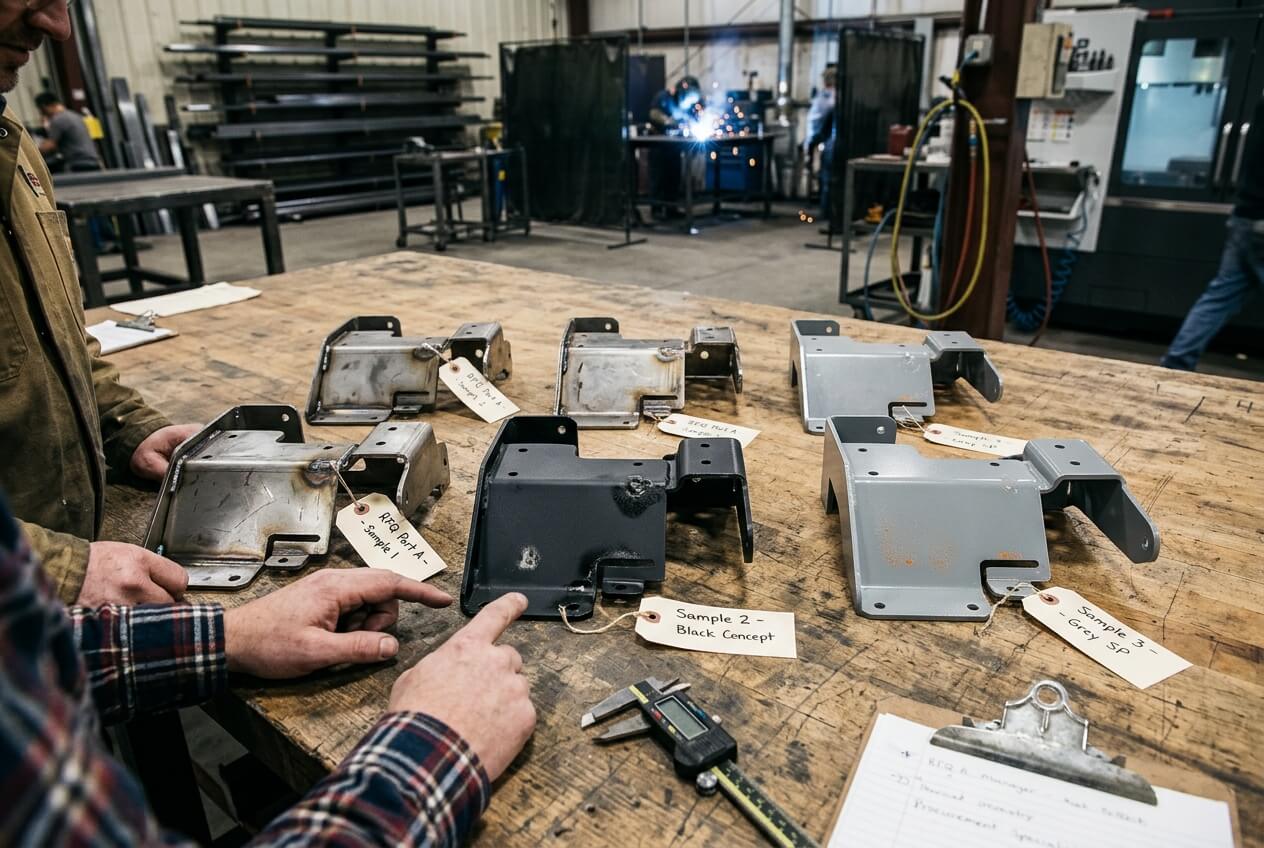
A coated sample can confirm direction, but it does not control production by itself. Batch production changes part geometry, hanging orientation, oven loading, powder lots, cure behavior, handling pressure, and packing conditions. A flat color coupon also does not behave like a welded cabinet with recessed corners, vents, and heavy hinge plates.
This matters when parts assemble together. A cabinet row, retail rack, machine cover, or modular frame may include several coated panels that customers see at the same time. If doors, side panels, and top covers differ in gloss, the final product may look inconsistent even though every component is “black powder coated.”
Batch ambiguity also affects lead time. If the customer rejects a production lot for appearance differences that the RFQ never defined, the team loses time deciding whether the parts are defective or merely different from expectation. Recoating may require stripping, remaking, or rescheduling fabrication. Export packing can make the delay worse because damage may appear only after shipment.
Packaging belongs in this discussion because it protects the finish that procurement bought. A front panel may leave the coating line acceptable and arrive with rub marks if the RFQ does not specify foam separation, protective film, carton strength, or pallet stacking limits. For overseas buyers, the cost of discovering this late can exceed the coating cost itself.
Clarify what the prototype proves. Does approval cover color only, or also gloss, texture, weld appearance, masking accuracy, film build, packing, and assembly fit? If multiple coated parts form one visible set, state whether they must match within each set. If touch-up is not acceptable on customer-facing surfaces, write that into the RFQ before the production batch starts.
Yishang can review sample feedback alongside drawings and assembly notes when buyers move from prototype to batch production. That review helps separate acceptable production variation from risks that need tighter instructions before the next quote.
How Buyers Can Compare Quotes Without Rewarding Missing Finish Scope
Procurement does not need a complicated coating specification for every part. A hidden internal bracket does not need the same detail as a customer-facing enclosure. The key is to prevent vague concept powder coating notes from hiding the assumptions that change price, fit, appearance, and acceptance.
Start with the product’s function. State whether the part is a hidden bracket, visible cabinet, outdoor frame, retail rack, or electrical enclosure. Then connect the finish to the drawing. Mark cosmetic faces, masked areas, grounding points, critical holes, threaded features, hinge interfaces, and post-coating fit requirements. Photos help, but written notes should control the quote.
Ask suppliers to state their coating assumptions inside the quotation. The response should confirm color reference, gloss or texture, pretreatment basis, film thickness range, masking scope, cosmetic acceptance, packing method, and any manufacturing concerns. This makes the quote easier to compare. It also gives procurement evidence when one supplier’s price excludes work that another supplier included.
Quantities and production stage also affect the risk. A one-off prototype, pilot run, and 2,000-piece batch need different controls for hanging points, fixtures, inspection sampling, packaging, and repeatability. If the production batch must match an approved prototype, define which features must repeat. Do not rely on the word “approved” to cover color, texture, fit, masking, and packaging at the same time.
Cost and lead time discussions become more useful once finish scope becomes visible. Masking adds labor. Stronger pretreatment adds process steps. Tighter cosmetic inspection may slow throughput. Better packaging increases material cost. These items may raise the unit price, but they can reduce rework, assembly stoppages, customer rejection, and late shipment.
Before awarding a coated sheet metal project, send the supplier a complete RFQ package. Include drawings, CAD files, material requirements, quantities, tolerances, finish expectations, use environment, approved samples or photos, assembly notes, and known prototype issues. If your RFQ still says only “powder coated,” “black finish,” or a color code, ask for the missing assumptions before comparing final prices.
For custom sheet metal enclosures, brackets, frames, cabinets, and welded assemblies, you can send drawings, material requirements, quantities, tolerances, and finish expectations to Yishang for RFQ review. Include photos, samples, assembly notes, and any prototype feedback so coating assumptions can be checked before price comparison and batch production.
Frequently Asked Questions
What does concept powder coating mean in a sheet metal RFQ?
In procurement, concept powder coating usually means the buyer has a finish intention but has not fully defined the production scope. The RFQ should still clarify color reference, gloss, texture, pretreatment, film thickness, masking, visible faces, packaging, and inspection criteria.
Why can “black powder coat” make supplier quotes misleading?
The phrase does not define powder type, pretreatment, film build, masking, gloss, cosmetic limits, or packing. One supplier may quote a basic indoor finish, while another includes functional masking and stronger inspection. The prices may look comparable, but the included work differs.
Which powder coating details should buyers put on fabrication drawings?
Mark cosmetic surfaces, masked threads, grounding pads, hinge areas, sliding surfaces, critical holes, and post-coating fit requirements. Also state the color reference, gloss or texture, use environment, and any surfaces where touch-up or visible weld marks are not acceptable.
How does powder coating affect tolerances and assembly fit?
Powder adds thickness to holes, slots, bends, flanges, hinges, and mating faces. That build-up can reduce clearance or block electrical contact. Buyers should state whether key dimensions apply before coating, after coating, or both.
Why can an approved powder coated sample still fail in batch production?
A sample may not represent production hanging methods, powder lots, oven loading, part geometry, handling, or packaging. Buyers should define which features must repeat in production, including color, gloss, texture, masking, fit, and visible-surface acceptance.
What should buyers send with an RFQ for powder coated sheet metal parts?
Send drawings, CAD files, material requirements, quantities, tolerances, finish expectations, use environment, assembly notes, approved samples or photos, and prototype feedback. This helps suppliers quote the same scope and reduces disputes after fabrication.