
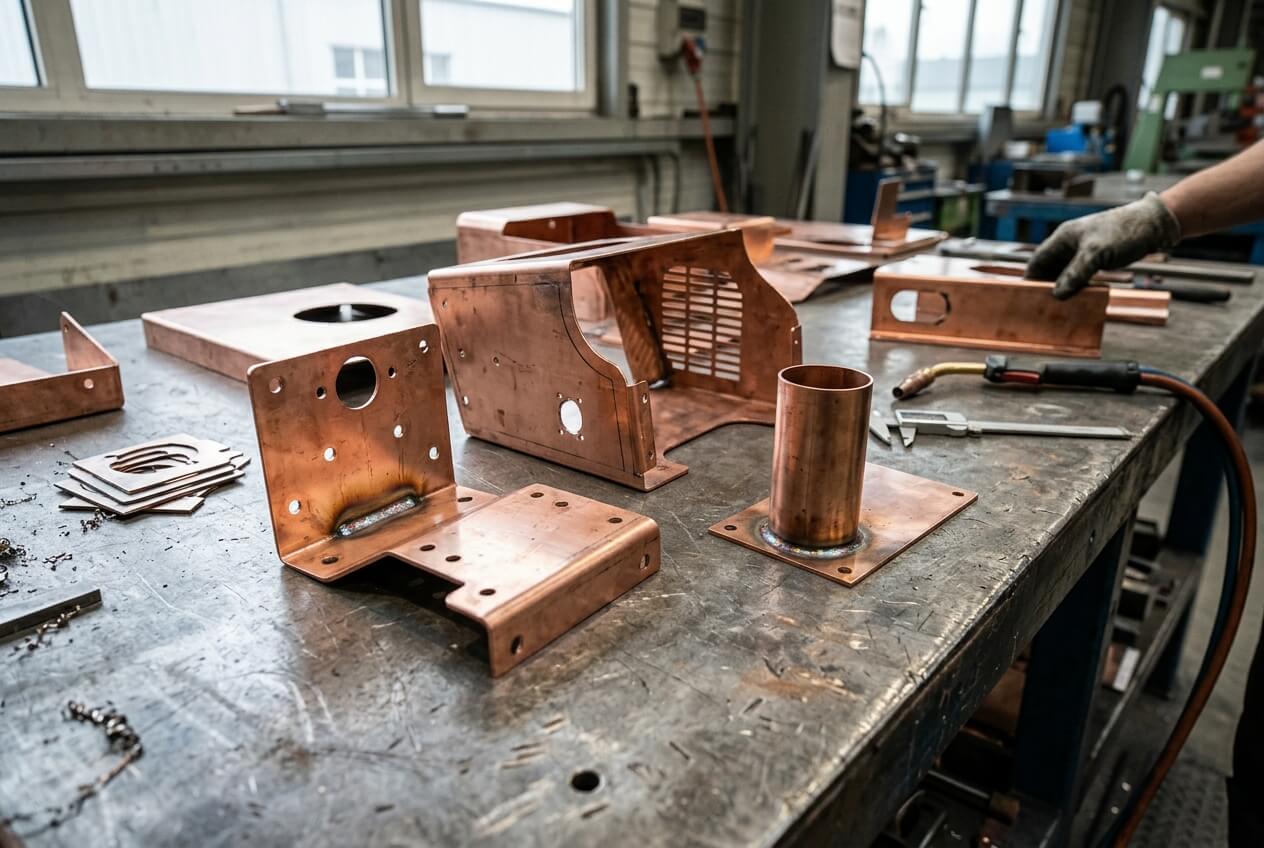
A buyer may begin with a simple technical question: copper melts at what temperature? Pure copper melts at about 1,084°C / 1,983°F. That fact matters, but it rarely explains why three suppliers return three different prices for the same copper enclosure, bracket, frame, or cabinet panel.
The larger procurement risk sits in the RFQ. Many copper sheet metal requests define the material too loosely, apply tight tolerances too broadly, and leave finish expectations open to interpretation. Each supplier then fills the gaps with its own assumptions. One quote may include polishing, masking, and post-weld correction. Another may assume standard handling marks and minimal inspection. The cheapest number may only look cheaper because it excludes work the buyer expects later.
This article focuses on one dominant buyer risk: non-comparable copper fabrication quotes caused by unclear RFQ assumptions. Copper makes this risk more expensive because raw material cost, heat behavior, surface sensitivity, and rework exposure can all amplify small drawing gaps. The goal is not to over-document every detail. The goal is to define what truly controls fit, function, finish, and repeatability before suppliers price the job.
Why the Melting Point Answer Does Not Prevent Quote Drift
Pure copper melts at about 1,084°C, but most sheet metal fabrication does not melt the whole part. Laser cutting, punching, bending, welding, brazing, powder coating, polishing, and assembly all create different risks. A buyer who only confirms the melting point still may leave the supplier guessing about grade, temper, bend radius, surface protection, and inspection scope.
That gap creates quote drift. One supplier may quote C110 copper sheet because it is common and conductive. Another may assume a copper alloy with different forming behavior. A third may add cost for protective film, polishing, and oxidation control because the drawing says “no scratches” without marking visible faces.
The temperature fact can hide the manufacturing question
Copper conducts heat quickly. During welding or brazing, heat moves away from the joint and into surrounding features. That can move holes, pull flanges, and reduce flatness. The part does not need to approach its melting point for distortion to matter.
For example, a copper shielding cover inside an electrical cabinet may include welded corners and four mounting ears. The CAD model looks rigid and simple. In production, heat input can shift the ears enough to make installation difficult. If the RFQ does not state which hole pattern controls assembly, suppliers must decide whether to price fixtures, straightening, or broader inspection.
The problem starts with a material label. It then spreads into process assumptions. By the time quotations arrive, the buyer compares different manufacturing scopes instead of different supplier prices. Clarifying the material and the part’s main function earlier keeps the melting point in perspective.
Where Vague Copper Notes Turn Into Defensive Pricing
Suppliers price risk when drawings leave important questions open. Copper increases that defensive pricing because scrap, handling damage, cosmetic rework, and weld correction cost more than they do on many steel parts. If a drawing says “copper, tight tolerance, nice finish,” the supplier cannot know which requirement matters most.
Some suppliers respond with a low quote and narrow assumptions. Others protect themselves with a higher quote. Neither response gives the buyer a clean comparison. The issue starts before production. It starts when the RFQ fails to separate critical requirements from flexible requirements.
Over-specified tolerances can be as risky as missing tolerances
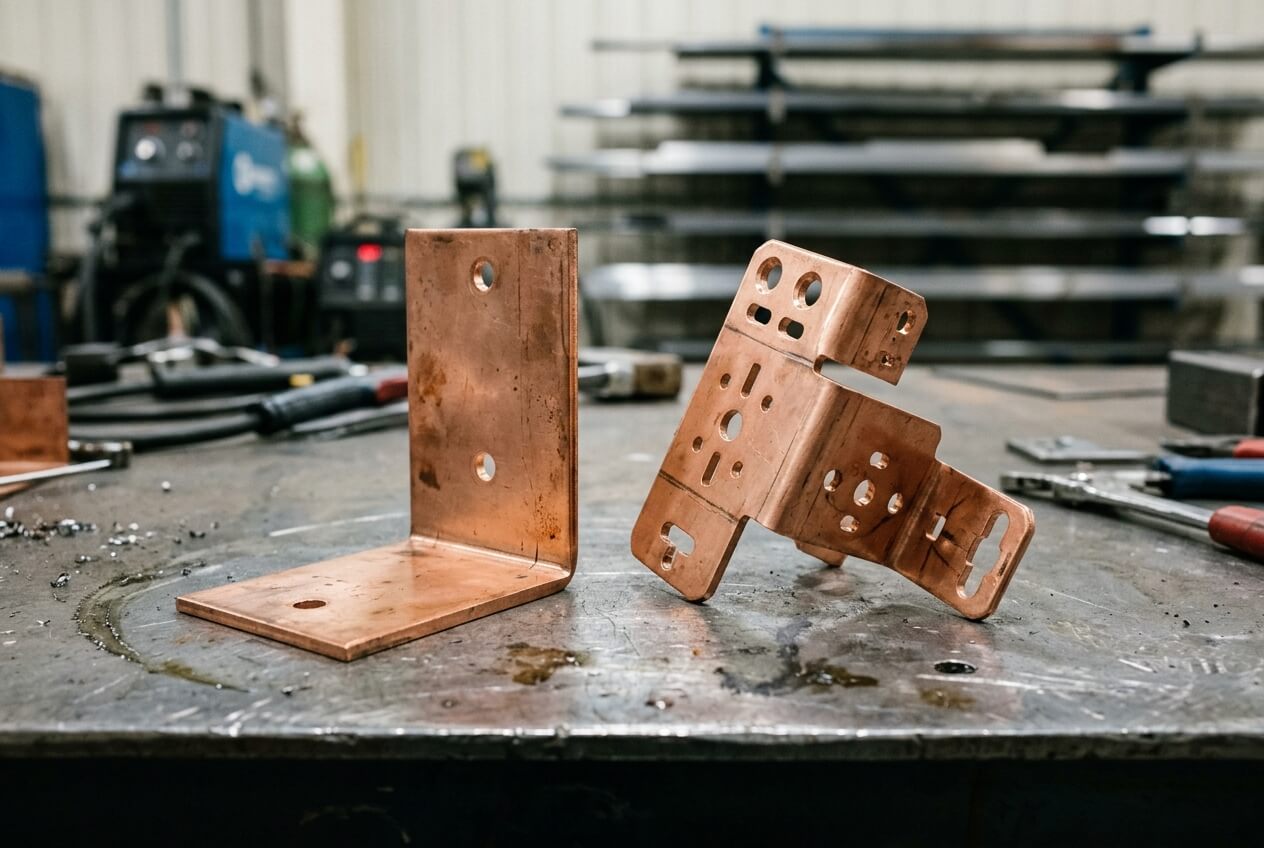
A copied tolerance block often creates unnecessary cost. A copper bracket may only need two holes to align with a busbar assembly. If the drawing applies ±0.05 mm to every outside edge, the supplier may price slow cutting, extra inspection, and lower yield. The outside profile may have no effect on fit.
A better RFQ marks the hole-to-hole distance, bend-to-hole relationship, and mating face as critical. It also allows normal fabrication tolerance on non-functional edges. This does not weaken quality. It directs inspection time toward the features that decide assembly success.
Unclear cosmetic zones create hidden labor
Finish notes can distort copper quotes even faster. Copper scratches, fingerprints, oxidizes, and changes color during handling. A note such as “surface must be clean” gives suppliers too much room to interpret scope.
Consider a brass decorative front panel for a display frame. The exposed face needs a consistent grain direction and low scratch visibility. The rear face sits inside the frame and never appears after assembly. If the drawing treats both faces the same, the quote may include unnecessary protection and polishing. If the RFQ marks the visible face, suppliers can price the finish correctly.
The same logic applies to powder coated copper parts. Conductive contact areas may need masking. Threaded holes may need protection. Hidden faces may accept normal coating variation. A short finish map often prevents a long pricing argument later.
How Material, Bend, and Finish Assumptions Change the Same Copper Part
Two suppliers can read the same drawing and imagine two different parts. This happens often when the RFQ names copper but does not explain the grade, temper, bend expectations, and final use. The quote then reflects the supplier’s guess, not the buyer’s requirement.
Material identity drives more than purchase cost. Copper, brass, bronze, and other copper alloys behave differently during bending, welding, polishing, and coating. Even within copper, temper can change springback, cracking risk, and forming marks. If alternatives are acceptable, the RFQ should say so. If conductivity, color, corrosion behavior, or bend performance matters, the RFQ should not leave the alloy open.
Bend details should protect fit, not lock in unnecessary difficulty
A bend radius that worked on stainless steel may not work well on a copper alloy sheet. A small radius can crack the outside surface, mark the inside bend, or create springback that affects hole alignment. When the radius is functional, the drawing should define it. When it is not functional, the buyer should allow the fabricator to recommend a practical radius for the material and thickness.
Project teams often miss this point on cabinet brackets and mounting plates. The bracket only needs to hold a component at a set height. Yet the drawing locks every bend radius and flange length tightly. The supplier then prices trial bends, tooling constraints, and inspection effort. A clearer note can preserve the mounting height while giving the fabricator more room to form the part consistently.
Finish assumptions affect conductivity and assembly
Finish requirements also change part performance. A raw copper grounding plate, polished copper cover, powder coated panel, and masked conductive component are different scopes. If a contact area must remain bare, the drawing should mark it. If a face must look uniform after installation, the drawing should identify that face.
One realistic example is a copper grounding plate inside a metal enclosure. Appearance matters less than flat conductive contact. A polishing requirement would add cost without improving function. Another example is a copper alloy decorative panel on a cabinet door. Conductivity does not matter, but scratches and color variation do. Both parts may use copper alloy sheet, but their RFQs should look very different.
Yishang often sees copper sheet metal RFQs where the drawing shows geometry but not intent. A short note about electrical contact, visible surfaces, mating parts, or acceptable alternatives can reduce quoting uncertainty. It also helps the fabricator recommend a process without guessing what failure means.
Why Prototype Approval Can Still Leave Batch Quotes Exposed
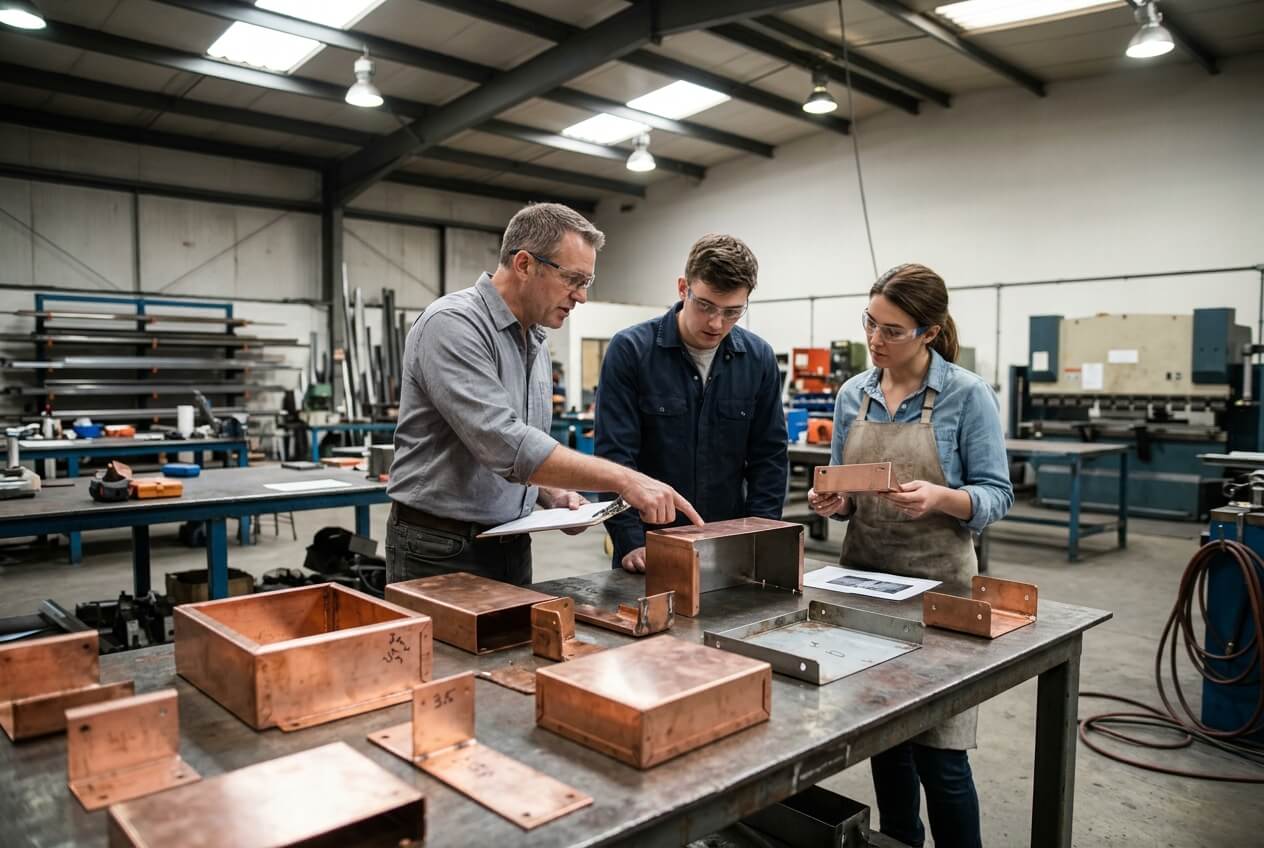
A prototype can reduce risk, but it can also hide risk if the buyer approves a sample without updating the drawing. This problem becomes costly when batch production follows the original file while the prototype succeeded because of manual correction.
A fabricator may open a slot slightly, hand-straighten a welded corner, polish a local mark, or adjust a flange after bending. The buyer receives a sample that fits and looks acceptable. Everyone moves quickly toward the production order. Later, the batch repeats the drawing instead of the undocumented correction. Fit problems return, and the supplier may request a change order or longer lead time.
Sample approval should define what the buyer approved
Prototype feedback should identify the reason for approval. Did the part pass because the hole pattern aligned? Did the surface meet a cosmetic standard? Did the powder coating avoid a contact area? Did the welded frame stay flat enough for assembly? Each answer should translate into drawing notes, inspection points, or revised tolerances.
For a welded copper frame, the sample may look acceptable after careful straightening. If batch flatness requirements remain undefined, production parts may vary more than expected. For a copper enclosure, the prototype may fit because a slot gained extra clearance after hand finishing. If the drawing does not change, the batch can fail during installation.
Prototype and batch methods may differ
Prototype methods do not always match batch methods. A prototype may use laser cutting and manual forming. A batch may use fixtures, CNC punching, or a different bending sequence. That difference is not a problem if the supplier explains which features stay controlled.
Buyers should ask suppliers to flag any prototype-only corrections before batch release. They should also send mating part drawings, photos, assembly notes, and acceptance concerns. Yishang can review drawings and prototype feedback for custom enclosures, brackets, frames, and welded assemblies when buyers need the production file to reflect the approved sample.
This step protects more than quality. It protects the quote. If the batch requires polishing, fixture control, masking, or post-weld correction, those items should appear before the purchase order. Hidden work rarely stays hidden once production starts.
What Buyers Should Clarify Before Comparing Copper Fabrication Quotes
The safest quote comparison starts before suppliers send prices. Buyers should define the assumptions that affect cost, fit, and repeatability. They do not need a long manual. They need a short, clear RFQ package that tells every supplier what to price.
Start with material. Name the copper grade or alloy if known. State whether alternatives are acceptable. Include thickness and temper when bending, stiffness, conductivity, or appearance matters. If the project uses copper mainly for electrical performance, say so. If it uses copper alloy for appearance, say that instead.
Next, separate critical dimensions from flexible dimensions. Mark hole centers, slots, bend-to-hole distances, gasket faces, mating edges, and assembly datums. Relax non-functional outside edges where possible. This helps suppliers price useful precision rather than blanket inspection.
Finish expectations need equal clarity. Identify visible faces, hidden faces, bare conductive zones, masking areas, thread protection, polishing direction, and acceptable handling marks. Copper finish work can add labor, packaging, and inspection time. Suppliers need to know whether those controls apply to the whole part or only selected zones.
Finally, connect prototype approval to batch production. Ask whether the supplier’s quote includes prototype review, drawing updates, first article inspection, fixture needs, weld cleanup, deburring, packaging, and any finish protection. If the supplier excludes these items, the unit price may not reflect the real production scope.
A useful procurement question is: “If we approve this quote, what assumptions are we approving?” That question exposes differences in material grade, bend radius, tolerance interpretation, finishing, masking, welding, inspection, lead time, and packaging. It also gives suppliers a chance to propose manufacturable alternatives before the buyer locks the order.
When preparing an RFQ for copper or copper alloy sheet metal parts, send Yishang your drawings, material requirements, expected quantities, tolerance priorities, finish expectations, assembly notes, and prototype feedback. Clear inputs help the manufacturing team quote the same scope you intend to buy. Start from https://zsyishang.com/.
Frequently Asked Questions
Copper melts at what temperature?
Pure copper melts at about 1,084°C / 1,983°F. That number helps identify the material, but it does not define the full fabrication risk. RFQs still need grade, thickness, temper, critical dimensions, finish zones, and assembly requirements.
Why can two suppliers quote different prices for the same copper drawing?
They may assume different material grades, bend radii, polishing levels, masking rules, inspection scope, or weld correction. If the RFQ does not define those points, suppliers price different scopes. The buyer then compares assumptions instead of true unit cost.
Which tolerances should buyers highlight on copper sheet metal parts?
Highlight the dimensions that control assembly and function. These often include hole centers, slot locations, bend-to-hole distances, mating edges, gasket areas, and conductive contact points. Non-functional edges can often follow normal fabrication tolerance.
Why do finish notes matter so much on copper and copper alloy parts?
Copper can scratch, oxidize, show fingerprints, and change color during handling. Polishing, powder coating, masking, and bare conductive areas all create different production scopes. Mark visible faces and functional contact zones before requesting quotes.
How can prototype approval create batch production problems?
A prototype may pass because the fabricator made manual corrections that never reached the drawing. If the batch follows the old file, hole alignment, bend angles, flatness, or finish can vary. Buyers should convert prototype feedback into drawing updates and inspection notes.
What should buyers send with a copper sheet metal RFQ?
Send drawings, material grade or acceptable alternatives, thickness, quantities, critical tolerances, finish expectations, assembly notes, mating part information, and prototype feedback if available. These details help suppliers quote the same manufacturing scope.