
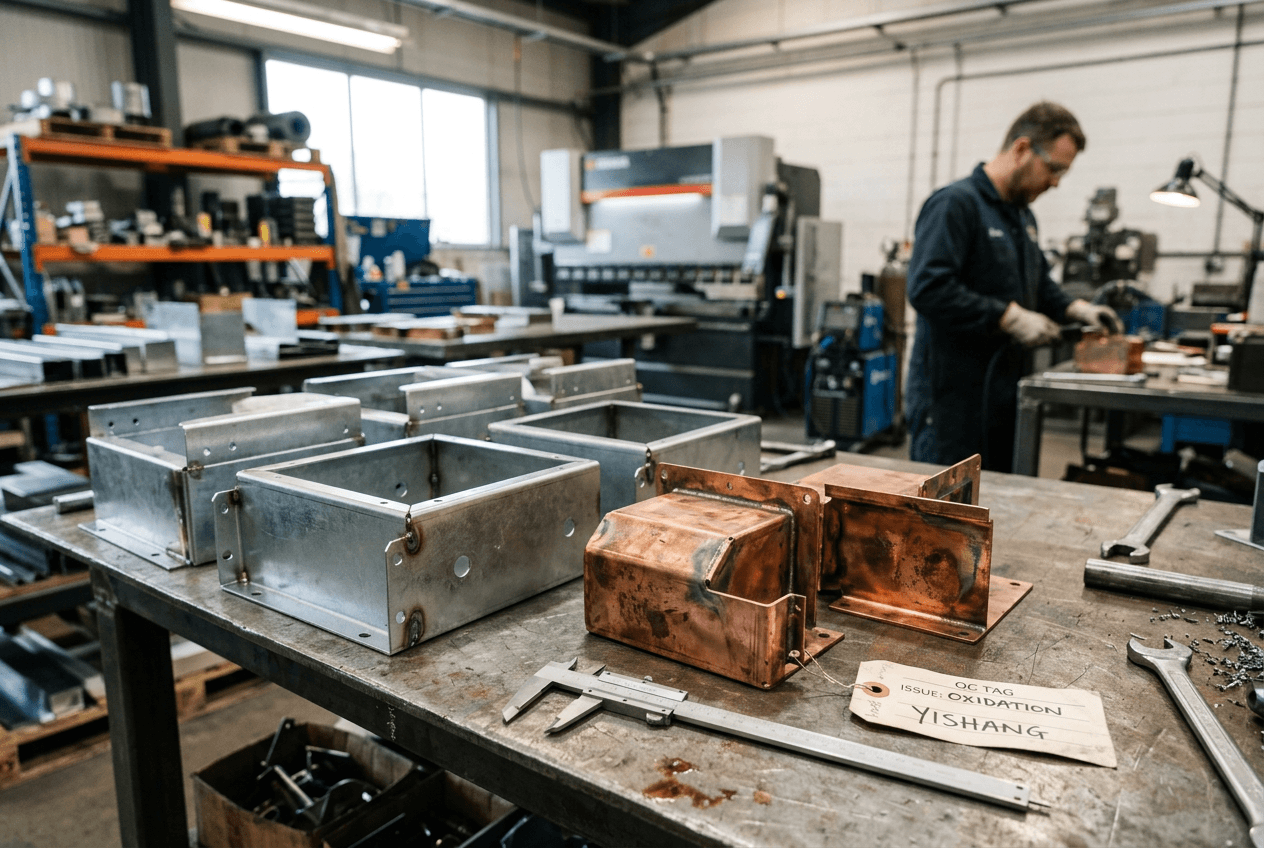
In custom sheet metal fabrication, oxidation of copper often looks like a simple finish note. In procurement, it is usually a risk note. If the RFQ uses one vague phrase, the supplier must guess the process, the color target, the masked areas, and the inspection standard. That guess can distort the quote, slow sampling, and create batch parts that no longer match the approved prototype.
For copper sheet metal parts, the finish is not an isolated cosmetic step. It affects cleaning, fixturing, weld cleanup, contact faces, visible edges, and final assembly. A buyer may compare two quotations that look similar on price, yet the assumptions behind them are very different. One supplier may price a light cosmetic oxidation. Another may include masking, post-cleaning, and extra inspection. That gap becomes visible only after the first sample or the first batch.
This article focuses on one buyer risk: RFQ ambiguity that causes quote drift and production rework. If you buy copper brackets, enclosures, frames, or welded assemblies, the key question is not whether oxidation is possible. The real question is whether the drawing and the RFQ define the finish closely enough for a supplier to build the right process from the start.
How one vague oxidation note can distort the quote basis
The first risk appears before production starts. A note that only says oxidation of copper leaves too many decisions open. The supplier still has to choose between chemical blackening, heat oxidation, a controlled patina, or another surface treatment path. Each route changes setup time, labor, inspection, and yield. If the buyer does not state the target appearance, the quote can be built on the wrong process.
This is where low prices can mislead. A supplier may price a narrow interpretation of the part, such as oxidation only on the front face, while another supplier prices full-part treatment and masking. Both quotes may be technically reasonable from their own assumptions. Neither quote is reliable if the RFQ has not locked the finish scope.
Hidden cost also appears in the details around the finish. Does the part need oxidation before bending or after bending? Must threads stay clean? Are weld zones allowed to show tonal variation? If those points are missing, the quoting team may undercount labor or assume a simpler routing than the drawing really requires.
For buyers, the consequence is not just a price difference. It can lead to sample rejection, redraws, or schedule slippage because the supplier discovers extra work after the order is released. Yishang reviews this kind of ambiguity early when buyers send drawings for copper sheet metal parts and welded assemblies, because the finish method should match the part geometry before the quote is fixed.
What usually drives the quote off course
Three gaps cause most problems. First, the RFQ names the finish but not the method. Second, the drawing does not define visible faces versus hidden faces. Third, the buyer does not state which contact points must remain bare. Once those details are missing, the quote reflects supplier assumptions, not buyer intent.
That gap is especially expensive on parts with multiple processes. A copper enclosure may need laser cutting, bending, weld cleanup, oxidation, and final assembly. If the oxidation requirement is vague, the estimator may miss the masking and handling steps that protect mounting holes and grounding pads. The result is a quote that looks attractive but leaves room for rework later.
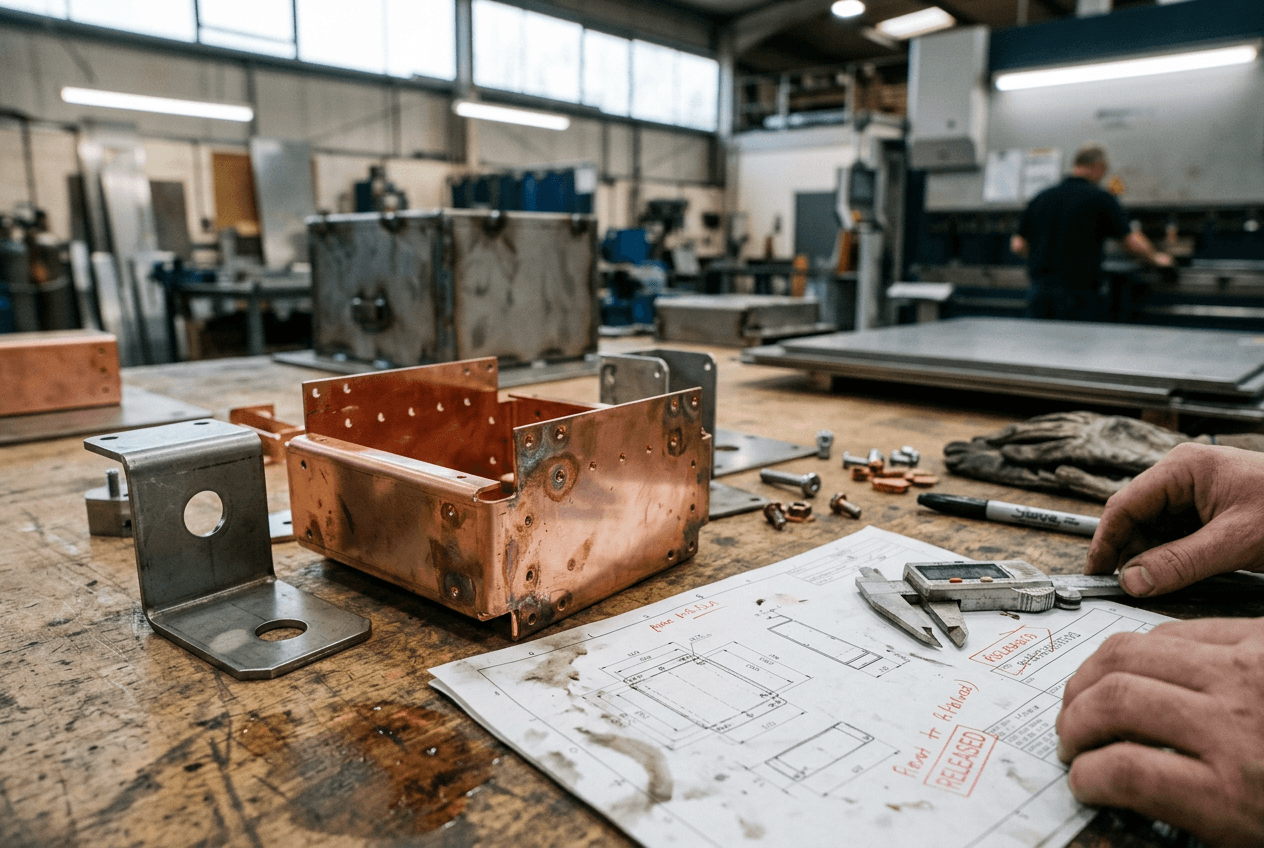
Why finish method and part geometry must be defined together
Oxidation does not behave the same on every copper part. Geometry changes the result. Flat cosmetic panels react differently from bent brackets. Welded seams react differently from clean laser-cut blanks. Sharp edges, corner radii, and cutouts can create color shifts that only appear after finishing. That means the buyer should not treat the finish note as separate from the fabrication drawing.
Take a copper display enclosure as an example. The front face may need a dark, uniform look, but the back side may remain hidden. If the buyer does not mark the front as the only cosmetic face, the supplier may include full-surface treatment and masking. That extra step can lift the price and extend the lead time. If the buyer later asks for a specific grounding area to stay clean, the change can trigger a second sample round.
The same risk appears in structural parts. A copper bracket that mounts inside a cabinet may only expose one edge. If oxidation is applied after forming, the exposed bend line can show a different tone from the flat area. If the buyer did not allow that variation in advance, the finish may be rejected even though the bracket functions correctly.
Buyers should define the finish intent alongside the geometry. Mark the visible faces. Mark the hidden faces. Mark the areas that must stay bare for assembly, electrical contact, or inspection. That level of clarity helps the supplier quote the right cleaning, masking, and handling steps the first time.
Project example: a copper cabinet nameplate
An equipment maker once asked for a copper nameplate with oxidation of copper noted only on the drawing. The part had countersunk holes, a brushed front, and a hidden back face. One quote assumed full-side treatment. Another assumed front-face oxidation only. The low quote looked attractive until the buyer realized the full-side version included extra masking and more inspection. Once the drawing marked the back face as non-cosmetic, the supplier could price the job correctly and avoid a revision after the first sample.
How bends, welds, and contact points create hidden assembly risk
Oxidation becomes a procurement problem when it reaches the assembly stage. The finish can make minor fabrication issues more visible, not less. Burrs, weld marks, fixture points, and bend stress lines can show through after oxidation. If the buyer did not plan for that effect, the final part may fail cosmetic approval or assembly fit even though the fabrication itself is within print.
This matters most on copper welded assemblies. Weld zones often take color differently from parent metal. Grinding and cleanup can also change the surface response. If the weld sequence, cleanup standard, or allowed visual variation is not clear, the supplier may finish the part correctly from a process standpoint but still deliver an uneven-looking frame or housing.
Contact points are another common source of trouble. Mounting holes, grounding pads, press-fit faces, and sliding interfaces often need to stay clean. If oxidation touches those areas, assembly can become harder or the part may need a second cleaning step. That second step adds cost and can also damage the finish around the cleaned area.
For a buyer, this means the risk is not limited to appearance. The finish can change fit-up, assembly sequence, and even electrical performance. A part that looks acceptable on the rack may create friction in the final build if the contact areas were not protected.
Project example: a welded copper frame for an industrial display
A buyer ordered a welded copper frame for a display unit and specified only oxidation of copper on the RFQ. The first sample looked acceptable from a distance, but the weld seams read darker than the surrounding metal. The mounting tabs also came back with a thin oxide film that interfered with fast assembly. The supplier had followed the drawing as written, but the drawing had not defined seam appearance or bare contact faces. A revised RFQ with masked tabs and a seam appearance limit prevented the same issue on the production lot.
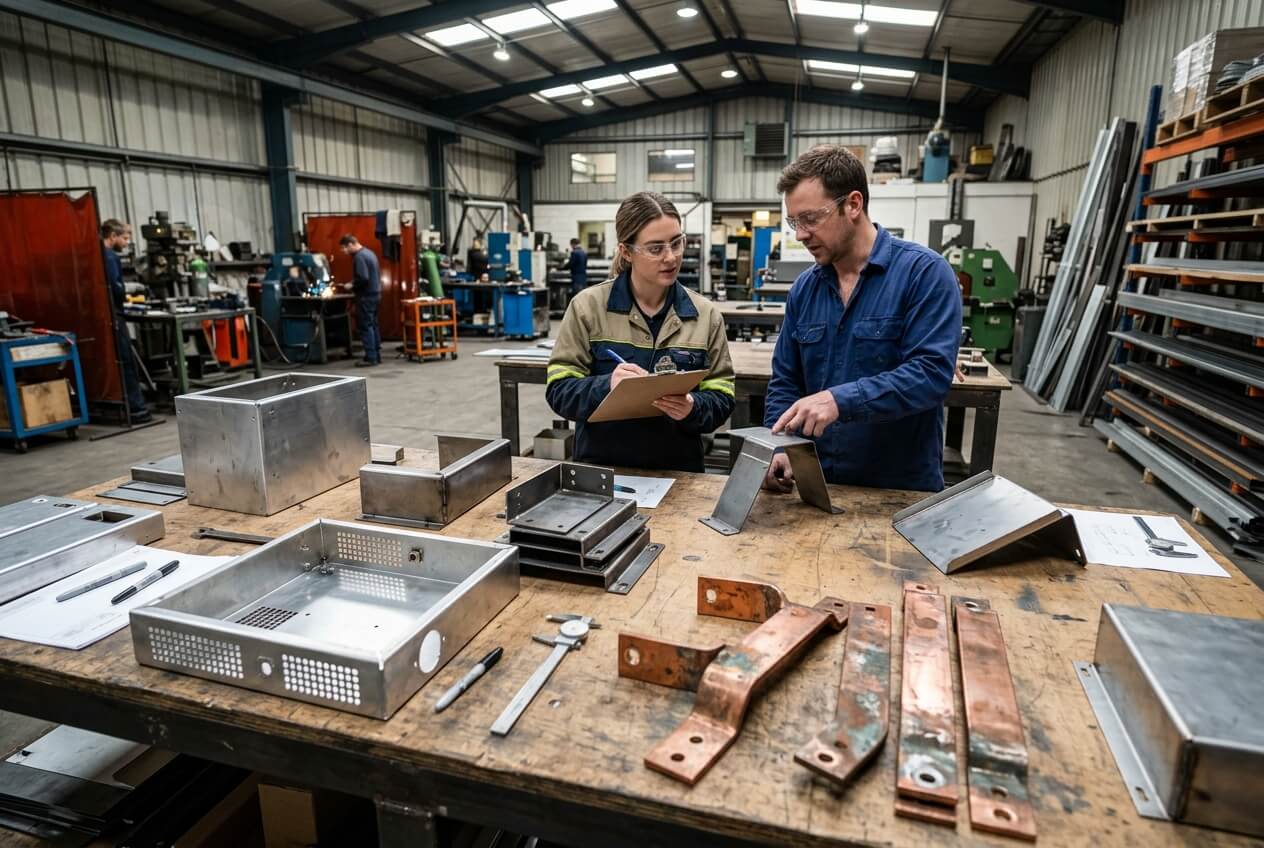
Why prototype approval can still fail when batch production begins
Prototype approval often gives buyers false confidence. A single copper sample can look perfect because the shop pays extra attention to it. The operator may clean it longer, rack it more carefully, or touch up the finish by hand. That level of control rarely repeats across a batch. When the order scales up, small process variations begin to matter.
That is why oxidation of copper should be treated as a repeatability issue, not just an appearance issue. Bath condition, cleaning quality, drying time, and loading pattern can all shift the color tone. If parts are nested differently or handled more often, the finish may show streaks, edge darkening, or inconsistent sheen. The prototype may pass because it was more carefully managed than the batch.
Buyers should ask one simple question before releasing production: does the approved sample represent normal batch conditions? If not, the approval may be too fragile. For copper enclosures and decorative frames, the buyer should confirm that the color, edge behavior, and masked areas remain stable across multiple pieces, not just one showcase sample.
This is also where supplier communication matters, but only in a practical way. The buyer does not need long discussions. The buyer needs proof that the supplier can run the same process twice with the same result. If Yishang reviews a prototype, the useful question is not whether the sample looks good once. The useful question is whether the finish can be repeated on a batch without changing the visible tone or the assembly condition.
What batch-ready approval should prove
Batch-ready approval should confirm four things. The finish tone must stay within the acceptable range. The masked areas must remain clean. The welds and bends must not create unexpected shadows. The part must still assemble without added cleaning or rework. If any of those points remain open, the prototype is not yet a safe basis for volume production.
What buyers should lock into the RFQ before they compare suppliers
The fastest way to reduce quote risk is to turn oxidation of copper into a controlled RFQ requirement. That does not mean overengineering the drawing. It means giving the supplier enough information to price the same process you expect to approve later. If the RFQ stays vague, the buyer will compare numbers that do not cover the same scope.
Start with the part function. Is it a visible enclosure panel, a structural bracket, a decorative frame, or a welded assembly with mixed cosmetic and functional zones? Then define the finish target in practical terms. State the color range, sheen, and any sample reference. After that, mark the no-finish areas. Holes, threads, contact pads, and assembly faces should be shown clearly on the drawing.
Buyers should also note the material grade, thickness, quantity, tolerances, and whether the finish must survive packaging and transport. On copper parts, those details influence fixturing, inspection, and the amount of handling the shop must allow. If the order will move from prototype to batch production, the RFQ should say whether the prototype becomes the production standard or whether a separate master sample is required.
This is the right point to ask for drawing review, not after the quote is already locked. If the buyer shares the drawings, material requirements, quantities, tolerances, and finish expectations early, Yishang can assess manufacturability and flag masking, weld cleanup, or finish-range risks before production starts. That is much cheaper than changing the process after the first sample fails.
Send the drawing package, material requirements, quantities, tolerances, finish expectations, and any reference photos before you release the RFQ. If oxidation of copper is part of the part specification, the safest quote is the one built on the same assumptions the buyer will use at inspection.
Frequently Asked Questions
What should an RFQ say instead of only oxidation of copper?
It should name the finish method, the visible faces, the masked areas, and the acceptable color range. If the part needs bare contact points, grounding pads, or clean threads, the drawing should mark those areas clearly.
Why do copper brackets and enclosures get different quotes for the same finish note?
Geometry changes the work. Bends, welds, holes, and hidden faces can add masking, cleaning, and inspection time. Two parts may share the same finish note, but the real process effort can be very different.
Can a prototype pass even if batch production later fails?
Yes. A prototype often gets extra cleaning and manual attention. Batch production depends more on stable process control. If bath condition, handling, or loading changes, the finish can shift in color, sheen, or coverage.
What assembly problems can oxidation create on welded copper assemblies?
Oxidation can make weld seams more visible and can leave a film on mounting tabs, grounding faces, or press-fit areas. That can slow assembly, require extra cleaning, or cause the part to miss the intended fit condition.
Which project details should buyers send before asking for a quote?
Send drawings, material requirements, quantities, tolerances, finish expectations, and any photo reference. If the part has visible and hidden faces, mark them clearly so the supplier can quote the right masking and inspection scope.