Metal Cutting Isn’t Just Cutting Metal — It’s Engineering Intent Made Visible
At YISHANG, we know that metal cutting is not just a step in the production process — it’s the first and most critical decision in transforming a design into a finished product. For bulk buyers, the method chosen for metal cutting directly impacts cost efficiency, product quality, and production timelines. Every material, whether stainless steel, aluminum, or carbon steel, behaves differently and requires the right cutting method to achieve optimal results.
In this guide, we’ll dive into how choosing the right metal cutting method can save you costs, improve consistency, and ensure faster delivery. We’ll also show you how to make smarter procurement decisions by understanding the factors influencing metal cutting choices.
How Metal Cutting Decisions Affect Your Bottom Line
When sourcing metal components in bulk, the cutting method directly affects not only the final product quality but also your total manufacturing costs and lead times. At YISHANG, we specialize in helping procurement managers make informed decisions by providing clear insights into how different metal cutting processes can align with their specific needs.
Here’s a breakdown of why metal cutting decisions matter for your business:
-
Cost Efficiency: Choosing the right cutting method can reduce waste, lower energy consumption, and minimize machine downtime, leading to significant cost savings. Methods like shearing or punching offer high-speed production for bulk orders, while laser cutting is ideal for custom, low-volume parts that require precision.
-
Quality Control: Precision cuts are essential for parts that need welding or additional assembly. Poor cuts lead to misalignment, higher rework, and defects. For example, waterjet cutting minimizes heat distortion, ensuring the integrity of heat-sensitive materials like titanium.
-
Turnaround Time: With fast methods like punching, you can achieve shorter production cycles and meet demanding delivery schedules. However, for intricate designs and precise features, laser cutting provides high accuracy, though at a higher cost.
Understanding Key Factors in Choosing the Right Cutting Method
When selecting the most suitable cutting method for your project, several factors come into play. The right choice depends on the material, the volume, the required precision, and the specific production needs.
Here are the key factors to consider:
1. Material Type and Thickness
The material type and thickness are the primary determinants in choosing the correct cutting method. For example:
-
Laser cutting works best for thin metals, offering high precision and a narrow kerf.
-
Plasma cutting is more suitable for thicker metals like carbon steel, where speed is prioritized over fine precision.
-
Waterjet cutting is ideal for materials like titanium or aluminum, as it doesn’t introduce heat that could distort the material.
2. Production Volume
For high-volume production, methods like punching and shearing provide fast, cost-effective solutions. These methods are perfect for creating basic shapes quickly, but they may lack the precision required for custom parts. On the other hand, laser cutting and CNC machining are better suited for low-volume, custom parts with tight tolerances.
3. Precision and Tolerances
If you’re working with components that need to be welded, assembled, or finished with high accuracy, precision cutting is critical. Laser cutting is well known for its high accuracy and ability to handle complex geometries, making it ideal for parts with tight tolerances.
Metal Cutting Methods and Their Applications
There are a variety of cutting methods available, each offering distinct advantages. Choosing the right one depends on your needs, whether you’re producing thousands of parts or creating custom components.
1. Laser Cutting: Precision for Custom Parts
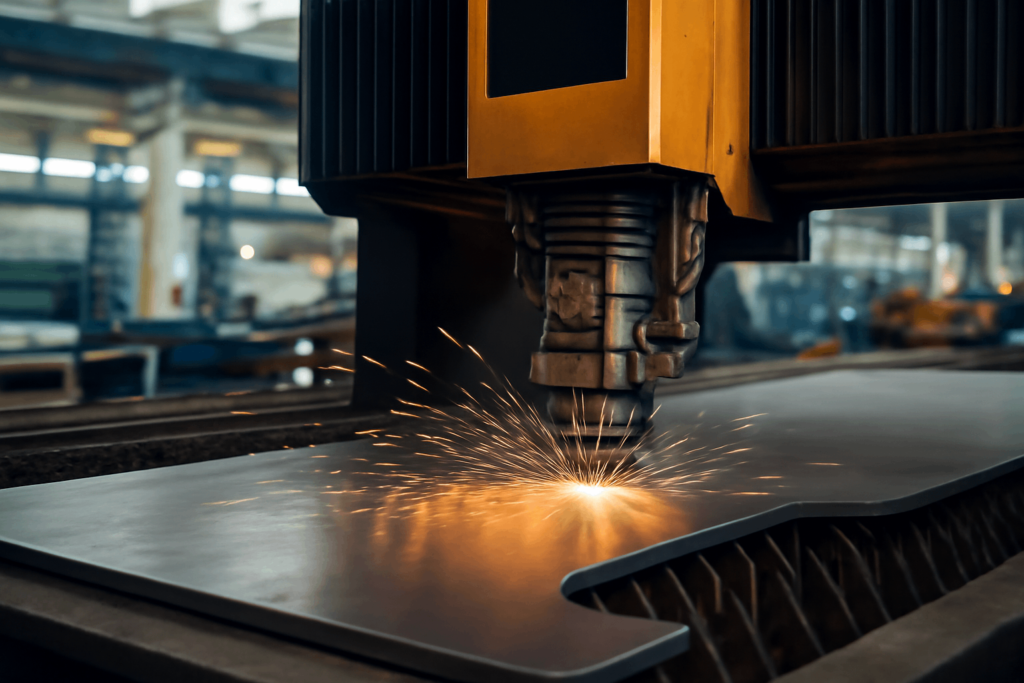
Laser cutting is one of the most accurate cutting methods, perfect for complex designs and tight tolerances. This method works by focusing a laser beam to melt the material, leaving a smooth edge with minimal burrs. Laser cutting is ideal for materials like stainless steel, aluminum, and carbon steel.
Best for: Custom parts, thin metals, tight tolerances, and high-precision cutting.
Example: YISHANG uses laser cutting to produce high-quality stainless steel enclosures with precise cutouts for the electronics industry.
2. Plasma Cutting: Speed for Heavy Metals
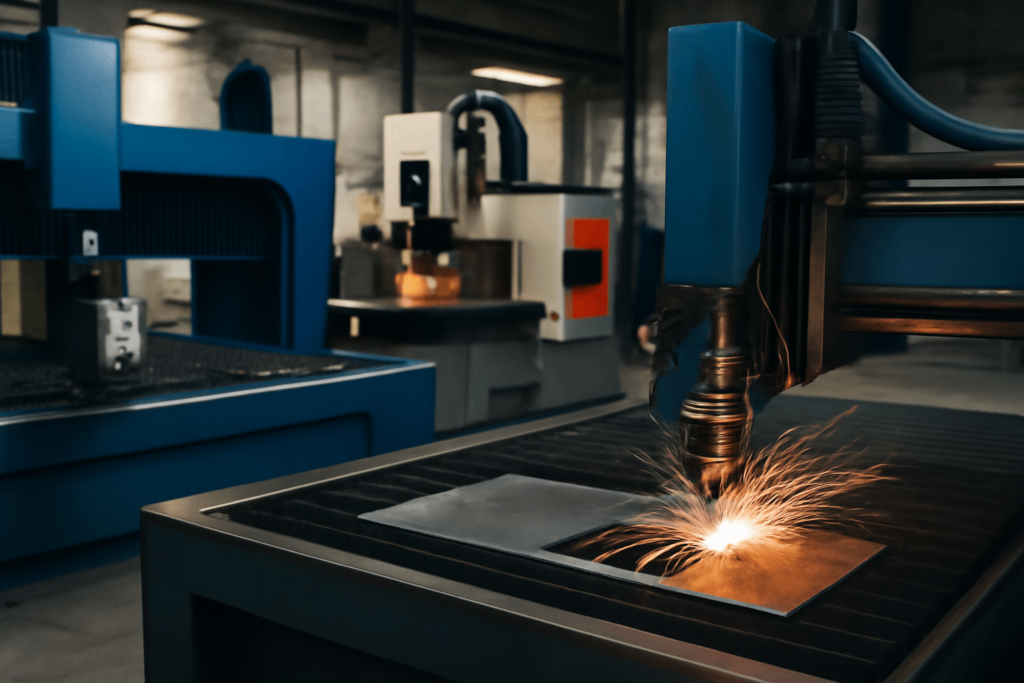
Plasma cutting uses an electrically conductive gas to cut through thick materials. It’s faster than laser cutting and works well with metals like carbon steel. However, it is less precise, so it’s not suitable for applications requiring tight tolerances.
Best for: High-speed cutting of thick metals where precision is not critical.
Example: YISHANG uses plasma cutting for bulk production of structural parts like steel frames.
3. Waterjet Cutting: Precision Without Heat
Waterjet cutting uses high-pressure water mixed with abrasive particles to cut through materials. Because there’s no heat involved, this method is perfect for sensitive materials that could be damaged by heat, such as aluminum and titanium.
Best for: Materials that cannot tolerate heat, like aluminum, titanium, and plastics.
Example: YISHANG employs waterjet cutting for high-precision aluminum components for the aerospace industry, where material integrity is critical.
Cutting Method Selection: A Decision-Making Framework for Procurement Managers
Choosing the right metal cutting method isn’t always straightforward, but here’s a framework to help make the decision easier:
-
Material Type: Is your part made of aluminum, stainless steel, or mild steel? Different materials require different methods.
-
Production Volume: Are you ordering thousands of parts or just a few custom components? Some methods are more cost-effective for mass production, while others are suited for small batches.
-
Required Precision: Does your part need to be welded, painted, or assembled with other parts? If yes, cutting precision will be critical.
-
Budget and Timeline: Determine your budget and production timeline. Methods like laser cutting offer high precision but can be more expensive, while methods like shearing and punching are more affordable for high-volume production.
Final Thoughts: Make Smart Procurement Decisions with YISHANG
At YISHANG, we specialize in delivering custom metal cutting solutions that meet your exact needs. Whether you’re sourcing stainless steel enclosures, custom brackets, or OEM parts, our expertise ensures you get the best possible solution for your budget, timeline, and quality requirements.
Our team is here to help you make informed decisions, reduce production costs, and improve efficiency.
Send your inquiry today to explore how we can assist you with your metal cutting needs and enhance your procurement process.