
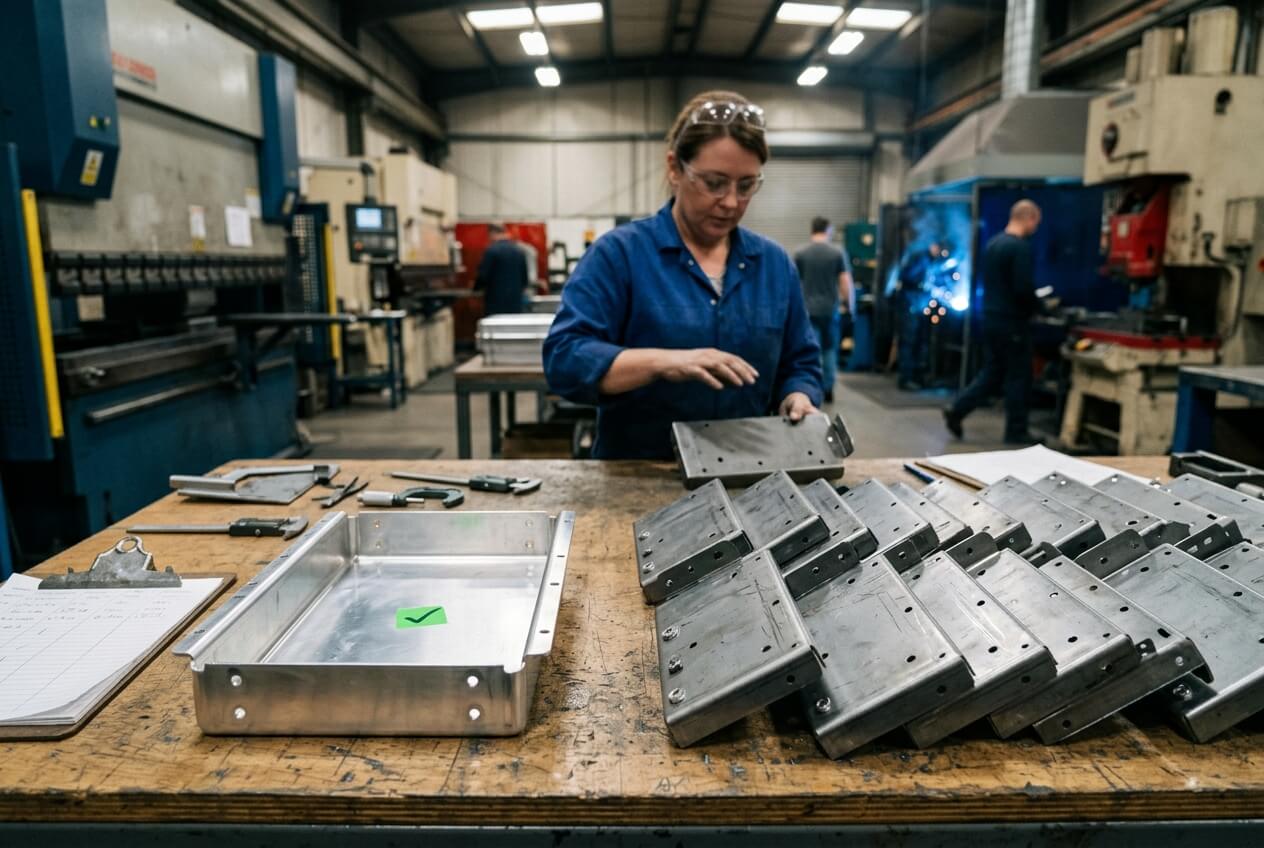
A prototype enclosure for an electric assembly can look fully approved. The PCB fits. The DIN rail lines up. The door closes. The black powder coat looks clean. Then the buyer releases 300 units, and the assembly bench finds the real problem. Holes need force, coated grounding pads fail continuity checks, and welded frames no longer hold a consistent door gap.
This failure usually does not start with one bad bend or one careless operator. It starts when a buyer treats prototype approval as production approval. A prototype may include slow bending, hand deburring, corrected weld distortion, chased threads, or extra coating cleanup. If the RFQ and drawings do not freeze those conditions, suppliers quote different levels of control while appearing to quote the same part.
For custom sheet metal fabrication used in electrical products, the main procurement risk is not whether one sample can work. The risk is whether the sample conditions can repeat across the batch without hidden rework. Buyers should use prototype approval as a production risk review before they compare final prices or issue a batch purchase order.
Prototype Approval Can Hide the Real Production Method
During sample approval, teams often focus on function. The enclosure accepts the electronics, so the project moves forward. That reaction feels reasonable, especially when the product launch has pressure. Yet the sample may prove only that one technician could make one part work.
Manual correction changes the meaning of approval. A technician may elongate a connector slot, dress a weld, adjust a return flange, or clean powder from threads. The buyer sees a working sample. The fabricator sees a prototype that needed extra attention. If nobody records the correction, the batch order starts with an assumption gap.
Where the assumption enters the quote
One supplier may quote the part as a simple laser cut, bend, weld, and coat job. Another may include a bending fixture, weld fixture, first article inspection, masking, and post-finish checks. Both quotes may use the same drawing number. They do not cover the same production route.
This gap matters most when the sheet metal part carries electrical components. A small shift in a bent panel can move PCB standoffs. Coating build-up can tighten a connector opening. Weld pull can change a cabinet diagonal. The individual variation may look minor, but the assembled product may not tolerate the combined stack-up.
Consider a wall-mounted control enclosure. The prototype front panel closes after the fabricator tweaks two return flanges by hand. The buyer approves the sample because the door gap looks acceptable. In batch production, springback varies across the lot. Some covers need pressure to install, and the assembly line starts sorting panels. The drawing did not show the flange as a door-fit feature, so the lowest quote did not include fixture control.
Before batch release, ask a direct question: what handwork made the prototype acceptable? Record hole adjustment, weld correction, special deburring, thread chasing, and coating cleanup. Then decide which actions should become part of the quoted production process, and which should disappear through design or tooling changes.
Unfrozen Fit Features Make Supplier Quotes Look Comparable When They Are Not
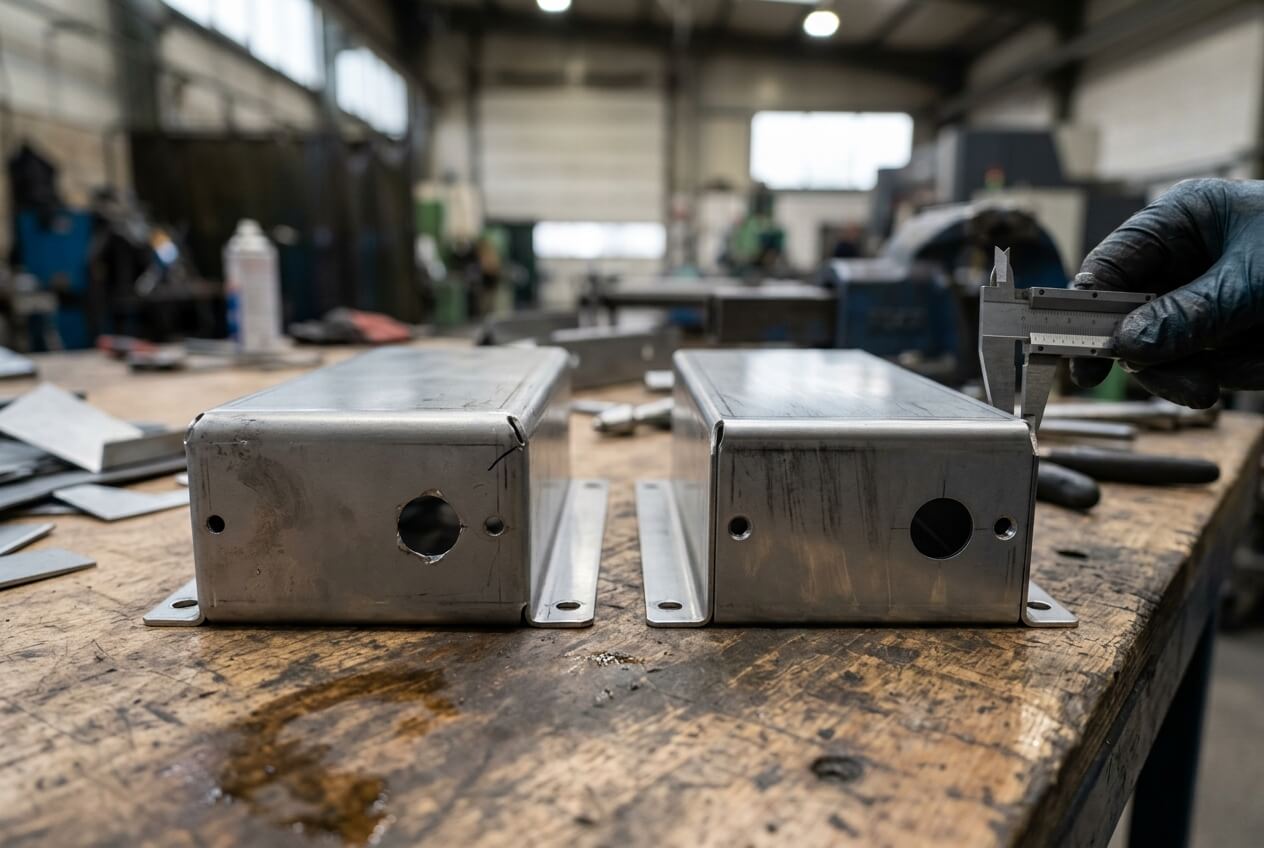
Many RFQs contain enough detail to make a prototype, but not enough detail to control a batch. Drawings often show outer dimensions, hole sizes, material thickness, and a finish note. They may not identify the features that determine assembly speed. That omission makes quote comparison risky.
For an electric assembly, the important features usually sit around the components. PCB tray holes, DIN rail positions, fan cutouts, connector windows, hinge lines, latch seats, and grounding studs often deserve more control than general edges or ventilation slots. If the RFQ treats every feature equally, the supplier must guess where to spend inspection time.
The cost driver is not only tolerance
Buyers sometimes respond by tightening many tolerances. That can raise cost without solving the right problem. A non-mating side flange may not need close control. A connector opening near a fixed PCB may need position control after bending and coating. The useful decision is not tight versus loose. It is controlled versus non-critical.
Clear marking helps suppliers quote the same scope. Instead of writing only holes according to drawing, mark the six holes that locate the PCB tray. Instead of listing powder coating black, identify contact areas that must remain conductive. Instead of approving a cabinet by outside size, define door gap, hinge alignment, and latch engagement after welding.
A realistic bracket example shows the chain. A buyer sends an RFQ for 500 bent brackets that hold a power supply inside a metal enclosure. The drawing gives hole sizes and bend angles, but it does not mark the mounting hole pair as assembly-critical. One supplier prices standard bending and batch sampling. Another includes a simple go/no-go gauge for the hole pair after bending. The cheaper quote wins. Later, technicians loosen the power supply to force alignment, and the saved unit price turns into assembly labor.
The problem started in the RFQ, not on the bench. The buyer needed to explain which holes locate the purchased component, what clearance the component allows, and whether inspection should occur after bending. That small clarification would have changed the quote and reduced production risk.
When Yishang reviews drawings for sheet metal parts, this is the type of detail worth discussing early. The goal is not to make every dimension premium. The goal is to align the quoted process with the real assembly function.
Finish and Coating Assumptions Can Break Electrical Function After the Sample Looks Good
Prototype finish approval often focuses on color, gloss, and visible surface quality. Those points matter, but they do not prove that the finish supports electrical assembly. Powder coating, plating, and polishing can change clearance, grounding, thread engagement, and hardware movement.
A finish note such as black powder coat leaves too many assumptions. It does not say whether threaded inserts need masking. It does not protect earth bonding areas. It may not define coating thickness near hinge knuckles, sliding covers, or latch seats. A prototype can pass because someone cleaned the problem areas by hand before review.
Grounding and threads need explicit treatment
Grounding points cannot rely on appearance. If coating covers the contact pad, the assembly team may scrape paint from every unit. That creates inconsistent contact, cosmetic damage, and retest work. Threaded holes create a similar issue. Coating inside threads may force operators to chase threads or reject parts that otherwise look acceptable.
These details affect price. Masking contact pads takes labor. Protecting threads adds handling steps. Checking coated holes after finishing adds inspection time. A supplier that includes those steps will not match a quote that assumes full coating everywhere. The two prices may look different because the production responsibilities are different.
Take a powder-coated cabinet panel with M5 grounding studs and several connector cutouts. The prototype passes because the fabricator cleans the grounding pad after coating and removes overspray from two threads. The batch RFQ only says powder coat, textured black. Production parts arrive with coated studs and tight connector openings. Assembly workers scrape, chase, and file. The schedule slips, and the buyer has no clear basis for rejection because the drawing never defined finish masks.
Clarify finish expectations before the batch price becomes fixed. Include color reference, visible surface zones, coating thickness range where relevant, masked grounding pads, protected threads, and packaging needs for cosmetic panels. This does not turn the RFQ into a textbook. It tells the supplier where finish work protects assembly and where standard coverage is acceptable.
Welded Frames and Enclosures Need Batch Datums, Not Just a Passed Sample
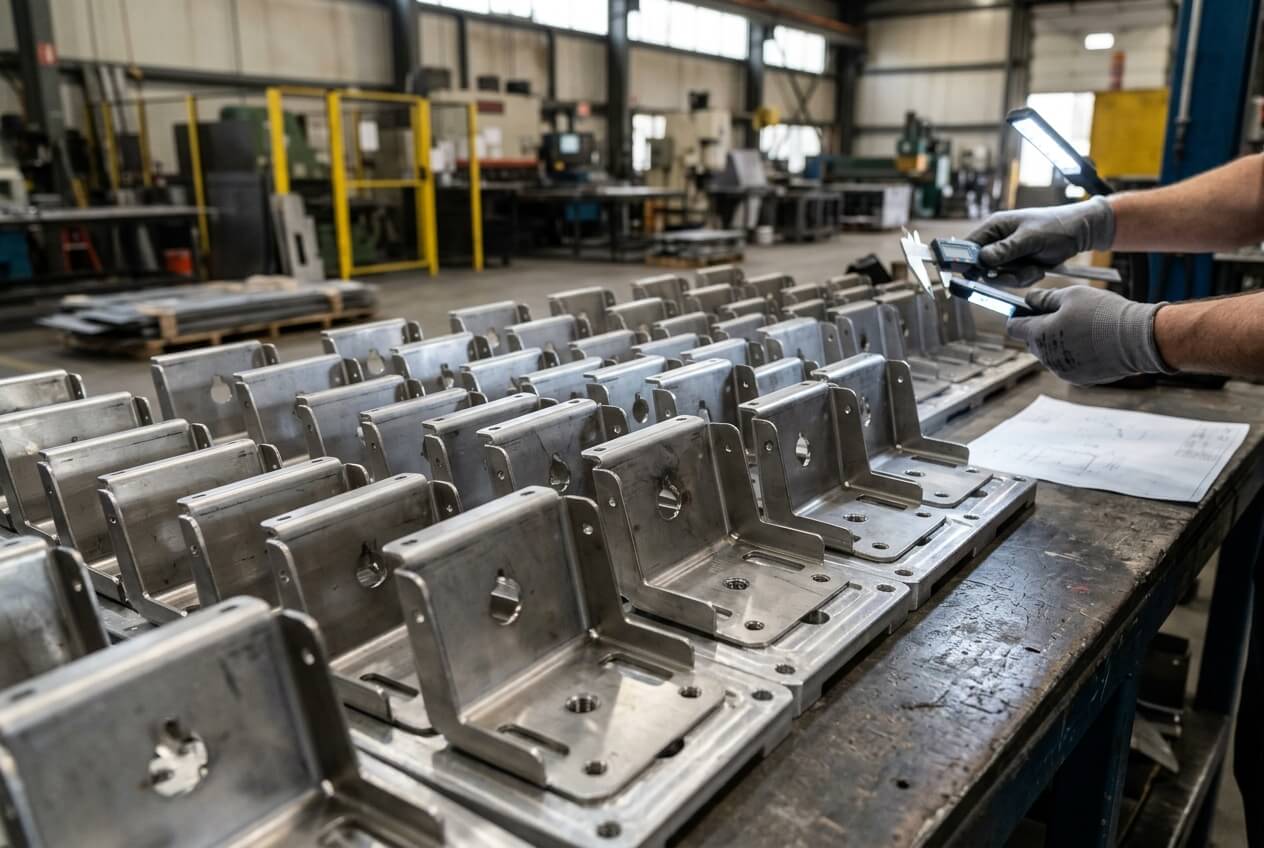
Welded assemblies create a special prototype-to-batch risk. Heat can pull corners, twist frames, and move mounting surfaces. A skilled welder can correct one prototype, but a batch needs datums, sequence control, and inspection points. Without them, the sample becomes a weak production reference.
Electrical cabinets, machine frames, and welded enclosure bases often look acceptable from the outside. Problems appear when doors, hinges, seals, fans, and internal panels interact. A door may close on the prototype because someone adjusted the hinge line after welding. In production, a small diagonal change can alter latch force and gasket compression.
Weld distortion changes more than appearance
Weld distortion can shift internal mounting plates. That movement affects terminal blocks, cable routes, and access to service parts. A frame that rocks slightly on a bench may still pass a quick visual check, but it can create stress when mounted to another structure. Once powder coating covers the welds, correction becomes slower and less clean.
A second project example makes the risk clear. A buyer orders 120 welded electrical cabinet frames after approving one sample. The prototype door gap looks even. The latch feels firm. During batch assembly, every fifth cabinet needs hinge shimming. The root problem sits in the welding sequence and fixture datum. The RFQ asked for weld locations, but it did not define diagonal checks, door gap range, or latch engagement after coating.
The buyer and fabricator should freeze the inspection reference before production. For a welded frame, that may include base flatness, diagonal measurement, hinge datum, door gap, latch position, and mounting plate location. For a smaller welded bracket, it may include perpendicularity, hole position after welding, and clearance around weld beads.
This clarification also protects lead time. If the shop discovers distortion after coating, the choices become rework, sorting, or remake. Each option delays shipment. If the team checks the first welded parts before finishing, they can adjust fixtures or sequence before the whole lot carries the same defect.
What to Freeze Before Releasing the Batch Purchase Order
A purchase order that says same as prototype does not freeze enough information. Same appearance, same drawing revision, same tooling, same fixture, same coating mask, and same inspection method are different requirements. Buyers need to connect the approved sample to a controlled production package.
Start with the current drawing revision. Make sure it includes all prototype changes, not just the original design intent. If a hole moved 1.5 mm after sample testing, update the drawing. If a flange relief changed to improve bending, capture it. If a grounding pad needed masking, add it to the finish note.
A practical release package
The release package should identify assembly-critical features, not every possible feature. Mark PCB, DIN rail, connector, hinge, latch, fan, grounding, and door-fit points. Add material grade and thickness, tolerance expectations for controlled features, finish requirements, mask areas, and acceptable cosmetic zones. Include prototype photos if they show fit, finish, or interference that the drawing does not communicate well.
Inspection timing also matters. Some checks should happen before finishing. Welded frame diagonals, bend angles, and critical hole positions can be easier to correct before coating. Other checks should happen after finishing, especially grounding areas, threads, connector clearances, and latch movement. A first article inspection can confirm the production route before the full lot moves forward.
Supplier communication should focus on assumptions that change cost, lead time, and repeatability. Ask whether the quote includes fixtures, masking, thread protection, special deburring, first article reporting, and packaging for visible surfaces. If a supplier excludes those items, the price may still be valid, but the buyer should know what responsibility remains with the assembly team.
For electric assembly sheet metal parts moving from prototype to batch production, send Yishang your drawings, material requirements, quantities, tolerance notes, finish expectations, prototype photos, and assembly feedback. Explain what fitted well, what needed adjustment, and which features must repeat across the batch. Yishang can review manufacturability, finishing, and assembly-risk points before you lock the purchase order through Yishang custom sheet metal fabrication.
Frequently Asked Questions
Why can an approved electric assembly prototype fail during batch production?
The prototype may include manual correction that never entered the drawing or RFQ. Common examples include adjusted holes, cleaned threads, dressed welds, and scraped grounding pads. If the batch quote does not include those controls, the production parts may look similar but assemble differently.
Which sheet metal features should buyers mark as assembly-critical?
Mark features that locate or constrain electrical components. These often include PCB standoffs, DIN rail holes, connector cutouts, fan openings, grounding studs, hinge lines, latch seats, and door-fit areas. These points should guide tolerance, inspection, and finish masking decisions.
How does RFQ ambiguity affect sheet metal fabrication quotes?
Ambiguity lets each supplier assume a different production scope. One quote may include fixtures, masking, first article inspection, and thread protection. Another may price only basic cutting, bending, welding, and coating. The lower price may shift risk to incoming inspection or final assembly.
What finish details matter most for powder-coated electrical enclosures?
Buyers should define masked grounding areas, protected threads, coating thickness limits where clearance matters, visible surface zones, and packaging protection. Color approval alone does not prevent grounding failures, tight connector openings, or latch interference after coating.
When should first article inspection happen for welded cabinets or frames?
Check critical geometry before finishing whenever possible. Diagonals, base flatness, hinge datums, latch positions, and internal mounting locations can often be corrected before coating. After finishing, rework becomes slower, less clean, and more disruptive to lead time.
What information should buyers send before requesting a batch quote?
Send drawings, revision history, material grade and thickness, order quantity, controlled tolerances, finish expectations, mask requirements, prototype photos, and assembly feedback. Also note any rework used on the sample. This helps the supplier quote the real production process.