
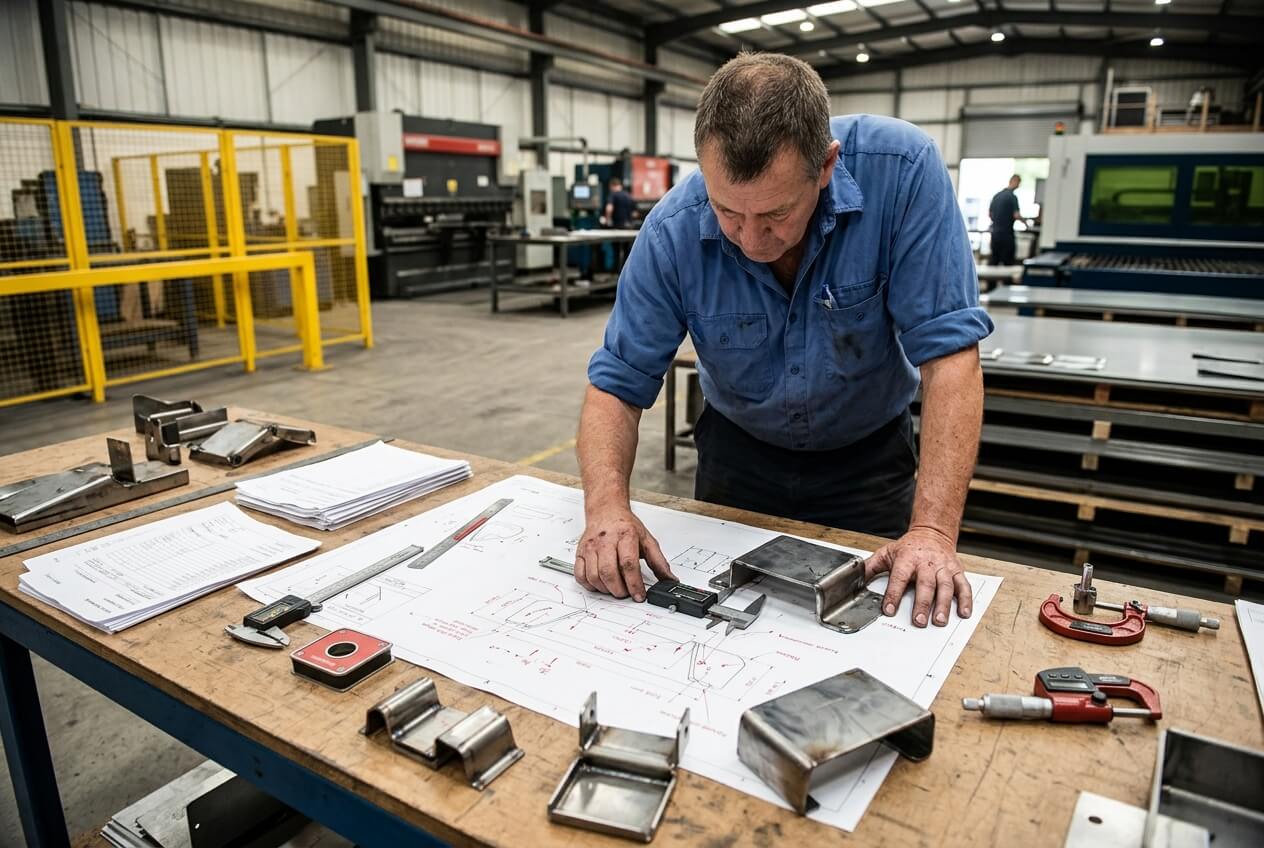
An OEM buyer sends one RFQ for a wall-mounted sheet metal enclosure to three suppliers. The 2D drawing shows the outside dimensions, hole positions, and powder coating color. The 3D model shows the folded shape. One supplier quotes 16% lower than the others, so purchasing feels pressure to move fast.
The risk starts before anyone cuts metal. The suppliers may not quote the same manufacturing basis. One may assume standard sheet thickness tolerance. Another may include masking for threaded holes. A third may add inspection for the cover fit after coating. The low quote may not be wrong, but it may answer a different RFQ.
This is the main procurement risk behind many engineer in drawing gaps. The drawing defines the part shape, but it does not always define the assumptions that control fabrication cost, lead time, inspection, and assembly reliability. If buyers compare unit prices before they expose those assumptions, they can move hidden decisions from RFQ stage into production.
Where RFQ assumptions start to make low quotes unsafe
A sheet metal RFQ often looks complete because it includes both a 2D drawing and a 3D file. That does not guarantee comparable quotes. Geometry tells the supplier what the part should become. It may not explain how tightly the supplier must control the route to get there.
The danger increases on metal enclosures, cabinets, frames, brackets, and welded assemblies. These parts combine cutting, bending, inserting, welding, grinding, coating, packing, and sometimes final assembly. A missing note in one process can change the cost of several later steps.
The quote may include different work
Consider a control box with a removable cover. The drawing shows M4 threaded holes and a black finish. It does not state whether the threads need masking before powder coating. It also does not state whether the cover fit needs inspection after coating buildup. One supplier prices basic fabrication and coating. Another includes masking, chase tapping, and cover-fit inspection. The second quote looks higher, but it may match the buyer’s real requirement.
Procurement teams often ask suppliers to "confirm to drawing." That phrase helps only when the drawing includes the decisions that matter. If the engineer in drawing package stays silent on masking, bend radius, visible faces, weld grinding, or critical datums, each supplier fills the gap differently.
The consequence chain is predictable. The buyer awards to the lowest quote. The supplier starts production based on its assumptions. During fabrication, the team finds that coated threads bind, a door rubs, or a bracket hole pattern does not match the mating frame. The project then needs clarification, rework, or a paid change. The price advantage shrinks after the purchase order.
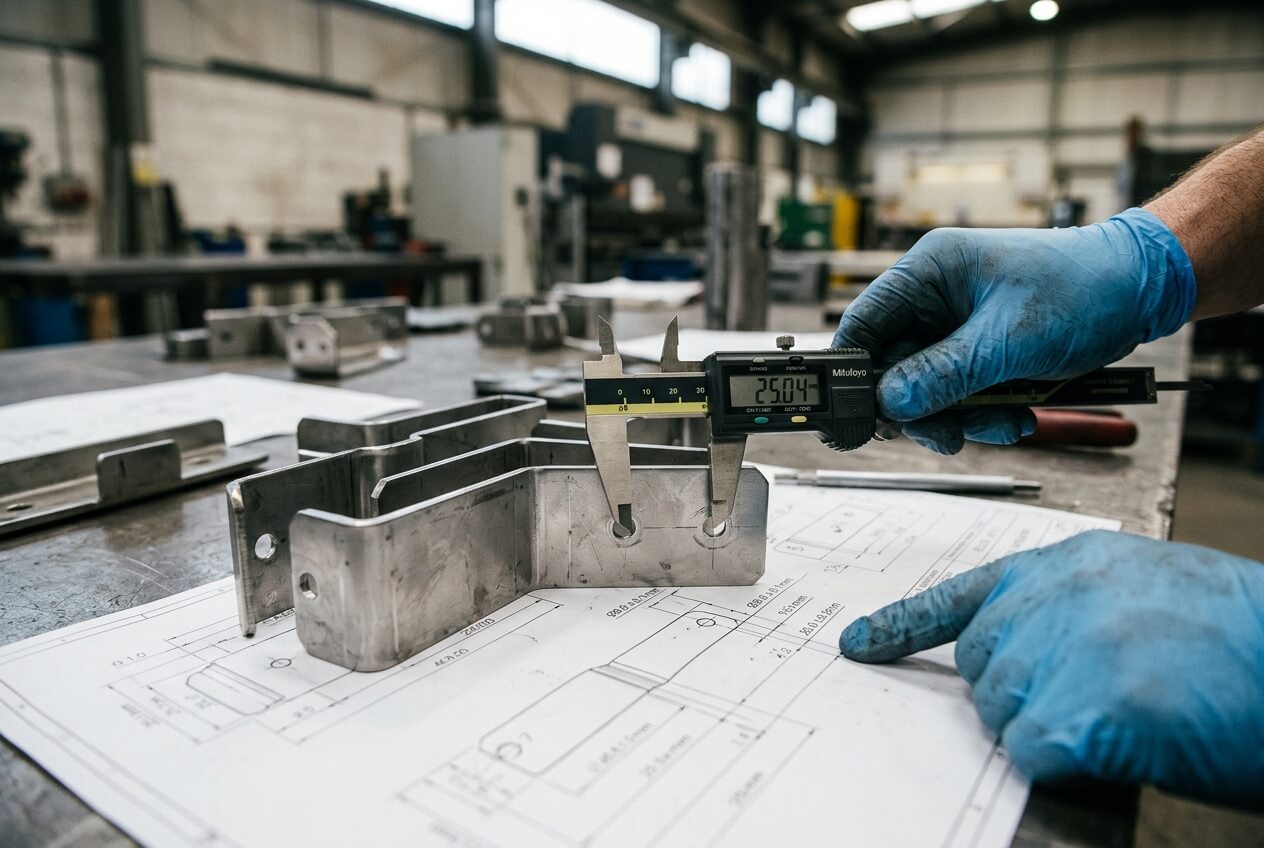
The drawing gaps that change the manufacturing basis
Not every missing note deserves a long discussion. The risky gaps are the ones that change process selection, labor time, inspection effort, or scrap probability. Buyers should focus on those points before they compare prices.
Material and thickness assumptions
Material notes can look simple but still create quote distortion. A drawing may list "steel, 1.5 mm" without naming the grade, allowable equivalent, surface condition, or thickness tolerance expectation. For a hidden bracket, that may cause little trouble. For a formed enclosure with tight cover clearance, sheet thickness variation can change bend results and internal space.
If the buyer allows equivalent material, the RFQ should say so. If the grade supports strength, corrosion performance, welding behavior, or cosmetic finish, the RFQ should lock it. A supplier cannot price the same risk if one quote assumes a common commercial sheet and another assumes a tighter, specified grade.
Bend and weld assumptions
Bend radius creates another common gap. The 3D model may show a radius that came from CAD defaults. The supplier may use standard tooling unless the RFQ marks the radius as functional. If a flange fits into a slot, holds a gasket, or aligns with a hinge, that radius may affect assembly. If it does not, the buyer may save cost by allowing supplier-standard tooling.
Welding notes also distort pricing. A frame drawing may show welded joints but not define weld length, weld type, grinding level, or straightness after welding. One supplier may quote intermittent welds and basic cleanup. Another may include continuous welds, grinding on visible sides, fixture time, and straightening. Both suppliers can claim they followed the drawing if the drawing left those choices open.
A short project example shows the risk. An OEM requests a welded machine base with four mounting plates. The drawing shows the plate locations but not the diagonal tolerance or flatness requirement. The low quote excludes a welding fixture. The sample passes after manual adjustment. The first batch arrives with small twists, and operators need shims during assembly. The issue started as an RFQ assumption, not as a simple production mistake.
When prototype approval hides batch assembly risk
Prototype approval can create false confidence when the RFQ does not separate functional dimensions from general dimensions. Sheet metal prototypes often receive extra manual attention. A technician can adjust a bend angle, open a slot slightly, chase a thread, or select the best-fitting cover. Batch production needs repeatable controls, not one successful sample.
The risk becomes serious when the prototype proves appearance but not process capability. A supplier may make one enclosure fit by hand. That does not mean the bend sequence, coating allowance, and inspection plan can hold the same fit across 200 units.
Critical dimensions need a clear reason
General tolerances can mislead both sides. If every dimension carries a tight tolerance, suppliers may add cost where function does not need it. If the drawing uses loose general tolerances and does not mark assembly features, suppliers may control the wrong areas. Neither approach protects the buyer well.
Buyers should identify the dimensions that affect fit, safety, sealing, alignment, or visible gaps. These may include enclosure door gaps, hinge hole locations, latch positions, rack shelf heights, bracket hole patterns, frame diagonals, and panel-to-panel offsets. The RFQ should also state the mating reference. A hole pattern for a bracket should not only reference the nearest sheet edge if the bracket bolts to a machine datum.
Take a U-shaped housing that slides over a plastic electronic module. The drawing shows the outside width and a powder coating note. It does not show the required inside clearance after coating. The prototype fits because the supplier adjusts the bend angle. In batch production, sheet thickness variation, springback, and coating buildup reduce clearance. Assemblers force the module into place, and scratches appear near the opening.
That problem affects more than quality. It slows assembly, creates internal blame, and may delay shipment. If the buyer clarifies the internal clearance and coating allowance during RFQ, the supplier can quote the right controls. The quote may include a different bend setup, a go/no-go gauge, masking, or added inspection. Those costs belong in the original comparison.
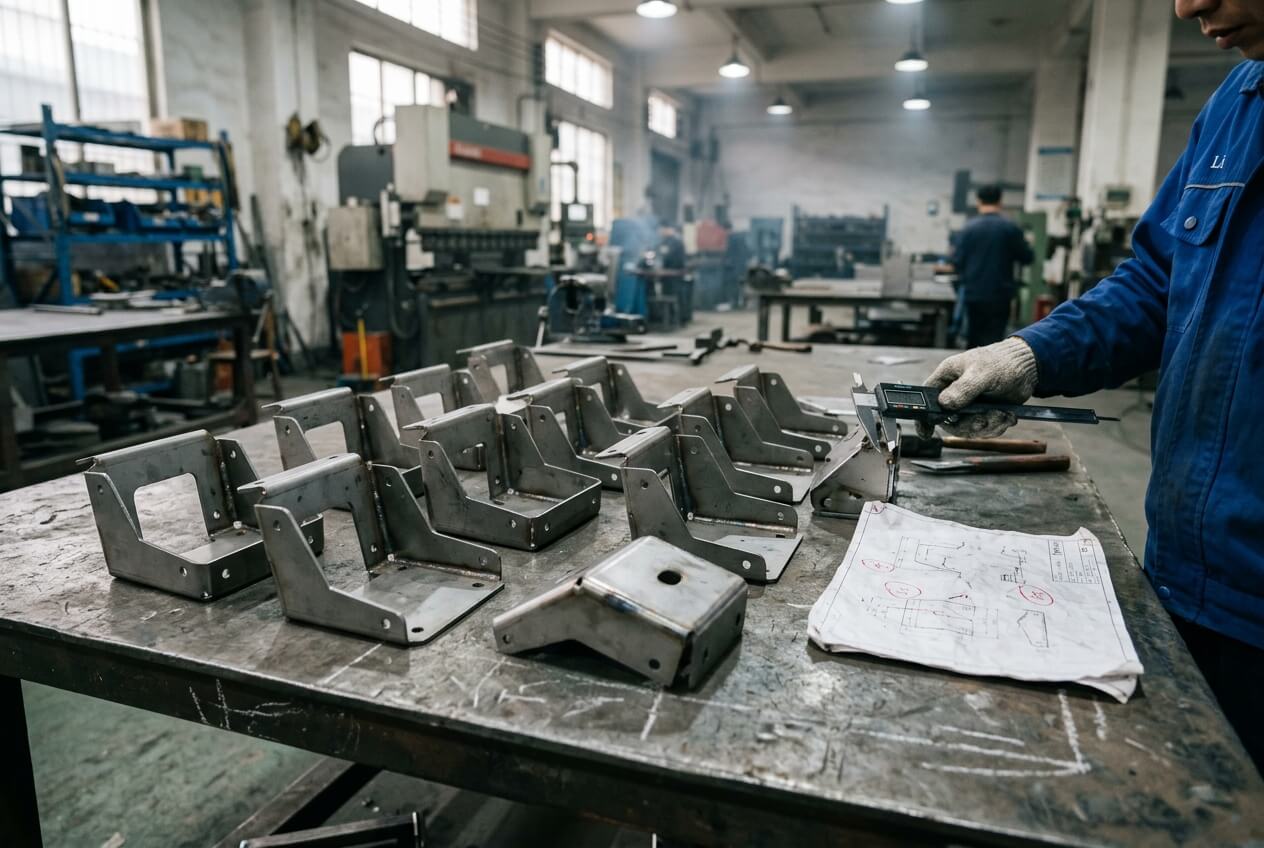
How unclear finish and tolerance notes move cost after award
Finish and tolerance notes often look like engineering details, yet they can decide whether a low quote survives production. The buyer may think "black powder coating" describes a color. The supplier must decide pretreatment, texture, gloss, coating thickness, masking, handling protection, and cosmetic acceptance. Those decisions change both price and lead time.
A cosmetic face requires different work than a hidden structural surface. A front panel for an electronics enclosure may need uniform texture and careful packaging. An internal support bracket may only need corrosion protection. If the drawing does not identify visible faces, suppliers cannot price polishing, grinding, coating inspection, or protective packing on the same basis.
Finish can become an assembly issue
Powder coating adds thickness around edges, holes, slots, hinges, and tabs. That thickness may improve durability, but it can reduce clearance. A door can rub. A cover can bind. Screws can jam in coated threads. If the RFQ does not mention masking or post-coating tapping, one supplier may omit that work to keep the quote low.
Outdoor cabinets add another layer of risk. The buyer may expect better corrosion resistance around weld seams, cut edges, and punched holes. If the RFQ only says "powder coat," a supplier may quote a basic coating system. Later requests for primer, heavier coating, salt spray performance, or special packaging become cost changes.
Tolerance notes can create the same pattern. A blanket ±0.1 mm tolerance on a formed sheet metal enclosure may force conservative quoting, extra inspection, or supplier pushback. Loose tolerances without critical feature callouts can create poor assembly. The better approach controls the features that matter and relaxes the ones that do not. This gives suppliers room to fabricate efficiently while protecting fit.
During drawing review, Yishang may ask whether a surface is customer-facing, whether a threaded hole needs masking, or whether coating thickness affects a cover gap. Those questions do not slow the RFQ for no reason. They reveal assumptions that would otherwise appear later as rework, schedule pressure, or invoice changes.
What buyers should lock before comparing sheet metal suppliers
The safest quote comparison starts before negotiation. Buyers should make every supplier price the same manufacturing basis. That does not require an overloaded drawing. It requires clear notes on the details that change fabrication decisions.
Start with the latest revision. File names, revision letters, and change notes matter. A small change to a flange height, slot width, bend relief, or door gap can affect cutting, bending, welding sequence, coating clearance, and inspection. If suppliers quote different revisions, the unit prices mean little.
Next, separate fixed design intent from supplier choice. If the bend radius can follow standard tooling, state that. If the radius protects fit, mark it as fixed. If an equivalent material is acceptable, name the acceptable range. If a visible surface must remain clean, show it on the drawing or send an assembly image.
For assemblies, send the context that affects fit. Mating part drawings, photos, sample comments, hardware lists, and inspection priorities often prevent wrong assumptions. A bracket that bolts to a machine frame needs different datum control than a decorative support. A cabinet frame that supports moving equipment needs stronger alignment control than a light-duty display stand.
Supplier questions also deserve attention. A question about weld length, coating masking, or hole datum may expose a hidden cost driver. Treat those questions as part of risk control, not just a delay. If one supplier asks and another stays silent, the silent quote may carry more risk.
Before awarding, ask each supplier to list key assumptions included in the price. The list should cover material, thickness, bend radius flexibility, weld treatment, critical tolerances, finish system, masking, inspection points, packing, first article approval, production quantity, and lead time basis. Then compare both price and assumption quality.
This approach helps buyers avoid a common trap: choosing a low unit price that depends on missing work. It also gives engineering and purchasing a shared decision record. If the project moves from prototype to batch, that record helps protect consistency.
Before you approve a low sheet metal quote, make the drawing assumptions visible. Send Yishang your 2D drawings, 3D files, material and thickness requirements, target quantities, critical tolerances, finish expectations, assembly photos, mating part details, and prototype comments. The team can review where the engineer in drawing package may leave room for different pricing assumptions on enclosures, brackets, frames, cabinets, panels, and welded assemblies. Submit your RFQ through Yishang custom sheet metal fabrication before final pricing is locked.
Frequently Asked Questions
What does engineer in drawing mean in a sheet metal RFQ?
In procurement use, engineer in drawing refers to the engineering details, notes, tolerances, and design intent carried inside the drawing package. For sheet metal fabrication, those details should tell suppliers which features control fit, finish, strength, inspection, and assembly. If they stay unclear, suppliers may quote different manufacturing assumptions.
Why can two suppliers quote very different prices from the same drawing?
They may include different work. One supplier may price standard bending, basic weld cleanup, and normal powder coating. Another may include masking, tighter datum inspection, welding fixtures, cosmetic grinding, and protective packaging. The prices only become comparable when the RFQ states which assumptions each supplier must include.
Which drawing gaps create the highest risk for metal enclosures?
High-risk gaps include internal clearance after coating, hinge and latch hole datums, door gap requirements, threaded hole masking, visible surface definition, bend radius flexibility, and cover-fit inspection. These details affect both unit price and batch assembly. Buyers should clarify them before they award the purchase order.
Can a prototype pass even if the production drawing is still unclear?
Yes. A prototype can pass because the fabricator manually adjusts bends, threads, weld distortion, or cover fit. Batch production needs repeatable fixtures, inspection points, and defined tolerances. If the RFQ does not mark critical features, the first production lot may vary even though the sample looked acceptable.
How should buyers handle supplier questions during quotation?
Buyers should treat useful technical questions as risk signals. Questions about material equivalence, bend radius, weld length, coating masking, datum control, or cosmetic faces often reveal hidden assumptions. Answer them once, update the RFQ package, and share the clarification with every quoting supplier.
What should I send for a clearer custom sheet metal fabrication quote?
Send the latest 2D drawing, 3D model, revision notes, material grade, sheet thickness, target quantities, critical tolerances, finish expectations, visible surface requirements, mating part details, assembly photos, hardware lists, and prototype feedback. This helps the supplier price the real manufacturing basis, not a guess.