
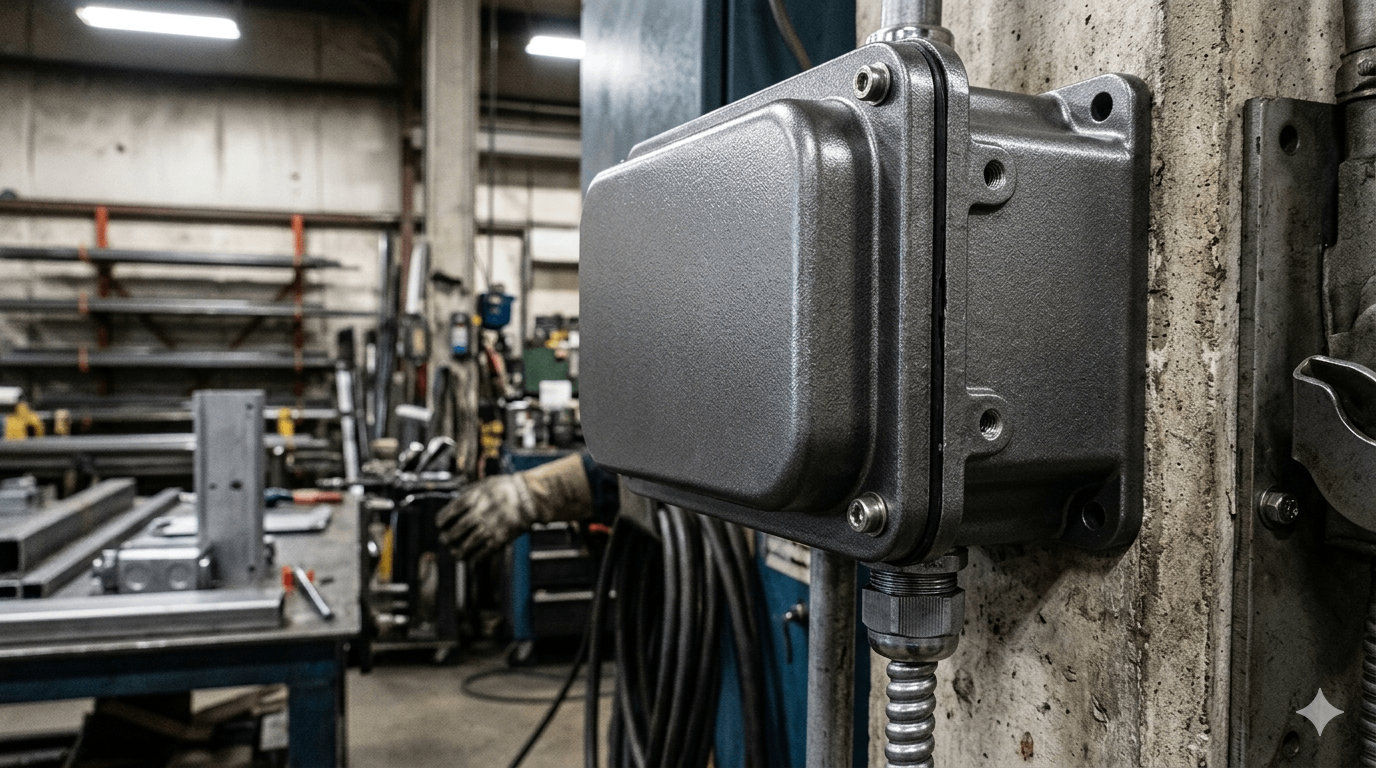
In the demanding world of industrial procurement, the pressure on managers has shifted. It’s no longer just about filling a purchase order; it’s about ensuring that a multi-million dollar supply chain doesn’t grind to a halt because of a single corroded part. Aluminum has long been the go-to for its light weight and strength, yet many engineers have faced the same frustrating reality: its natural protection often hits a wall when faced with high-alkaline environments or relentless salt spray.
At YISHANG, we see this as more than a material challenge—it’s a business risk. Choosing epoxy-coated aluminum is a calculated move to drive down the Total Cost of Ownership (TCO) and protect a brand’s reputation in unforgiving global markets. This guide moves past the basic data sheets to look at how combining precision metal fabrication with smart polymer chemistry creates components that actually stand the test of time, rather than just meeting the minimum spec.
Where Fabrication Logic Meets Coating Integrity
High-volume production brings a unique set of headaches, most notably ensuring that the coating holds up during and after mechanical stress. For a brand like YISHANG, the decision to coat after fabrication—rather than using pre-painted sheets—comes down to long-term liability. Think about what happens during high-speed laser cutting or multi-axis CNC bending: those raw, structural edges are left completely exposed.
Using pre-coated material leaves these edges wide open to “creep corrosion.” This is a quiet killer of metal parts where moisture sneaks under the coating from the cut line and slowly rots the component from the inside out. By coating the part after it’s been formed, the epoxy resin wraps around every micro-crevice and laser-cut edge. This 360-degree envelope is a non-negotiable for a junction box NEMA or a push button enclosure, where environmental leaks almost always start at the corners or fastener holes.
The physical geometry of an enclosure can also be a hidden trap. In the shop, we have to fight the “Faraday Cage effect”—a phenomenon where the powder coating naturally wants to jump away from deep recesses and tight internal bends. Getting a uniform finish in these “shadow zones” isn’t automatic; it takes specialized grounding and fine-tuned voltage control. Whether you’re ordering a hundred or ten thousand units, every enclosure aluminum enclosure needs that same consistent thickness to avoid the microscopic weak points that invite electrochemical attack.
This rigorous attention to detail is what protects you from the nightmare of mass warranty claims. For complex gear like a solar battery enclosure or control station enclosures, the epoxy-coated aluminum epoxy bond has to stay rock-solid under the physical strain of field assembly. We don’t just spray a part; we engineer a barrier that’s as tough as the metal it protects.
Performance as a Business Asset: The Chemistry of a Hardened Barrier
The endurance of these coatings isn’t luck—it’s the result of a thermal reaction that turns a simple finish into a structural asset. Unlike standard liquid paints that just dry on top, industrial epoxy resins are cured at temperatures between 180 and 200 degrees Celsius. This creates a dense, three-dimensional network of covalent bonds. For a procurement manager, this chemical stability means an enclosure electrical meter that can survive industrial degreasers and harsh cleaning chemicals without the finish flaking off or delaminating.
To give our partners peace of mind during international tenders, we validate these epoxy-coated aluminum epoxy parts against the ASTM B117 salt spray test. We’ve seen our products regularly pass the 1,000-hour mark without a single blister. In coastal or high-pollution zones, this level of corrosion resistance is a massive competitive edge for your own downstream marketing. It tells your customers that your equipment is built for the real world, not just a clean showroom.
Safety often hinges on the things we can’t see, like dielectric strength. With breakdown ratings often topping 20 kV/mm, epoxy-treated parts act as both structural armor and electrical insulators. This is a game-changer for an enclosure electrical meter or electrical meter box where space is tight and safety is paramount. People often ask, “How strong is epoxy-coated aluminum?” The real answer is found in the way YISHANG manages the bond. We’ve created a surface so resilient that while a standard enclosure carbon steel equivalent might dent and rust, our coated aluminum stays intact and functional.
Reliability Benchmarks for B2B Decision Makers
| Technical Property | Testing Standard | Result for YISHANG Industrial Grade |
|---|---|---|
| Salt Spray Resistance | ASTM B117 | 1,000+ Hours (No failure) |
| Coating Adhesion | ASTM D3359 | 5B (Superior bonding) |
| Dielectric Strength | ASTM D149 | 15 – 30 kV/mm (Insulation grade) |
| Pencil Hardness | ASTM D3363 | 3H – 6H (Wear resistant) |
| NEMA Corrosion Test | NEMA 250 | Fully compliant with 4X Specs |
The Procurement Matrix: Choosing the Right Shield
Selecting a material is about more than just checking a price tag; it’s a deep dive into the long-term cost of maintenance versus initial investment. Procurement teams often find themselves weighing a stainless steel enclosure against a carbon steel enclosure, a galvanized steel enclosure, or epoxy-coated aluminum. While stainless steel is undoubtedly durable, its weight and cost can break the budget for a massive solar project or marine infrastructure.
YISHANG offers a more balanced path. Our epoxy-coated aluminum works provide the corrosion resistance of a material stainless steel but at about 34% of the weight. In marine and ship components production, those weight savings aren’t just a bonus—they translate directly into better fuel efficiency and lower shipping costs. And compared to a galvanized steel enclosure, epoxy-coated aluminum offers a much cleaner aesthetic and better protection against the sun and weather, which is essential for smart-city gear that needs to look good and last.
We also help clients look at other aluminum coating types like anodizing. Anodizing is great for a decorative look, but it can’t match the dense chemical shield of a high-grade epoxy coat. For something that’s going to be handled every day, like an enclosure push button or a solar battery enclosure, the physical thickness of the epoxy (usually 60-120 microns) ensures the metal stays protected from grit and chemicals. When you choose epoxy coating your aluminum with YISHANG, you’re picking a finish designed for heavy-duty industrial life, not just architectural flair.
Integrity in the Supply Chain: From Design to Delivery
The success of any part starts long before the coating is sprayed. Everything depends on the pre-treatment. Before the electrostatic charge is even applied, the aluminum goes through a multi-stage cleaning and de-oxidizing process. At YISHANG, we use advanced conversion coatings that serve as a “molecular anchor.” This is the secret to a finish that doesn’t peel. Without this professional prep, even the best liquid epoxy will start to bubble and flake under thermal stress within months.
Wholesale buyers also have to think about the journey a part takes. A perfect aluminum enclosure in our factory doesn’t do you any good if it arrives at your dock with scratches from its time on a cargo ship. That’s why we use industrial-grade packaging, from custom-fit PE films to moisture-wicking desiccants for ocean freight. We see our job as ensuring that when you open the crate, every part is in showroom condition and ready to go.
This end-to-end control is what has made YISHANG a trusted name for over 26 years. We don’t just ship parts; we provide the care guides to help you maintain epoxy-coated aluminum so it stays in peak condition. Whether you’re sourcing a junction box NEMA or complex control station enclosures, we offer a solution that is as resilient as your business needs it to be. If you’re ready to move past generic parts and start engineering for the future, we’re here to help.
B2B Procurement & Technical FAQ
What’s the best way to keep these parts in top shape? It’s actually quite simple. For most indoor setups, a quick wipe with a neutral soap twice a year is plenty. If your gear is in a high-salt or coastal area, a fresh-water rinse every few months will stop corrosive salt from building up. This easy routine ensures the epoxy coating last on aluminum for its entire planned life.
Is this finish NEMA 4X compliant? Yes, as long as we use the right powder grade and gasket system. YISHANG specializes in NEMA 4X junction box NEMA solutions that sail through the 200-hour salt spray and hose-down tests required for certification.
Is the epoxy process environmentally responsible? We take this seriously. Our powder coating is a zero-VOC process, and we make sure everything we use meets RoHS and REACH standards. This means your products won’t hit any regulatory walls in the US or Europe, simplifying your compliance paperwork.
Does this work for marine applications? Absolutely. The combination of 1000-hour salt spray resistance and light weight makes it a favorite for marine structural frames. It gives you the protection of a stainless steel enclosure without the heavy weight that slows a vessel down.
Reach out to YISHANG today to discuss your next project. We’re ready to provide the competitive wholesale pricing and technical support your team needs.