

For industrial and OEM products, surface marking is not just a cosmetic detail. The marking method can affect traceability, barcode readability, branding consistency, audit readiness, and the long-term legibility of part information.
When buyers compare etching vs engraving, the practical question is not simply which method looks better. The real question is which marking method performs better under the product’s actual use conditions.
What Etching and Engraving Actually Mean
Although the two terms are often grouped together, they are not the same process.
Etching changes only the surface layer of the metal.
Engraving removes metal to create a deeper and more durable mark.
That distinction matters because marking depth influences how well the mark survives handling, cleaning, abrasion, and outdoor exposure.
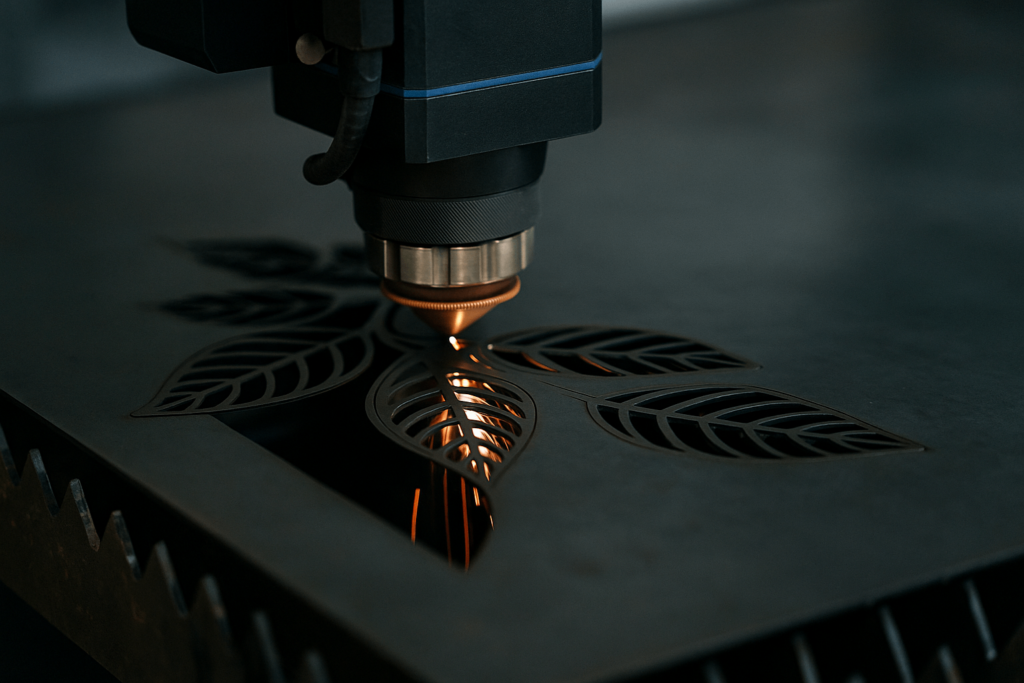
The Real Difference Between Etched and Engraved Metal
| Comparison Factor | Etching | Engraving |
| Depth | Surface-level or shallow | Deeper material removal |
| Visual effect | Clean, sharp, often more refined for graphics | More tactile, more visible under wear |
| Durability | Good for moderate-use environments | Better for harsh-use environments |
| Best use | Branding, labels, faceplates, decorative marks | Traceability, serials, compliance marks, heavy-use parts |
| Typical speed | Usually faster | Usually slower |
| Typical cost | Often lower for large-volume marking | Usually higher per unit, especially with deeper cuts |
Common Process Routes
| Method | Typical Use |
| Chemical etching | Repeated designs, high-volume visual marking |
| Laser etching | Flexible, low-to-mid volume, changing SKUs |
| Mechanical engraving | Deep marks, durable industrial identification |
| Laser engraving | Precise, durable marking without physical tool wear |
How Each Method Performs in Production and Use
When choosing a marking method, buyers should compare not only appearance, but also how the mark behaves after shipping, installation, use, and servicing.
| Performance Dimension | Etching | Engraving |
| Appearance quality | Often sharper and cleaner for graphics | More industrial and tactile |
| Wear resistance | Moderate | High |
| Cleaning resistance | Good, but depends on depth and finish | Better under repeated cleaning or abrasion |
| Outdoor readability | Can fade faster in severe exposure | Better for long-term readability |
| Barcode / QR retention | Suitable when conditions are moderate | More reliable when harsh handling is expected |
Cost and Production Logic
From a procurement perspective, etching is often more efficient when:
the design stays the same,
visual consistency matters more than depth,
the parts are not exposed to heavy abrasion.
Engraving is often the safer choice when:
the mark carries compliance or traceability value,
the part will be handled frequently,
the mark must remain readable for years under industrial conditions.
How to Choose Based on Product Needs
A simple selection framework is often more useful than a long process explanation.
| Product Need | Better Fit |
| Large-volume, fixed design | Chemical etching |
| Short lead time, variable design files | Laser etching |
| Harsh operating environment | Laser engraving |
| High-end front panel appearance | Laser etching |
| Long-term industrial identification | Engraving |
| Compliance-heavy serial marking | Engraving |
When the Wrong Choice Creates Problems
Choosing the wrong method can create issues such as:
fading codes after transport or field use;
poor barcode readability during audits or service;
over-specification that adds cost without adding practical value;
under-specification that leads to early rework or label replacement.
What Buyers Should Confirm Before Approving a Marking Method
Before approving etching or engraving for a production run, buyers should confirm:
| Check Item | Why It Matters |
| Required mark depth | Determines how well the mark survives use |
| Use environment | Indoor cosmetic parts and outdoor industrial parts need different marking strategies |
| Traceability requirement | Compliance IDs and serial numbers may require deeper, more durable marking |
| Surface finish sensitivity | Some parts prioritize clean appearance over deep marking |
| Volume and SKU variability | This affects whether flexible digital marking is more efficient than fixed tooling methods |
FAQ
Which is better for industrial traceability: etched or engraved metal?
Engraved metal is usually better when long-term readability matters under abrasion, handling, or cleaning.
Is etched metal better for appearance?
In many cases, yes. Etching often gives a cleaner and flatter visual result, which can make it preferable for branding panels and decorative applications.
Does laser etching last as long as engraving?
Not always. Laser etching is usually shallower, so it may not retain legibility as well as engraving in harsh-use environments.
Can the same product line use both methods?
Yes. Some products use etching for visible branding and engraving for hidden serial or compliance identification.
Conclusion
Etched vs engraved metal is not just an appearance decision. It is a practical choice about durability, readability, production efficiency, and lifecycle risk.
For buyers, the best choice depends on how the part will be used, how long the mark needs to remain readable, and whether the priority is visual finish, traceability, or both.